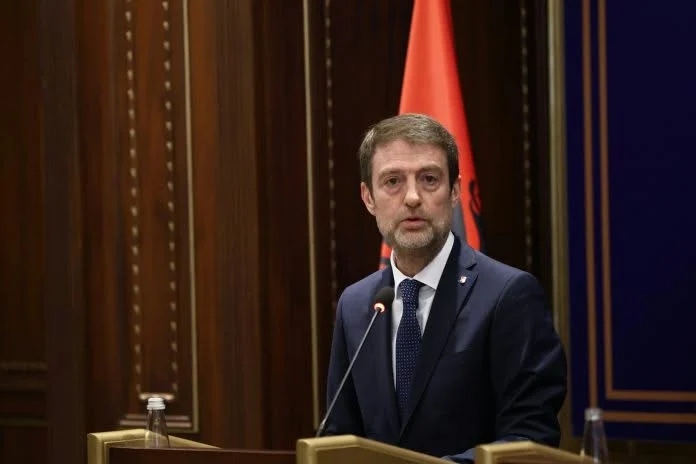
Tirana/Belgrade, October 25, 2026 – Ferit Hoxha, Albania’s Minister for Europe and Foreign Affairs, has issued a powerful call to ethnic Albanians residing in Serbia’s Preševo Valley, urging them to exercise their democratic right to vote in upcoming elections. In a widely circulated message shared across social media platforms, Minister Hoxha underscored the critical importance of robust participation to ensure their voices are heard and their political representation adequately secured. The appeal, published by Gazeta Express on October 25, 2026, signals Tirana’s continued commitment to the welfare and rights of Albanian communities beyond its borders.
Minister Hoxha’s statement serves as a direct and unambiguous appeal for massive voter turnout, asserting that "every vote matters" for the future of Albanians in the Preševo Valley. He articulated that high electoral participation is not merely a civic duty but a strategic imperative that significantly strengthens the community’s collective voice in advocating for their rights and political standing. The minister’s intervention comes at a sensitive time for the region, where the interplay of ethnic minority rights, cross-border relations, and European integration aspirations remains a complex and often contentious issue.
A Call to Civic Duty
Minister Hoxha’s message, originally disseminated via his official social media channels, resonated immediately across Albanian-language media and within the Preševo Valley itself. His emphasis on democratic participation highlights a recurring theme in Tirana’s foreign policy: the active support for ethnic Albanian communities in neighboring countries to integrate fully into the political systems of their respective states while preserving their cultural identity and advocating for their rights.
The Minister’s Urgent Plea
In his full post, which was widely quoted, Minister Hoxha addressed his "dear compatriots, citizens of the Preševo Valley," framing electoral participation as both a "fundamental democratic right" and a "crucial opportunity" for their voices to be heard and to carry the weight they deserve. "Today is the day to make this happen, by participating massively in the polls and freely exercising your democratic right," he urged, making the appeal particularly timely in the context of any impending electoral process in Serbia that would include the Preševo Valley.
The urgency in his tone reflects a deep-seated concern in Tirana regarding the socio-political status of Albanians in southern Serbia. For decades, this community has grappled with issues ranging from perceived political marginalization and economic underdevelopment to challenges in preserving their linguistic and cultural heritage. Minister Hoxha’s message is thus seen as a rallying cry, intended to galvanize a population that, at times, has shown signs of political disillusionment.
Emphasizing the Power of the Ballot
Hoxha unequivocally stated that "every vote matters," a sentiment designed to combat apathy and to empower individual voters. He further elaborated that "the greater the participation, the stronger your voice for the rights, representation, and future of Albanians in the #PreševoValley." This direct correlation between turnout and influence is a cornerstone of democratic theory, and its invocation by a foreign minister of a kin-state underscores the strategic importance attributed to this election by Albania.
The minister concluded his message with a clear and concise directive: "Go out and vote. For your #voice, for your #rights, for your #future." These hashtags reinforce the core pillars of his argument, aiming to connect the act of voting with the tangible benefits of enhanced representation and a more secure future for the community. The appeal is not merely about numerical representation but about securing a legitimate, influential platform for the community’s needs and aspirations within the Serbian political landscape.
Chronology of Engagement and Tensions
The Preševo Valley, comprising the municipalities of Preševo, Bujanovac, and Medveđa, is a region with a complex and often turbulent history, nestled at the crossroads of Serbia, Kosovo, and North Macedonia. Its ethnic Albanian majority has long been a focal point of regional politics, making any call for political mobilization inherently significant.
Historical Context of the Preševo Valley
Following the 1999 Kosovo War, the Preševo Valley experienced a brief but intense insurgency by the Liberation Army of Preševo, Medveđa, and Bujanovac (UÇPMB) in 2000-2001, which sought to unite the region with Kosovo. This conflict was eventually defused through international mediation, resulting in a peace agreement that granted greater integration of Albanians into Serbian state institutions and promised economic development. However, many of these promises have been slow to materialize, leading to persistent grievances.
The region’s demographics show a significant Albanian majority in Preševo and Bujanovac, while Medveđa has a smaller but historically present Albanian population. For generations, Albanians in the Preševo Valley have navigated their identity within the Serbian state, often looking to Albania and Kosovo for political and cultural support. This historical context provides the backdrop for Minister Hoxha’s intervention, which is not an isolated event but part of a long-standing pattern of engagement from Tirana.
Previous Electoral Cycles and Turnout
Past electoral cycles in the Preševo Valley have often been characterized by lower-than-desired Albanian turnout, particularly in national elections. Factors contributing to this have included:
- Political disillusionment: A belief that their votes do not significantly impact their living conditions or political status.
- Emigration: A steady outflow of young people seeking better economic opportunities abroad, leading to a smaller, often older, active voter base.
- Voter list discrepancies: Allegations of "passive registration," where ethnic Albanians are removed from voter lists if they are not continuously residing at their registered address, often affecting those working abroad or displaced.
- Lack of unified political strategy: Internal divisions among Albanian political parties in the region have sometimes fragmented their political power.
These challenges have historically hampered the community’s ability to maximize its political leverage, making calls like Hoxha’s particularly relevant. High turnout is seen as a way to overcome these systemic obstacles and present a more unified front.

Recent Diplomatic Initiatives
Albania has consistently advocated for the rights of Albanians in the Preševo Valley on various international platforms. Diplomatic efforts have often focused on ensuring equal access to education in the Albanian language, promoting economic development, and ensuring fair political representation. Minister Hoxha’s current call aligns with a broader strategy of encouraging democratic participation as the most effective means for minority communities to assert their rights within their respective states.
While the specific elections to which Hoxha refers are not explicitly named in the original snippet, his message is generic enough to apply to any local or national elections impacting the region. The year 2026 suggests potential local elections or even snap national parliamentary elections in Serbia, making the timing of his appeal crucial for maximizing its impact.
Supporting Data and Demographic Realities
The demographic and socio-economic realities of the Preševo Valley underscore the importance of Minister Hoxha’s message. The region’s unique composition and challenges directly inform the urgency of his call for increased civic engagement.
Demographic Composition and Political Representation
According to the latest census data available, ethnic Albanians constitute a significant majority in Preševo and Bujanovac, and a notable minority in Medveđa. However, their political representation at both local and national levels has often been disproportionately low compared to their demographic strength. This underrepresentation stems from a combination of factors, including the aforementioned low voter turnout, fragmented political parties, and challenges in overcoming electoral thresholds.
Minister Hoxha’s appeal aims to directly address the turnout issue. By increasing participation, Albanians could potentially consolidate their political influence, secure more seats in local assemblies, and potentially send more representatives to the Serbian National Assembly. Such an outcome would not only provide a stronger platform for their concerns but also make it harder for their interests to be overlooked in Belgrade.
Socio-Economic Challenges in the Region
The Preševo Valley remains one of the least developed regions in Serbia. High unemployment, particularly among youth, limited foreign investment, and inadequate infrastructure are persistent problems. These economic hardships often fuel a sense of marginalization and contribute to significant emigration, which further depletes the voter base and human capital.
A stronger political voice, achieved through increased electoral participation, is seen as a key mechanism to advocate for greater government investment, improved public services, and targeted economic development programs for the region. Without effective representation, the community risks being left behind in Serbia’s broader development trajectory.
The Impact of Low Turnout
The historical pattern of low turnout among Albanians in the Preševo Valley has had tangible negative consequences. It weakens their negotiating position with central authorities, makes it difficult to secure funding for essential services (like Albanian-language education, healthcare, and cultural institutions), and limits their ability to influence legislation that directly impacts their lives. Moreover, low turnout can inadvertently be interpreted as a lack of interest or cohesion, diminishing the community’s overall political weight.
Hoxha’s message seeks to counteract this narrative by mobilizing the electorate, transforming potential apathy into active engagement. He implicitly argues that a high turnout is a clear demonstration of the community’s unity, determination, and commitment to shaping its own future within the Serbian state.
Official Responses and Regional Dynamics
Minister Hoxha’s intervention, while framed as a democratic encouragement, is not without its geopolitical implications, particularly for the delicate relations between Tirana and Belgrade, and within the Preševo Valley itself.
Reactions from Belgrade
The Serbian government has historically been sensitive to what it perceives as interference in its internal affairs, particularly concerning its southern regions. While encouraging minority participation in elections is generally seen as a democratic principle, direct calls from a foreign minister of a kin-state can sometimes be interpreted by Belgrade as an attempt to influence domestic political outcomes or even as a challenge to Serbia’s sovereignty.
Official reactions from Belgrade, though not yet reported for this specific instance in the provided snippet, would likely reiterate Serbia’s commitment to the rights of all its citizens, including national minorities, while perhaps subtly or overtly expressing disapproval of what might be seen as external meddling. Serbian officials might emphasize that the democratic process is an internal matter for Serbia’s citizens to decide. This dynamic highlights the tightrope walk involved in advocating for minority rights in a historically charged region.

Responses from Local Albanian Leaders
Local Albanian political leaders in the Preševo Valley are expected to largely welcome and echo Minister Hoxha’s call. For years, these leaders have tirelessly worked to mobilize their communities, often facing significant obstacles. An endorsement from a high-ranking official like Albania’s Foreign Minister provides crucial moral support and, potentially, greater legitimacy to their efforts.
Leaders like Shaip Kamberi, a prominent Albanian politician from the Preševo Valley who has served in the Serbian parliament, or mayors of Preševo and Bujanovac, would likely use Hoxha’s statement to reinforce their own campaigns for increased voter turnout. They would emphasize that a strong mandate from the people is essential for effective advocacy for local interests, economic development, and the protection of national minority rights. This solidarity from Tirana strengthens their position within Serbia’s political system.
International Community’s Stance
The international community, including the European Union, the Organization for Security and Co-operation in Europe (OSCE), and the United States, generally advocates for the full and active participation of all citizens, including national minorities, in democratic processes. They consistently stress the importance of minority rights as a cornerstone of stable, democratic societies, particularly in the Western Balkans where ethnic tensions have historically been a concern.
While these international bodies would likely not endorse a specific call from a foreign minister, they would implicitly support the underlying message of active civic engagement. Their monitoring missions often scrutinize the fairness of electoral processes and the inclusion of national minorities. Minister Hoxha’s call aligns with broader international principles of democratic inclusion, even if its direct source makes it a sensitive diplomatic issue.
Implications for Regional Stability and Cross-Border Relations
The call from Minister Hoxha carries significant implications not only for the Preševo Valley but also for the broader landscape of Albanian-Serbian relations and the region’s path toward European integration.
The Future of Albanian-Serbian Dialogue
Relations between Albania and Serbia have historically been complex, heavily influenced by the status of Kosovo and the treatment of ethnic Albanian minorities in Serbia. While there have been attempts at improving dialogue and cooperation, particularly through initiatives like the "Open Balkan," underlying tensions persist. Minister Hoxha’s appeal, while democratic in nature, could be perceived differently by Belgrade, potentially adding another layer to these complex bilateral discussions.
However, a successful mobilization of Albanian voters in the Preševo Valley could also paradoxically contribute to stability. If the community feels genuinely represented and empowered within the Serbian system, it could reduce the potential for discontent and radicalization. This could, in the long run, foster a more constructive dialogue between Belgrade and Tirana regarding minority rights and regional cooperation.
Potential for Increased Political Leverage
Should Minister Hoxha’s call lead to a significantly higher voter turnout, the Albanian community in the Preševo Valley stands to gain substantial political leverage. Increased representation at local and national levels would mean:
- Stronger advocacy: More effective lobbying for specific legislative changes, budget allocations, and policy initiatives that benefit the region.
- Negotiating power: A more cohesive political bloc could become a kingmaker in coalition governments, particularly at the local level, allowing them to extract concessions.
- Visibility: Enhanced media attention and political focus on the issues facing the Preševo Valley, both domestically and internationally.
This increased leverage would be a crucial step towards addressing the long-standing grievances of the community and ensuring their equitable treatment within the Serbian state.
Broader European Integration Context
Both Albania and Serbia are aspirants for membership in the European Union. A key criterion for EU accession is the protection of minority rights and the functioning of democratic institutions. The situation in the Preševo Valley is often cited in reports on Serbia’s progress in these areas.
Minister Hoxha’s call, by promoting democratic participation, aligns with the very principles the EU champions. A vibrant, engaged national minority that actively participates in the political life of its country is a positive indicator for EU integration. Therefore, a successful mobilization of voters in the Preševo Valley, leading to stronger representation, could indirectly serve to bolster both Albania’s and Serbia’s EU aspirations, demonstrating a commitment to European democratic values.
In conclusion, Minister Ferit Hoxha’s message to the Albanians of the Preševo Valley is more than just a routine diplomatic statement; it is a strategic call to action with profound implications. By urging robust electoral participation, Tirana seeks to empower a historically marginalized community, strengthen its voice within Serbia, and contribute to a more stable and democratically representative future for the region. The success of this appeal will be measured not only in voter numbers but in the tangible improvements in rights, representation, and socio-economic conditions for the Albanians in southern Serbia, ultimately influencing the delicate balance of relations in the Western Balkans.