Rome, Italy – Italy was gripped by a wave of widespread civil unrest this past Saturday, as thousands of citizens took to the streets in at least eight major cities across the nation. The demonstrations, fueled by growing public discontent over various socio-economic issues, led to significant police intervention, resulting in nine arrests and the detention of 371 individuals, including a notable number of minors.
The Italian Police confirmed these figures in an official statement released shortly after the protests subsided, providing an initial snapshot of the day’s tumultuous events. Among those taken into custody for questioning, 110 were identified as minors, a statistic that has immediately drawn attention and concern from civil rights organizations and political observers. While authorities have yet to release specific details regarding the identities of those arrested or the precise circumstances that led to their detention, the nationwide scale and the high number of individuals processed by law enforcement underscore the intensity of the demonstrations and the government’s firm response.
The protests, which saw participants marching through city centers, blocking key arteries, and congregating outside governmental buildings, were primarily driven by frustrations over the rising cost of living, perceived government inaction on economic inequality, and specific policies related to labor reform and environmental issues. The events of Saturday mark a significant moment in Italy’s recent political landscape, signaling a potentially escalating period of public activism and challenging the current administration to address a diverse array of grievances.
Main Facts: A Nation on Edge
Last Saturday, Italy experienced a coordinated series of demonstrations that swept through at least eight of its most prominent urban centers. From the northern industrial hubs to the southern metropolises, citizens mobilized en masse, voicing their dissent against what many describe as a deepening socio-economic crisis and a lack of governmental responsiveness. The widespread nature of the protests, occurring simultaneously in cities such as Rome, Milan, Naples, Turin, Florence, Bologna, Palermo, and Bari, indicated a high degree of organization and a broad base of support for the underlying causes.
The official statement from the Italian Police confirmed that the day’s operations resulted in nine arrests. These individuals are reportedly facing more serious charges, potentially related to public disorder, property damage, or direct confrontation with law enforcement personnel. Beyond the arrests, a staggering 371 people were "shoqëruar në komisariat," or taken to police stations for identification and questioning. This broader category of detention typically involves individuals who may have violated public assembly rules, engaged in minor disturbances, or were present in areas where clashes occurred. The distinction between arrest and detention is crucial, as those detained might be released after questioning without formal charges, or could face administrative penalties, while those arrested are typically held pending judicial proceedings.
A particularly striking detail from the police communiqué was the revelation that 110 of the 371 detained individuals were minors. This figure has ignited a debate about youth engagement in political activism, the effectiveness of police crowd control measures, and the legal protections afforded to young protestors. The presence of such a significant number of underage participants suggests either a strong appeal of the protest movements to younger generations or perhaps instances where minors were inadvertently caught up in larger demonstrations.
Despite the release of these headline figures, Italian authorities have maintained a tight lid on further specific information. The lack of detailed accounts regarding the identities of the arrested, the specific charges they face, or the precise circumstances of the numerous detentions has fueled calls for greater transparency from opposition parties and human rights organizations. This information vacuum leaves much to speculation regarding the nature of the alleged infractions and the protocols followed by law enforcement during what was clearly a challenging day for public order.
Chronology of Events: From Grievance to Gridlock
The genesis of Saturday’s nationwide protests can be traced back to several months of simmering discontent across Italy. The country has been grappling with persistent economic challenges, exacerbated by global inflation, an energy crisis, and the lingering effects of recent geopolitical instability. Public frustration had been mounting over a new government austerity package, dubbed the "Stability and Growth Initiative" (SGI), which proposed cuts to public services, adjustments to pension schemes, and new labor market flexibilities. Critics argued that the SGI disproportionately affected working-class families and vulnerable populations, while failing to address systemic issues of inequality.
Background Context: A Crucible of Discontent
Throughout the autumn, various civic groups, trade unions, and student organizations had been holding smaller, localized demonstrations. University students protested against cuts to education funding and rising tuition fees. Labor unions organized strikes against job insecurity and stagnating wages. Environmental activists rallied against insufficient climate action. These disparate movements gradually began to coalesce around a broader narrative of dissatisfaction with the government’s overall direction, particularly its economic policies. Social media platforms played a crucial role in amplifying these grievances and facilitating inter-city coordination, with hashtags like #ItaliaNonSiFerma (Italy Doesn’t Stop) and #ProtestaNazionale (National Protest) gaining significant traction. A coalition of activist groups, under the informal banner of "Movimento Unito per il Cambiamento" (United Movement for Change), emerged as a primary organizer, advocating for a synchronized day of action.
The Day Unfolds: A Nationwide Mobilization
The morning of Saturday began with gathering crowds in designated assembly points across the eight cities. In Rome, thousands converged at Piazza della Repubblica, intending to march towards Palazzo Chigi, the Prime Minister’s official residence. Similarly, in Milan, protestors gathered at Piazza Duomo, aiming for the regional government headquarters. The initial hours of the demonstrations were largely peaceful, characterized by vibrant banners, chanting, and speeches from organizers. Participants included a diverse cross-section of Italian society: students, retirees, union members, unemployed youth, and small business owners.
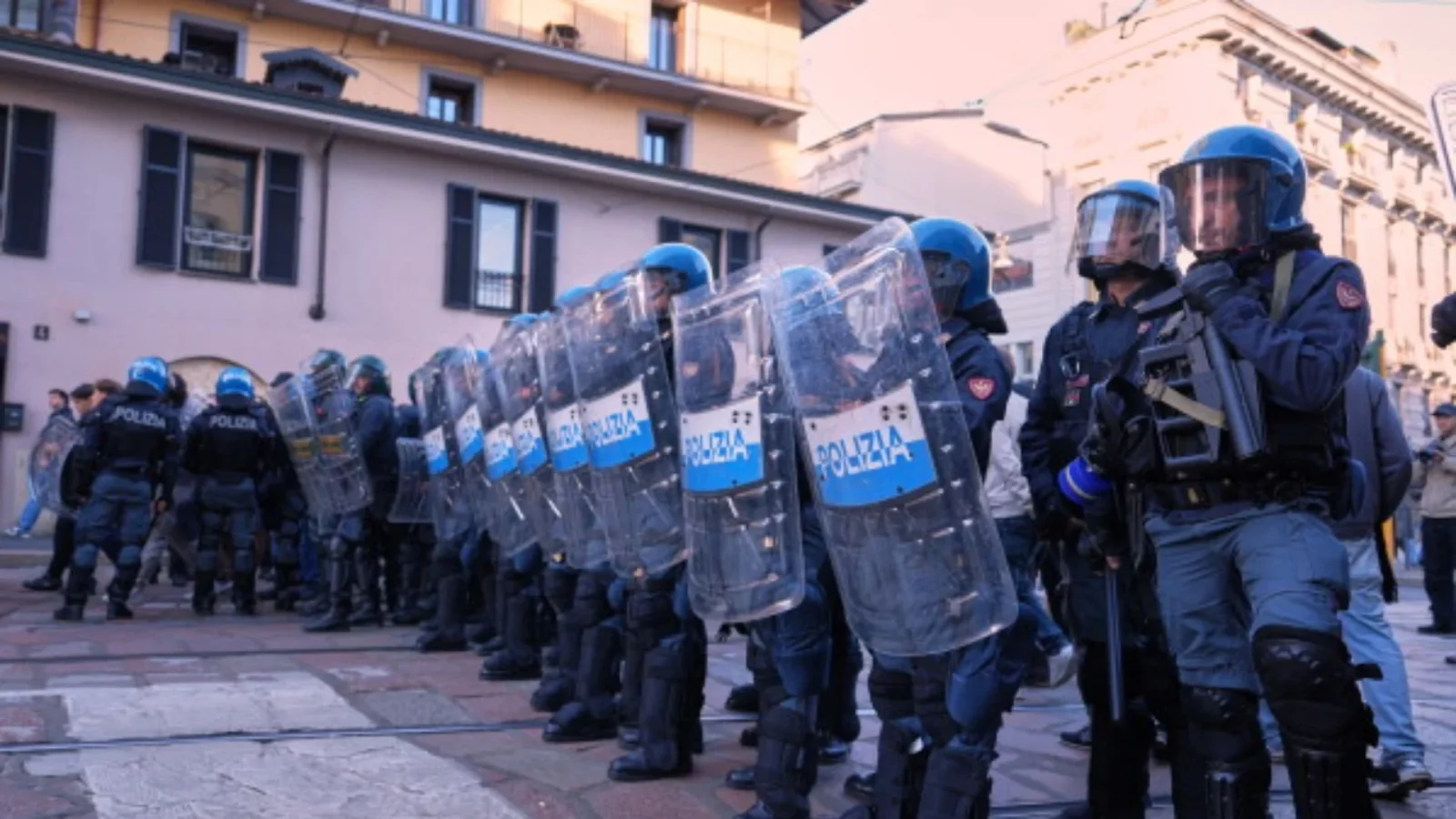
As the marches progressed, however, the atmosphere in some cities began to shift. Reports from Naples indicated early skirmishes as protestors attempted to breach police cordons around the Prefecture. In Turin, a sit-in demonstration temporarily blocked a major thoroughfare, causing significant traffic disruption. Police presence was heavy from the outset, with riot police units deployed strategically in anticipation of potential flashpoints. Authorities had issued warnings in the preceding days, urging protestors to remain peaceful and adhere to designated routes, while also emphasizing their commitment to ensuring public order.
Escalation and Interventions: Clashes and Containment
The afternoon saw an escalation in tension, particularly in cities like Rome and Milan, where larger crowds and more radical elements attempted to deviate from approved routes or engage in direct confrontations. In Rome, a splinter group reportedly tried to scale barricades near a government building, leading to a swift response from law enforcement. Tear gas was deployed in at least two locations, and water cannons were used to disperse crowds that had become unruly. Eyewitness accounts described scenes of chaos, with protestors throwing objects and police responding with baton charges to contain the situation.
It was during these periods of heightened tension that the majority of arrests and detentions occurred. Police strategically moved into crowds to identify and apprehend individuals deemed to be instigating violence, damaging property, or refusing lawful orders to disperse. The detention of minors, in particular, often happened during these mass dispersals, where younger participants might have been less experienced in navigating such volatile situations or less aware of the legal consequences of their actions. By early evening, the bulk of the demonstrations had been brought under control, with police forces maintaining a visible presence to prevent any resurgence of activity. The coordination of law enforcement across multiple cities on such a large scale indicated a meticulously planned response to anticipated unrest.
Supporting Data and Context: Unpacking the Numbers
The raw figures – nine arrests, 371 detentions, 110 minors – provide a stark measure of Saturday’s events, but their true significance lies in the context they offer regarding the current state of Italian society and its relationship with authority.
Scale and Scope of Protests: A Barometer of Discontent
The fact that protests erupted simultaneously in eight major cities – covering the geographic breadth of Italy from north to south – speaks volumes about the widespread nature of the discontent. This was not an isolated incident but a coordinated national outcry. Such extensive mobilization suggests deep-seated grievances that resonate across diverse demographics and regions. Compared to previous protest waves in Italy, which often focused on specific regional issues or single policy debates, Saturday’s demonstrations appear to have tapped into a broader sentiment of frustration with the national government’s overall trajectory. Analysts suggest this widespread participation could indicate a growing disillusionment with traditional political channels and an increasing willingness to resort to direct action. The sheer number of participants, though not officially tallied, is estimated to be in the tens of thousands nationwide, making it one of the largest protest days in recent memory.
Nature of Charges and Detentions: Legal Ramifications
The nine individuals arrested are likely facing criminal charges that carry more severe penalties. These could include charges such as resisting a public official, aggravated public disorder, damage to public property, or even assault if any officers were injured. Convictions for such offenses can lead to significant fines or even imprisonment.
For the 371 individuals detained, the situation is more nuanced. "Shoqëruar në komisariat" (taken to the police station) can encompass a range of scenarios. Many might have been held for identification checks, processed for minor infractions like illegal assembly or disturbing the peace, and then released, potentially with a formal warning or a future summons. However, even these seemingly minor detentions can have consequences, such as a criminal record or restrictions on future participation in public gatherings. The focus on identifying individuals suggests a police strategy aimed at deterring future unrest and maintaining a database of known protestors. The lack of detailed information regarding their release status or potential charges has been a point of contention for civil liberties advocates.
The Enigma of Minors: Youth Engagement and Vulnerability
The presence of 110 minors among the detained is particularly concerning. This figure represents nearly 30% of all individuals taken into custody, highlighting either a significant youth involvement in the protests or a vulnerability of young people to being caught up in such situations. Several factors could explain this:
- Youth Activism: Italian youth, like their counterparts globally, are often at the forefront of social and environmental movements. Frustration over economic prospects, climate change, and educational opportunities could be driving their participation.
- Lack of Experience: Minors may be less adept at navigating large, potentially volatile crowds and understanding the legal implications of their actions, making them more susceptible to police intervention.
- Recruitment/Influence: Some activist groups might actively engage younger participants, or minors might simply follow older peers into demonstrations.
- Police Tactics: Critics argue that police tactics, particularly during mass dispersals, might not adequately differentiate between adult and minor protestors, leading to indiscriminate detentions.
The detention of minors invokes specific legal protections under Italian law, requiring parental notification and the involvement of juvenile authorities. Human rights groups are closely monitoring these cases to ensure due process and proper treatment.
Historical Precedent: Italy’s Legacy of Protest
Italy has a rich history of social and political protest, often serving as a vibrant arena for public dissent. From the student movements of 1968 to the anti-globalization rallies of the early 2000s, and more recent demonstrations against austerity measures, Italians have frequently used public demonstrations as a means to express grievances and demand change. This latest wave of protests fits within this historical narrative, suggesting that when traditional political avenues are perceived as unresponsive, the street remains a powerful forum for expressing collective dissatisfaction. The current unrest echoes past periods of significant social tension, reminding observers that public grievances, if left unaddressed, can quickly escalate into widespread civil disobedience.
Official Responses and Statements: Navigating the Aftermath
The aftermath of Saturday’s protests has seen a flurry of statements from various official channels, attempting to frame the events, justify actions, and articulate a path forward.
Police Statement Analysis: Emphasis on Order
The initial statement from the Italian Police was concise, focusing primarily on the quantitative outcomes of their operations: the number of cities affected, arrests made, and detentions recorded. This approach is typical in the immediate aftermath of large-scale public order incidents, aiming to project an image of control and efficiency. The withholding of specific details about identities or charges is often attributed to ongoing investigations and the need to protect privacy, especially concerning minors. However, this lack of transparency has also drawn criticism, with demands for more comprehensive reports on police conduct and the exact nature of the alleged offenses. Police officials, speaking anonymously to state media, emphasized the "difficult task" of maintaining public order while upholding the right to peaceful protest, asserting that interventions were only made when demonstrations turned violent or deviated from authorized routes, posing a threat to public safety or property.
Government Reaction: Condemnation and Call for Dialogue
The government’s response has been multifaceted, balancing condemnation of violence with a cautious acknowledgment of public grievances. Prime Minister Giorgia Meloni issued a statement through her office, expressing "firm condemnation of any act of violence or vandalism" that marred the demonstrations. She praised the "professionalism and restraint" of the police forces in managing complex situations. However, she also added that "the government hears the voice of its citizens and remains committed to addressing the challenges facing our nation through dialogue and democratic processes." This dual message aims to deter further unrest while not entirely dismissing the underlying concerns.
The Interior Minister, Matteo Piantedosi, took a firmer stance, stating that "those who use protests as an excuse for violence and destruction will face the full force of the law." He underscored the importance of respecting legal frameworks for public assembly and warned against attempts to "destabilize national order." Piantedosi also announced a review of security protocols for future large-scale events, suggesting a potentially stricter approach to managing demonstrations.
Political Opposition and Civil Society: Criticism and Concern
Opposition parties were quick to react, largely criticizing the government’s handling of the protests while also condemning any violence. Elly Schlein, leader of the Democratic Party (PD), stated, "While we unequivocally condemn violence, the government must reflect on why so many Italians feel compelled to take to the streets. Their economic policies are creating a chasm of inequality and despair." Other opposition figures called for an parliamentary inquiry into police actions, particularly regarding the detention of minors and alleged instances of excessive force.
Civil society organizations and human rights groups have voiced significant concerns. Amnesty International Italy issued a statement calling for "full transparency regarding the circumstances of all arrests and detentions, especially concerning minors." They emphasized the importance of safeguarding the right to peaceful protest and urged authorities to ensure that all individuals detained are afforded due process and access to legal counsel. Child welfare advocates expressed alarm over the high number of detained minors, stressing the need for specialized handling and protection of their rights. Trade unions, whose members were active participants in the protests, reiterated their demands for policy changes, framing the demonstrations as a legitimate expression of workers’ rights and public frustration.
Implications and Future Outlook: A Precarious Balance
The events of last Saturday have far-reaching implications for Italy’s political landscape, social cohesion, and the government’s mandate. The scale and intensity of the protests suggest that the current administration faces a significant challenge in managing public dissent and addressing the underlying socio-economic grievances.
Immediate Impact: Heightened Public Discourse and Division
The most immediate impact has been a heightened national discourse surrounding the government’s policies, the role of law enforcement, and the state of civil liberties. Media coverage has been extensive, sparking debates on television, radio, and social media. The public is largely divided, with some supporting the protestors’ right to demonstrate and criticizing police actions, while others condemn the violence and defend the need for strong public order. This division could exacerbate existing political polarization, making consensus-building even more challenging for the government. Minor economic disruptions, such as temporary business closures in protest areas, were reported, though the long-term economic impact is expected to be minimal unless unrest continues.
Political Ramifications: Pressure on the Government
For the ruling coalition, the protests represent a significant test of its authority and its ability to respond to popular demands. The widespread nature of the demonstrations puts immense pressure on the government to either reconsider some of its more contentious policies, such as the Stability and Growth Initiative, or to at least demonstrate a more empathetic and effective approach to the cost of living crisis. Failure to adequately address these concerns could lead to a decline in public approval, potentially weakening the government’s parliamentary majority or impacting its performance in upcoming regional elections. The opposition will undoubtedly use these events to galvanize their base and intensify their criticism of the government’s economic agenda.
Social Cohesion: The Risk of Further Unrest
The high number of participants, particularly minors, underscores a potential deepening of social divisions and a growing frustration among segments of the population. If the government is perceived as unresponsive or dismissive of the protestors’ concerns, there is a significant risk of further unrest. The coordinated nature of Saturday’s events suggests that activist groups possess the capacity to mobilize large numbers, and continued grievances could fuel more frequent and potentially more confrontational demonstrations. The involvement of youth is particularly critical, as it indicates a generational discontent that could have long-term implications for political engagement and social stability.
Legal Aftermath: Scrutiny and Justice
The legal process for the nine arrested individuals will be closely watched, as their cases could set precedents for how future protests are policed and how dissent is prosecuted. Similarly, the outcomes for the 371 detained individuals, especially the minors, will be subject to intense scrutiny from legal and human rights advocates. Questions about police procedures, the proportionality of force used, and the rights of detainees are likely to be debated in courts and public forums. Transparency in these legal proceedings will be crucial for maintaining public trust in the justice system.
Conclusion: An Unfolding Narrative
The nationwide protests that swept Italy this past Saturday are more than just a fleeting moment of unrest; they are a potent symptom of deeper socio-economic anxieties and political discontent simmering beneath the surface of Italian society. With nine arrests and hundreds detained, including a significant number of minors, the events have cast a stark light on the challenges facing the current administration and the determination of its citizens to demand change. As the legal processes unfold and political reactions continue to evolve, the coming weeks and months will be critical in determining whether these protests represent an isolated outburst or the beginning of a sustained period of social and political upheaval in Italy. The government’s ability to respond effectively, balancing the need for public order with a genuine commitment to addressing the grievances of its people, will ultimately shape the nation’s path forward.