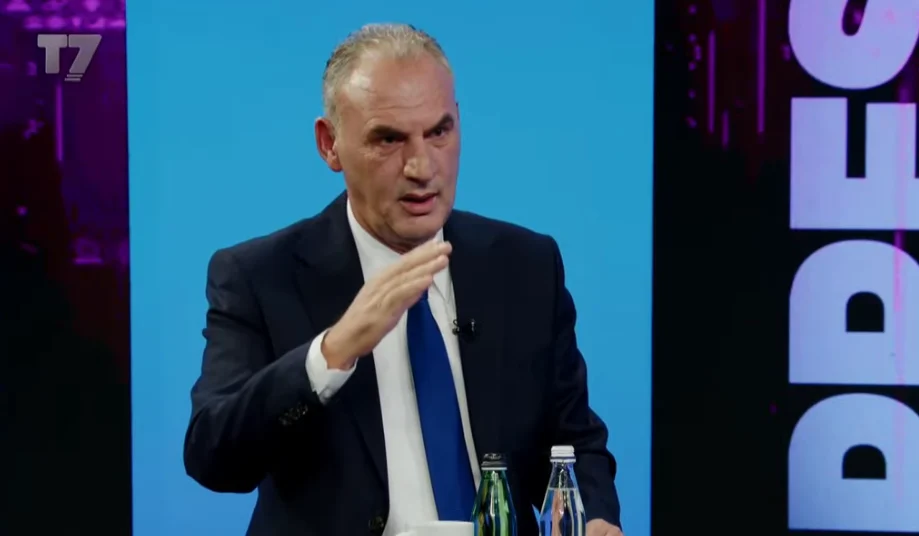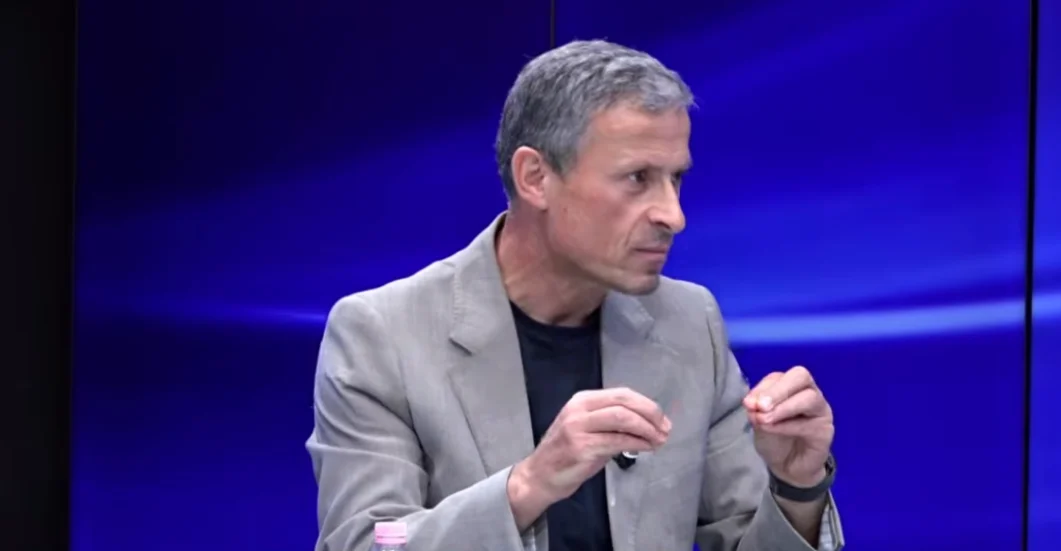
Pristina, Kosovo – In a pointed critique that has reverberated through Kosovo’s political landscape, prominent pedagogue Fitim Zekthi has voiced significant concerns regarding the political methodology employed by Prime Minister Albin Kurti and his administration. Speaking on the television program "Now me Erla Mëhillin," Zekthi characterized Kurti’s approach to governance as akin to "pulling the steering wheel of a bus," a metaphor he used to underscore a perceived unpredictability and disregard for conventional political norms. His remarks highlight a growing apprehension among some observers about the trajectory of Kosovo’s democratic consolidation and its international standing.
Zekthi’s analysis delves beyond surface-level policy debates, scrutinizing the very essence of political leadership in a nation still navigating complex challenges of state-building, international recognition, and the establishment of robust democratic institutions. He argued that such an unpredictable style of politics is not only counterproductive but ultimately detrimental to a state like Kosovo, which he believes is in dire need of "model governance."
Main Facts: A Call for Predictability and Responsibility
Fitim Zekthi’s comments emerged during a live broadcast, where he offered a stark assessment of the current political climate in Kosovo under Prime Minister Albin Kurti. His central thesis revolves around the idea that Kurti’s political actions lack the measured predictability essential for sound governance, particularly for a young state like Kosovo.
The "pulling the steering wheel of a bus" analogy serves as a vivid descriptor of Zekthi’s concerns. He elaborated on this, stating, "Albin Kurti uses a political technique of pulling the steering wheel of the bus. I pull this [steering wheel] and tell them: ‘Either clear the way or I’ll hit you, or do something.’ I can’t control the steering wheel." This imagery suggests a leader who might deliberately create instability or leverage uncertainty to achieve political objectives, rather than steering a steady course based on consensus and established procedures.
Zekthi made it clear that he finds this approach deeply troubling in politicians. "I don’t like this in politicians, because it shows they play with unpredictability. Good politics cannot be like this," he asserted. For him, predictability is not merely a preference but a fundamental requirement for effective and responsible governance. He emphasized that Kosovo, still striving for full international recognition and facing significant challenges to its very existence as a consolidated state, cannot afford a political style that embraces unpredictability.
He further stressed the imperative for Kosovo to exhibit "model governance." This isn’t just about good intentions but about demonstrating a functional, stable, and rule-of-law-based democracy to the international community. Zekthi’s remarks underscore a widely held belief among analysts that Kosovo’s internal political stability and the maturity of its democratic institutions are intrinsically linked to its progress on the international stage, including its aspirations for European integration and full membership in international organizations.
Chronology: From Critique of Style to Demands for Democratic Integrity
Zekthi’s commentary unfolded as a structured argument, moving from a diagnosis of Kurti’s leadership style to a broader discussion about the foundational principles of democracy and the historical responsibilities incumbent upon Kosovo’s political elite.
1. The "Unpredictable Steering" Analogy:
The initial thrust of Zekthi’s argument focused squarely on the tactical methods employed by Prime Minister Kurti. The "pulling the steering wheel" metaphor implies a disruptive, perhaps even confrontational, approach to politics. It suggests a leader who might bypass established channels, push boundaries, or create high-stakes situations to force outcomes. While Zekthi did not cite specific instances during the segment, observers could interpret this as referencing Kurti’s firm stance in the dialogue with Serbia, his government’s often unyielding approach to internal political opposition, or its sometimes confrontational relationship with international partners over certain policy decisions. The core criticism here is that such unpredictability, rather than being a sign of strength or decisive leadership, can undermine trust, both domestically and internationally.
2. The Imperative for Model Governance:
Zekthi swiftly linked his critique of Kurti’s style to the existential needs of the Kosovan state. He reiterated that Kosovo remains a country "still fighting to be recognized internationally and has a gigantic challenge of its own existence." This context elevates the discussion from mere political bickering to a matter of national survival and prosperity. For Zekthi, this precarious position demands a political leadership that is not only effective but also exemplary. "It needs a model governance," he declared, suggesting that Kosovo’s political conduct must serve as a benchmark for stability, democratic integrity, and adherence to international norms. This "model" is crucial for attracting foreign investment, fostering internal cohesion, and ultimately securing its place on the global stage.
3. The Call for Sacrifice and Restraint:
Deepening his argument, Zekthi invoked the profound sacrifices made during the Kosovo War. He posited that the blood shed and lives lost should serve as a perpetual reminder and an ethical imperative for today’s leaders. "What was sacrificed in the war, the blood of the people, should make them make a sacrifice today, to give up the lusts for power," he passionately stated. This is a powerful appeal, urging politicians to prioritize national interest and collective well-being over personal ambition or partisan gain. He called for all involved to "bite their tongues" – a colloquial expression for exercising restraint, swallowing pride, and prioritizing unity for the greater good of the nation. This perspective suggests that the historical struggle for independence imposes a unique moral burden on Kosovo’s political class to act with exceptional responsibility and selflessness.
4. Democracy Beyond the Ballot Box:
Perhaps the most critical aspect of Zekthi’s commentary was his nuanced discussion on the nature of democracy itself. He cautioned against a simplistic understanding of democracy as merely the act of holding elections. "Kosovo truly holds elections, but democracy is not simply a matter of elections. It is a necessary condition, but not sufficient," he explained. This statement resonates with broader academic and political discourse that distinguishes between electoral democracy and substantive democracy.
Zekthi elaborated that true democracy hinges on fundamental principles such as the separation of powers and the rule of law. He issued a stark warning: "If you have an executive power that controls the prosecution, the courts, overrules parliament, this is no longer democracy." This is a direct challenge to any perceived attempts by the executive branch to concentrate power or undermine the independence of other state institutions. His words serve as a reminder that the health of a democracy is measured not just by the popular mandate of its leaders, but by the robustness of its checks and balances, the impartiality of its justice system, and the sovereignty of its legislative body. This aspect of his critique touches on perennial concerns in many young democracies about potential executive overreach and the erosion of institutional safeguards.
Supporting Data: Contextualizing Kosovo’s Challenges
While Fitim Zekthi’s comments are primarily opinion-based, they resonate within a broader context of well-documented challenges facing Kosovo. His emphasis on the need for "model governance" and a robust democracy is not abstract but grounded in the realities of a nation still in its formative years.
1. International Recognition and Sovereignty:
Kosovo declared independence in 2008, but its statehood remains contested by Serbia and several other countries, including five EU member states (Spain, Slovakia, Romania, Greece, Cyprus). This lack of universal recognition complicates its efforts to join the United Nations and other international bodies, limiting its diplomatic reach and economic potential. The ongoing EU-facilitated dialogue with Serbia, aimed at normalizing relations, is fraught with difficulties, and any perceived unpredictability or unilateral action by Pristina can hinder progress and alienate international mediators. Zekthi’s concern about Kosovo’s "gigantic challenge of its own existence" is therefore a stark reflection of this enduring geopolitical reality. A stable, predictable, and rule-of-law-abiding government is seen by many international partners as a prerequisite for advancing the recognition process.
2. Democratic Consolidation and Rule of Law:
Since gaining independence, Kosovo has made strides in establishing democratic institutions, but challenges persist. Reports from organizations like Freedom House, Transparency International, and the European Commission consistently highlight areas needing improvement. These often include:
- Judicial Independence: Concerns about political interference in the judiciary and prosecution remain, impacting public trust and the fight against corruption.
- Separation of Powers: The balance between the executive, legislative, and judicial branches is a continuous area of focus, with some critics periodically raising alarms about executive dominance or attempts to influence independent bodies.
- Corruption: Despite efforts, corruption remains a significant issue, undermining economic development and public confidence in institutions.
- Media Freedom: While generally robust, concerns about political pressure on media and the spread of disinformation occasionally surface.
- Electoral System: While elections are generally free and fair, issues of campaign finance and political polarization are ongoing topics of discussion.
Zekthi’s specific warning about an executive controlling the prosecution, courts, and overriding parliament directly addresses these vulnerabilities, echoing the concerns of civil society organizations and international monitors. He implies that without strict adherence to the separation of powers, the democratic gains made since the war could be jeopardized.
3. Economic Development and Brain Drain:
A predictable political environment, underpinned by strong rule of law, is crucial for attracting foreign direct investment and fostering economic growth. Political instability or perceived arbitrary governance can deter investors, exacerbating high unemployment rates, particularly among youth. This, in turn, contributes to a significant brain drain, as many young, educated Kosovars seek opportunities abroad. Model governance, as advocated by Zekthi, is thus not just a political ideal but an economic necessity for Kosovo’s long-term prosperity.
Official Responses: Defending a Mandate for Change
While Fitim Zekthi’s comments represent a significant critique, it is important to consider how Prime Minister Albin Kurti’s government and its supporters would likely respond, even if no direct official response to Zekthi’s specific remarks was immediately available.
The Vetëvendosje Movement (VV), led by Kurti, came to power on a strong anti-establishment and anti-corruption platform, securing a landslide victory in the 2021 elections. Their mandate is often interpreted as a popular demand for radical change and a departure from the political practices of previous administrations, which were frequently accused of corruption and clientelism.
1. Mandate for Decisive Action:
Supporters of Kurti would likely argue that his approach is not "unpredictable" but rather "decisive" and "uncompromising" in pursuit of national interests and the fight against corruption. They might contend that previous governments were too conciliatory or lacked the political will to tackle deep-seated problems. From this perspective, Kurti’s willingness to "pull the steering wheel" could be framed as a necessary measure to break free from old patterns and steer Kosovo towards a new, more sovereign and equitable path. They would assert that the public voted for a government willing to challenge the status quo, even if it means disrupting established norms or facing international pushback.
2. Prioritizing Rule of Law and Anti-Corruption:
The Kurti government has consistently highlighted its commitment to strengthening the rule of law and combating corruption. They would likely argue that any actions taken regarding the judiciary or prosecution are aimed at increasing efficiency, accountability, and independence, rather than undermining them. They might point to reforms or initiatives designed to vet officials, streamline judicial processes, and ensure that justice is applied equally, without political influence. They would likely reject the notion that they are "controlling" institutions, instead asserting that they are working to "de-capture" them from previous political or criminal influences.
3. Protecting National Sovereignty:
In the context of the dialogue with Serbia and international relations, Kurti’s government often emphasizes the protection of Kosovo’s sovereignty and territorial integrity. Actions perceived as unyielding by critics might be defended as necessary stands against external pressures that could compromise Kosovo’s statehood. His government has often adopted a more assertive stance in negotiations, demanding reciprocity and equal treatment, which some might interpret as "pulling the steering wheel" but which his supporters see as defending national dignity.
4. Public Support and Democratic Legitimacy:
The government would underscore its strong electoral mandate as evidence of public trust in its policies and leadership style. They would argue that their actions are democratically legitimate, reflecting the will of the people who voted for a government that promised fundamental change. For them, Zekthi’s critique, while valid as an opinion, might be seen as failing to fully appreciate the popular demand for a more assertive and less compromising leadership.
Implications: Navigating the Future of Kosovan Democracy
Fitim Zekthi’s stark warnings carry significant implications for the future of Kosovo’s domestic politics, its international relations, and the long-term health of its democratic institutions.
1. Internal Political Stability:
A political style perceived as unpredictable or confrontational can lead to increased polarization within Kosovo. If the executive is seen as overstepping its bounds or disregarding the parliament and judiciary, it risks alienating political opposition, civil society, and even segments of the electorate. This can hinder consensus-building on crucial national issues, impede legislative progress, and potentially lead to internal instability or protests. For a young democracy, internal cohesion and a functioning political dialogue are paramount.
2. International Relations and Integration:
Kosovo’s path towards full international recognition and Euro-Atlantic integration (EU and NATO) heavily relies on its ability to project an image of stability, democratic maturity, and adherence to international norms. A political leadership style that is seen as unpredictable or disrespectful of democratic checks and balances by key international partners (like the EU and the US) could complicate these integration efforts. It might lead to a cooling of relations, reduced diplomatic support, or even conditionalities on aid and membership prospects. The perception of "model governance" is crucial for building trust with allies and demonstrating readiness for greater international responsibilities.
3. Erosion of Democratic Norms:
Zekthi’s most profound concern revolves around the potential erosion of democratic norms. If the executive indeed gains undue influence over other branches of government, or if parliamentary oversight is weakened, it could set dangerous precedents. This slippery slope could lead to a concentration of power, weakening the very foundations of a pluralistic and accountable democracy. Over time, such a trend could undermine the rule of law, foster corruption, and ultimately diminish citizens’ trust in their institutions. It challenges the fundamental idea that democracy is more than just periodic elections; it is a complex system of checks, balances, and respect for institutional integrity.
4. Legacy and National Identity:
For a nation forged through immense sacrifice, the manner in which its leaders govern carries a heavy historical weight. Zekthi’s appeal to the "blood of the people" underscores the moral dimension of leadership in Kosovo. The implications of a perceived deviation from democratic principles could affect Kosovo’s national identity, potentially diminishing the moral authority of its post-independence leadership and impacting future generations’ faith in their political system. The challenge for Kosovo’s leaders is to honor the past by building a future based on robust democratic values and responsible governance that truly reflects the aspirations of its citizens and the sacrifices made for its freedom.
In conclusion, Fitim Zekthi’s critique of Prime Minister Albin Kurti’s political style serves as a significant warning shot, urging a re-evaluation of governance methods in Kosovo. His call for "model governance" and a deeper commitment to the principles of separation of powers and rule of law highlights the ongoing fragility and crucial importance of democratic consolidation in a nation still defining its place in the world. The debate sparked by his comments underscores the delicate balance between decisive leadership and adherence to democratic norms, a balance that will ultimately shape Kosovo’s trajectory for years to come.