Despite the superficial resilience of the American labor market—marked by historically low unemployment rates and a consistent, albeit slowing, pace of job creation—a deeper, more troubling narrative has emerged. According to the latest Gallup American Job Quality study, a mere 41% of U.S. workers occupy positions that meet the threshold for a "quality job." This figure, stagnant since 2025, suggests that while the economy may be functioning, it is failing to provide the foundational stability that workers require to thrive.
As companies navigate the complexities of AI integration, inflation, and shifting productivity metrics, the divide between those in "quality" roles and those in precarious, low-quality employment is widening. The implications of this rift extend far beyond the office cubicle or the factory floor, affecting public health, corporate bottom lines, and the long-term stability of the American social contract.
Main Facts: Defining the "Quality" Standard
The Gallup findings are based on a robust sample of 17,874 employed adults aged 18 to 75, surveyed between January 26 and March 24. For a position to be classified as a "quality job," it must meet a specific set of rigorous criteria. Gallup’s methodology assesses roles based on:
- Financial Security: Fair, competitive pay and comprehensive benefits packages.
- Workplace Environment: A safe, inclusive atmosphere devoid of harassment and systemic discrimination.
- Operational Stability: A predictable work schedule that allows for personal life balance.
The fact that only 41% of the workforce meets these metrics is a sobering statistic. It implies that for nearly 60% of American workers, employment is characterized by some degree of instability, underpayment, or environmental toxicity. The stagnation of this figure year-over-year indicates that the current labor market is not naturally trending toward improvement; rather, it is entrenched in a status quo that leaves a majority of the workforce vulnerable.
Chronology: The Evolution of the Modern Labor Crisis
To understand the current impasse, one must look at the recent trajectory of the U.S. labor market.
2024: The Post-Pandemic Correction
Following the volatility of the pandemic, the labor market entered a phase of high demand. "The Great Resignation" gave way to a period where employees held significant leverage, often switching jobs to secure higher wages. However, the foundational quality of those new roles was often overlooked in the rush for higher pay.
2025: The Baseline Established
Gallup initiated its inaugural American Job Quality study, establishing the 41% benchmark. At this time, economists noted a disconnect: while the "macro" numbers looked strong, workers were reporting high levels of burnout and dissatisfaction.
2026: The AI Integration Phase
As organizations began to aggressively integrate artificial intelligence into their workflows, the nature of "quality" began to shift. The focus moved from mere compensation to job security. The 2026 data shows that the 41% figure remains locked. This period has been defined by a "wait-and-see" approach from employers, who are leveraging AI to do more with less, effectively suppressing the creation of new high-quality roles.
Supporting Data: Disparities and Demographics
The study reveals that the quality of one’s employment is not distributed evenly across the population. It is, in many ways, a function of educational attainment and career longevity.
The Education and Age Divide
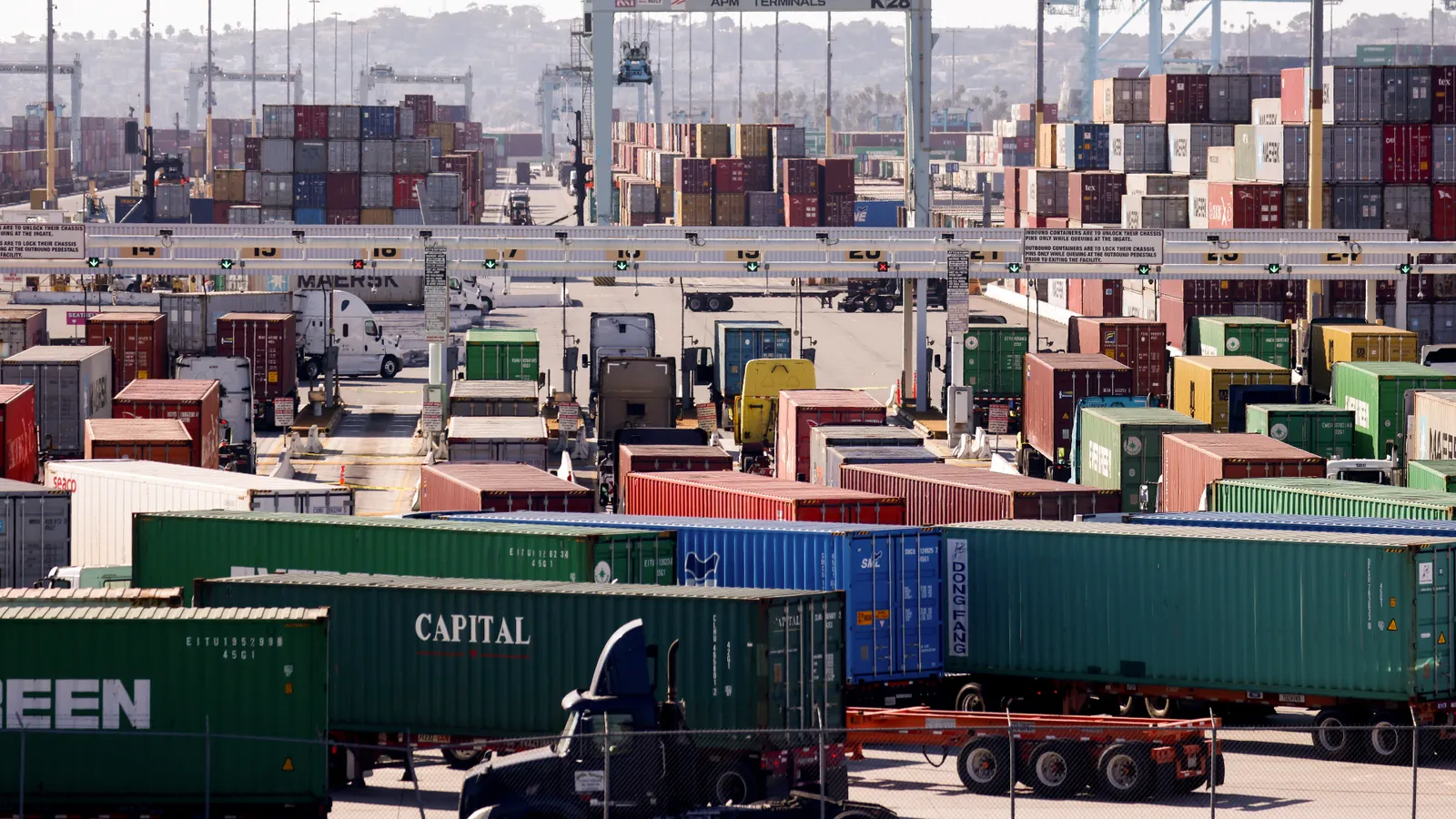
Workers holding advanced degrees are statistically more likely to report having a "quality job." This group often benefits from the very systems that define high-quality employment—structured benefits, HR protections, and greater control over schedules. Conversely, younger workers and those in service-oriented, hourly, or labor-intensive roles (such as the warehousing sector) face the brunt of the "low-quality" designation.

The Turnover and Health Nexus
The data suggests a direct correlation between job quality and retention. Workers in low-quality positions were nearly twice as likely to change employers within a 12-month window. This creates a cycle of "revolving door" employment that plagues industries like logistics, retail, and hospitality.
Perhaps more concerning is the health disparity. 51% of workers in high-quality roles report good to excellent health, while that number drops to 35% for those in non-quality roles. This indicates that the stress of unpredictable schedules, wage insecurity, and hostile work environments acts as a tangible, physical burden on the American worker, leading to higher rates of chronic illness and mental health struggles.
Official Responses and Expert Analysis: The AI Anxiety
The current atmosphere is described by many as "turbulent." While hiring rates have slowed, the primary concern among the workforce is no longer just finding a job—it is keeping one that offers value.
During a recent industry summit hosted by Charter, human resources executives and labor analysts discussed the "productivity paradox." Companies are currently assessing how many human roles can be augmented or entirely replaced by AI. This uncertainty is creating a bifurcated experience:
- The "High-Quality" Fear: Ironically, those in the most stable, "quality" jobs—often knowledge workers—are the most vocal about their anxiety regarding AI replacement. Because these jobs are typically in sectors where AI can mimic or accelerate tasks (coding, writing, data analysis), these employees feel the shadow of obsolescence.
- The "Low-Quality" Stagnation: Meanwhile, workers in low-quality roles continue to struggle with the fundamentals: pay, safety, and predictability. For this group, the threat isn’t just AI; it is the systemic lack of investment in their human potential.
Implications: A Call for Corporate and Policy Reform
The implications of this study are profound for both the private sector and policymakers.
For Employers: The Hidden Cost of "Bad Jobs"
Companies that maintain low-quality job standards are often blind to the long-term financial drain. High turnover rates are not just a nuisance; they represent a significant "hidden tax" on business. The cost of recruiting, onboarding, and training new employees to replace those who leave due to poor conditions often outweighs the cost of increasing wages or improving benefits. Furthermore, the health care costs associated with an stressed, unhealthy workforce inevitably filter back to the employer through rising insurance premiums and decreased productivity.
For Policy: The Need for Structural Standards
If 59% of the workforce is not experiencing "quality" employment, the national labor strategy requires a recalibration. Policymakers must look beyond the unemployment rate—a metric that only tells us who has a job, not what kind of job they have. Future legislation may need to address:
- Predictable Scheduling Laws: Mandating notice periods for shift changes to reduce the chaos in the lives of hourly workers.
- AI Transition Support: Incentivizing companies to use AI to augment human productivity rather than simply replacing staff, ensuring that the transition to an automated economy does not destroy the middle class.
- Benefits Portability: Creating systems where health and retirement benefits follow the worker, rather than being tied exclusively to a single, potentially unstable employer.
Conclusion: The Path Forward
The Gallup data serves as a mirror held up to the American economy. It reveals a nation where, despite significant technological and financial growth, the fundamental experience of work remains broken for the majority.
As we move deeper into an AI-driven era, the definition of a "good job" will undoubtedly continue to evolve. However, the core requirements—dignity, safety, and fair compensation—remain non-negotiable. For employers, the lesson is clear: long-term profitability and sustainable growth cannot be built on a foundation of precarious labor. For the workforce, the struggle for a "quality job" remains the defining challenge of the decade. The question is not just whether we can create jobs, but whether we can create a future where work serves the worker, rather than the other way around.