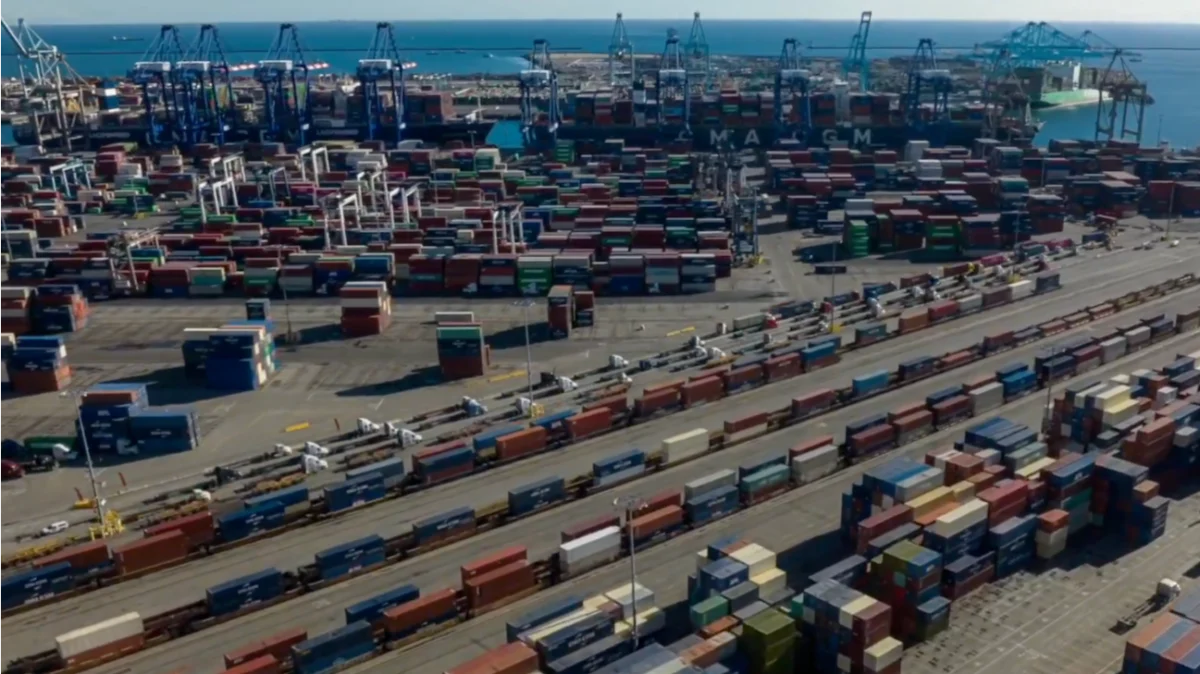
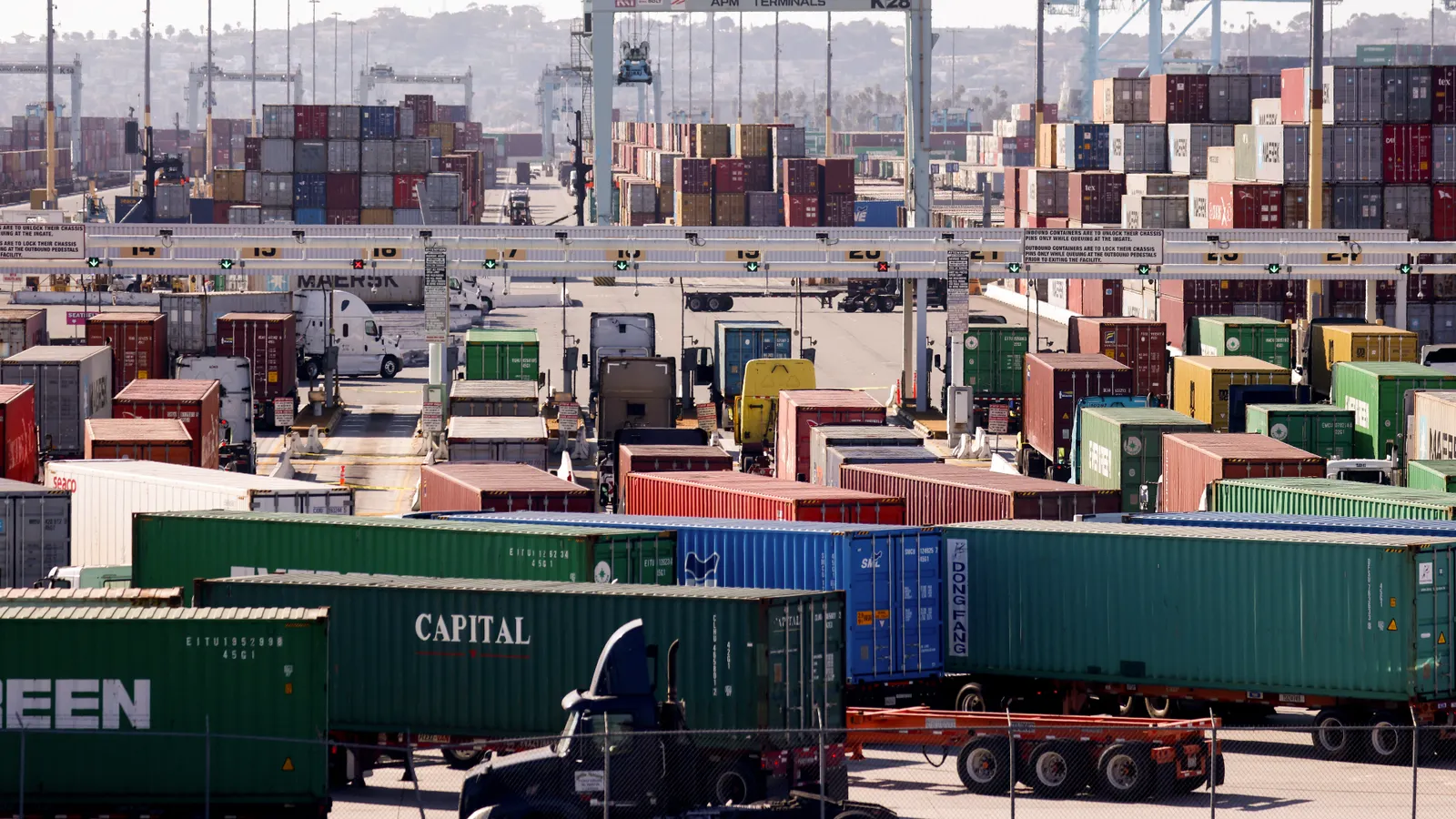
The global logistics landscape is undergoing a fundamental transformation. For decades, ocean shipping was governed by the predictable rhythm of seasonality—a reliable cycle of "peak seasons" tied to back-to-school preparations and the year-end holidays. However, the Port of Los Angeles has signaled that this era of predictability has effectively ended.
In a recent media briefing held on July 15, 2026, Port of Los Angeles Executive Director Gene Seroka outlined a new paradigm: businesses are no longer waiting for "perfect conditions." Instead, they are operating with a heightened sense of agility, moving cargo whenever a favorable opening emerges in a volatile global market. This shift toward frontloading inventory has led to historic cargo volumes, even as the horizon beyond July remains shrouded in complexity.
The Main Facts: A Historic June Performance
The data from the Port of Los Angeles is nothing short of historic. In June 2026, the port processed 1,002,734 Twenty-Foot Equivalent Units (TEUs), marking the busiest June in the facility’s 118-year history. This figure represents a 12% increase year-over-year, underscoring a massive surge in import activity.
The surge was driven primarily by loaded imports, which reached 530,558 TEUs—a 13% jump compared to the previous year. While exports remained relatively flat at 126,365 TEUs, the port also handled a significant volume of empty containers, which saw a 17% increase to 345,811 TEUs, reflecting the rapid cycle of repositioning equipment to meet the needs of manufacturers in Asia.
The Port of Long Beach, the primary neighbor to the Los Angeles complex, mirrored this robust performance. A July 14 report confirmed that Long Beach processed nearly 780,000 TEUs in June, a 10.6% year-over-year growth. Import volumes at Long Beach rose by 11% to 387,025 TEUs, further cementing the Southern California gateway as the epicenter of the current import boom.
Chronology: The Road to an Early Peak Season
The current congestion and high volume did not happen in a vacuum. The trajectory began earlier this year as retailers and manufacturers began to anticipate a confluence of negative headwinds.
- Q1 2026: Initial concerns regarding global trade policy and inflationary pressures began to mount. Companies started discussions regarding early inventory builds to mitigate potential delivery delays.
- May 2026: Market analysts noted a departure from standard seasonal shipping patterns. Ocean carriers began seeing increased booking requests well before the traditional Q3 peak.
- June 2026: The "early peak season" officially manifested as the Port of Los Angeles eclipsed the 1-million TEU threshold, a feat of operational efficiency that pushed the port’s infrastructure to its limits.
- July 14-15, 2026: Official reports from the Ports of Long Beach and Los Angeles confirmed the record-breaking nature of the June data, with forecasts for July suggesting continued volumes exceeding 900,000 TEUs for Los Angeles.
- July 24, 2026: A critical inflection point regarding the expiration of Section 122 tariffs, a date that has acted as a primary driver for the current "ship-now" mentality among importers.
Supporting Data: By the Numbers
The scale of the movement through Southern California is best illustrated by the granular performance metrics reported by the Port of Los Angeles for June 2026:
| Metric | June 2026 Volume (TEUs) | Year-over-Year Change |
|---|---|---|
| Total Processed | 1,002,734 | +12% |
| Loaded Imports | 530,558 | +13% |
| Loaded Exports | 126,365 | 0% (Flat) |
| Empty Containers | 345,811 | +17% |
These numbers paint a picture of a supply chain that is aggressively trying to "beat the clock." The high volume of empty containers suggests that carriers are prioritizing speed over efficiency, ensuring that containers are returned to origin points as quickly as possible to facilitate the next wave of shipments.
Official Responses and Strategic Pivot
Gene Seroka’s analysis provides the most direct window into the minds of the retail and manufacturing giants that drive global trade. "Retailers are making strategic decisions about when and how much to ship," Seroka noted, "balancing back-to-school and holiday demand against tariffs, rising fuel costs, and global uncertainty."
The port’s leadership is not merely observing these trends; they are actively preparing for them. According to Seroka, the port’s operations teams are running continuous simulation exercises. These simulations focus on high-stakes scenarios, such as the potential implementation of new tariffs or sudden spikes in fuel costs due to the ongoing Iran war.
"This is part of the reason why you saw the retail community advance shipments and inventories," Seroka explained. "They just don’t know what’s going to happen with any level of specificity after these Section 122s expire." By treating the port as a dynamic node in a risk-management strategy rather than a static transit point, stakeholders are attempting to insulate themselves from the "unknown unknowns" of the coming months.
Implications: The Looming Challenges
While the record volumes suggest a healthy economy, the reality behind the numbers is more nuanced. The sustainability of this pace is in question due to several interconnected factors.
1. The Tariff Tangle
The expiration of Section 122 tariffs on July 24 represents a "binary event" for the industry. Importers have frontloaded goods in case these tariffs are extended, increased, or replaced by new, more punitive measures. This creates a "cliff" effect: if the policy environment stabilizes, there may be a sharp drop-off in import demand in late summer; if uncertainty persists, the surge could continue, placing immense strain on port labor and inland logistics networks.
2. The Energy Cost Trap
The war involving Iran continues to exert significant upward pressure on global energy markets. Fuel currently accounts for up to 30% of a vessel’s total voyage cost. Seroka points out a dangerous lag in pricing: when oil prices rise, ocean carriers quickly implement fuel surcharges. However, when fuel prices eventually retreat, these surcharges often remain elevated for an extended period, creating a permanent increase in the cost of doing business. This "ratchet effect" on logistics costs is eventually passed down to the consumer, contributing to inflationary pressure.
3. Operational Volatility
Beyond July, the outlook "gets a little harder to read," according to Seroka. The unpredictability of global trade means that port operators must remain in a state of permanent readiness. The shift away from seasonal patterns means that the "traditional" lulls in traffic, which ports historically used for infrastructure maintenance and staff training, are disappearing. This puts a premium on the digitalization of port operations, as manual processes cannot keep pace with the real-time, erratic nature of modern shipping.
Conclusion: Adapting to the "New Normal"
The record-shattering June at the Port of Los Angeles is a microcosm of a global logistics system under duress. The industry has effectively abandoned the luxury of long-term planning in favor of tactical, short-term survival. By prioritizing inventory security over the optimization of shipping costs, retailers are signaling that they view the current geopolitical and economic climate as fundamentally unstable.
As the industry looks past July, the focus will remain on agility. Whether through the use of advanced simulation modeling to navigate tariff changes or the absorption of persistent fuel surcharges, the players in the global supply chain are learning to navigate a world where the only constant is change. For now, the Port of Los Angeles remains the front line of this battle, managing the massive flows of goods that define the modern consumer economy while preparing for whatever the next wave of global uncertainty brings to its docks.