In late August 2026, Microsoft co-founder Bill Gates published a seminal essay that sent shockwaves through the global corporate landscape. Addressing the “unbridled march” of artificial intelligence, Gates did not mince words: he described the coming transition as potentially one of the most turbulent periods in human history. While the technological sector has long touted AI as a panacea for efficiency, the reality emerging on the ground—particularly within the procurement function—is far more nuanced, complex, and, for many, deeply unsettling.
For Chief Procurement Officers (CPOs) and executive leaders, the conversation has shifted from the novelty of AI adoption to the existential question of how humans fit into a hyper-automated future.
The Gates Warning: A Landscape of Turbulence
Bill Gates’ recent commentary serves as a sober reminder that technological advancement is rarely a linear path toward prosperity. His essay outlined a spectrum of risks that extend far beyond mere technical glitches. Gates highlighted the potential for large-scale job displacement, the lowering of barriers for bad actors to cause societal harm, and, perhaps most alarmingly, the potential for AI to stunt the cognitive and emotional development of younger generations.
While Gates acknowledged the undeniable benefits of AI—ranging from medical breakthroughs to productivity gains—he maintained that these rewards are secondary to the immediate risks. He argued that we cannot afford to celebrate potential outcomes until we have rigorously addressed the systemic vulnerabilities created by rapid AI integration. For the CPO, this is not a philosophical debate; it is an operational imperative that directly impacts supply chain stability, organizational culture, and long-term talent management.
Chronology of a Shifting Paradigm
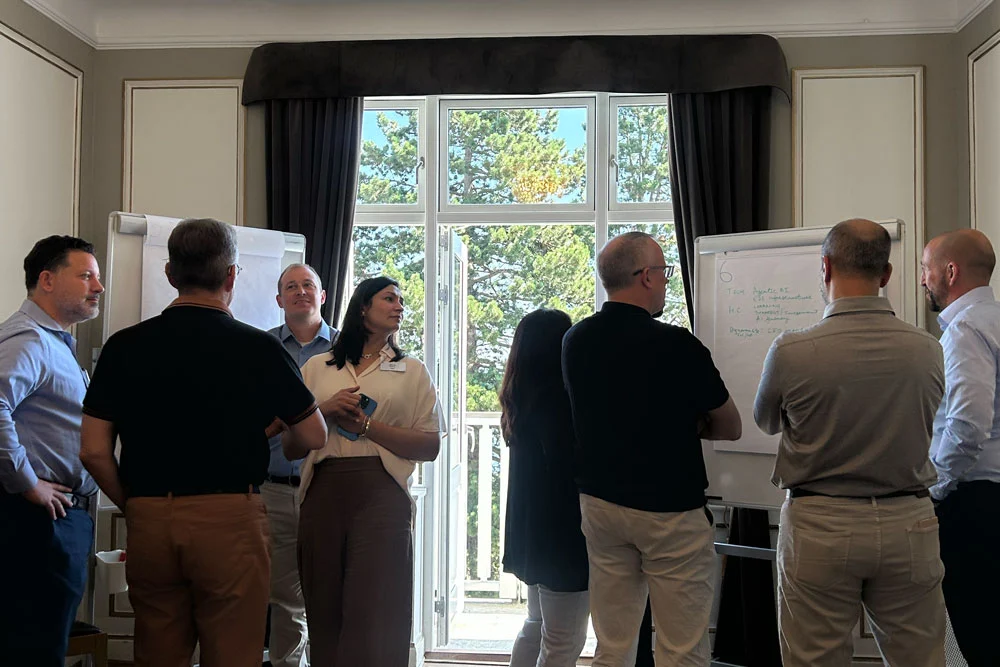
The urgency of this debate was crystallized during Ovation, the premier CPO retreat held in July 2026. What began as a strategic discussion on digital transformation quickly evolved into a high-stakes interrogation of the future of work.
- Pre-July 2026: Procurement functions were largely focused on incremental AI adoption—using machine learning for spend analysis and contract management. The narrative was one of “augmentation,” where AI would free up human staff for “higher-value work.”
- July 2026 (Ovation Retreat): The narrative shattered. During a series of sessions, CPOs were challenged to break their current operating models. The provocation was simple but devastating: If AI is truly capable of replacing core procurement functions, what happens to your team?
- Late August 2026: Bill Gates publishes his essay, mirroring the concerns raised during the Ovation retreat and elevating the discussion from private boardrooms to the public consciousness.
- Present Day: Organizations are now grappling with the dissonance between the "augmentation" narrative and the reality of aggressive headcount reduction mandates coming from the C-suite.
The CPO Dilemma: Efficiency vs. Human Capital
A critical contradiction currently defines the procurement landscape. On one hand, CPOs frequently defend AI adoption by claiming it empowers staff to focus on strategic sourcing, relationship management, and sustainability—tasks that require a "human touch." On the other hand, reports from the field show a surge in CFOs and CEOs mandating significant headcount reductions as a direct result of automation.
The two narratives are mathematically and logically incompatible. If AI truly automates the "low-value" tasks, the natural outcome is either a leaner team doing more with less, or a team that remains the same size but shifts focus. However, the data emerging from the Ovation sessions suggests a much sharper trajectory. During these workshops, participants cited potential headcount reductions ranging from 30% to 80%.
Even if these figures represent a "worst-case" or "provocative" scenario designed to spark discussion, they indicate a trend that cannot be ignored. When procurement leaders are tasked with breaking their operating models, they are increasingly finding that the answer lies in radical automation, which inevitably leads to the displacement of large swaths of the workforce.
Larry Kramer and the Revaluation of the Worker
A pivotal perspective introduced during the Ovation retreat came from Larry Kramer, president and vice dean of the London School of Economics. Kramer provided a structural critique of the current economic environment, arguing that we have spent decades viewing people primarily as "consumers" rather than "workers."
According to Kramer, the consumer-first lens has driven an obsession with efficiency, cost-reduction, and intense competition. The procurement function, by its very design, has been a primary engine of this model, obsessively squeezing margins and optimizing supply chains for the benefit of the end-user.
Kramer’s argument is that this model is no longer sustainable in the age of AI. If we continue to prioritize the consumer at the expense of the worker, we risk a total collapse of the social contract. To transition successfully, he suggests a paradigm shift: treating people as workers—as contributors to the economy—rather than just units of cost to be optimized. This, he argues, will require:
- Greater Government Intervention: Moving away from the hands-off regulatory approach that has defined the last thirty years.
- Multilateralism: International cooperation to ensure that the "AI race" does not lead to a global "race to the bottom" in terms of labor standards and human rights.
Implications for the Procurement Function
The implications for current and future CPOs are profound. As enterprise leaders, they are no longer just responsible for the cost-efficiency of the supply chain; they are now the architects of a transition that could reshape the labor market.
1. Re-evaluating Strategic Sourcing
If the procurement function is to survive as a value-driver, it must move beyond the "cost-center" mentality. CPOs must advocate for a hybrid model where AI is utilized to handle the transactional volume, but the human element is protected and redeployed into roles that require empathy, ethics, and long-term relationship building—attributes that AI, for all its sophistication, currently lacks.
2. The Ethical Dimension of Automation
CPOs must now integrate "ethical procurement" not just into their supply chain sustainability reports, but into their internal workforce strategy. If a company claims to care about labor rights in its supply chain, it must also consider the impact of its internal AI adoption on its own employees. The hypocrisy of pushing for fair wages abroad while aggressively automating jobs at home will become a significant reputational risk.
3. Resilience over Efficiency
The quest for pure efficiency has made supply chains fragile, as seen during the various crises of the early 2020s. A similar risk exists in the workforce. By stripping down teams to the bare minimum via AI, companies lose the "human redundancy" that allows for innovation, mentorship, and crisis management. CPOs must lead the charge in defining the optimal balance between automated efficiency and human-led resilience.
Conclusion: Preparing for the Turbulence
Bill Gates’ warning is not a call to halt progress, but a call to manage it with extreme caution. The "turbulent times" he describes are already beginning to manifest in the offices of CPOs around the world. As we look toward the remainder of the decade, the ability to navigate this transition will distinguish the leaders who build resilient, human-centric organizations from those who simply chase the short-term gains of automation.
The procurement function is at a crossroads. The decisions made by CPOs in the next few years regarding headcount, technology, and organizational design will have lasting effects on the fabric of our society. It is no longer enough to be a master of the supply chain; CPOs must become masters of the transition, ensuring that as we move into an era of AI, we do not leave our humanity behind.
For those in leadership, the mandate is clear: start the debate now. The technology is moving faster than our policy, our ethics, and our operating models. Addressing these risks today is the only way to earn the privilege of benefiting from the technology of tomorrow.