For many B2B marketing teams, the "Request a Demo" button is treated like a magic wand. Marketing pushes budget into ads, sales complains about low-quality leads, and the cycle of frustration repeats. However, in the high-stakes world of SaaS, treating a demo request as a "low-friction" call to action (CTA) is a fundamental strategic error.
Asking a prospect to book time with a sales representative is not a simple click; it is a significant commitment of time and professional capital. To drive meaningful conversions, organizations must stop viewing the demo page as a standalone destination and start seeing it as the final, high-trust milestone in a complex, multi-touch buyer journey.
The Reality of the Modern B2B Buyer Journey
Data from the 2025 Dreamdata LinkedIn Ads benchmark report paints a sobering picture: the average B2B customer journey now spans 211 days and incorporates 88 distinct touchpoints. In such a protracted cycle, software buyers do not wake up ready to jump on a discovery call. They arrive at your landing page only after extensive self-education, peer research, and internal validation.
If your landing page is the first place a prospect learns about your product, you have already lost. Successful conversion requires that the demo landing page serves as a destination for "warm" traffic—buyers who already understand their problem, recognize your solution, and are currently narrowing their shortlist.
Chronology of a Conversion: From Cold Traffic to Sales Ready
To understand why so many demo pages fail, one must look at the chronology of the buyer’s intent.
- Discovery (The TOFU Stage): The buyer identifies a pain point. They consume blog posts, white papers, and webinars. They are not ready for a demo.
- Evaluation (The MOFU Stage): The buyer compares alternatives. They look for pricing, feature lists, and third-party reviews.
- Validation (The BOFU Stage): The buyer seeks proof. They want to see ROI statistics, customer success stories, and evidence of implementation success.
- The Ask (The Demo Page): Only now, after trust has been established, does the buyer land on your demo page.
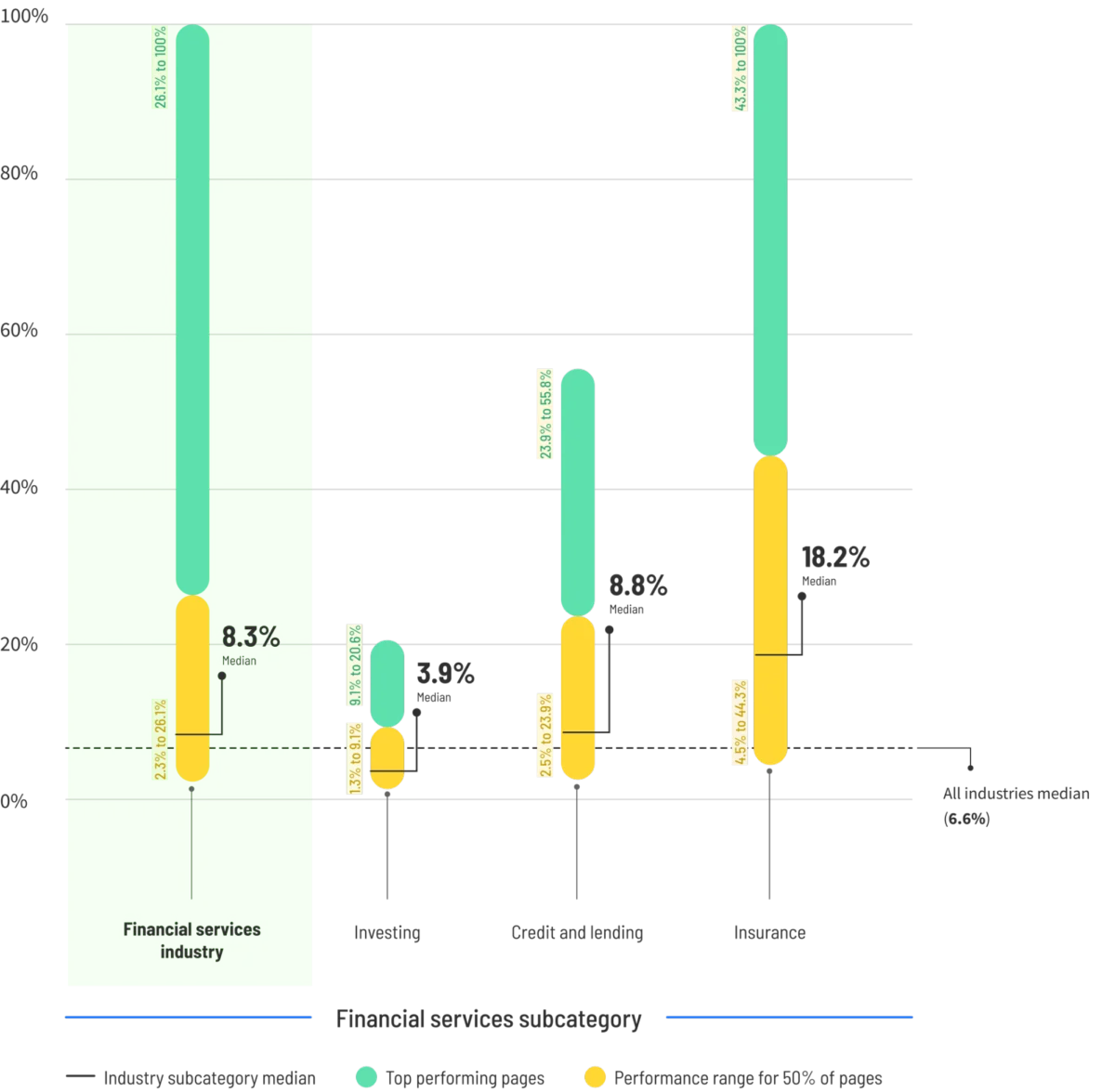
If you skip these stages and force "cold" traffic directly to a demo request, you are essentially asking a stranger to marry you on the first date. Industry benchmarks confirm this disconnect; while the median conversion rate for SaaS landing pages sits at roughly 3.8%, those that focus on "warm" traffic—utilizing frameworks like the "Core Four" developed by landing page expert Tas Bober—consistently see higher-quality lead flow.
Supporting Data: Why Friction Matters
The numbers are clear: as you increase the requirements for a conversion, you increase the rate of abandonment. According to 2026 conversion benchmarks, there is a sharp "cliff" in conversion rates once a form exceeds five fields.
- 1–5 Fields: High engagement, manageable friction.
- 7 Fields: A noticeable drop-off in conversion rates.
- 10+ Fields: Conversion rates often plummet below 7%.
While sales teams often demand more fields for "lead qualification," marketers must push back. The most effective strategy is to balance the need for CRM data with the psychological reality of the buyer. If your form is too long, you aren’t qualifying leads; you are simply losing them.
The Anatomy of a High-Converting Demo Page
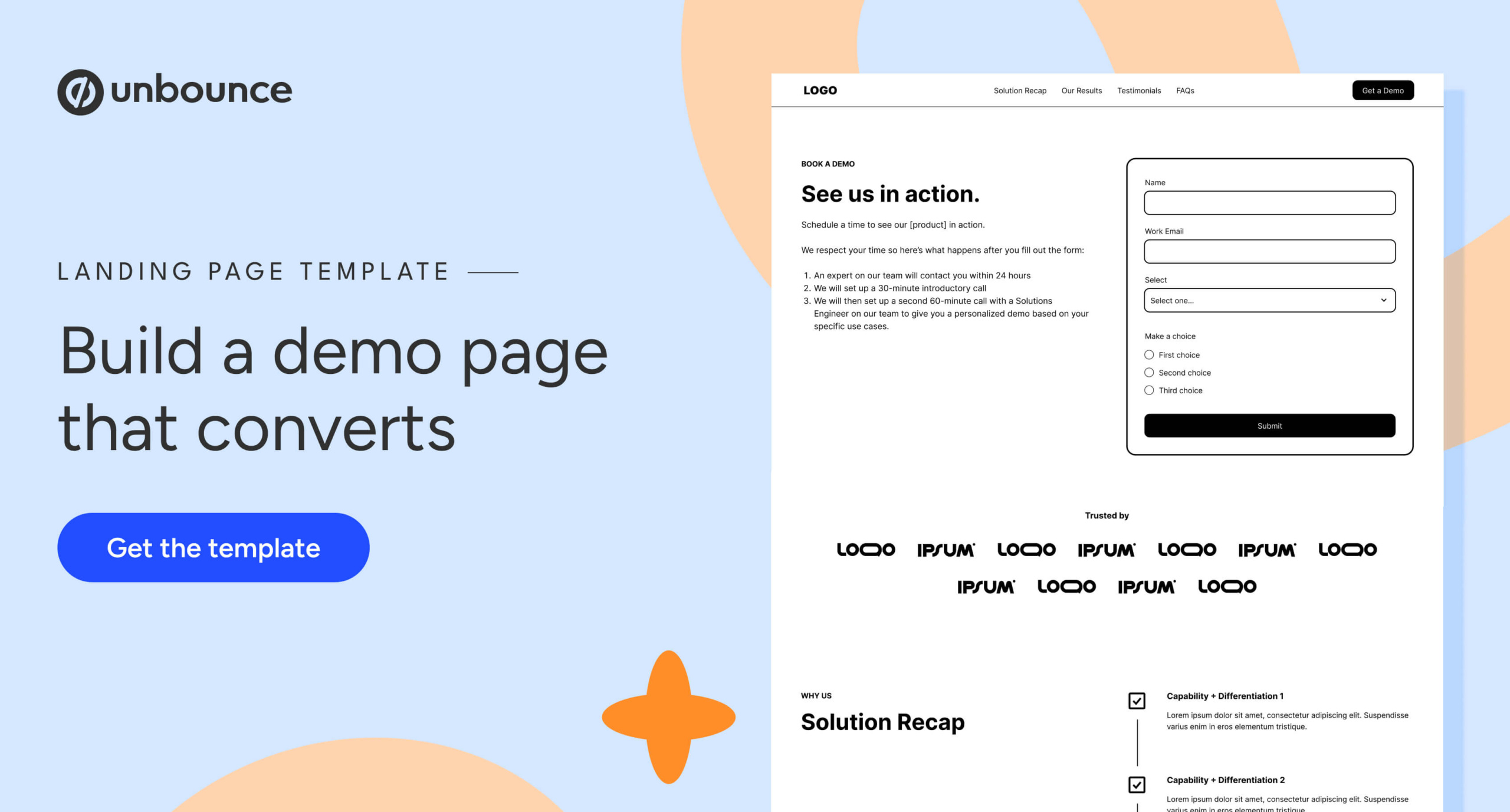
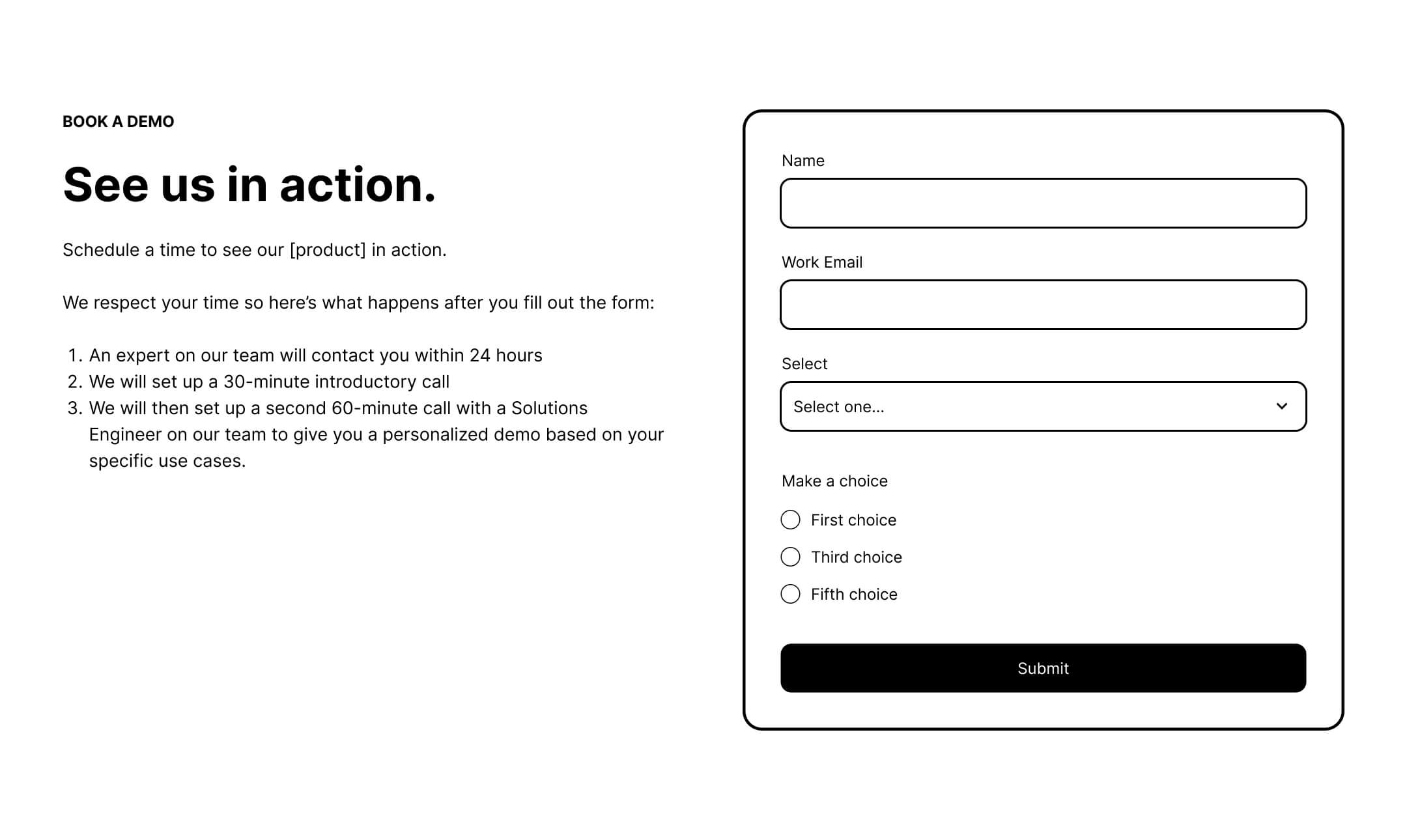
A high-performing demo page should be a masterclass in risk mitigation. When a buyer reaches this page, they are looking for reassurance. Every block should answer a specific, lingering question.
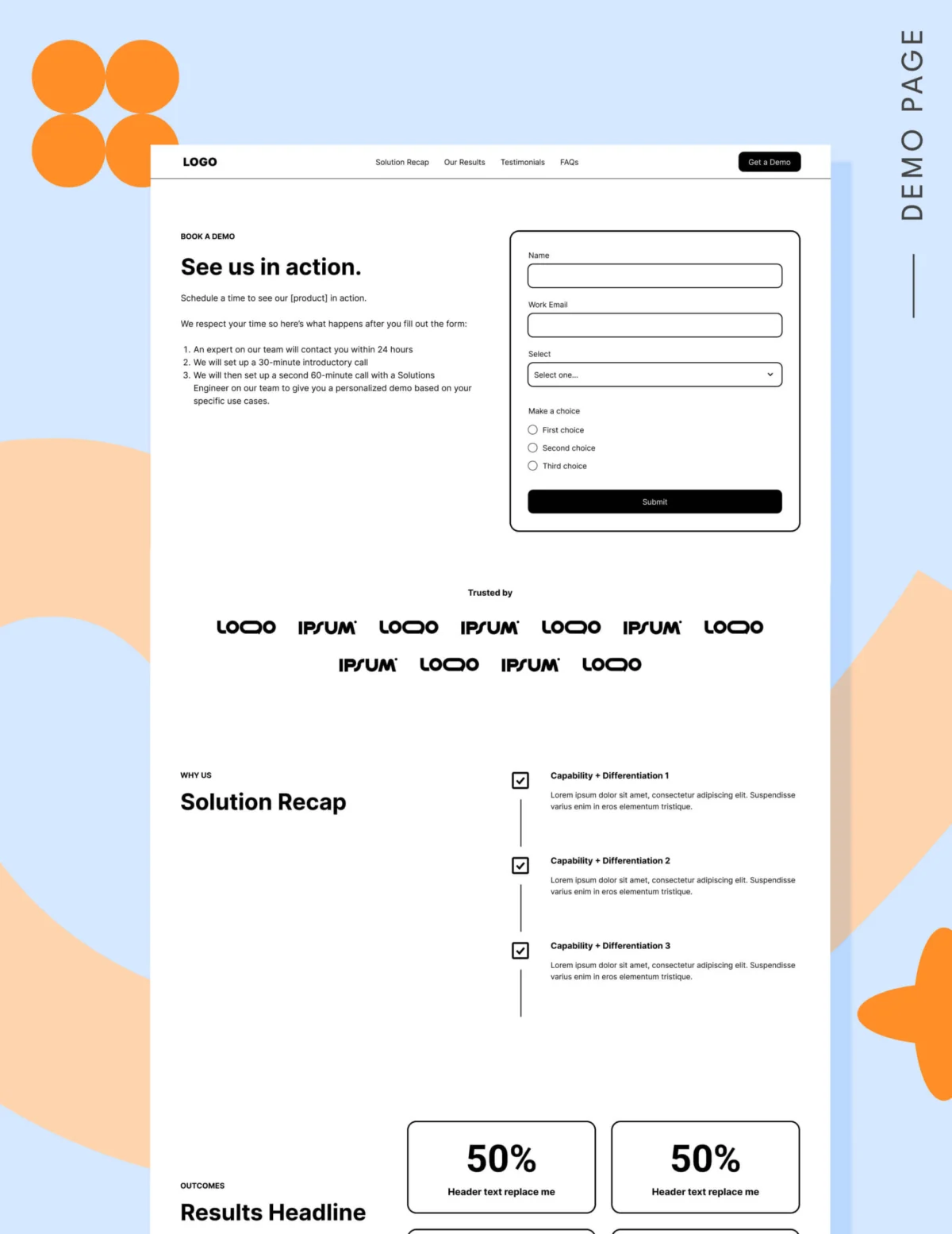
1. The Hero Section
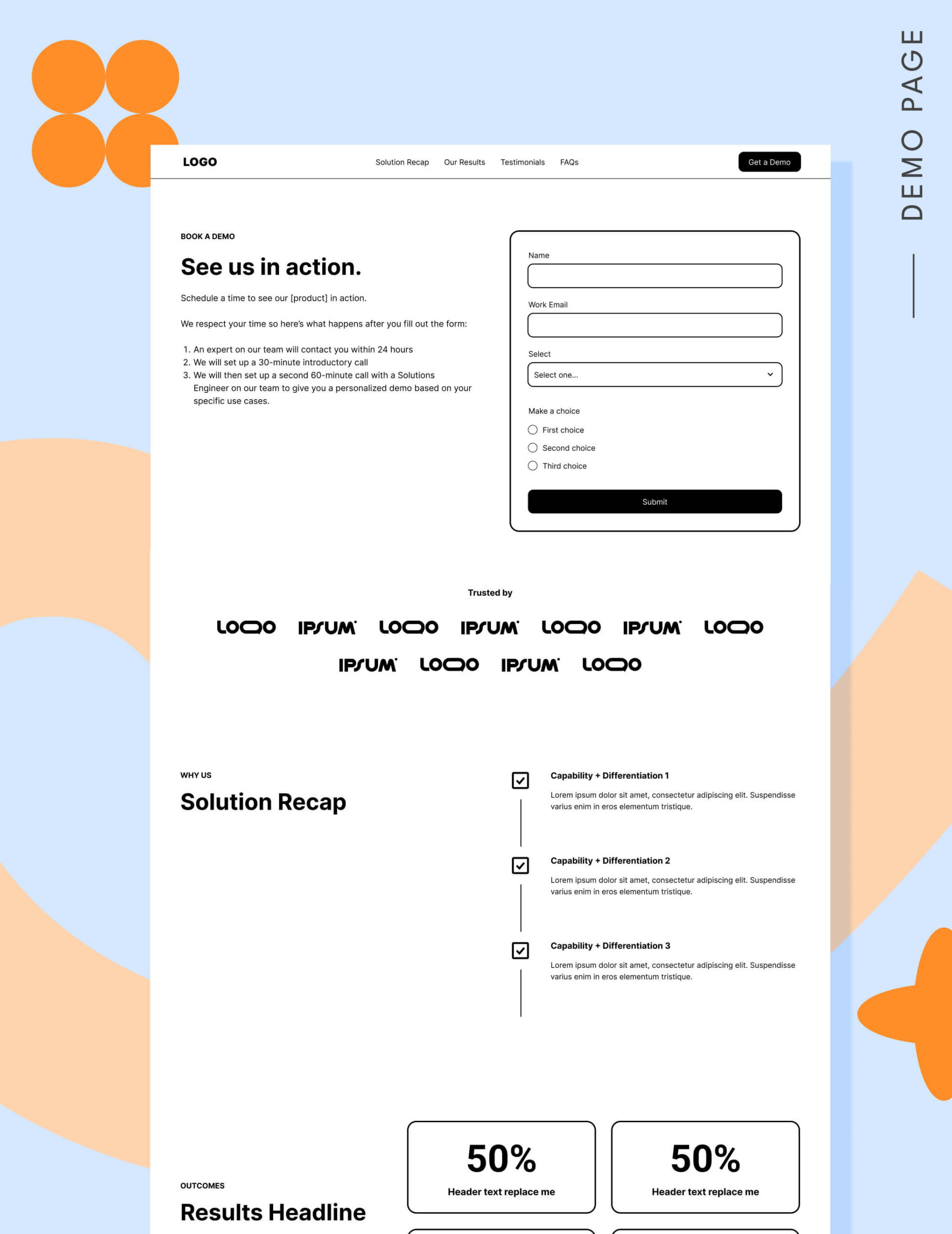
The hero is the one place where placing a form "above the fold" is not just acceptable, but necessary. However, the form must be paired with clear, concise expectations. Explain what happens after the click. Does a rep call immediately? Is there a discovery call before the product demo? Transparency reduces anxiety.

2. Proof and Credibility (Logo Gardens and Testimonials)
Social proof is the engine of B2B sales. If you have enterprise clients, a "Logo Garden" is essential to establish authority. If your brand is still building name recognition, move to detailed testimonials. Research shows that volume matters here—three testimonials are good, but six to twelve create a sense of market validation that makes the prospect feel they are making a "safe" choice.
3. The "What to Expect" FAQ
Never underestimate the fear of a high-pressure sales call. Use your FAQ section to preemptively address common objections:
- "What is the duration of the demo?"
- "Will I be pressured to sign a contract?"
- "Can I see a preview of the product before the call?"
By addressing these concerns, you lower the barrier to entry and increase the intent of the leads you do capture.
Official Perspectives: The Navigation Shift
For years, the "Golden Rule" of landing pages was to strip away all navigation to keep the user focused. However, 2025 updates to Google’s ad quality prediction models have shifted this paradigm. Search engines now reward pages that provide helpful, relevant navigation, viewing them as more aligned with user intent.
For a demo page, this means providing an anchor-link navigation menu that allows users to jump to the sections they care about (like Pricing or Results) without leaving the ecosystem of your site. It is better to have a user explore your site’s resources than to have them click the "Back" button and disappear into the search results.
Implications: The Role of Pricing and Transparency
Perhaps the most controversial aspect of the modern demo page is the inclusion of pricing. Sales-led organizations often fear that showing pricing will scare away prospects. However, the opposite is often true. Including a "starting at" price range or a simplified pricing grid performs two vital functions:
- Self-Qualification: It removes buyers who are fundamentally outside of your budget, saving your sales team from wasted calls.
- Trust Building: It signals that your company is mature, transparent, and confident in its value proposition.
Conclusion: Fix the Traffic, Then the Page
When demo request volumes drop, the knee-jerk reaction is to redesign the landing page. However, the data suggests that the problem is almost always upstream. If your traffic is cold, no amount of color-swapping or copy-editing will save your conversion rate.
To truly fix your pipeline, you must:
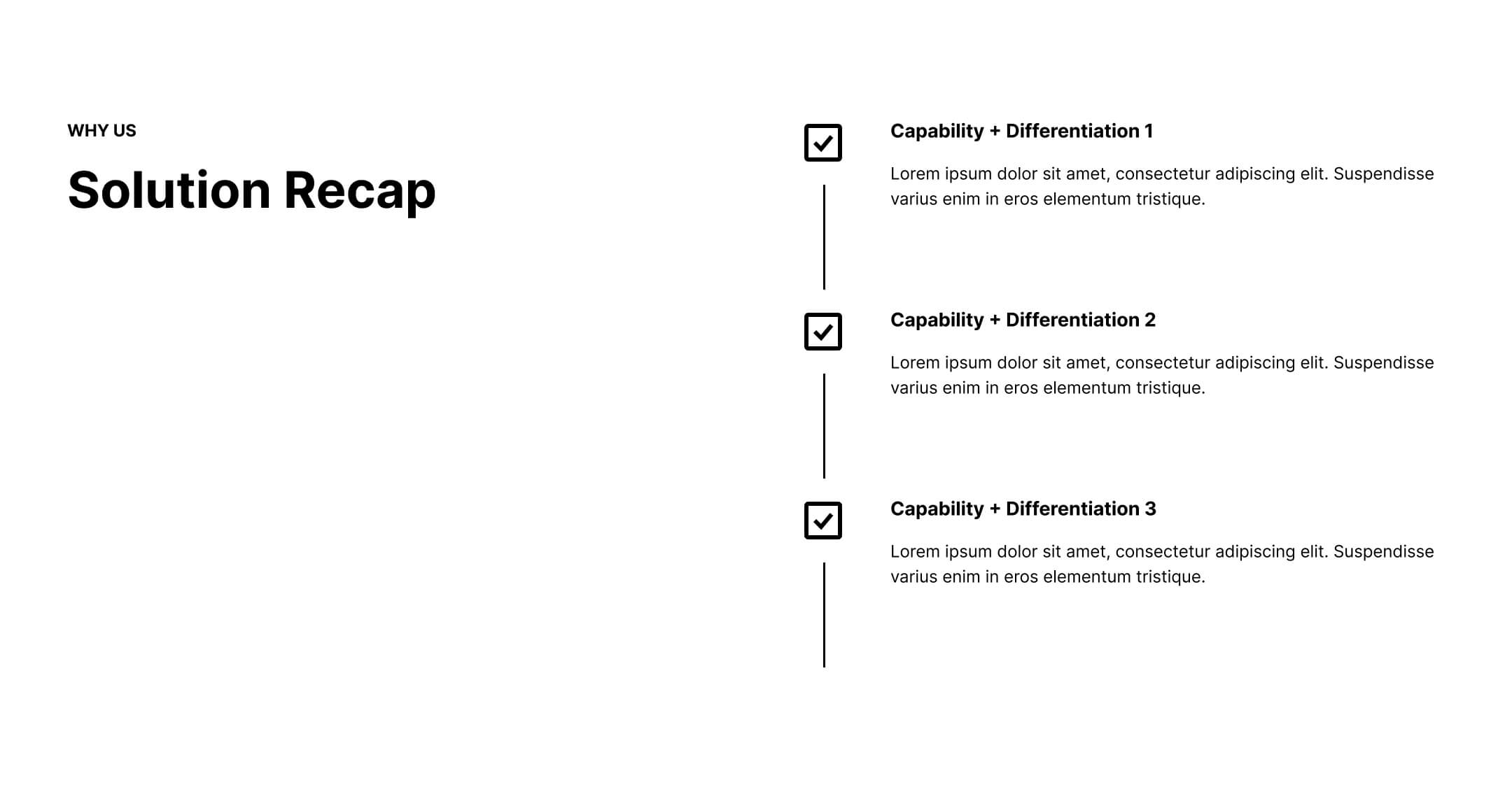
- Map your content to the buyer journey. Ensure prospects are "warmed up" before they reach the demo page.
- Shorten the path. Limit your form to five fields or fewer.
- Increase transparency. Be honest about what the demo call entails.
- Leverage proof. Use testimonials and logo gardens to build trust at every scroll.
The "Request a Demo" button is not a hurdle; it is an invitation. When you respect the buyer’s time, educate them through the funnel, and provide a clear, low-pressure path to engagement, the conversion will follow naturally. By shifting your focus from "more leads" to "more educated leads," you will ultimately build a more efficient, high-performing sales machine.