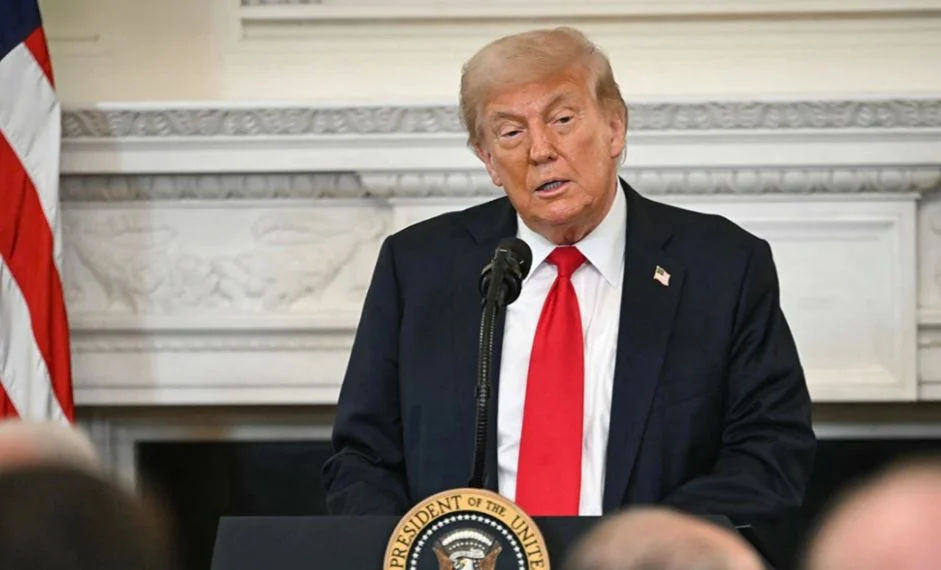
Washington D.C. / Moscow – Former U.S. President Donald Trump has once again asserted that the end of the conflict in Ukraine is "near" and that the world is "closer to peace than ever before." These audacious claims, made amidst ongoing hostilities and complex geopolitical maneuvering, have ignited a fresh wave of discussion and skepticism across international capitals. Trump attributed this supposed progress to a direct conversation with Russian President Vladimir Putin, which he claimed led to the release of Steven Hubbard, a retired American teacher detained after fighting alongside Ukrainian forces.
The former President’s statements, delivered during a White House cybersecurity roundtable, suggest an unconventional and direct diplomatic channel, with Trump emphasizing that Russia "gave nothing in return" for Hubbard’s release. This narrative was somewhat echoed by Yuri Ushakov, a close aide to President Putin, who separately remarked that the "Ukrainian conflict is nearing its end" and indicated Russia’s readiness to resume trilateral talks involving the U.S. and Ukraine in mid-November, potentially in Abu Dhabi. The convergence of these pronouncements from seemingly disparate political figures has injected a new, albeit fragile, dimension into the ongoing discourse surrounding one of the 21st century’s most devastating conflicts.
Main Facts
At the core of the unfolding narrative are two key assertions: Donald Trump’s declaration of an impending peace in Ukraine, facilitated by his direct engagement with Vladimir Putin, and the corroborating, though more circumspect, remarks from a senior Kremlin official.
Trump’s pronouncements came after the reported release of Steven Hubbard, an American citizen who had been fighting in Ukraine and was subsequently captured by Russian forces. According to Trump, his direct appeal to Putin, "I said, ‘Can you release Stephen Hubbard?’ … and now he’s coming back," was the sole catalyst for the release, with no concessions made by the United States. This claim, if true, would represent a significant, albeit informal, diplomatic achievement outside traditional State Department channels.
Simultaneously, Yuri Ushakov, a veteran diplomat and foreign policy advisor to President Putin, stated, "The Ukrainian conflict is nearing its end." While cautious about setting a precise timeline, Ushakov affirmed that "things are moving in that direction." More concretely, he revealed Russia’s openness to trilateral discussions with the U.S. and Ukraine in November, with Abu Dhabi being floated as a potential venue. This detail adds a tangible, albeit unconfirmed, element to the abstract talk of peace.
The confluence of these statements from Moscow and Washington, albeit from unofficial or former official capacities, has introduced a layer of complexity and speculation into the diplomatic landscape. While the precise details and motivations behind these claims remain opaque, they collectively suggest a potential, however remote, pathway toward de-escalation or even negotiation, challenging the entrenched positions that have characterized the conflict thus far.
Chronology of Recent Developments
The past few days have seen a series of interconnected events and statements that have abruptly shifted the focus towards potential, if highly uncertain, peace prospects for Ukraine.
The Release of Steven Hubbard
The impetus for Trump’s claims appears to be the release of Steven Hubbard, identified as a retired American teacher. Hubbard’s detention by Russian forces came after he chose to join the fight on Ukraine’s side, highlighting the complex and often perilous involvement of foreign nationals in the conflict. While details surrounding his capture and subsequent imprisonment remain largely unpublicized, his release has been attributed by Trump to a direct, unreciprocated request made during a conversation with President Putin. The Russian side has not officially confirmed the specific circumstances of Hubbard’s release or any direct linkage to a conversation with the former U.S. President, leaving a significant information gap regarding the nature of this purported exchange. Without official corroboration from Moscow or the current U.S. administration, Trump’s account stands as a singular assertion.
Trump’s Public Statements
During a roundtable discussion on cybersecurity at the White House, Donald Trump took the opportunity to make his striking announcements. He not only claimed responsibility for Hubbard’s release but also extrapolated from this event a broader optimistic outlook on the Ukraine war. His declaration that peace is "closer than ever" and that the conflict is "near its end" fits within his long-standing narrative of being a uniquely capable negotiator and deal-maker, particularly with leaders like Vladimir Putin. The timing and venue of these remarks – a White House event, despite his status as a former president – further amplify their visibility and impact, particularly within the context of his ongoing political activities and potential future presidential campaign.
Yuri Ushakov’s Remarks
Adding another layer to this developing story were the comments from Yuri Ushakov, President Putin’s aide. Speaking to reporters, Ushakov confirmed that Russia views the conflict as nearing its conclusion, stating, "The Ukrainian conflict is nearing its end." While deliberately vague on specific timelines or conditions, his statement aligns surprisingly with Trump’s optimistic outlook. Crucially, Ushakov also revealed that Russia is prepared to engage in trilateral talks with the United States and Ukraine. He specified that these discussions could potentially take place in mid-November in Abu Dhabi, the capital of the United Arab Emirates. This concrete proposal for a neutral venue and a timeframe lends a degree of credibility to the idea of renewed diplomatic efforts, moving beyond mere rhetoric.
Prior Diplomacy Attempts
The backdrop to these new developments is a history of largely unsuccessful diplomatic endeavors since Russia’s full-scale invasion in February 2022. Early attempts at direct negotiations between Ukraine and Russia, particularly in the initial months of the war, quickly faltered over irreconcilable differences, primarily concerning territorial integrity and security guarantees. Various international actors, including Turkey, the UN, and European nations, have made efforts to mediate or facilitate dialogue, often resulting in limited success, such as grain deals or prisoner exchanges, but never a comprehensive peace agreement. The current proposal for trilateral talks in Abu Dhabi, if it materializes, would represent a significant shift from these bilateral or broader multilateral efforts, suggesting a potential desire from all parties for a new format to address the intractable issues.
Supporting Data and Context
Understanding the gravity and implications of these peace claims requires a deeper look into the current state of the conflict, the historical context of U.S.-Russia relations under Trump, and precedents for such diplomatic maneuvers.
The State of the Conflict
The war in Ukraine continues to be a brutal and attritional conflict, characterized by entrenched front lines, intense artillery duels, and significant human cost. Ukraine’s much-anticipated counter-offensive, while achieving some localized gains, has not resulted in the sweeping breakthroughs hoped for, leading to a de facto stalemate in many areas. Both sides have suffered immense casualties, and critical infrastructure, particularly in Ukraine, has been severely damaged. The humanitarian crisis remains dire, with millions displaced and facing immense hardship. Economically, the war has had global repercussions, impacting energy markets, food supplies, and supply chains. Against this backdrop of ongoing violence and devastation, any claim of an imminent end to the war naturally invites both hope and profound skepticism. The current military reality does not outwardly suggest a rapid resolution, making such declarations particularly striking.
Past US-Russia Relations Under Trump
Donald Trump’s presidency was marked by a unique and often controversial approach to Russia and its leader, Vladimir Putin. Unlike many traditional U.S. politicians, Trump frequently expressed admiration for Putin and pursued a policy of direct engagement, often bypassing conventional diplomatic protocols. His infamous Helsinki summit with Putin in 2018, where he appeared to side with the Russian leader over U.S. intelligence agencies regarding election interference, remains a potent symbol of his unconventional approach. Trump consistently positioned himself as a "deal-maker" who could resolve complex international disputes through personal charisma and direct negotiation. His current claims about the Ukraine war and Hubbard’s release align perfectly with this self-styled persona, reinforcing his narrative that he possesses a unique ability to influence Putin and bring about outcomes that traditional diplomacy cannot. This history means his statements, while outside official channels, are not entirely out of character for him.
The Prisoner Exchange Precedent
The release of Steven Hubbard, as described by Trump, echoes previous high-profile prisoner exchanges between the U.S. and Russia. In recent years, several American citizens detained in Russia, such as basketball star Brittney Griner and former Marine Trevor Reed, have been released in complex, often secretive, negotiations that involved prisoner swaps. These exchanges typically involve intense back-channel diplomacy and careful balancing of interests, often with each side claiming they received little in return while the other made concessions. Trump’s assertion that Russia "gave nothing in return" for Hubbard’s release, while emphasizing his personal influence, runs somewhat counter to the historical complexity of such deals. While direct appeals from high-level figures can certainly influence outcomes, the reality of international prisoner exchanges is usually more nuanced than a simple, unilateral act of goodwill. This precedent suggests that while the stated lack of reciprocity might be true, the underlying diplomatic calculations could be far more intricate.
The Role of Third-Party Mediators
The mention of Abu Dhabi as a potential venue for trilateral talks highlights the increasing role of neutral third parties in facilitating dialogue in intractable conflicts. Countries like the UAE, with strong ties to both Western nations and Russia, often position themselves as credible mediators. Their economic influence, geopolitical neutrality (in certain contexts), and established diplomatic infrastructure make them attractive locations for sensitive negotiations where direct talks between warring parties or their primary backers are politically difficult. The choice of Abu Dhabi, if confirmed, would signify an attempt to create a space free from the immediate pressures and biases of the primary belligerents’ territories, potentially fostering a more conducive environment for dialogue.
Official Responses and Reactions
The unexpected pronouncements from Trump and Ushakov have elicited a range of reactions, from cautious optimism to outright skepticism, reflecting the profound complexities of the Ukraine conflict.
US Administration’s Stance
The current U.S. administration, led by President Joe Biden, has largely maintained a stance of cautious distance from Trump’s claims. While any prospect of peace is theoretically welcomed, official channels typically emphasize that any resolution must be on Ukraine’s terms and must respect its territorial integrity. Administration officials have likely reiterated that the U.S. strategy remains focused on providing robust support to Ukraine to enable it to defend itself and achieve a just and lasting peace. They would likely avoid validating Trump’s informal diplomatic claims, instead highlighting the formal, multilateral efforts undertaken by the State Department and international partners. Any suggestion of a quick, unilaterally negotiated peace deal without Ukraine’s full involvement would likely be met with skepticism and a reaffirmation of established policy, particularly concerning Russia’s ongoing aggression.
Ukrainian Reaction
Kyiv’s reaction to such claims would undoubtedly be one of deep caution and potential alarm. For Ukraine, the terms of peace are non-negotiable on fundamental issues such as territorial integrity, the complete withdrawal of Russian forces, reparations for damages, and accountability for war crimes. Any suggestion of a peace deal brokered without their direct and central involvement, or one that might entail territorial concessions, would be vehemently rejected. Ukrainian officials would likely reiterate that true peace cannot be achieved by rewarding aggression and that any negotiations must be based on international law and Ukraine’s sovereign rights. While welcoming any initiative that genuinely leads to the end of the war, they would be highly suspicious of any "back-channel" deals that might undermine their hard-won gains or compromise their national interests.
Russian Official Commentary
Beyond Yuri Ushakov’s initial remarks, broader Russian official commentary would likely maintain a consistent, albeit measured, line. While confirming a readiness for talks, Russian officials would probably not fully endorse Trump’s specific narrative, especially the claim of releasing Hubbard without anything in return. Instead, they would likely emphasize Russia’s long-standing position that it is open to negotiations, provided that its "new realities" (i.e., territorial gains) are acknowledged, and its security concerns are addressed. They might frame the proposed trilateral talks as a necessary step to address the complex geopolitical situation, rather than a direct response to a former U.S. president’s intervention. This cautious approach allows Russia to appear open to dialogue while not ceding ground on its maximalist demands or validating Trump’s personal diplomatic prowess.
International Community
The international community, particularly European allies and multilateral organizations like the UN, would likely react with a mixture of hope and profound skepticism. While any genuine pathway to ending the war would be welcomed, there would be significant concern about the nature of such a peace. Allies would prioritize a peace that upholds international law, respects Ukraine’s sovereignty, and does not embolden future aggression. There would be a strong emphasis on transparency and inclusivity in any peace process, ensuring that Ukraine’s voice is central. Unilateral declarations or opaque "deals" would likely be viewed with suspicion, as they could undermine the collective effort to support Ukraine and uphold the rules-based international order. Organizations like the UN would likely reiterate calls for a comprehensive, just, and lasting peace in line with their founding principles.
Implications and Future Outlook
The declarations from Donald Trump and Yuri Ushakov, irrespective of their immediate veracity, carry significant implications across political, diplomatic, and geopolitical spheres, while simultaneously highlighting the immense challenges that lie ahead.
Impact on US Politics
For Donald Trump, these claims are a potent political tool. His assertion of unique access to and influence over Vladimir Putin, coupled with the narrative of being able to solve intractable conflicts that elude conventional diplomacy, directly reinforces his "America First" and "deal-maker" persona. As a potential presidential candidate, such statements allow him to present himself as the only figure capable of de-escalating the Ukraine war, appealing to segments of the electorate weary of prolonged foreign entanglements and military aid. The release of an American citizen, even if under disputed circumstances, can be leveraged as tangible proof of his effectiveness. This narrative could complicate the Biden administration’s foreign policy efforts and inject uncertainty into the ongoing debate about U.S. involvement in Ukraine, potentially creating divisions within the Republican party itself regarding the future direction of foreign policy.
Prospects for Peace
Despite the optimistic tone of the pronouncements, the genuine prospects for a comprehensive peace remain daunting. The fundamental gap between Russian and Ukrainian demands appears vast. Ukraine insists on the full restoration of its territorial integrity, including Crimea and the Donbas regions, along with reparations and accountability for war crimes. Russia, conversely, demands recognition of its annexed territories and security guarantees that Ukraine and NATO consider unacceptable. These core disagreements have proven intractable in all previous peace efforts. While trilateral talks in Abu Dhabi could offer a new format, the success of such negotiations hinges on a willingness from both sides to compromise on fundamental issues, something that has been notably absent thus far. Without significant shifts in these maximalist positions, any peace claims, however confidently delivered, risk being premature.
The Role of Informal Diplomacy
The alleged role of a former president in securing a prisoner release and influencing peace talks raises questions about the efficacy and potential pitfalls of informal diplomacy. On one hand, such channels can sometimes bypass bureaucratic hurdles and establish direct communication where formal ties are strained. On the other hand, they can also create confusion, undermine official foreign policy, and lead to conflicting messages, potentially complicating the efforts of the current administration. The lack of transparency inherent in such informal interactions also makes accountability difficult. While Trump’s intervention may have (or may not have) directly led to Hubbard’s release, it sets a precedent that could be both beneficial in specific circumstances and detrimental to a cohesive foreign policy strategy in others.
Geopolitical Ramifications
A sudden or unconventional end to the Ukraine war would have profound geopolitical ramifications. For NATO, it would raise questions about the alliance’s future role and the credibility of its collective defense posture, especially if the terms of peace are perceived as unfavorable to Ukraine or as a concession to Russian aggression. For the European Union, it would impact energy security, refugee policies, and the broader security architecture of the continent. Globally, it would send signals about the effectiveness of international law and the ability of major powers to unilaterally alter borders. The manner in which the conflict concludes will shape the global order for decades to come, influencing relations between major powers and potentially emboldening or deterring future acts of aggression.
Challenges and Uncertainties
Ultimately, the path to peace in Ukraine is fraught with immense challenges and uncertainties. The current military stalemate, the deep-seated mistrust between belligerents, the extensive human and material losses, and the significant geopolitical stakes all contribute to an extremely complex environment. Any claims of an imminent resolution, particularly those made outside established diplomatic frameworks, must be viewed with considerable caution. While the prospect of trilateral talks offers a glimmer of hope, the success of such endeavors is far from guaranteed. The world watches, with a mixture of anxiety and guarded optimism, to see if these latest pronouncements mark a genuine turning point or merely another rhetorical volley in a war that continues to defy easy solutions.