In a landmark parliamentary session that has reignited one of the most emotive debates in modern Irish politics, lawmakers in the Dáil Éireann voted on Wednesday to approve contentious legislation that effectively dismantles the country’s long-standing "triple lock" mechanism. The decision, which passed with a razor-thin margin of 79 votes to 71, marks a definitive departure from decades of Irish foreign policy, signaling a move away from a reliance on United Nations mandates for overseas military deployments.
The "triple lock" has served as the bedrock of Ireland’s military neutrality for decades, acting as a safeguard that required three distinct levels of approval—government authorization, parliamentary support, and a United Nations Security Council (UNSC) mandate—before more than 12 Irish Defense Forces personnel could be deployed abroad. By removing the requirement for UN approval, the government is attempting to modernize Ireland’s military responsiveness in an increasingly fractured geopolitical landscape, even as critics warn it represents a fundamental betrayal of the nation’s non-aligned heritage.
The Triple Lock: A Historical Context
To understand the gravity of Wednesday’s vote, one must look at the historical significance of the triple lock. Since the mid-20th century, Ireland has cultivated a reputation as a global leader in international peacekeeping. With a modest defense force of approximately 8,000 active personnel, Ireland has punched significantly above its weight, contributing soldiers to UN-led missions in Lebanon, the Golan Heights, and across the African continent.
The triple lock was designed not merely as a bureaucratic hurdle, but as a moral compass. It ensured that Irish soldiers would only participate in missions that had the broad international consensus of the UN Security Council. For a nation that emerged from a colonial past, this mechanism served as a guarantee that Irish troops would never be deployed in support of a singular global superpower’s agenda, but rather as agents of impartial, multilateral peace.
Chronology: The Road to the Vote
The move to scrap the triple lock did not occur in a vacuum; it is the culmination of years of mounting frustration within the Irish executive regarding the efficacy of the United Nations.
- 2022–2023: Following the Russian invasion of Ukraine, the Irish government began a series of high-level consultations regarding the state of its defense capabilities. Taoiseach Micheál Martin, alongside other senior ministers, publicly signaled that the paralysis of the UN Security Council was rendering the triple lock "impractical."
- Early 2024: The government commissioned a Consultative Forum on International Security Policy. The forum saw intense public debate, with experts divided on whether the triple lock remained a viable tool in an era where permanent members of the Security Council (the P5) were increasingly using their veto power to stall international action.
- October 2026: The legislative proposal reached the Dáil floor. Throughout the preceding weeks, opposition parties, led by Sinn Féin, organized protests and parliamentary filibusters, arguing that the government lacked a mandate to change such a foundational pillar of the state’s identity without a public referendum.
- Wednesday, October 2026: The final vote was held. The government successfully secured the 79 votes necessary to pass the bill, setting the stage for a significant change in how the Irish Defense Forces will be deployed in the coming decade.
Supporting Data: Why the Shift?
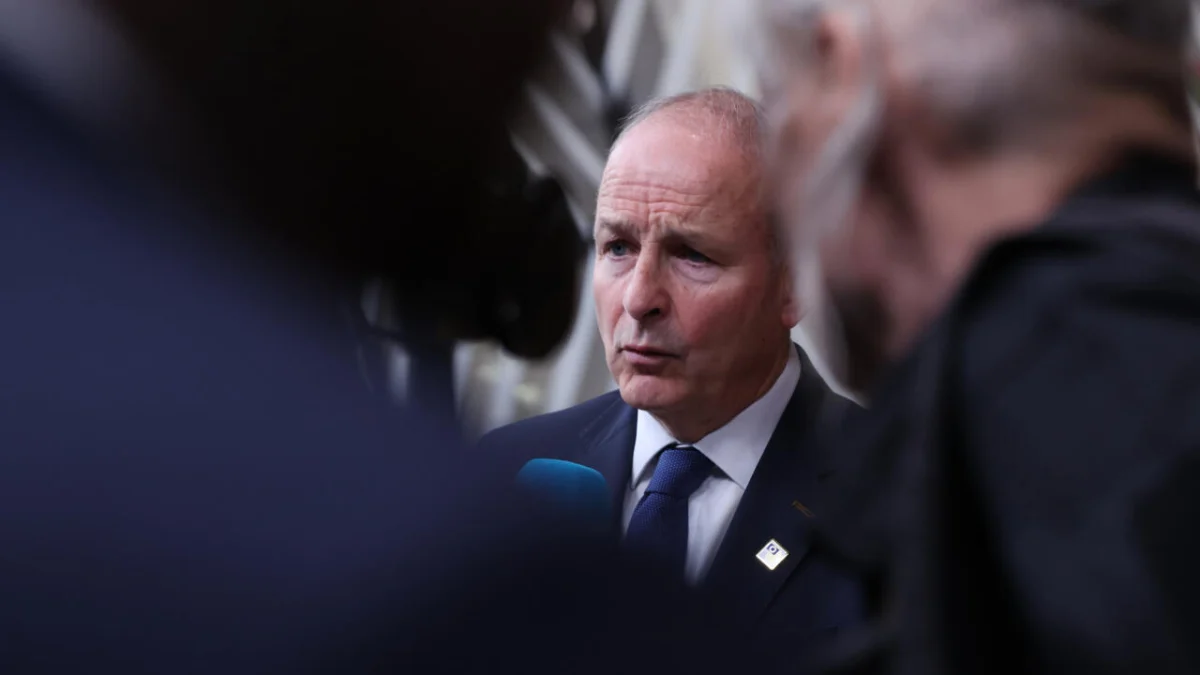
The government’s primary justification for the change is the perceived "functional paralysis" of the UN Security Council. Taoiseach Micheál Martin, addressing the Dáil, argued that the current global order has shifted dramatically since the triple lock was conceived.
The Case for Reform
- The Veto Problem: The government points to the frequent use of the veto by permanent members of the UNSC—specifically Russia, China, and occasionally the United States and Britain—to block resolutions on critical issues. The argument follows that Ireland should not be prevented from participating in humanitarian or peacekeeping missions simply because one of the P5 nations chooses to exercise a veto for geopolitical reasons.
- Operational Agility: Under the current system, even if the government and the Dáil support a mission, they are beholden to the diplomatic calendar of New York. The new legislation aims to grant the Irish cabinet the agility to deploy up to 50 personnel without seeking a specific UN mandate, provided they retain parliamentary approval.
- Modernization: Defense experts argue that Ireland’s small military requires more flexibility to integrate with European Union security structures. Proponents argue that the triple lock is an "outdated relic" that inhibits Ireland from playing a more active role in the European Common Security and Defence Policy (CSDP).
Official Responses: A House Divided
The Government Position
Taoiseach Micheál Martin framed the legislative change as an act of preservation rather than destruction. He argued that the Irish Defense Forces are world-class peacekeepers and that, by removing the UN requirement, Ireland can ensure its troops are deployed where they are most needed, rather than where the UN Security Council can agree to send them. "We are not abandoning our values," Martin stated. "We are ensuring that our ability to act as a force for good in the world is not held hostage by the gridlock of the Security Council."
The Opposition’s Outcry
The opposition, led by Sinn Féin’s Mary Lou McDonald, has characterized the move as a "profound betrayal." The criticisms leveled by the opposition focus on three core areas:
- Erosion of Sovereignty: Opposition leaders argue that the triple lock was a firewall against being drawn into "imperialist" or "aggressive" foreign conflicts. Without the UN safety net, they fear Irish soldiers could be deployed in support of missions led by NATO or the EU that do not enjoy global legitimacy.
- The NATO "Backdoor": McDonald and others have explicitly raised concerns that this legislation is a precursor to a deeper, closer alignment with NATO. While Ireland remains a non-NATO member, critics argue that the removal of the triple lock makes it easier for Ireland to integrate into larger military architectures that prioritize regional security over global peacekeeping.
- The Demand for a Referendum: The opposition maintains that a policy change of this magnitude—one that alters the constitutional or near-constitutional understanding of Irish neutrality—should have been put to the people in a national referendum. By bypassing the electorate, they argue, the government has undermined the democratic process.
Implications: What Lies Ahead?
The implications of this vote extend far beyond the walls of the Dáil. Ireland now finds itself at a crossroads that will define its international identity for the next generation.
Geopolitical Realignments
The scrapping of the triple lock signals to the international community that Dublin is willing to take a more independent, and potentially more assertive, stance in international security. While this may be welcomed by some European allies who have long pushed for Ireland to contribute more to collective security efforts, it will undoubtedly invite scrutiny from other international partners who viewed Ireland’s neutral stance as a unique asset in diplomacy.
The Domestic Legal Landscape
While the legislation has passed, the legal battle may not be over. Constitutional scholars have debated whether the triple lock was essentially a "normative" part of the state’s identity that, while not explicitly written into the Constitution in its current form, is so deeply tied to the state’s foreign policy principles that it warrants a legal challenge. The government will likely face pressure to ensure that the "double lock" (Government + Dáil approval) is bolstered by strict new oversight mechanisms to satisfy public concerns regarding accountability.
Military Deployment and Future Missions
In the short term, the military will be tasked with adjusting its protocols. The increase in the number of personnel that can be deployed without full legislative oversight (from 12 to 50) allows for the rapid deployment of specialized teams—such as medical units, cybersecurity experts, or logistics personnel—to crisis zones. This "light touch" deployment model is expected to become the new normal for the Irish Defense Forces.
Conclusion: A Nation Reconsidering Its Place
The debate over the triple lock is, at its core, a debate about what it means to be Irish in the 21st century. Is neutrality a rigid, unchangeable doctrine, or is it a fluid concept that must adapt to a world where international institutions are failing to prevent conflict?
As the government moves to implement the new legislation, the Irish public remains deeply divided. The decision to dismantle the triple lock marks the end of an era of diplomatic certainty. Whether this move leads to a more effective, globally engaged Ireland or a nation that has lost its unique moral standing remains the central question of the decade. As Ireland navigates this new reality, the eyes of the international community will be watching to see how the "island of peacekeepers" adapts to a world where the old rules no longer apply.