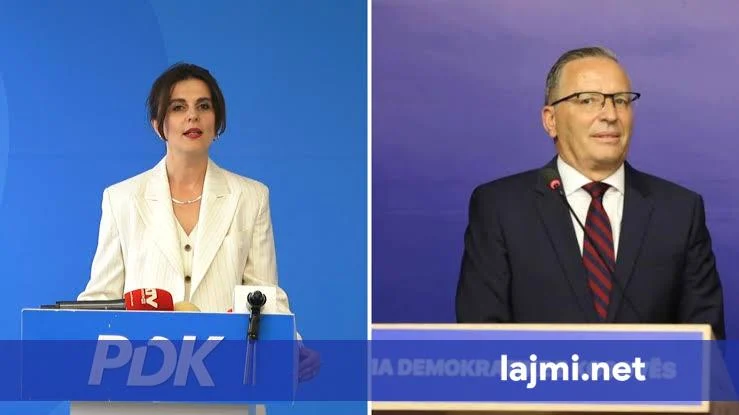
Pristina, Kosovo – In a significant development poised to reshape the political landscape of Kosovo’s largest opposition party, the Democratic Party of Kosovo (PDK) has named Vlora Çitaku as its acting Chairwoman. The appointment follows the unexpected and "irrevocable" resignation of Bedri Hamza from the party’s top leadership position. Çitaku, a seasoned diplomat and prominent figure within the party, will steer the PDK through a crucial transitional period that will culminate in comprehensive internal elections at all levels, aimed at establishing a new, permanent leadership.
The announcement, disseminated via a concise statement from the PDK’s Information Office, underscored the party’s commitment to democratic processes and internal renewal. Çitaku’s interim mandate is set to last until the conclusion of these internal electoral processes, which are expected to redefine the party’s strategic direction and leadership for the foreseeable future. This transition marks a pivotal moment for the PDK, a party with a storied history at the forefront of Kosovo’s political development, as it seeks to rejuvenate its ranks and solidify its role in the nation’s evolving political tapestry.
A New Chapter for PDK: Çitaku Takes the Helm
The Democratic Party of Kosovo, one of the nation’s most influential political forces since its inception, finds itself at a critical juncture. The appointment of Vlora Çitaku as acting Chairwoman signals not only a change in immediate leadership but potentially a broader strategic recalibration for the party. Her ascension to this interim role comes at a time when the PDK, currently in opposition, is striving to regain its electoral momentum and redefine its identity in a political environment increasingly dominated by new political actors and shifting voter priorities.
The official notification from the PDK’s Information Office was brief yet clear, stating: "Following the irrevocable resignation of Mr. Bedri Hamza from the position of Chairman of PDK, the steering bodies of the party have appointed Ms. Vlora Çitaku as acting Chairwoman. During this period, internal party elections will be organized and held at all levels." This statement emphasizes the temporary nature of Çitaku’s position, framing it as a necessary step to ensure continuity and facilitate an orderly transition towards a democratically elected leadership.
For Çitaku, assuming this responsibility means navigating a complex internal landscape while simultaneously positioning the party effectively within Kosovo’s dynamic political arena. Her immediate tasks will undoubtedly include stabilizing the party’s structures, fostering internal unity, and preparing the ground for what are expected to be robust and competitive internal elections. This period will be crucial for the PDK to demonstrate its resilience and its capacity for self-renewal, particularly as it faces the ongoing challenges of being an opposition force in a country grappling with significant domestic and international issues. The party’s ability to manage this transition smoothly and transparently will be a key indicator of its health and its prospects for future electoral success.
The Chronology of a Leadership Transition
The sudden shift in PDK’s leadership began with Bedri Hamza’s decision to step down, a move that, while not entirely unprecedented in political cycles, carries significant weight for a party of PDK’s stature. The subsequent swift appointment of Vlora Çitaku underscores the party’s efforts to maintain stability and project an image of continuity amidst change.
Hamza’s Resignation: An Irrevocable Decision
The news of Bedri Hamza’s departure first surfaced with his formal notification to the PDK Presidency. The term "irrevocable" used in the official communication is particularly noteworthy, suggesting a definitive end to his tenure as party leader and precluding any possibility of reconsideration. While the official statement did not elaborate on the specific reasons behind Hamza’s decision, such irrevocable resignations in politics often stem from a confluence of factors. These can include personal considerations, strategic disagreements within the party, a desire for fresh leadership following electoral setbacks, or a conscious effort to pave the way for party renewal.
Bedri Hamza had been a prominent figure within the PDK and in Kosovo’s political and economic spheres for many years. His leadership of the party, particularly after the departure of its foundational figures like Hashim Thaçi to the Specialized Chambers in The Hague, was seen as a period of attempting to stabilize and consolidate the party’s base. However, the PDK has faced increasing challenges in recent national elections, moving from its long-held position as the dominant force to an opposition role. This electoral performance, combined with the broader political shifts in Kosovo, may have contributed to a strategic decision to allow for a comprehensive leadership overhaul. His resignation can be interpreted as a selfless act aimed at enabling the party to undergo a necessary transformation without the perceived encumbrance of past leadership.
Rapid Response from PDK’s Steering Bodies
The swiftness with which the PDK’s steering bodies acted following Hamza’s announcement is indicative of a well-structured party machinery and a clear intent to avoid a leadership vacuum. The decision to appoint Vlora Çitaku as acting Chairwoman was not merely a procedural step but a strategic choice aimed at injecting experience, international credibility, and a fresh perspective into the party’s interim leadership.
This rapid response reflects the party’s understanding of the importance of maintaining a clear leadership structure, especially for a major opposition party. Any prolonged uncertainty at the helm could lead to internal fragmentation or a weakening of its political voice. By quickly installing an acting leader, the PDK has demonstrated its capacity for organizational resilience and its commitment to a managed transition, signaling to both its members and the wider public that the party remains unified and focused on its future. This immediate action sets the stage for the upcoming internal elections, providing a stable platform from which the party can conduct its democratic processes.
Profiles in Leadership: Çitaku and Hamza
The leadership transition from Bedri Hamza to Vlora Çitaku brings into focus the distinct profiles of these two influential figures, each having contributed significantly to Kosovo’s political and public life. Their backgrounds and experiences offer insights into the potential trajectory of the PDK during this crucial interim period.
Vlora Çitaku: Diplomat, Politician, Acting Leader
Vlora Çitaku’s appointment as acting Chairwoman marks a significant moment, not only for the PDK but also for women in Kosovo politics. Çitaku is a highly recognized and respected public figure, both domestically and internationally. Her career has been distinguished by a blend of diplomatic acumen and political engagement.
Born in 1980, Çitaku rose to prominence through her articulate advocacy for Kosovo’s independence and state-building efforts. She served as Kosovo’s Ambassador to the United States from 2015 to 2021, a tenure during which she played a crucial role in strengthening bilateral relations between Kosovo and its most important international ally. Prior to her diplomatic posting in Washington D.C., Çitaku held several key ministerial positions within the Government of Kosovo. She served as Minister for European Integration, guiding Kosovo through complex processes related to its European Union aspirations, and also held portfolios related to foreign affairs and trade. Her experience at the highest levels of government has equipped her with a deep understanding of governance, policy-making, and international relations.
Within the PDK, Çitaku has been a consistent and vocal presence, often seen as representing a more modern, pro-Western, and reform-oriented wing of the party. Her public speaking skills, command of English, and media presence have made her an effective communicator and advocate for Kosovo’s interests. Her appointment as acting leader could signal the PDK’s intention to project a renewed image, emphasizing diplomacy, international engagement, and a progressive outlook. The symbolism of a woman taking the helm, even in an acting capacity, in a traditionally male-dominated political sphere, is also noteworthy and could resonate positively with a segment of the electorate seeking more inclusive leadership. Her challenge will be to translate her diplomatic and public appeal into effective internal party management and strategic direction.
Bedri Hamza: A Respected Figure’s Departure
Bedri Hamza’s departure from the leadership of the PDK concludes a chapter for a figure who has played a vital role in Kosovo’s economic and political development. Hamza’s career has been primarily characterized by his expertise in finance and economics, making him a trusted hand in managing the state’s fiscal affairs.
Before assuming the leadership of the PDK, Hamza served as Minister of Finance, a position he held with distinction, overseeing the national budget and implementing various economic policies. His tenure as Finance Minister was marked by efforts to promote fiscal discipline and support economic growth. Prior to his ministerial role, he also served as Deputy Governor of the Central Bank of Kosovo, further solidifying his reputation as an expert in financial governance. His background is deeply rooted in public service and economic management, rather than revolutionary politics, setting him apart from some of the PDK’s foundational figures who emerged from the Kosovo Liberation Army (KLA).
Hamza assumed the leadership of the PDK during a particularly challenging period for the party, following the indictment of its long-time leader, Hashim Thaçi, by the Specialized Chambers. His task was to stabilize the party, maintain its relevance, and prepare it for new electoral cycles. His contributions during this period were critical in preventing further fragmentation and ensuring the party’s operational continuity. His decision to step down, while perhaps unexpected by some, can be viewed through the lens of a statesman recognizing the need for a fresh start for his party. His departure, though marking an end to his formal leadership, leaves behind a legacy of dedicated public service and economic stewardship. The impact of his absence will be felt as the party navigates its future without his seasoned economic perspective at the very top.
The Democratic Party of Kosovo: Navigating a Critical Juncture
The Democratic Party of Kosovo (PDK) stands at a pivotal moment in its history. From its origins as a political movement born out of the Kosovo Liberation Army (KLA), it has evolved into a cornerstone of Kosovo’s democratic system. However, recent years have presented significant challenges that necessitate a profound internal reassessment and renewal.
PDK’s Historical Legacy and Current Challenges
Founded in 1999, the PDK quickly established itself as one of Kosovo’s dominant political forces, playing a central role in the declaration of independence in 2008 and subsequent state-building efforts. Led for many years by Hashim Thaçi, the party cultivated a strong base of support, often aligning itself with the KLA’s legacy and a pro-Western foreign policy. For over a decade, PDK was either the leading party in government coalitions or a significant power broker, shaping much of Kosovo’s post-war trajectory.
However, the party has faced increasing headwinds. The indictment and departure of key figures like Hashim Thaçi and Kadri Veseli to The Hague for war crimes charges created a leadership vacuum and cast a shadow over the party’s historical narrative. Simultaneously, a new generation of political leaders and parties, particularly Vetëvendosje, has emerged, appealing to a electorate increasingly focused on issues of good governance, anti-corruption, and socio-economic justice.
This shift has been reflected in recent electoral performances, where the PDK has seen a decline in its vote share, moving from its traditional position as the leading party to becoming the largest opposition force. The challenges facing the party are multifaceted:
- Internal Cohesion: Maintaining unity among diverse factions and generations within the party.
- Rebranding: Adapting its message and image to resonate with a younger, more demanding electorate.
- Opposition Role: Effectively holding the government accountable while offering credible alternative policies.
- Legacy Management: Reconciling its historical legacy with contemporary demands for transparency and accountability.
The appointment of Vlora Çitaku and the upcoming internal elections are crucial steps in addressing these challenges, offering an opportunity for the PDK to redefine its identity and strengthen its appeal.
The Imperative of Internal Elections
The announcement that internal elections will be organized and held "at all levels" is a clear signal of the PDK’s commitment to a comprehensive process of democratic renewal. These are not merely symbolic gestures but fundamental steps for any political party seeking to maintain its legitimacy and vitality.
The process of internal elections typically involves:
- Local Branch Elections: Members elect leaders and representatives at the municipal and regional levels.
- Convention Delegates: These local representatives then elect delegates to a national party convention.
- National Leadership Election: The convention then elects the party’s presidency, vice-presidents, and crucially, the party leader.
The importance of these elections for the PDK cannot be overstated. They serve several critical functions:
- Democratic Legitimacy: They provide a mandate for the new leadership, ensuring they are chosen by the party’s membership, not merely appointed by an inner circle.
- Internal Renewal: They offer an opportunity for new voices and ideas to emerge, potentially bringing fresh perspectives and energy to the party.
- Defining Future Direction: The candidates who emerge and the platforms they present will shape the party’s ideological direction, policy priorities, and strategic approach for the coming years. This includes how the party will position itself on key national issues such as the dialogue with Serbia, economic development, and rule of law.
- Addressing Factions: While potentially exposing internal divisions, a transparent electoral process can also help to resolve them by providing a legitimate mechanism for leadership selection and policy debate.
The stakes in these internal elections are exceptionally high. The outcome will determine whether the PDK can successfully transition from its historical leadership model to one that is more responsive to current political realities. It will also test the party’s ability to unite behind a new leader and present a coherent, compelling vision to the Kosovar electorate. The period under Çitaku’s acting leadership will be critical for laying the groundwork for a fair, robust, and ultimately unifying internal electoral process.
Official Responses and Party Statements
The official communication regarding Bedri Hamza’s resignation and Vlora Çitaku’s appointment was meticulously crafted and delivered through the Democratic Party of Kosovo’s Information Office. This centralized approach to communication is standard for major political parties, especially during sensitive leadership transitions, and allows for the careful management of the party’s public narrative.
The brevity of the official statement, while providing the core facts, also reveals what was not explicitly stated. The statement clearly confirmed Hamza’s "irrevocable" resignation and Çitaku’s appointment as acting leader, specifying her mandate until the internal elections are concluded. However, it refrained from offering any detailed reasons for Hamza’s departure. This omission is common in such political transitions, often designed to prevent speculation, maintain an image of internal unity, and allow the party to control the message. It suggests that the party leadership, while accepting Hamza’s decision, prefers to focus on the future and the process of renewal rather than dwelling on the specifics of his exit.
Key messages conveyed, even implicitly, through the official response include:
- Commitment to Internal Democracy: The emphasis on organizing and holding internal elections "at all levels" reinforces the party’s adherence to democratic principles within its own structure. This is crucial for a party that seeks to represent democratic values nationally.
- Smooth Transition and Continuity: The immediate appointment of an acting leader demonstrates a proactive approach to prevent any leadership vacuum, assuring both members and the public that the party remains stable and functional.
- Unity and Future Focus: By presenting a clear path forward, the party aims to project an image of unity and a forward-looking orientation, rather than being bogged down by internal strife or past issues.
While the official statement did not include direct quotes from Çitaku or other high-ranking PDK officials, the typical tone accompanying such announcements would likely involve expressions of gratitude to the outgoing leader for their service, an affirmation of confidence in the acting leader’s capabilities, and a call for party unity during the transitional period. Such statements are designed to reassure members, project stability to the public, and set a positive tone for the upcoming internal electoral process. The very act of issuing a formal notification underscores the party’s institutional strength and its capacity to manage significant internal changes in an orderly fashion.
Broader Implications for Kosovo’s Political Landscape
The leadership transition within the Democratic Party of Kosovo is not merely an internal party matter; it carries significant implications that will ripple across Kosovo’s entire political landscape, affecting not only the opposition but also the governing coalition and the nation’s broader trajectory.
Impact on PDK’s Future Trajectory
Vlora Çitaku’s appointment as acting Chairwoman and the subsequent internal elections offer a profound opportunity for the PDK to redefine its identity and strategy. Her background as a diplomat with extensive international experience, particularly in the United States, could steer the party towards a more moderate, pro-Western, and internationally-focused image. This might involve:
- Ideological Shift: A potential move towards a more centrist platform, emphasizing rule of law, economic development, and European integration, possibly moving away from some of the more nationalistic rhetoric historically associated with certain factions of the party.
- Internal Realignment: The upcoming elections could lead to a reshuffling of power within the party, with new figures potentially emerging and different ideological currents gaining prominence. This could also influence future alliances and partnerships.
- Opposition Strategy: Under new leadership, PDK might adopt a more constructive or more aggressive opposition strategy against the ruling Vetëvendosje party, focusing on specific policy areas where it can offer credible alternatives. Its ability to effectively articulate a compelling vision will be crucial for its electoral prospects.
- Generational Appeal: Çitaku’s relative youth and modern image could help the party appeal to a younger demographic, which has increasingly gravitated towards other political forces.
The success of this transition will depend heavily on the party’s ability to manage internal disagreements, unite behind a new leader, and present a coherent and appealing platform to the Kosovar electorate.
Shifting Dynamics in the Opposition Bloc
The PDK is a crucial component of Kosovo’s opposition bloc, alongside parties like the Democratic League of Kosovo (LDK) and the Alliance for the Future of Kosovo (AAK). A change in PDK’s leadership will inevitably affect the dynamics within this bloc:
- Cooperation and Competition: A renewed PDK under new leadership might seek to forge stronger alliances with other opposition parties to more effectively challenge the government. Alternatively, if the new leadership seeks to differentiate PDK more sharply, it could lead to increased competition among opposition parties.
- Balance of Power: Any significant shift in PDK’s internal strength or public appeal could alter the overall balance of power within the opposition, influencing their collective ability to scrutinize government actions, propose alternative legislation, and potentially trigger future no-confidence motions.
- Leadership of the Opposition: Depending on the outcome of its internal elections, PDK could either solidify its position as the de facto leader of the opposition or see other parties step up to fill that role.
The stability and strategic direction of PDK are therefore vital for the overall health and effectiveness of Kosovo’s democratic opposition.
The Road Ahead: National Elections and Political Stability
Ultimately, the internal developments within the PDK have implications for Kosovo’s broader political stability and its future electoral cycles.
- Influence on Future Elections: A successful leadership transition and rejuvenation of the PDK could significantly impact the outcomes of future local and general elections. A strong, revitalized opposition is essential for a healthy democracy, providing voters with viable alternatives and holding the government accountable.
- Dialogue with Serbia: Kosovo faces critical challenges, including the ongoing dialogue with Serbia, which requires a unified and strategic approach from its political class. The leadership of major parties like PDK plays a vital role in shaping national consensus on such sensitive issues.
- Economic Development and Rule of Law: As Kosovo continues its journey towards European integration, issues of economic development, job creation, and strengthening the rule of law remain paramount. A renewed PDK will need to present credible policies and a strong vision in these areas to resonate with the public.
Vlora Çitaku’s interim leadership marks a period of introspection and potential transformation for the Democratic Party of Kosovo. The forthcoming internal elections will be a true test of the party’s resilience and its capacity to adapt to the evolving demands of Kosovo’s political landscape. The choices made during this transition will not only determine the future of PDK but will also have lasting effects on the broader political stability and democratic trajectory of the young nation. This is a moment of profound significance, setting the stage for a new chapter in one of Kosovo’s most historically important political movements.