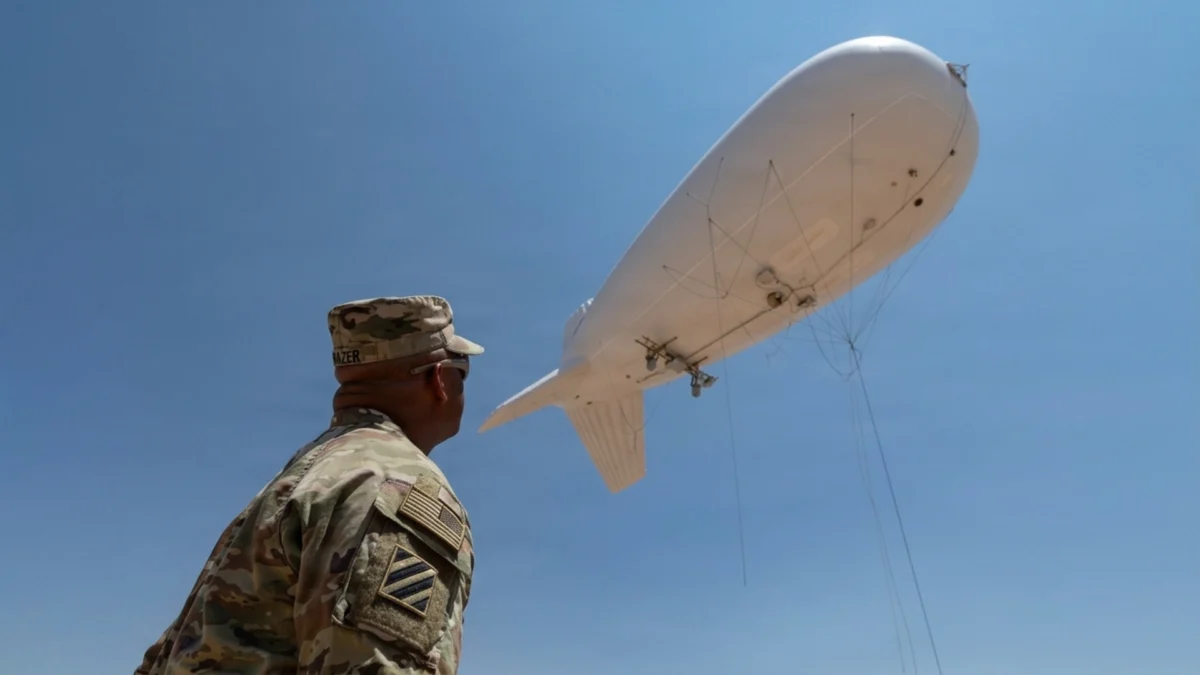
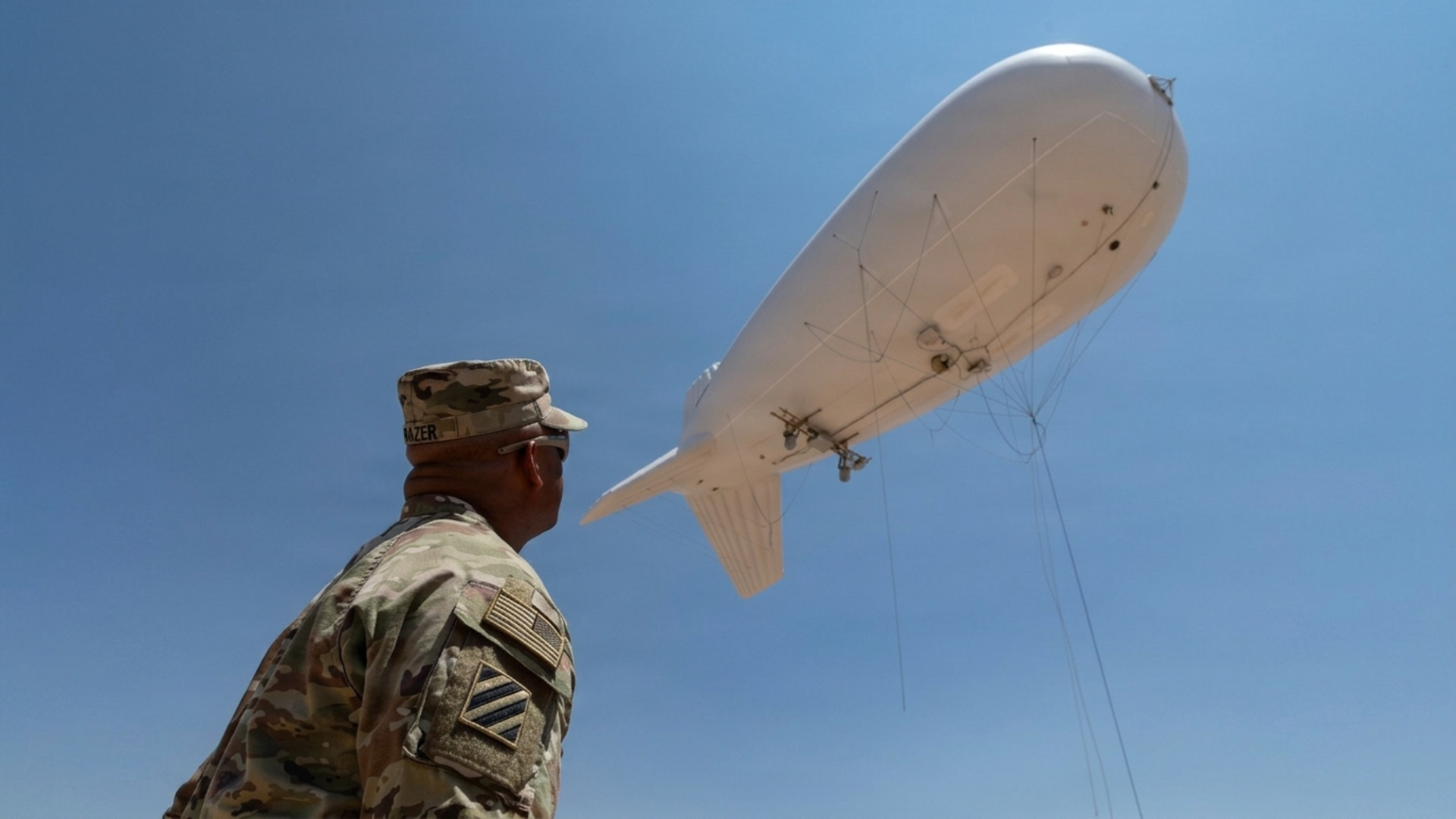
In a striking fusion of 18th-century aeronautical principles and modern aerospace engineering, Ukrainian defense developers are testing a novel, low-cost long-range strike system. The "Balun-Mara" platform—a combination of a specialized high-altitude aerostat and a tactical strike drone—represents a significant shift in asymmetric warfare, potentially allowing Kyiv to strike targets over 1,000 kilometers away at a fraction of the cost of traditional cruise missiles.
As the conflict in Ukraine continues to evolve, the reliance on unmanned aerial vehicles (UAVs) has moved beyond tactical reconnaissance to strategic disruption. The Mariupol design bureau, the architect behind this system, suggests that by leveraging the buoyancy of aerostats to bypass early-stage fuel consumption, they can extend the reach of relatively inexpensive drones to depths previously considered safe by Russian logistical hubs.
Main Facts: A Hybrid Approach to Strategic Reach
The core of the Balun-Mara system is the strategic use of an aerostat—a tetherless, lighter-than-air craft—to ferry a fixed-wing strike drone to an altitude exceeding 10 kilometers. At this altitude, the drone, known as the "Mara," remains shielded from the majority of short-range air defense systems, such as MANPADS or light anti-aircraft cannons, which struggle to engage targets at such extremes.
Once the Balun reaches the target vicinity or the edge of the operational envelope, the Mara drone is released. The drone then transitions into a glider-like flight mode before engaging its propulsion system to cover the final 60 kilometers to its objective. The total operational range is estimated to be at least 1,060 kilometers.
The most provocative aspect of this system is its price point. While official documentation remains guarded, the manufacturer estimates the cost of a single complete unit at approximately $6,000. In stark contrast, a standard U.S.-made Tomahawk cruise missile, which shares a similar range profile, costs between $1.3 million and $2.5 million per unit. This disparity highlights the potential for "attrition warfare" on a budget, where the sheer volume of low-cost, long-range platforms could overwhelm sophisticated, high-cost defense grids.
Chronology of Development and Deployment
The path from concept to the reported battlefield deployment of the Balun-Mara has been rapid, reflecting the accelerated innovation cycle characteristic of the Ukrainian defense sector since February 2022.
- Initial Design Phase: The Mariupol design bureau focused on integrating custom-built data links and flight control systems into a compact, fixed-wing airframe. By building these components in-house, they ensured compatibility with the specialized release mechanism required for mid-air deployment.
- Combat Testing (Q3 2026): Reports emerged during the summer and early autumn of 2026 regarding successful strikes on military infrastructure in occupied Crimea and the strategic port city of Berdiansk. These tests served as the proving ground for the deployment mechanism and the survivability of the aerostat under high-altitude wind conditions.
- Production Transition (October 2026): Following the success of initial trials, the bureau announced plans to transition to commercial-scale manufacturing by mid-October. This move signifies an intent to move from experimental prototypes to a standardized, serial-production military asset.
Supporting Data: The Economics of Asymmetric Warfare
To understand the strategic significance of the Balun-Mara, one must look at the cost-benefit analysis of modern air defense suppression. Traditional cruise missiles are designed for precision and high survivability, justifying their seven-figure price tag. However, they are "high-value targets" for defenders.
The Balun-Mara, by utilizing a 240-year-old technology (the aerostat) as a delivery bus, effectively offloads the "energy cost" of flight to the environment. The drone itself does not need to burn fuel to climb to 10,000 meters, which significantly preserves its battery or fuel reserves for the final attack phase.
Technical Specifications and Limitations
| Feature | Estimated Capability |
|---|---|
| Total Range | 1,060+ km |
| Release Altitude | 10,000m+ |
| Glider Range | ~60 km |
| System Cost | ~$6,000 (est.) |
| Development Origin | Mariupol Design Bureau |
Despite the manufacturer’s claims, analysts point to several variables that remain unverified. First, the impact of high-altitude jet streams on an unpowered, buoyant balloon is significant. If the winds deviate from the predicted path, the drone may be released far from its intended target, potentially rendering the mission unsuccessful. Furthermore, the bureau has yet to disclose the "cruising speed" of the Mara in its final approach. A slow-moving drone, while difficult to detect at altitude, becomes a target of opportunity for electronic warfare (EW) systems and medium-range surface-to-air missiles once it descends into the terminal phase of its flight.
Official Responses and Industry Skepticism
The Mariupol design bureau has maintained a degree of operational security, declining to share detailed specifications regarding the payload (warhead) weight or the specific frequency hopping protocols used in their data links. This silence is typical of Ukrainian startups currently operating under the "Defense Tech" umbrella, where intellectual property is treated as a matter of national security.
However, the lack of third-party verification has led to a measured response from the international military community. Independent experts note that while the concept is theoretically sound, the "Balun" component faces severe challenges in terms of target acquisition. Without a high-fidelity GPS-denied navigation suite, a balloon is effectively a "dumb" carrier. If the system relies solely on standard satellite navigation, it remains highly vulnerable to the robust Russian electronic warfare and GPS-spoofing capabilities that have plagued precision weapons throughout the conflict.
Implications for Modern Air Defense
The deployment of the Balun-Mara system, if proven effective at scale, would necessitate a significant shift in how regional powers approach airspace security.
1. The Death of the "Safe Zone"
For decades, depth in the rear—the area behind the front lines—was considered safe from all but the most expensive and rare ballistic assets. The proliferation of low-cost, long-range systems like the Balun-Mara forces defenders to stretch their air defense coverage, forcing them to deploy expensive assets (like S-400 or Patriot batteries) to protect minor logistical nodes that were previously considered "low risk."
2. The Inflation of Attrition
If Russia is forced to expend a $2 million interceptor missile to destroy a $6,000 drone, the economic attrition favors the attacker. This is the central logic behind the "drone revolution." The Balun-Mara takes this logic a step further by removing the need for a massive, expensive propulsion system on the drone itself.
3. Tactical Adaptation
The emergence of this system may force a move toward "Layered Defense 2.0." This would involve not just high-altitude interceptors, but a massive increase in the density of low-cost EW jamming arrays and rapid-fire automated gun systems to catch slower, incoming threats at the point of entry.
Conclusion: A Prototype, Not Yet a Panacea
The Balun-Mara system stands at the intersection of historical ingenuity and modern desperation. It is a testament to the agility of Ukrainian engineers who are forced to find workarounds for the lack of conventional, heavy-duty cruise missile stockpiles.
While the manufacturer’s claims are bold, the transition to serial production marks a critical threshold. The coming months will likely determine whether the Balun-Mara is a viable strategic asset or merely an experimental curiosity. If the system demonstrates the ability to reliably penetrate contested airspace and hit targets of consequence, it will cement the status of the "balloon-drone" as one of the most cost-effective innovations in the history of modern aerial combat. For now, however, the world watches to see if these high-altitude gliders can survive the harsh reality of the front lines.