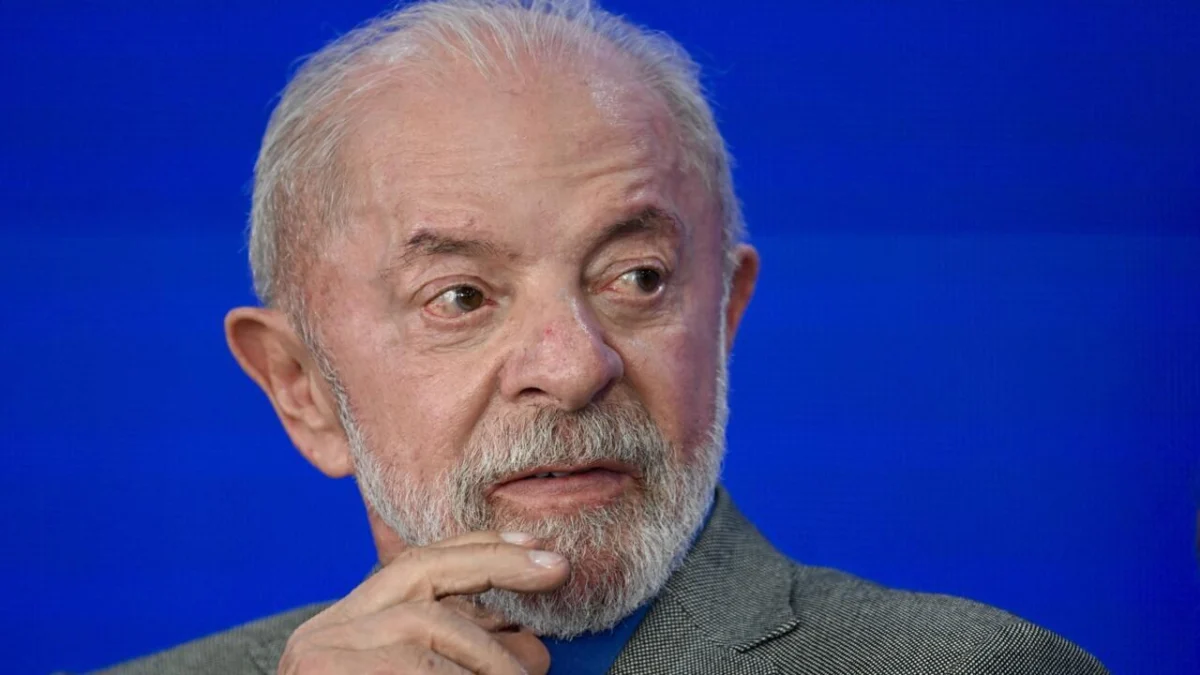
The political landscape in Brazil has descended into a high-stakes confrontation between the campaign of President Luiz Inácio Lula da Silva and the tech conglomerate Meta. As the nation pivots toward a critical October 25 runoff election, the incumbent president’s Workers’ Party (PT) has announced plans to file a formal complaint before the Organization of American States (OAS), accusing the Silicon Valley giant of systematic digital interference.
This development marks a significant escalation in the ongoing debate regarding the influence of social media platforms on democratic processes. Lula, who is seeking a fourth nonconsecutive term in office, faces a formidable challenger in Senator Flávio Bolsonaro, the son of the former far-right president, Jair Bolsonaro. With the electoral margin razor-thin, the PT’s accusations strike at the heart of the campaign’s ability to communicate with the electorate, framing the tech company’s content moderation policies as a partisan weapon rather than neutral administrative enforcement.
The Core Allegations: Digital Suppression or Algorithmic Glitch?
The controversy centers on several technical incidents reported by the Lula campaign over the past week. According to party officials, the campaign experienced a series of "unexplained" restrictions that significantly hampered their visibility on Meta-owned platforms, including Instagram, Facebook, and WhatsApp.
The campaign’s complaints are threefold:
- Promotion Restrictions: The campaign claims that Meta prevented the President’s official profile from "boosting" or promoting Instagram feed posts, a critical tool for reaching undecided voters in the final stretch of the campaign.
- Engagement Throttling: Campaign managers reported a sudden and "unnatural" interruption in view counts for key posts, which they argue directly suppressed their reach and influence.
- Search Visibility: Perhaps most alarmingly, the campaign asserts that in the days leading up to the first round of voting on October 13, the accounts of President Lula and several prominent leftist allies were effectively "shadowbanned," disappearing from Instagram’s search functionality.
"It is time to denounce this before the international community, starting with the OAS," said Eden Valadares, the PT’s Communications Secretary, who confirmed that the directive for this international complaint came directly from President Lula.
A Chronology of the Electoral Standoff
The current tensions are the culmination of a volatile electoral cycle that has seen extreme polarization within the Brazilian electorate.
- Pre-Election Phase: As the campaign season heated up, digital strategy became the primary battleground. Lula, who famously eschews the use of a mobile phone, pivoted his strategy to a "social-first" approach, utilizing highly produced videos to bypass traditional media filters.
- The October 13 First Round: The first round of voting concluded with a surprise result, as Senator Flávio Bolsonaro secured the lead. In the immediate lead-up to this date, the PT alleges that search visibility for their candidate evaporated, a move they characterize as an attempt to suppress turnout.
- Post-Election Escalation: Following the first-round results, the Lula campaign doubled down on its digital outreach. However, the subsequent claims of "throttling" prompted the campaign to move from domestic legal posturing to international diplomatic pressure.
- The Upcoming Runoff: With the October 25 runoff fast approaching, the campaign has scheduled an urgent meeting with international election observers to present their "evidence" of interference, aiming to frame the upcoming vote as a contest defined by technological hurdles.
The Global Dimension: Geopolitics and Tech Regulation
The conflict is not occurring in a vacuum. President Lula has openly suggested that the United States is taking an active interest in the Brazilian election, alleging that external forces are favoring the Bolsonaro camp. This narrative is bolstered by the historical alliance between the Bolsonaro family and former U.S. President Donald Trump.
By taking the complaint to the OAS, the PT is attempting to internationalize the struggle, suggesting that Meta’s actions are not merely technical errors but a geopolitical maneuver intended to sway the outcome in favor of the right-wing opposition. This move taps into a broader, growing skepticism in Latin America regarding the unchecked power of U.S.-based tech firms to act as arbiters of political speech.
Meta’s Response: "Simply False"
In a terse statement released by their Brazilian office, Meta has categorically denied all allegations of bias or interference. The company’s representatives described the accusations as "simply false" and asserted that the claims are "not supported by the facts."

Meta maintains that its moderation tools are applied neutrally based on community standards and automated algorithms designed to detect spam or inorganic behavior. From the perspective of the company, any fluctuation in reach or search visibility is the result of neutral software updates or technical glitches that affect users across the political spectrum, rather than a targeted campaign against the left.
However, the lack of transparency in how these algorithms operate remains a point of contention. Without access to the company’s internal metrics, the Lula campaign argues that it is impossible to distinguish between a technical bug and intentional suppression. This "black box" nature of social media platforms has become a recurring theme in global election debates, as political parties worldwide increasingly feel at the mercy of algorithms they cannot control or verify.
Implications for Democracy and the Digital Public Square
The implications of this standoff extend far beyond the borders of Brazil.
1. The Erosion of Trust in Digital Platforms
If a major political movement is convinced that the platforms themselves are rigged, the legitimacy of the electoral process itself is called into question. Even if Meta’s actions are purely technical, the perception of bias is sufficient to fuel conspiracy theories and deepen public distrust in both the tech industry and the electoral system.
2. The Legal and Regulatory Vacuum
Brazil has been a testing ground for digital regulation, particularly through the efforts of its judiciary to combat disinformation. However, the current situation highlights a gap in the law: how should a government hold a private, multinational corporation accountable for perceived interference when the platform claims technical immunity? The PT’s move to the OAS suggests they believe domestic legal avenues are insufficient to handle the scale and reach of Meta.
3. The Shift in Campaign Strategy
The fact that a candidate like Lula—who does not personally use a mobile device—is so heavily dependent on digital outreach demonstrates the total transformation of modern campaigning. When the "digital town square" is controlled by a private entity, the democratic process becomes inherently dependent on the benevolence and transparency of that entity.
Conclusion: A High-Stakes Final Week
As Brazil approaches the October 25 runoff, all eyes will be on the digital performance of both candidates. The PT’s engagement with international observers is a strategic move to ensure that the global community is watching not just the ballot boxes, but the screens of millions of Brazilian voters.
Whether the alleged interference is a genuine attempt to tip the scales or a case of technical misunderstanding, the conflict highlights the increasingly fragile relationship between the tech giants that host our political discourse and the candidates who rely on them to win power. For the Brazilian electorate, the outcome of this election will be determined as much by the reliability of the software as by the strength of the political platforms on offer. The world watches as the intersection of technology, sovereignty, and democracy faces its most significant test yet in the South American giant.