The Australian economic and political landscape is currently navigating a period of significant turbulence, defined by a precarious labour market, stalled legislative agendas, and intensifying scrutiny of government policy. As the Reserve Bank of Australia (RBA) weighs its next interest rate decision, recent data from the Australian Bureau of Statistics (ABS) has painted a complex picture of the nation’s workforce, while the federal parliament has become a stage for intense ideological clashes over social policy, health, and national security.
The Labour Market: A Mixed Bag for the RBA
The Australian labour market held steady in September, with the unemployment rate remaining at 4.7%. However, beneath this headline figure lies a more nuanced narrative of economic cooling. The economy shed 39,300 jobs in the month, a contraction that would have arguably pushed the jobless rate higher had the ABS not revised the August figures upward from 4.6% to 4.7%.

The composition of this shift is particularly revealing: while the economy added 34,400 full-time positions, this growth was eclipsed by a sharp decline in part-time employment, which fell by 73,700. Furthermore, the underemployment rate—a measure of those who are currently employed but seeking additional hours—rose to 6.3% from 6.2% in September.
This data is far from academic; it serves as a critical indicator for the RBA ahead of its pivotal meeting on November 3. Prior to the release of these figures, financial markets were pricing in a 40% probability of an interest rate hike on Melbourne Cup day. Such an increase would represent the fifth hike this year, a aggressive move as the central bank battles to pull inflation back toward its 2.5% target. Whether this labour market volatility gives the RBA pause or underscores the need for continued restraint remains the central question for policymakers and investors alike.

Chronology of Legislative and Political Developments
The current parliamentary session has been marked by a flurry of activity, ranging from contentious social reforms to heated debates over government transparency and corporate regulation.
- October 14, 2026: The government faces an uphill battle as the Coalition and the Greens signal opposition to key budgetary measures, including the restructuring of private health insurance rebates.
- October 15, 2026: Communications Minister Anika Wells introduces the "digital duty of care" bill, aiming to force tech companies to prevent harmful content on their platforms. The opposition remains steadfastly against the bill, while the Greens demand stricter penalties.
- October 15, 2026: Victorian Labor, ahead of the November election, pledges to make the state the first in Australia to offer free abortion care, sparking a debate on healthcare accessibility and the role of minor parties in social policy.
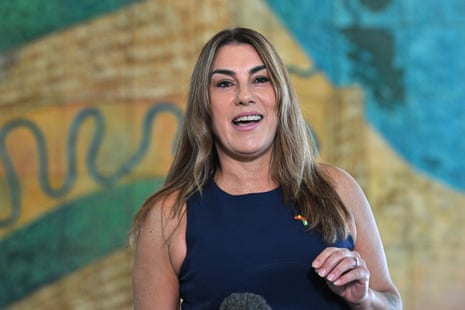
- Ongoing: Independent Senator Jacqui Lambie leads a chorus of condemnation regarding the discovery of a concealed recording device on a Royal Australian Navy vessel, calling for an independent body to investigate defence force culture.
Supporting Data and Economic Implications
The government’s fiscal strategy is currently under siege. Treasurer Jim Chalmers is fighting to implement a minimum 30% tax on trusts—a move that has drawn fire from business groups. In a strategic development, the New South Wales government has pledged to waive stamp duty for small businesses that restructure their trusts to avoid this new levy. While this provides a degree of relief for businesses, it poses a strategic challenge for the federal government as it attempts to consolidate its revenue-raising measures.
Simultaneously, the debate over private health insurance rebates for over-65s highlights a broader struggle over "intergenerational equity." The government argues that these changes are necessary to simplify the system and reallocate funds to aged care. However, with the Coalition and the Greens blocking the legislation in the Senate, the government faces a potential $3 billion shortfall in planned savings, forcing a rethink of their fiscal strategy.
Official Responses and Political Friction
The atmosphere in Canberra is increasingly adversarial. The Resources Minister, Madeleine King, has openly accused the Coalition of hypocrisy, noting that while they preach "responsible fiscal management," they are actively sabotaging the government’s attempts to achieve budget savings. "They want to blow the place up," King remarked, highlighting the difficulty of passing legislation in a fragmented Senate.
Meanwhile, the "digital duty of care" bill has become a flashpoint for concerns over government overreach. While Minister Anika Wells has removed the controversial "ministerial rule-making power" to define "harms" in the final draft, the Coalition remains suspicious. The opposition maintains that the legislation is a thinly veiled attempt at censorship, while the Greens are pushing for even more aggressive reforms, including the right for individuals to sue platforms directly.
In the realm of national security, the rhetoric has been equally sharp. Senator Jacqui Lambie’s assertion that the defence force has failed to "clean up its culture" following the discovery of a camera in a women’s shower on a naval vessel has put the government on the defensive. Lambie’s call for an independent oversight body to handle such matters reflects a growing lack of confidence in internal military processes.

Implications for the Future
The current impasse in the Senate and the volatility of the labour market suggest that the final quarter of 2026 will be defined by legislative gridlock and economic uncertainty. Several key implications emerge from these events:
1. The Challenge of "Truth" in the AI Age
The Australian Electoral Commission (AEC), led by Jeff Pope, is grappling with the rise of AI-generated misinformation. Pope’s admission that relying on chatbots for voting information is an "emerging concern" underscores the need for legislative updates. However, the AEC remains wary of becoming an "arbiter of truth," fearing that such a role would compromise the neutrality of the institution. This leaves a vacuum that the government must address through policy, without infringing on the democratic process.
2. Social Policy at the Crossroads
The Victorian Labor Party’s promise of free abortion care is likely to set a precedent for the rest of the country. By framing abortion as "healthcare" rather than a political issue, the government is shifting the narrative. However, the opposition from minor parties, such as One Nation, and the national cost barriers highlighted by Tanya Plibersek, demonstrate that reproductive rights remain a fragile and highly contested aspect of Australian public life.
3. The Tobacco Black Market
The emergence of sophisticated illegal tobacco production in Southeast Asia, which replicates Australian packaging to evade detection, poses a significant law enforcement challenge. The proposed legislation, which would grant authorities enhanced powers to disrupt these criminal networks, is a critical test of the government’s ability to protect the integrity of its regulatory frameworks in the face of organized crime.

4. A Nation Divided on Fiscal Priorities
The "hypocrisy" row between the government and the Coalition over health rebates and trust taxes illustrates a fundamental disagreement on the role of the state. Whether it is the $3 billion in savings from health insurance or the tax on trusts, the government is finding that its "responsible" budget measures are often viewed as "cruel" by the opposition and the crossbench. Without a clear pathway to consensus, the government risks a period of stagnation that could hamper its ability to respond to future economic shocks.
Conclusion
As Australia moves toward the end of 2026, the intersection of economic instability and political polarization is becoming increasingly pronounced. The RBA’s interest rate decisions will continue to be influenced by a labour market that is struggling to balance growth with the pressures of inflation. Concurrently, the government must find a way to navigate a hostile Senate if it hopes to pass its legislative agenda. Whether through compromise or strategic legislative maneuvering, the months ahead will be a defining period for the current administration, testing its resilience, its capacity for reform, and its ability to maintain the public trust in an era of digital disruption and economic caution.