Tirana, Albania – October 14, 2026 – Tensions flared dramatically today in the heart of Albania’s capital, Tirana, as a student protest outside the Ministry of Education, Sport and Youth devolved into violent clashes between demonstrators and police. What began as a passionate, yet initially peaceful, demonstration by university students quickly escalated, with law enforcement deploying water cannons and tear gas to disperse the crowd, while protesters retaliated by throwing stones. The confrontation underscores a growing wave of frustration among Albanian youth, who claim their significant sacrifices for education are rendered futile by a dire job market and a disconnect between academic pursuits and professional opportunities.
The incident, captured by numerous onlookers and local media, paints a grim picture of escalating social unrest, echoing previous waves of student activism that have periodically challenged the Albanian government. Today’s events, however, mark a particularly sharp turn towards confrontation, signaling a deepening chasm between the aspirations of the country’s youth and the realities of its socio-economic landscape. Students expressed profound disillusionment, articulating a widespread grievance that they are unable to secure employment in the very fields they painstakingly study, leading to a sense of betrayal and a bleak outlook on their future within Albania.
Chronology of Escalation: From Peaceful Assembly to Violent Confrontation
The seeds of today’s protest were sown weeks ago, as student groups across various universities began mobilizing through social media and informal campus meetings. The primary catalyst was a growing frustration over what they perceive as systemic failures in the education-to-employment pipeline, compounded by a general lack of opportunities for young graduates. Organizers, largely representing student councils and independent youth movements, called for a nationwide demonstration to pressure the Ministry of Education and the wider government to address issues ranging from curriculum reform to active job creation strategies for young professionals.
Morning Assembly and Initial Demands:
The protest commenced around 10:00 AM, with hundreds, and eventually thousands, of students gathering peacefully at the "Mother Teresa" Square, a common starting point for demonstrations in Tirana. The atmosphere was initially charged with a sense of collective purpose rather than aggression. Students carried banners emblazoned with slogans such as "Our Degrees, Our Future, Our Rights!" and "No Jobs, No Hope: End the Brain Drain!" Speeches delivered by student leaders articulated key demands:
- Guaranteed Internships: Mandatory, paid internship programs integrated into university curricula to provide practical experience.
- Labor Market Alignment: Comprehensive reform of university programs to better align with the demands of the Albanian and regional labor markets.
- Government Incentives: Creation of government-backed incentive programs for businesses to hire recent graduates.
- Transparency in Public Sector Hiring: An end to perceived nepotism and corruption in public sector employment.
- Increased Funding for Education: Better resources for universities to improve the quality of teaching and research.
The March Towards the Ministry:
Around 11:30 AM, the assembled students began their march towards the Ministry of Education, Sport and Youth, located on the "George W. Bush" Street. The procession was orderly, albeit boisterous, filled with chants and drumbeats. As the crowd swelled, local traffic was diverted, and a noticeable police presence began to form ahead of the marchers, establishing a cordon around the Ministry building.
The Standoff and Escalation:
Upon reaching the Ministry around noon, protesters found their path blocked by a double line of riot police, backed by specialized vehicles, including water cannon trucks. For nearly an hour, a tense standoff ensued. Student representatives attempted to negotiate access to present their demands directly to the Minister, but these requests were reportedly denied, with officials insisting that a formal delegation could be received later at the Ministry’s administrative entrance, away from the main protest. This refusal, perceived by the students as a dismissive gesture, significantly ratcheted up the frustration among the crowd.
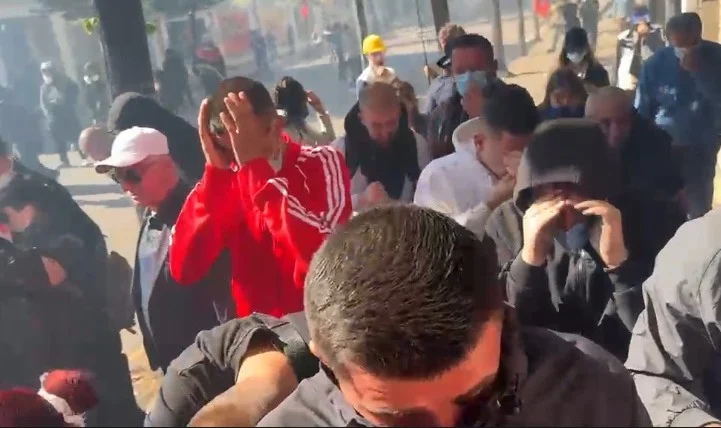
Around 1:00 PM, the situation rapidly deteriorated. Accounts vary, but multiple witnesses describe a small group of protesters attempting to push through the police cordon, prompting an immediate and forceful response from law enforcement. Police issued warnings via loudspeakers, urging the crowd to disperse, but these were largely drowned out by the noise of the protest. Within minutes, water cannons were deployed, drenching the front lines of the demonstrators. Almost simultaneously, tear gas canisters were fired into the crowd, creating chaos as students scattered, coughing and shielding their eyes.
The Violent Aftermath:
The use of force by police ignited a furious reaction from a segment of the protesters. Stones, plastic bottles, and other projectiles began to fly towards the police lines. The scene became a blur of running figures, retreating protesters, and advancing police. Several individuals, both protesters and police officers, sustained minor injuries in the melee, primarily from projectiles and the effects of tear gas. Local paramedics were seen attending to those affected. By 2:30 PM, the main body of the protest had largely dispersed, though smaller groups of defiant students remained in the vicinity, engaging in sporadic confrontations with police and blocking traffic. Several arrests were made, though official figures were not immediately released.
Supporting Data: A Deep Dive into Albania’s Youth Crisis
The recent escalation is not an isolated incident but rather a symptom of deeper, systemic issues plaguing Albania’s youth. The students’ grievances resonate with widely acknowledged challenges concerning youth unemployment, the quality of education, and the pervasive issue of "brain drain."
The Burden of Youth Unemployment:
Albania consistently faces one of the highest youth unemployment rates in Europe. While national unemployment figures fluctuate, the rate for individuals aged 15-29 often significantly surpasses the overall national average, frequently hovering above 25-30%. For university graduates, the situation is particularly grim. Many find themselves either unemployed, underemployed in roles unrelated to their qualifications, or forced to accept low-wage positions that do not justify their years of academic investment. This mismatch between educational attainment and labor market opportunities fuels a profound sense of disillusionment and economic insecurity. Reports from the Albanian Institute of Statistics (INSTAT) and international bodies like the World Bank and Eurostat consistently highlight this structural problem, attributing it to a combination of factors:
- Economic Stagnation: A relatively small and undiversified economy struggles to absorb the annual influx of university graduates.
- Skills Mismatch: A significant disconnect exists between the skills taught in universities and the actual needs of the private sector. Industries often complain about graduates lacking practical experience, critical thinking, and specific technical skills.
- Informal Economy: A substantial portion of the Albanian economy operates informally, offering precarious and often exploitative employment conditions, especially for young people.
- Nepotism and Corruption: Perceptions of widespread corruption and favoritism in hiring practices, particularly in the public sector, further discourage meritocratic advancement and fuel cynicism among graduates.
The "Brain Drain" Phenomenon:
Perhaps the most devastating consequence of these challenges is the accelerating "brain drain." Thousands of young, educated Albanians are choosing to emigrate to Western European countries, the US, and Canada in search of better economic prospects and professional development. This exodus deprives Albania of its most valuable human capital, hindering long-term economic growth and social development. The students protesting today are, in many ways, voicing a desperate plea to carve out a future within their own country, rather than being forced to seek it abroad. International organizations have repeatedly warned Albania about the demographic and economic consequences of this persistent emigration trend.
Challenges in the Education System:
While Albania has made strides in increasing access to higher education, concerns persist regarding its quality and relevance.
- Underfunding: Public universities often operate with limited budgets, impacting infrastructure, research capabilities, and the ability to attract and retain top academic talent.
- Outdated Curricula: Many university programs are criticized for being theoretical and failing to incorporate modern pedagogical approaches or practical, industry-relevant training.
- Lack of Practical Experience: Opportunities for internships, apprenticeships, and hands-on projects are often scarce, leaving graduates ill-equipped for the demands of the modern workplace.
- Accreditation and Quality Assurance: Despite efforts, questions occasionally arise regarding the rigor of accreditation processes and the consistent quality of all higher education institutions.
Historical Precedents: The 2018-2019 Student Protests:
Today’s events bear a striking resemblance to the massive student protests that rocked Albania in late 2018 and early 2019. Those protests, initially sparked by an increase in tuition fees, quickly broadened to encompass wider demands for educational reform, improved university conditions, and an end to corruption. While the government at the time responded with a "Pact for the University" that included some concessions, many students feel that the fundamental issues, particularly concerning post-graduation employability, remain largely unaddressed. The current protests suggest that the government’s previous efforts were either insufficient or inadequately implemented, leading to a resurgence of student activism with even deeper grievances.
Official Responses and Political Repercussions
The violent turn of the protest immediately drew reactions from government officials, law enforcement, and opposition parties, highlighting the deeply polarized political climate in Albania.
Ministry of Education, Sport and Youth:
In an official statement released hours after the clashes, the Ministry of Education, Sport and Youth expressed "deep regret over the escalation of violence," while simultaneously condemning "any acts of aggression against public order and law enforcement." A spokesperson for the Ministry stated, "The Ministry remains committed to dialogue with student representatives and civil society to address legitimate concerns regarding education and employment. However, we cannot tolerate vandalism or violence that undermines the democratic right to peaceful protest." The Ministry reiterated its ongoing efforts to reform curricula, strengthen vocational training programs, and foster better collaboration with the private sector through initiatives like "Youth Employment Programs" and "Innovation Hubs." They emphasized that "solutions to complex socio-economic challenges require time, strategic planning, and constructive engagement from all stakeholders, not destructive confrontation."
Ministry of Interior and Police:
The Ministry of Interior and the General Directorate of State Police issued a joint press conference, defending the actions of the police. The Chief of Police stated, "Our officers acted with utmost professionalism and proportionality in the face of direct aggression. The deployment of water cannons and tear gas was a necessary measure to maintain public order, protect public property, and ensure the safety of both citizens and police officers after repeated warnings were ignored and objects began to be thrown." They reported that "at least 7 police officers sustained minor injuries from thrown objects," and confirmed "the arrest of 12 individuals for disturbing public order, resisting police, and property damage." The Police urged citizens to respect the law and distance themselves from any individuals attempting to incite violence or exploit legitimate grievances for unlawful purposes.
Government and Prime Minister’s Office:
While the Prime Minister did not immediately issue a direct statement, a government spokesperson delivered a televised address, acknowledging the challenges faced by young people but also criticizing the escalation. "We understand the frustrations of our youth, and this government is tirelessly working to build a stronger economy and create more opportunities," the spokesperson affirmed. "However, the scenes witnessed today are unacceptable. Violence has no place in our democracy. We urge all parties to reject extremism and engage in constructive dialogue. We must also be vigilant against those who seek to politicize and manipulate student concerns for their own narrow political agendas, aiming to destabilize our society." This veiled reference hinted at possible opposition involvement, a common accusation during periods of unrest.
Opposition Parties:
Opposition political parties were quick to condemn the government’s handling of the protest, accusing the authorities of using excessive force and failing to address the root causes of student discontent. The leader of the main opposition party stated, "The government’s heavy-handed response to legitimate student grievances is a testament to its authoritarian tendencies and its complete disconnect from the realities faced by Albanian youth. This is not just about education; it’s about a generation being denied a future in their own country. We stand in full solidarity with the students and demand accountability for the police brutality, as well as concrete solutions for youth unemployment and brain drain." Opposition figures called for an immediate parliamentary inquiry into the events and renewed calls for the resignation of relevant ministers.
Implications: A Crossroads for Albanian Society
The violent student protests and their underlying causes carry significant implications for Albania’s social, political, and economic future.
Short-Term Political Instability:
The immediate aftermath of the clashes is likely to be characterized by heightened political tension. The government will face increased pressure from both the opposition and international observers to justify its response and address the student demands. The incident could fuel further protests, potentially leading to a sustained period of social unrest if a genuine pathway for dialogue and resolution is not established. Public trust in institutions, already fragile, may suffer further erosion, particularly among the youth who feel unheard and marginalized.
Exacerbated Brain Drain and Demographic Crisis:
If the core issues of unemployment and lack of opportunity for graduates remain unaddressed, the brain drain phenomenon is likely to intensify. Young Albanians, seeing their pleas met with force rather than solutions, will be further incentivized to seek futures abroad. This continued exodus of skilled and educated individuals will have severe long-term consequences for Albania’s demographic structure, economic productivity, and capacity for innovation. It threatens to create a vicious cycle where a lack of talent hinders development, which in turn fuels more emigration.
Pressure for Genuine Reforms:
The intensity of the protest might, paradoxically, create a stronger impetus for the government to implement meaningful reforms in the education and labor sectors. Cosmetic changes will likely no longer suffice. There will be increased pressure to:
- Invest more substantially in higher education: Improving infrastructure, research capabilities, and faculty quality.
- Bridge the skills gap: Through more industry-academia partnerships, vocational training, and curriculum modernization.
- Address corruption and nepotism: Particularly in public sector hiring, to restore faith in meritocracy.
- Stimulate job creation: Through policies that support small and medium-sized enterprises (SMEs), attract foreign direct investment, and diversify the economy.
Impact on Albania’s EU Integration Aspirations:
Albania’s path towards full membership in the European Union is contingent on its adherence to democratic principles, rule of law, and respect for human rights, including the right to peaceful assembly. Violent suppression of protests and perceived failures to address fundamental socio-economic grievances could draw scrutiny from Brussels and potentially complicate the accession process. The EU has consistently emphasized the importance of addressing youth unemployment and improving governance in candidate countries.
The Role of Youth as a Political Force:
The protests serve as a powerful reminder of the potential for youth activism to shape the political discourse in Albania. This generation, often characterized by its digital fluency and global awareness, is increasingly unwilling to accept the status quo. Their mobilization, despite the risks, highlights their growing demand for accountability and a more inclusive future. Understanding and constructively engaging with this demographic will be crucial for any government seeking long-term stability and legitimacy.
In conclusion, today’s violent clashes near the Ministry of Education are more than just an isolated incident; they are a stark manifestation of deep-seated frustrations and a generational cry for change. How the Albanian government responds in the coming days and weeks will be critical, not only for resolving the immediate crisis but for charting a sustainable and hopeful future for its most valuable resource: its youth. The path forward demands not just dialogue, but concrete action that genuinely addresses the chasm between educational aspirations and the harsh realities of the Albanian job market.