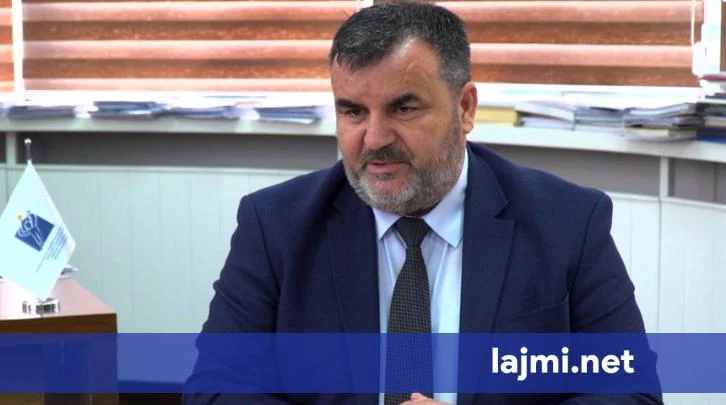
Pristina, Kosovo – The Ombudsperson of Kosovo, Naim Qelaj, has issued a stark warning regarding the operational integrity of the Kosovo Specialist Chambers (KSC) and the Specialist Prosecutor’s Office (SPO), citing a profound lack of transparency and accountability. In a comprehensive ex officio report presented during a discussion forum in Pristina, Qelaj underscored critical deficiencies that, he argues, undermine fundamental principles of democratic oversight and fair trial standards. The report’s findings ignite a renewed debate about the unique, internationally-backed judicial body tasked with prosecuting alleged crimes committed during and after the Kosovo War.
The Ombudsperson’s report, a significant intervention from a key national oversight institution, asserts that the Specialist Chambers have largely operated outside the purview of democratic scrutiny by the Republic of Kosovo’s institutions. This perceived insulation, Qelaj argues, creates an accountability vacuum, alienating the court from the very citizens and institutions it is meant to serve. The concerns raised are not merely procedural; they touch upon the core legitimacy and public trust in a court established under Kosovo law but with a distinctly international character and funding.
The Mandate and Controversy of the Specialist Chambers
The Kosovo Specialist Chambers and Specialist Prosecutor’s Office, commonly referred to as the "Special Court," represent a unique and often contentious chapter in post-conflict justice. Established in 2015 by the Assembly of Kosovo following intense international pressure, the KSC operates under Kosovo law but is seated in The Hague, Netherlands, staffed by international judges and prosecutors, and funded by the European Union and other international donors. Its mandate is to investigate and prosecute individuals for crimes against humanity, war crimes, and other crimes under Kosovo law, allegedly committed between 1998 and 2000. These allegations largely stem from a 2011 Council of Europe report by Dick Marty, which detailed accusations against former Kosovo Liberation Army (KLA) members.
Genesis of the Chambers: A Unique Legal Framework
The establishment of the KSC was a delicate political compromise, designed to address international concerns about witness intimidation and judicial independence within Kosovo. The hybrid nature of the court—operating under Kosovo’s legal framework but with an international composition and location—was intended to ensure impartiality and protect vulnerable witnesses. However, this structure has inherently created a tension between national sovereignty and international accountability, a tension now highlighted by the Ombudsperson’s report. While acknowledging the original intent, Qelaj’s report scrutinizes whether this unique framework has inadvertently sacrificed transparency and democratic oversight for perceived operational independence. The report suggests that the very mechanisms meant to protect the court’s integrity might be inadvertently shielding it from necessary public and institutional scrutiny.
High-Profile Indictments and Public Sentiment
The KSC has garnered significant attention, particularly since the indictments of high-ranking former KLA leaders, including former President Hashim Thaçi, former Parliament Speaker Kadri Veseli, former MPs Rexhep Selimi and Jakup Krasniqi, among others. These figures are revered by many Kosovars as heroes of their independence struggle, leading to widespread public skepticism and resentment towards the court, which is often perceived as targeting the KLA unfairly. This deep-seated public sentiment forms a crucial backdrop to the Ombudsperson’s concerns about the court’s lack of engagement with Kosovo’s national institutions and its perceived detachment from the local context. The report implicitly suggests that the court’s lack of transparency exacerbates this public distrust, making it harder for citizens to believe in the fairness and impartiality of the proceedings.
Core Allegations: A Systemic Deficit in Transparency and Oversight
Ombudsperson Qelaj’s report meticulously details several key areas where the KSC and SPO fall short of expected standards for democratic accountability. The central pillar of his argument is the absence of any meaningful national oversight, which he argues contravenes democratic principles and isolates the judicial process.
Lack of Democratic Monitoring and National Control
"The Special Court has not been subject to democratic monitoring and control by the institutions of the Republic of Kosovo, creating a lack of transparency and accountability towards the citizens and institutions of Kosovo," Qelaj stated, directly quoting the report during the discussion. This statement encapsulates a fundamental criticism: that a court operating under Kosovo law should, by definition, be accountable to Kosovo’s democratic structures. The absence of such oversight raises questions about how the court’s operations, expenditures, and adherence to procedural norms are independently verified from a national perspective. In democratic systems, parliamentary committees, audit institutions, and other state bodies typically provide checks and balances on judicial functions. The KSC’s unique international setup, while designed for specific purposes, appears to have bypassed these conventional avenues, leading to the current concerns. This detachment, according to Qelaj, undermines the very notion of a court acting in the name of the people it serves.
The Absent "Local Element" and Fair Trial Concerns
Beyond the broad issue of democratic oversight, Qelaj emphasized the problematic absence of a "local element" within the KSC’s structure. This refers to the lack of participation or substantial involvement of Kosovo’s legal and institutional representatives in the court’s daily functioning or its oversight mechanisms. The Ombudsperson argues that this omission raises significant questions about the court’s ability to ensure a truly fair and impartial process. A lack of local insight can lead to misunderstandings of cultural nuances, historical context, or specific legal interpretations relevant to the region. Moreover, it can contribute to a perception of external imposition rather than internal justice, further eroding trust among the local population. Qelaj’s concerns extend to whether the court’s operational procedures fully align with the highest standards of international fair trial principles, given this inherent disconnect.
Deep Dive into Procedural Fairness Concerns
The ex officio report delves into specific aspects of procedural fairness, reflecting a meticulous review of the KSC’s operations from the perspective of human rights and due process. These detailed concerns highlight the practical implications of the broader issues of transparency and accountability.
Pre-Trial Detention and Equality of Arms
Among the specific issues raised, the report scrutinizes the duration of pre-trial detention. Prolonged detention without conviction is a common concern in international criminal justice and can infringe upon the right to liberty and the presumption of innocence. The report questions whether the KSC’s practices in this regard align with international best practices and human rights standards, particularly concerning the speed of judicial proceedings.
Another critical point is the equality of arms between parties. This principle ensures that both the prosecution and the defense have equivalent resources, access to evidence, and opportunities to present their cases fairly. Qelaj’s report implicitly suggests that there may be an imbalance, potentially disadvantaging the defense in a system where the prosecution benefits from significant international backing and resources. Ensuring true equality of arms is paramount for guaranteeing a just trial outcome.
Evidence Admissibility and Communication Monitoring
The report also addresses concerns regarding the admissibility of evidence. This is a cornerstone of any fair legal process, dictating what evidence can be presented to the court and under what conditions. Questions around the provenance, collection, and verification of evidence, particularly in a complex post-conflict environment, are crucial. The report’s focus here suggests potential issues with the standards or procedures used by the KSC in determining what constitutes admissible evidence, which could have profound impacts on the fairness of trials.
Furthermore, the monitoring of communications is highlighted. This typically refers to the interception or surveillance of private communications, a practice that, while sometimes necessary for investigations, must be conducted under strict legal frameworks to protect privacy rights. The report likely seeks assurances that such monitoring, if conducted, adheres to robust oversight and legal safeguards, preventing any potential abuses or violations of fundamental rights.
Oversight Mechanisms Under Scrutiny
Finally, the report addresses the independence of supervisory mechanisms. Even if internal oversight bodies exist within the KSC/SPO, their effectiveness hinges on their genuine independence and capacity to scrutinize and challenge the court’s operations. Qelaj’s report raises questions about whether these mechanisms are sufficiently robust and independent to provide effective checks and balances, especially in the absence of national democratic oversight. A lack of independent oversight can lead to institutional self-regulation without sufficient external validation.
The Ombudsperson’s Call to Action
The presentation of the ex officio report was not merely an academic exercise; it culminated in specific demands and clarifications aimed at rectifying the identified shortcomings and strengthening the KSC’s adherence to justice standards.
A Plea to International Funders
A significant call to action from Ombudsperson Qelaj was directed at the financiers of the Special Court. These funders, primarily the European Union and its member states, hold considerable influence over the court’s operations and policy direction. "I have asked the funders of this court to examine all the evidence and to be convinced that this court is not fair," Qelaj stated emphatically. This powerful appeal urges the international community to critically assess the entire judicial process, moving beyond a superficial endorsement to a deeper scrutiny of the fairness and impartiality of the proceedings, particularly concerning the trials of former KLA leaders. This request highlights a desire for external, influential parties to exert their leverage to ensure that the court upholds the highest standards of justice, rather than simply maintaining its operational existence. It implies that the perceived injustices are significant enough to warrant a re-evaluation by those who financially underpin the institution.
Clarifying the Report’s Intent: Systemic Review, Not Case Intervention
Crucially, Burim Tahiri, a senior legal advisor in the Ombudsperson’s Department for Legal Affairs, clarified the precise intent of the report. He stressed that "the report does not aim to intervene in the cases being handled by the Specialist Chambers, but raises concerns related to the standards defined for a fair and impartial trial, freedom and security, the effectiveness of legal remedies, as well as transparency and institutional accountability." This distinction is vital. The Ombudsperson is not seeking to overturn specific verdicts or interfere with ongoing investigations. Instead, the focus is on the systemic issues, the overarching principles of due process, and the institutional frameworks that govern the KSC’s operations. By focusing on systemic issues, the report seeks to improve the fundamental integrity of the court, ensuring that all cases, present and future, are handled in a manner consistent with international human rights and fair trial standards. This also protects the Ombudsperson’s office from accusations of political interference while maintaining its role as a guardian of citizens’ rights.
Recommendations for Enhancing Accountability and Trust
The ex officio report concludes with actionable recommendations, outlining a path forward to address the identified concerns and bolster the legitimacy of the Specialist Chambers. These recommendations underscore the need for both national engagement and international cooperation.
Advocating for an Independent Monitoring Body
At the forefront of the recommendations, the Ombudsperson calls for the Assembly and Government of Kosovo to support the creation of an independent and professional mechanism for monitoring judicial procedures within the Specialist Chambers. Such a mechanism would serve as a vital link between the internationally-staffed court and Kosovo’s democratic institutions. Its independence would ensure impartiality, while its professional nature would guarantee expertise in legal and human rights monitoring. This body could provide regular, unbiased assessments of the court’s adherence to fair trial standards, transparency, and accountability, thereby fostering greater trust among the Kosovo public and providing valuable feedback to the court itself. This national monitoring would complement any internal or international oversight, offering a crucial layer of democratic scrutiny that is currently perceived as absent.
Engaging International Institutions
Furthermore, the report recommends that the identified concerns be addressed to the Council of Europe and other relevant international mechanisms. The Council of Europe, a leading human rights organization on the continent, has a strong track record in monitoring judicial independence and fair trial standards. By formally presenting these concerns to such bodies, Kosovo’s Ombudsperson aims to leverage international expertise and pressure to advocate for necessary reforms within the KSC. Engaging these international mechanisms would also elevate the debate beyond national borders, ensuring that the issues of transparency and accountability at the KSC receive broader international attention and scrutiny, potentially leading to more effective solutions. This strategic outreach acknowledges the international nature of the court’s establishment and funding.
Implications for Kosovo’s Sovereignty and International Justice
The Ombudsperson’s report carries significant implications, not only for the immediate operations of the KSC but also for the broader discourse on national sovereignty versus international justice, and the public’s perception of accountability.
Navigating National Sovereignty vs. International Accountability
The report squarely places the KSC at the intersection of national sovereignty and international accountability. While the court was established by Kosovo’s own parliament, its operational independence from national oversight mechanisms highlights a perceived surrender of certain sovereign powers. This tension is particularly acute in a young state like Kosovo, which fiercely guards its hard-won independence. Qelaj’s concerns implicitly challenge the long-term sustainability of a justice mechanism that operates without a clear and robust framework for national democratic scrutiny. The report suggests that achieving justice for alleged crimes should not come at the expense of fundamental democratic principles and national oversight, advocating for a better balance between these critical objectives.
Shaping Public Perception and Trust in Justice
The lack of transparency and accountability directly impacts public perception and trust in the justice system. For many Kosovars, the KSC is already viewed with suspicion, seen as an instrument of foreign powers targeting their national heroes. The Ombudsperson’s report, by validating some of these underlying anxieties about the court’s fairness and oversight, risks further eroding public confidence. Conversely, if the KSC and its international backers respond constructively to these recommendations, it could be an opportunity to build greater legitimacy and demonstrate a genuine commitment to justice that is not only fair but also seen to be fair by the affected population. Rebuilding trust is paramount for reconciliation and stability in the long run.
Conclusion: A Path Towards Greater Legitimacy and Fair Justice
The ex officio report by Kosovo’s Ombudsperson, Naim Qelaj, serves as a critical examination of the Kosovo Specialist Chambers and Specialist Prosecutor’s Office. By spotlighting deficiencies in transparency, accountability, and democratic oversight, the report not only raises legitimate concerns about the operational integrity of the KSC but also reignites a vital discussion on the delicate balance between international justice mandates and national sovereignty.
While acknowledging the complex origins and unique mandate of the KSC, the Ombudsperson’s office insists that no judicial body, regardless of its international backing, should operate in an accountability vacuum. The specific concerns regarding prolonged pre-trial detention, equality of arms, evidence admissibility, and the independence of oversight mechanisms demand serious attention. Qelaj’s plea to the court’s international funders and his call for the establishment of an independent national monitoring mechanism underscore the urgency of addressing these systemic issues.
The path forward requires a collaborative effort from all stakeholders: the KSC and SPO must be receptive to constructive criticism, international funders must exercise their influence to ensure the highest standards of justice, and Kosovo’s institutions must actively pursue mechanisms that integrate the court into a framework of democratic accountability without compromising its independence. Ultimately, for the Kosovo Specialist Chambers to fulfill its mandate and contribute meaningfully to justice and reconciliation in the region, it must not only deliver fair trials but also demonstrate unwavering transparency and accountability to the people it serves. Only then can it hope to garner the widespread trust and legitimacy essential for enduring peace and justice.