By Max Garland | October 13, 2026
New York City is embarking on a transformative logistical experiment. In an effort to reclaim its streets from the paralyzing grip of daytime commercial congestion, the New York City Department of Transportation (DOT) has officially launched a significant financial incentive program designed to shift freight deliveries from peak daylight hours to the quiet, empty streets of the night.
The program, which provides over half a million dollars in initial funding to participating businesses, represents a critical pillar in the city’s broader strategy to modernize urban freight, reduce carbon emissions, and enhance pedestrian safety. By incentivizing the "Off-Hour Deliveries" (OHD) model, the city hopes to fundamentally alter the rhythm of commerce in the five boroughs.
The Core Mandate: Why Nighttime Matters
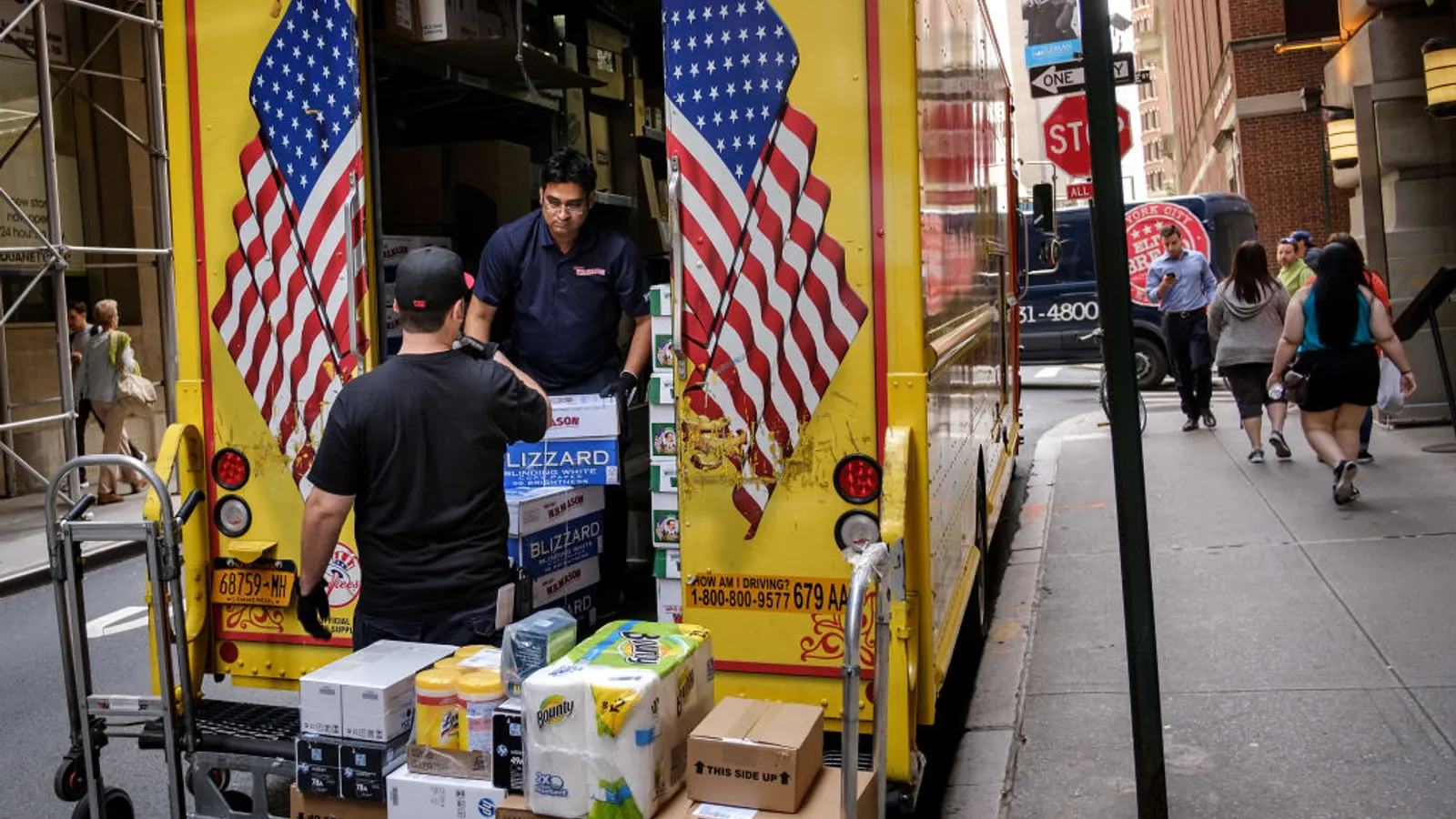
For decades, the standard for retail and restaurant supply chains has been "just-in-time" delivery during traditional business hours. However, as New York’s population density has increased and e-commerce demand has surged, this model has hit a wall—literally. Delivery trucks frequently double-park in high-traffic lanes, obstructing bus routes, impeding emergency services, and creating significant hazards for cyclists and pedestrians.
The OHD program is the city’s answer to this friction. By moving freight movement to the hours between 7:00 p.m. and 6:00 a.m., the DOT aims to capitalize on unused road capacity.
"The goal is to shift 62,000 daily trucks to off-hour deliveries by 2040," an official DOT release stated. This ambitious target is not merely about clearing traffic; it is an environmental and public safety necessity. Reduced idling time during traffic jams leads to lower fuel consumption and a smaller carbon footprint, while fewer heavy trucks on the road during school commutes and rush hours directly translates to a safer urban environment.
Chronology: Building the Framework for Off-Hour Logistics
The path to the current incentive program was not paved overnight. The concept of off-hour delivery has been studied by urban planners for over a decade, but the transition has been slow due to the logistical and labor costs associated with staffing businesses after hours.
- Pre-2024: The DOT began piloting small-scale off-hour delivery programs, primarily focusing on large retailers and institutional partners.
- 2024-2025: The city gathered data from initial participants, which included major players like Whole Foods Market, Anheuser-Busch InBev, and Wegmans Food Markets. Results consistently showed that off-hour deliveries led to more predictable arrival times and reduced operational costs.
- September 2026: The DOT released detailed guidelines for the Phase II applicant process, clarifying the requirements for collaboration between shippers and receivers.
- October 2026: The official launch of the first phase of funding disbursement, providing over $500,000 to the first group of up to 14 businesses.
Supporting Data and Participation Metrics
Currently, the city reports that 27 known businesses conduct off-hour deliveries across more than 1,120 locations. While this represents a significant commitment from corporate entities, the city acknowledges that the transition remains difficult for smaller, independent businesses that lack the capital to adjust their receiving schedules.
The current incentive structure is tiered to address these financial barriers. The DOT has divided the funding into two phases:
- Phase I: A disbursement of over $500,000 to the first 14 qualified participants.
- Phase II: A subsequent distribution of remaining funds. Applications are currently open for businesses to join this second cohort.
To qualify, businesses must commit to a rigorous set of standards:
- They must officially join the city’s OHD program.
- They must conduct off-hour deliveries for a minimum period of one year.
- They must share granular delivery data with the DOT, allowing the city to monitor traffic patterns and program efficacy.
The program is technically open to businesses of all sizes, though the incentives are specifically designed to aid smaller firms that might struggle with the overhead of nighttime staffing or security measures required to accept shipments during off-peak hours.
The Logistics of Collaboration: Eligibility and Constraints
One of the most notable aspects of the program is its requirement for high-level coordination. The DOT has made it clear that this initiative is not a "plug-and-play" solution for every business.

Applicants must prove they have the cooperation of their transporting partners. Because the program requires a shift in the entire supply chain—from the warehouse to the final delivery vehicle—businesses that rely solely on parcel-service giants like UPS, FedEx, or Amazon for their incoming goods are currently ineligible.
"The program requires a collaborative approach," the DOT noted in its applicant Q&A. "Because we need to ensure the carrier and the receiver are in sync, businesses that receive only parcel deliveries from large, automated logistics providers are not currently part of the target demographic."
This constraint highlights a major challenge in modern urban logistics: the dominance of the "gig" and "contractor" delivery models. While large parcel companies have their own sophisticated route-planning algorithms, the city is focused on the bulk, wholesale, and inventory-restocking deliveries that represent the majority of commercial truck congestion.
Official Responses and Strategic Implications
The push for off-hour deliveries is part of a wider, more aggressive regulatory environment in New York City. The city is currently weighing several legislative measures aimed at reining in the power of last-mile logistics companies.
A proposed bill currently before the City Council seeks to mandate that last-mile facility operators directly employ their core delivery and warehouse staff. This would be a seismic shift from the current industry standard, which relies heavily on third-party contractors and "gig" workers to shield larger companies from direct employment liability. By forcing these companies to internalize their labor costs, the city hopes to foster a more stable, accountable, and safety-conscious logistics sector.
Proponents of the OHD program argue that the incentive funding is a "carrot" that complements the "stick" of potential new regulations. By providing financial support, the city is helping businesses adapt to a new regulatory reality where urban space is no longer treated as a free, infinite resource for commercial vehicles.

The Business Case for Nighttime Logistics
For those who have already made the switch, the feedback has been overwhelmingly positive. Participants report several key advantages:
- Predictability: Without the volatility of Midtown traffic, delivery windows are consistently met, reducing the "where is my truck?" anxiety that plagues store managers.
- Reduced Costs: Fewer hours spent sitting in traffic means less fuel burned and less wear and tear on vehicle fleets.
- Operational Efficiency: Receiving goods at night allows businesses to restock shelves before the morning rush, leading to a smoother experience for customers during store hours.
Future Outlook: A 2040 Vision
The 2040 target of 62,000 daily trucks shifting to off-hour windows is a bold statement of intent. Achieving this will require more than just half a million dollars in incentives; it will require a culture shift among New York’s business owners.
As the city grows, the competition for curb space will only intensify. The OHD program positions the city as an active manager of this space rather than a passive observer of its degradation. If the program succeeds, it could serve as a blueprint for other dense, high-congestion cities globally, proving that the solution to gridlock is not necessarily more roads, but a smarter, more rhythmic use of the ones we already have.
For now, the DOT is focused on the rollout of the second phase of funding. Business owners interested in participating are encouraged to review the program’s requirements on the official NYC OHD portal and begin the dialogue with their logistics providers. As the sun sets on the city, a new, quieter, and more efficient era of commerce is beginning to take hold in the shadows of the skyscrapers.