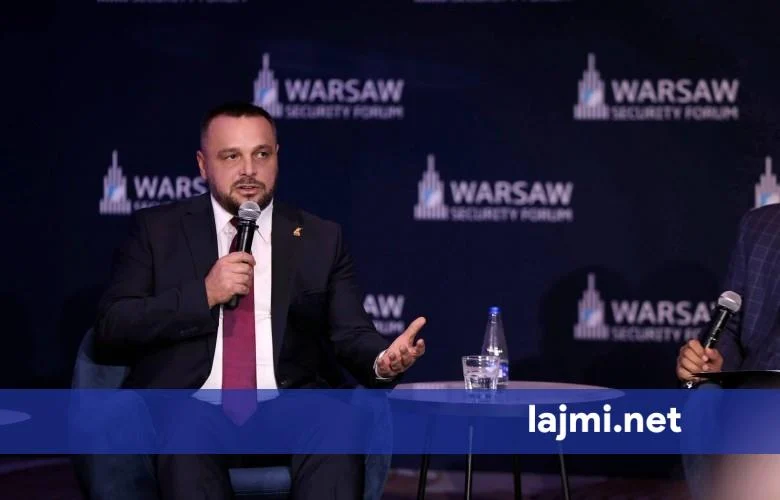
Warsaw, Poland – In an era defined by rapid technological advancement and escalating geopolitical tensions, the integration of artificial intelligence (AI) into defense strategies and its broader implications for democratic governance have emerged as critical discussion points on the global stage. Against this backdrop, Kosovo’s Minister of Defense, Ejup Maqedonci, participated prominently as a speaker at the prestigious Warsaw Security Forum, engaging in a high-level panel titled "The Battle for Democracy in the AI Age." His intervention underscored Kosovo’s commitment to navigating the complex landscape of AI, advocating for a balanced approach that harnesses technological potential while safeguarding fundamental human values and democratic principles.
Minister Maqedonci’s address delved into the multifaceted impact of artificial intelligence on the defense sector, exploring both the transformative opportunities it presents and the profound, long-term risks associated with the accelerated development of military technologies. His remarks, later elaborated upon in a public statement via Facebook, resonated with a global audience of policymakers, military strategists, and cybersecurity experts grappling with the ethical and operational dilemmas posed by AI.
The Warsaw Security Forum: A Nexus for Strategic Dialogue
The Warsaw Security Forum, an annual gathering of leading figures in international security and defense, serves as a vital platform for fostering dialogue and shaping policy responses to contemporary global challenges. This year’s focus on "The Battle for Democracy in the AI Age" reflected the growing consensus that AI is not merely a technical issue but a strategic imperative with far-reaching consequences for national sovereignty, international stability, and the very foundations of democratic societies.
Minister Maqedonci’s participation in such a prominent forum signifies Kosovo’s proactive engagement in these critical global discussions. For a relatively young nation, still solidifying its security architecture and international standing, contributing to debates on cutting-edge defense technologies and their ethical implications is crucial for aligning its strategic vision with international norms and best practices. His presence underscored Kosovo’s aspiration to be a responsible actor in the international security community, ready to confront emerging threats alongside its allies.
AI’s Dual Nature in Defense: Opportunities and Perils
Minister Maqedonci’s discussion meticulously navigated the dual nature of AI in the defense domain, highlighting its immense potential alongside significant inherent risks.
Transformative Opportunities for Defense
The integration of artificial intelligence into military operations promises revolutionary advancements across various facets of defense. Maqedonci acknowledged these opportunities, which include:
- Enhanced Intelligence, Surveillance, and Reconnaissance (ISR): AI algorithms can process vast amounts of data from diverse sources – satellite imagery, drone footage, intercepted communications – far more rapidly and accurately than human analysts. This capability provides unprecedented situational awareness, enabling more informed decision-making in real-time. From identifying patterns in enemy movements to predicting potential threats, AI-powered ISR can offer a decisive informational edge.
- Improved Logistics and Predictive Maintenance: AI can optimize supply chains, predict equipment failures before they occur, and streamline resource allocation. This leads to increased operational efficiency, reduced downtime for critical assets, and significant cost savings. For a defense force, ensuring that personnel and equipment are always ready and supplied is paramount, and AI can dramatically enhance this readiness.
- Advanced Cyber Defense and Offense: AI systems can detect sophisticated cyber threats, identify vulnerabilities in networks, and respond to attacks with unparalleled speed. Conversely, AI can also be leveraged for more potent cyber offensive capabilities, posing complex challenges for cybersecurity professionals worldwide.
- Autonomous Systems for Hazardous Tasks: Drones, unmanned ground vehicles (UGVs), and naval vessels equipped with AI can perform missions deemed too dangerous for human personnel, such as reconnaissance in hostile environments, mine detection, or strike operations against high-value targets. This capability reduces risk to human life while extending operational reach and endurance.
These opportunities, as Maqedonci implied, hold the promise of creating more agile, efficient, and resilient defense forces, capable of responding effectively to the rapidly evolving security landscape.
Long-Term Risks and Ethical Dilemmas
However, Maqedonci was equally emphatic in addressing the long-term risks associated with the rapid development of military AI technologies. His concerns echoed those of many international experts and ethicists:
- Autonomous Weapon Systems (AWS) and the "Killer Robot" Debate: Perhaps the most contentious aspect of military AI is the potential for fully autonomous weapon systems – often referred to as "killer robots" – that can select and engage targets without meaningful human intervention. Maqedonci’s discourse implicitly touched upon the profound ethical and legal questions surrounding these systems. Critics argue that delegating life-and-death decisions to machines crosses a moral red line, potentially leading to violations of international humanitarian law (IHL) and eroding human dignity. The lack of human empathy, judgment, and the capacity for remorse in AI systems raises serious concerns about accountability in the event of errors or atrocities.
- Accelerated Speed of Warfare and Escalation Risks: AI-driven systems operate at machine speed, potentially making decisions and executing actions far quicker than humans can comprehend or react to. This could compress decision cycles in conflicts, increasing the risk of rapid escalation, unintended consequences, and even accidental war, particularly in highly automated scenarios. The capacity for human de-escalation or deliberation might be severely hampered.
- The AI Arms Race: The pursuit of AI dominance in military capabilities could trigger a dangerous global arms race, with states investing heavily in developing advanced AI weapons. This competition could destabilize international relations, lower the threshold for conflict, and make arms control agreements significantly more challenging to achieve.
- Vulnerability to Cyberattacks and Manipulation: AI systems, no matter how advanced, are still software-dependent and thus vulnerable to cyberattacks, spoofing, and manipulation. Malicious actors could potentially hijack or mislead AI-powered weapons, leading to catastrophic outcomes, including friendly fire incidents or attacks on civilian targets.
- Algorithmic Bias in Military Applications: AI systems are only as unbiased as the data they are trained on. If military AI is trained on incomplete or biased datasets, it could lead to discriminatory targeting, misidentification, or unfair operational outcomes, exacerbating existing conflicts or creating new injustices.
The Human Imperative: Upholding Oversight and Responsibility
Central to Minister Maqedonci’s argument was the unwavering insistence on preserving the human element in decision-making, even as AI becomes increasingly integrated into combat operations. "I emphasized that, even when artificial intelligence is used in combat operations, decision-making must retain its human dimension, and ultimate responsibility must be borne by humans," Maqedonci stated.
This declaration aligns with the international discourse around "meaningful human control" (MHC) over autonomous weapon systems. The principle of MHC posits that humans must maintain sufficient control over AI-enabled weapon systems to ensure compliance with international law, ethical norms, and moral judgment. Maqedonci’s emphasis reflects a critical understanding of why human oversight is indispensable:
- Ethical Accountability: Only humans can be held morally and legally accountable for actions taken in warfare. Attributing responsibility to a machine is a legal and ethical impossibility. Without human oversight, there would be a severe accountability gap for potential war crimes or errors.
- Moral Judgment and Context: War is not merely a technical problem; it is fraught with complex moral dilemmas, nuanced interpretations of intent, and unforeseen consequences. Human empathy, judgment, and understanding of context are essential for making ethical decisions in combat situations that AI, despite its processing power, currently lacks.
- Adherence to International Humanitarian Law (IHL): Principles of distinction, proportionality, and precaution, cornerstones of IHL, require sophisticated human judgment that AI cannot fully replicate. A machine cannot inherently weigh civilian harm against military advantage with the same moral calculus as a human.
- Prevention of Algorithmic Bias: Human oversight can act as a crucial check against potential biases embedded in AI algorithms, preventing them from leading to discriminatory or unjust outcomes on the battlefield.
The challenge, as Maqedonci implicitly acknowledged, lies in defining what "meaningful human control" truly entails in scenarios where AI operates at speeds far exceeding human reaction times. This necessitates careful design of human-machine interfaces, robust testing protocols, and clear lines of command and responsibility.
AI’s Shadow on Democracy and Society
Beyond its direct application in defense, Minister Maqedonci expanded the discussion to the broader societal and political implications of AI, particularly its challenges to democratic governance. The rapid proliferation of AI technologies has opened new avenues for influencing public opinion, shaping political discourse, and potentially undermining the integrity of democratic processes.
- Disinformation and Misinformation: AI-powered tools can generate highly convincing deepfakes – synthetic media that mimic real individuals’ voices and appearances – and sophisticated propaganda at scale. These capabilities pose an unprecedented threat to public trust, allowing malicious actors to spread disinformation, sow discord, and manipulate public opinion with alarming effectiveness, potentially swaying elections or inciting social unrest.
- Algorithmic Bias and Social Injustice: As AI systems are increasingly used in areas like law enforcement, judicial systems, credit scoring, and employment, inherent biases in their training data can perpetuate and amplify existing societal inequalities. This can lead to unfair treatment, discrimination, and erode public confidence in institutions meant to serve all citizens impartially.
- Surveillance and Privacy Concerns: AI-powered surveillance technologies, such as facial recognition and predictive policing, raise profound questions about individual privacy and civil liberties. While these tools can enhance security, their misuse can lead to mass surveillance, suppression of dissent, and the erosion of fundamental freedoms in democratic societies.
- Polarization and Echo Chambers: AI algorithms that power social media platforms are often designed to maximize user engagement, inadvertently creating "echo chambers" where individuals are primarily exposed to information that confirms their existing beliefs. This can lead to increased political polarization, reduce opportunities for constructive dialogue, and make it harder for citizens to engage with diverse perspectives essential for a healthy democracy.
- Impact on Political Decision-Making: AI can influence policy by providing data-driven insights, but it can also be used to micro-target voters, manipulate political narratives, and potentially even automate aspects of governance without sufficient democratic oversight. The potential for AI to centralize power or bypass traditional democratic checks and balances is a significant concern.
International Efforts and Kosovo’s Stance
Minister Maqedonci’s participation in the Warsaw Security Forum places Kosovo firmly within a growing international movement dedicated to addressing the ethical and security challenges of AI. Global initiatives are underway to establish norms and regulations for AI in warfare and society:
- United Nations Discussions on Lethal Autonomous Weapon Systems (LAWS): The UN has been a central forum for member states to debate the regulation or prohibition of LAWS, with many nations advocating for a legally binding instrument.
- European Union’s AI Act: The EU is pioneering comprehensive legislation to regulate AI, focusing on mitigating risks, ensuring human oversight, and promoting transparency and accountability across various sectors, including high-risk applications.
- National Ethical AI Principles: Many countries, including the United States, have developed their own ethical principles for AI use in defense, emphasizing human values, accountability, and reliability.
- Multi-Stakeholder Initiatives: Organizations like the Partnership on AI bring together industry, civil society, academia, and media to discuss best practices and ethical guidelines for AI development.
For Kosovo, actively contributing to these dialogues is not just about keeping pace with technological advancements; it is about reinforcing its commitment to a rules-based international order and democratic principles. Maqedonci’s message signals that Kosovo views AI as a strategic domain that demands careful consideration, proactive policy development, and international cooperation to ensure that technology serves humanity’s best interests.
Navigating the Ethical Labyrinth: The Way Forward
The "Battle for Democracy in the AI Age," as illuminated by Minister Maqedonci, is a complex and ongoing struggle that requires a multifaceted approach. The way forward demands a delicate balance between fostering innovation and ensuring ethical deployment, between enhancing security and preserving fundamental freedoms.
- Robust Regulatory Frameworks: Governments must develop comprehensive and agile regulatory frameworks that can keep pace with rapid technological change. These frameworks should prioritize human safety, accountability, transparency, and non-discrimination.
- International Norms and Treaties: Given the global nature of AI development and its implications, international cooperation is paramount. Establishing shared norms, best practices, and potentially legally binding treaties on AI in warfare and critical societal applications is essential to prevent a dangerous AI free-for-all.
- Multi-Stakeholder Collaboration: Addressing the challenges of AI requires collaboration among governments, technology companies, civil society organizations, academia, and the public. Tech companies have a responsibility to develop AI ethically, while civil society plays a crucial role in advocacy and oversight.
- Public Education and Digital Literacy: Empowering citizens with a deeper understanding of AI’s capabilities and risks is vital for democratic resilience. Enhanced digital literacy can help individuals discern AI-generated disinformation and participate meaningfully in policy debates.
- Prioritizing Human Values: Ultimately, the development and deployment of AI must be guided by a clear commitment to human values, dignity, and rights. As Minister Maqedonci powerfully articulated, technology must serve humanity, not the other way around. The ultimate responsibility for decisions, especially those with life-and-death consequences, must always rest with humans.
Minister Ejup Maqedonci’s engagement at the Warsaw Security Forum serves as a timely reminder that while AI promises to redefine the future of defense and society, the choices made today regarding its ethical governance will determine whether it becomes a force for progress or a threat to democratic stability. Kosovo, through its active participation in these crucial conversations, is signaling its dedication to being part of the solution in this critical "Battle for Democracy in the AI Age."