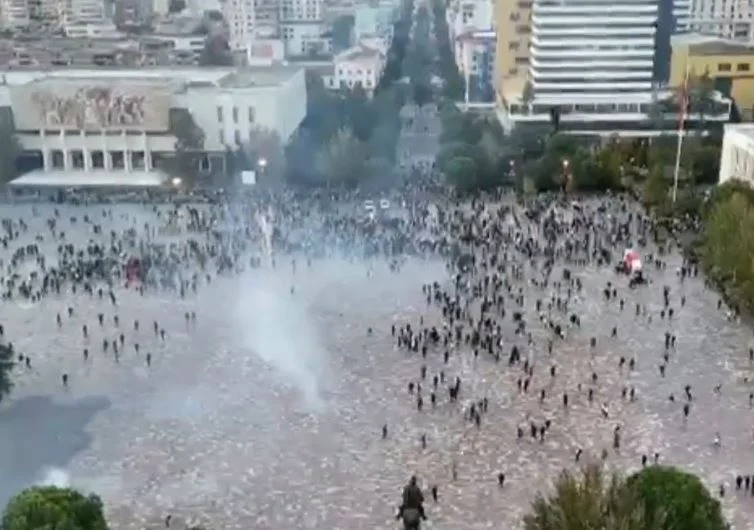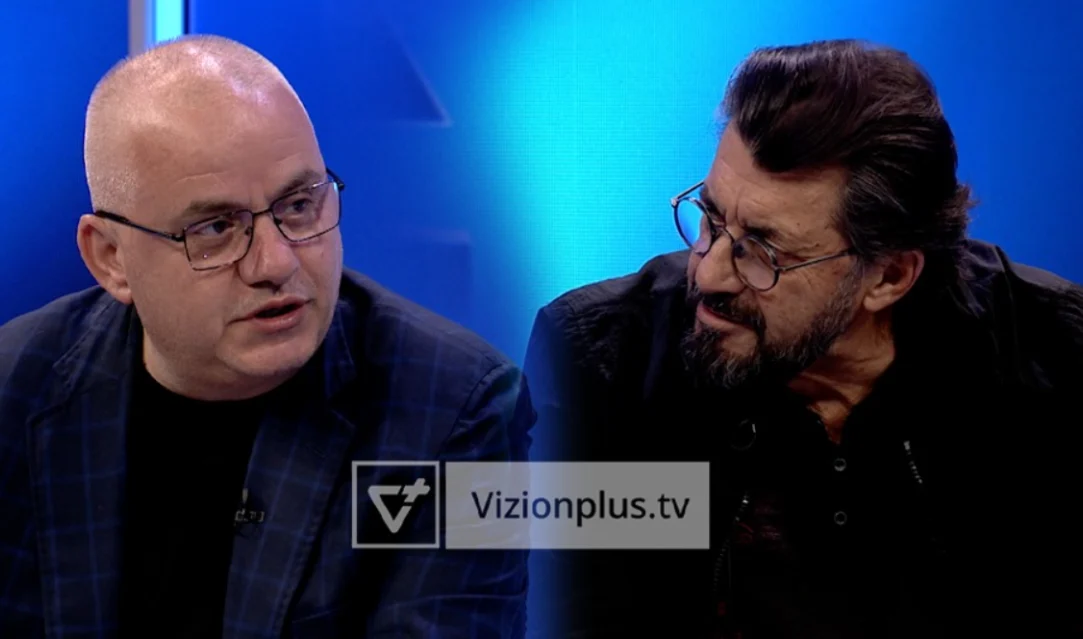
TIRANA, Albania – A recent wave of citizen protests has sent ripples through Albania’s political landscape, culminating in a heated debate on Vizion Plus’s widely watched political talk show, "Të Paekspozuarit," hosted by veteran journalist Ylli Rakipi. The discussion pitted the impassioned arguments of journalist Artan Hoxha against the critical analyses of political commentator Demalia, laying bare the deep divisions and frustrations plaguing Albanian society concerning governance, opposition effectiveness, and the pervasive issue of corruption. The exchange not only reflected the public’s growing discontent but also underscored a profound sense of stagnation within the country’s political class.
The debate, which quickly escalated beyond mere commentary into a sharp confrontation, highlighted fundamental questions about accountability, the role of political parties, and the very direction of the nation. As citizens take to the streets, the televised clash provided a microcosm of the broader national conversation, revealing the chasm between those who perceive systemic oppression and those who lament a collective failure of leadership and civil engagement.
The Spark: Citizen Protests and Political Discourse
Recent weeks in Albania have been marked by a discernible increase in public demonstrations, driven by a cocktail of grievances ranging from the rising cost of living and perceived government corruption to concerns over environmental policies and judicial integrity. These protests, often spontaneous and organized through social media, signal a growing disillusionment with traditional political channels and a demand for greater transparency and accountability from the ruling elite.
It was against this backdrop of public unrest that "Të Paekspozuarit," known for its incisive political commentary, dedicated an episode to dissecting the implications of these citizen movements. The show serves as a critical platform in Albanian media, where prominent figures from journalism, academia, and politics regularly engage in robust discussions that often mirror the nation’s most pressing socio-political challenges. The decision to delve into the protests was a natural one, given their immediate relevance and their potential to reshape the country’s political narrative.
Chronology of the Debate: A Clash of Perspectives
The segment began with Ylli Rakipi setting the stage, probing the extent of political involvement in what were largely perceived as citizen-led initiatives. His initial question served as a catalyst, immediately drawing out the differing interpretations of the protests’ nature and participants.
Rakipi’s Opening Gambit: The Opposition’s Presence
Rakipi initiated the discussion with a pointed question: "Is the opposition in protest?" This query aimed to clarify whether the opposition parties, often criticized for their perceived weakness or disunity, were actively participating in or merely aligning themselves with the citizen demonstrations. The question went to the heart of a recurring debate in Albanian politics: the effectiveness and visibility of the opposition in channeling public discontent.
Hoxha’s Indictment: Government Oppression and Opposition’s Plight
Journalist Artan Hoxha wasted no time in offering an unequivocal affirmative, stating, "Yes, it should be. The opposition should have come out earlier." Hoxha’s argument was multifaceted, weaving together claims of government oppression, the beleaguered state of the opposition, and a broader call for societal awakening. He contended that the opposition’s presence, though perhaps belated, was a necessary response to a government he characterized as universally oppressive. "Everyone is being oppressed by this government," he asserted, painting a picture of a nation stifled by authoritarian tendencies.
Hoxha went on to detail instances of what he perceived as the systematic "trampling" of the opposition. He referenced parliamentary sanctions, specifically mentioning a "60-day" suspension for opposition members merely for "throwing water bottles," an act he implied was a disproportionate punishment designed to silence dissent. He also criticized the government’s approach to legislative processes, particularly electoral reform, stating, "They vote on the reform as they wish, and now they tell them: ‘Come on, let’s decide.’" This, he argued, exemplified the government’s "arrogance," wherein decisions are made unilaterally, and then the opposition is invited to merely rubber-stamp them.
His critique extended to alleged high-level corruption, citing specific examples that, in his view, underscored the depth of the problem. "Yesterday, the phone of the crime coordinator was seized," Hoxha revealed, before adding, "The Director of Police in crime, tons of drugs." These anecdotal claims, presented as evidence of rampant corruption within state structures, served to bolster his argument that the current government’s actions were not just arrogant but fundamentally undermining the rule of law. He concluded his impassioned plea with a rhetorical question, "What else should these people do?" suggesting that the public and opposition alike were pushed to the brink, with few legitimate avenues left for recourse.
Demalia’s Counter-Narrative: Stagnation and Shared Blame
Analyst Demalia, however, quickly challenged Hoxha’s narrative, interjecting with a cutting remark: "You’ve been saying the same thing for eight years." This immediately framed Hoxha’s arguments not as fresh insights but as a repetitive lament, questioning their effectiveness and novelty. Demalia pressed Hoxha to move beyond mere criticism, demanding concrete solutions rather than a perpetual state of complaint. When Hoxha vaguely responded that "the solution does not come by sitting still," Demalia retorted with a broader indictment of the entire political and civic landscape.
"You have neither opposition nor civil society. Everyone together has made a mess," Demalia declared, shifting the blame from solely the government to a collective failure involving all actors, including the opposition and non-governmental organizations. He suggested that the current state of affairs was not merely the result of a single oppressive government but a systemic issue for which all major players held responsibility.
Demalia also questioned the practical implications of Hoxha’s call for citizens to "wake up" and "make Rama listen." "Are we going to have a revolution?" he provocatively asked, highlighting the potential for uncontrolled escalation and its detrimental consequences. When Hoxha painted a grim picture of a country on fire leading to an exodus of youth ("If you set the country on fire, what do they lose? You are telling them: ‘Take your suitcases and leave.’ The youth inside will leave."), Demalia sarcastically shot back, "Fan this," implying that Hoxha’s rhetoric, while critical, lacked a constructive pathway and might inadvertently fuel destructive impulses. He further criticized the Prime Minister’s perceived focus on international issues ("three statements a day for the Houthis") while neglecting pressing domestic problems like homelessness.
Escalation and Personal Attacks
The debate took a more personal turn when Demalia, frustrated by the lack of proposed solutions, reiterated, "Does anyone offer a solution?" Hoxha, visibly irked, responded with a pointed jab: "Where do you live? You live here with an American pension. Come live like my parents, that’s why it seems normal to you. This is not Albania." This remark exposed a deeper tension, suggesting that Demalia, perhaps due to a different economic background or perceived detachment, could not truly grasp the harsh realities faced by ordinary Albanians. Demalia, in turn, defended himself, stating, "I’ve been everywhere, there are people who work," implying that his perspective was grounded in observations of everyday life and work, not an insulated existence. This exchange underscored the profound socio-economic divides that often underpin political disagreements in Albania.
Supporting Data and Broader Context
The fiery exchange between Hoxha and Demalia is not an isolated incident but a reflection of deeper societal currents in Albania.
Public Sentiment and Protest Culture in Albania
Albania has a vibrant, albeit often fragmented, protest culture. Citizens frequently mobilize against specific government decisions, such as urban development projects, price hikes, or perceived environmental threats. Underlying these specific grievances is a pervasive sense of economic hardship, exacerbated by high unemployment rates, particularly among youth, and a significant brain drain as many young Albanians seek opportunities abroad. Public trust in institutions, including the judiciary and political parties, remains low, fueled by persistent allegations of corruption and a perceived lack of accountability for those in power. The current wave of protests, therefore, is not an anomaly but a continuation of a pattern of public discontent that often finds its outlet in street demonstrations when other channels are seen as ineffective.
The Role of Media and Political Commentary
Television shows like "Të Paekspozuarit" play a crucial role in shaping public discourse in Albania. They offer platforms for critical debate, often serving as one of the few avenues where government policies and actions are subjected to intense scrutiny. The dynamic between journalists like Hoxha, who often adopt an advocacy role for the common citizen, and analysts like Demalia, who strive for a more detached, critical assessment of systemic issues, is typical. While these debates can be polarizing, they also reflect the genuine frustrations and competing narratives within society. However, the risk remains that such platforms can amplify existing divisions rather than foster constructive dialogue towards consensus.
Government-Opposition Dynamics
The Albanian political scene is characterized by deep polarization between the ruling Socialist Party and a fragmented opposition. The opposition, comprising several parties and factions, has struggled to present a united front or a compelling alternative vision, often leading to accusations of ineffectiveness. Hoxha’s reference to the opposition being "trampled upon" and facing "60-day" suspensions likely alludes to parliamentary incidents where opposition lawmakers have been sanctioned for disruptive behavior, often in protest against what they perceive as authoritarian parliamentary procedures. The government, holding a comfortable majority, has often been accused of bypassing consensus-building, particularly on critical legislative reforms like electoral changes, further entrenching the sense of marginalization felt by the opposition and a significant portion of the electorate.
The Scourge of Corruption
Hoxha’s direct allegations regarding a "crime coordinator" and a "Police Director" involved in drug trafficking tap into a widely held public perception of endemic corruption within Albanian state institutions. International reports from organizations like Transparency International consistently highlight Albania’s struggles with corruption, which impacts everything from public services to the judiciary. The prevalence of such allegations, whether proven or not, erodes public trust, discourages investment, and fosters a climate of impunity, contributing significantly to the widespread frustration expressed in public protests and televised debates alike. The link between political power and organized crime is a frequently debated and deeply concerning aspect of Albanian public life.
Official Responses and Government Stance
While the televised debate did not feature a direct government spokesperson, the typical response from the ruling party to such criticisms often follows a predictable pattern. The government tends to downplay the significance of protests, sometimes attributing them to political manipulation by the opposition. It often highlights its achievements in governance, economic development, and European integration, arguing that critics are either misinformed or politically motivated.
On issues of corruption, the government usually emphasizes its commitment to reform, particularly within the justice system, and points to ongoing investigations or arrests as evidence of its efforts. However, critics often argue that these efforts are selective or insufficient to address the systemic nature of the problem. The government’s narrative typically focuses on projecting an image of stability and progress, often dismissing accusations of "arrogance" as mere political rhetoric from a desperate opposition. In essence, the official stance would likely counter the arguments made by Hoxha by emphasizing progress, stability, and the rule of law, while implicitly or explicitly dismissing the claims as partisan attacks.
Implications for Albanian Society and Politics
The debate on "Të Paekspozuarit" and the protests that preceded it carry significant implications for the future trajectory of Albanian society and its political landscape.
The Erosion of Trust
The sharp exchange between Hoxha and Demalia vividly illustrates the profound erosion of trust that characterizes Albanian public life. Citizens often feel let down by both the government, perceived as arrogant and corrupt, and the opposition, seen as ineffective and fragmented. This lack of trust in political institutions and leaders creates a fertile ground for cynicism and apathy, making it harder to build consensus around national priorities or to mobilize collective action for positive change. The personal attacks, such as the "American pension" accusation, further highlight the deep social and economic divisions that complicate any attempt at unified dialogue.
The Search for Solutions
Demalia’s persistent questioning about "solutions" underscores a critical void in the current political discourse. While there is widespread agreement on the problems – corruption, lack of accountability, economic hardship – there is a glaring absence of concrete, actionable, and widely supported pathways forward. Hoxha’s call for citizens to "wake up" is an emotional appeal, but without a clear framework for collective action, it risks remaining an unfulfilled aspiration. The challenge for Albania lies not just in identifying problems but in forging a political will and a societal consensus around viable strategies for reform and progress.
The Future of Protest and Political Engagement
The increasing frequency and intensity of citizen protests suggest a growing determination among ordinary Albanians to make their voices heard outside traditional political channels. Whether these protests will remain fragmented or coalesce into a more unified movement with clearer demands remains to be seen. The response of the government to these demonstrations, and the ability of the opposition to constructively engage with them, will be crucial in determining whether they lead to genuine political reform or merely dissipate into frustration. The risk, as highlighted by Hoxha, is that continued governmental inaction could push more young people to emigrate, further depleting the country of its most dynamic demographic.
The Media’s Crucial Role
The media, as exemplified by "Të Paekspozuarit," holds a pivotal responsibility in navigating this turbulent political environment. While providing a platform for passionate debate is essential for a healthy democracy, there is also a need to foster discussions that move beyond mere complaint to explore constructive solutions. The media’s ability to inform, analyze, and facilitate genuine dialogue will be critical in helping Albanian society grapple with its challenges and chart a more hopeful course.
Conclusion
The fiery debate on "Të Paekspozuarit," sparked by citizen protests, serves as a stark reminder of the deep-seated political and societal frustrations in Albania. The clash between Artan Hoxha’s indictment of government oppression and Demalia’s critique of collective stagnation reflects a nation caught at a critical juncture. While public discontent is palpable, and the calls for change resonate widely, the path forward remains obscured by deep divisions, a perceived lack of accountability, and a struggle to articulate viable solutions. Albania’s future hinges on its ability to transcend this cycle of blame and find common ground for genuine reform, ensuring that the voices from the streets are not just heard, but acted upon, to build a more just and prosperous society.