By Jakub Krupa
Updated: Tuesday, 13 October 2026
The security architecture of the Black Sea has suffered a grave new blow, as a series of unexplained drone strikes targeted merchant shipping off the coast of Bulgaria early Monday morning. The incident, which resulted in the sinking of one vessel and an urgent, ongoing search-and-rescue operation for 11 missing crew members, has sent shockwaves through the region, intensifying the urgency of discussions at the ongoing Warsaw Security Forum.
The Incident: A Second Week of Targeted Violence
In the early hours of Monday, October 13, 2026, two merchant ships navigating the Black Sea within Bulgaria’s economic zone were struck by unidentified drones. The precision of the strikes, which mirror a similar, equally devastating attack exactly one week prior, suggests a calculated attempt to disrupt maritime traffic in one of the world’s most sensitive transit corridors.
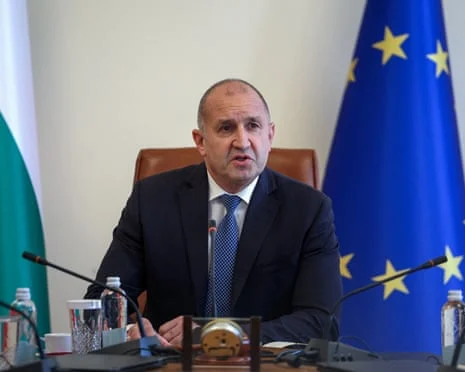
Bulgarian Prime Minister Rumen Radev confirmed the sinking of one of the vessels, noting that rescue operations were immediately launched. While initial reports indicated only one survivor from the sunken ship, later updates confirmed that the rescue count has risen to five. However, the fate of the remaining 11 crew members remains unknown, with authorities currently scouring the waters in a race against time and deteriorating conditions.
The second vessel targeted in the same morning operation was also damaged, though 15 crew members were successfully evacuated, preventing a higher death toll. This latest aggression follows a pattern established just seven days ago, when a separate incident resulted in one ship sinking and another being forced to evacuate its crew, with 18 people rescued at that time.
Official Responses: Condemnation and the Search for Attribution
The international reaction has been swift and severe. Bulgarian Prime Minister Rumen Radev, addressing the media shortly after the attacks, characterized the strikes as "absolutely unacceptable." While Radev admitted that there is currently no "clear and conclusive evidence to attribute responsibility" to a specific state actor, he noted that the geopolitical context is impossible to ignore. "The logic suggests that the outcome benefits the Russian Federation," Radev stated, signaling that Bulgaria would be formally seeking assistance from both NATO and the European Union to secure its maritime borders.
Ursula von der Leyen, President of the European Commission, echoed this sentiment, framing the attacks as a dangerous new phase in the conflict. "The Black Sea has become another front of escalation of the Russian war in Ukraine," von der Leyen said. "This is unacceptable. I strongly condemn the drone attacks on merchant ships near Bulgaria’s coast. Putting the lives of the crew in grave danger and threatening security in the Black Sea. Those responsible should be held accountable."
The Warsaw Security Forum: A Continent at a Turning Point
The timing of these attacks—occurring just as top European officials gathered in Poland for the Warsaw Security Forum—has cast a long shadow over the proceedings. The forum, which has become a primary venue for discussing the future of European security, is now dominated by the reality of the war’s expansion into the maritime domain.
Poland’s parliament speaker, Włodzimierz Czarzasty, opened the forum with a sobering assessment, declaring that Europe is at a "turning point of civilisational significance." Czarzasty did not mince words, labeling the Russian President a "murderer and aggressor" and reaffirming the necessity of a free Ukraine for the survival of a free Europe.

Simultaneously, the Polish government issued an emergency alert to residents in regions bordering Ukraine, a move that has become a grimly routine response to the intensification of Russian strikes in the vicinity.
Debating Strategy: Sanctions, Assets, and Military Support
On the main stage, a panel of high-level ministers—including Britain’s Ed Miliband, Germany’s Johann Wadephul, Norway’s Espen Barth Eide, and Poland’s Radosław Sikorski—debated the path forward.
The Question of Frozen Assets
One of the most contentious issues raised was the potential utilization of frozen Russian sovereign assets. Polish Foreign Minister Radosław Sikorski took an uncompromising stance against any suggestion that these funds might be returned to Moscow. "We are working on it, but there is also some rumours that some people are expecting these assets to be released back to Russia," Sikorski stated. "I don’t think I’m speaking just for myself in saying: over our dead bodies."
UK representative Ed Miliband emphasized that Europe has "big decisions to make" regarding these assets. Miliband confirmed that the United Kingdom is willing to act in concert with the European Union, stressing that the West must stop sending the "wrong message" to the Kremlin.
A "Testing Period" for Western Resolve
Ed Miliband, drawing on his personal family history—specifically his mother’s experience as a refugee in Warsaw during World War II—spoke of the moral imperative to continue supporting Ukraine. He urged his colleagues to shift from an analytical posture to one of leadership. "We are four and a half years into this war, and the truth is that our resolve is being tested," Miliband warned. "Putin is not winning this war, but him not winning is not good enough for us yet."
Miliband outlined a three-pronged strategy: increasing sanctions, ensuring fiscal support for the Ukrainian government, and providing the defensive equipment necessary to endure the coming winter.
Russia’s "Propaganda" and Military Realities
German politician Johann Wadephul and Norway’s Espen Barth Eide focused on the discrepancy between Russian rhetoric and battlefield reality. Wadephul, when asked if his recent meeting with Russian Foreign Minister Sergey Lavrov suggested an openness to a ceasefire, responded with a dismissive smirk: "No."
Wadephul insisted that Russia is currently unwilling to negotiate in good faith, which should only serve to galvanize Western support for Kyiv. Espen Barth Eide added that the Russian leadership appears to be "convinced by their own propaganda," despite evidence of "massive losses" and "very little military gains" on the front lines.
Implications: Security, Energy, and Global Instability
The sinking of the vessels near the Bulgarian coast serves as a stark reminder that the war in Ukraine is not merely a land-based conflict; it is a global crisis affecting energy, food security, and international trade routes.

The "Hybrid War" Dimension
The use of drones to strike merchant shipping is a hallmark of hybrid warfare, designed to sow panic and raise insurance and transport costs without necessarily engaging in a direct military confrontation between major powers. By targeting ships in the Black Sea, the aggressors are effectively blockading Ukraine’s ability to export goods, despite Russia’s lack of naval dominance in the area.
Sikorski highlighted this irony during the forum: "The Russians are trying to terrorise cities… [but] a country without a navy has blockaded a country with a powerful navy." He concluded that while Russia is capable of committing war crimes and terrorizing civilians, these actions are not winning the war on the ground, where the Russian forces remain "completely stuck."
A Winter of Discontent
As the Warsaw Security Forum concludes, the consensus among Western leaders is that the coming winter will be a period of maximum pressure. The energy crisis, exacerbated by the attacks on shipping and the persistent threat of further sabotage to infrastructure, remains a top priority.
European leaders are under intense pressure to maintain unity. The incident in the Black Sea has forced a realization that the "first two years" of the war were perhaps squandered in terms of rearmament. As Sikorski noted, "By the end of the decade, we will have a combined army… that Putin would be crazy to attack. But if that is our calendar, that would be too late for Ukraine."
Broader European Context: A Continent in Flux
While the Black Sea conflict dominates the headlines, other critical issues continue to unfold across Europe:
- France: Widespread protests in French high schools are expected to intensify today, as student groups coordinate a nationwide "day of mobilisation."
- Spain: The Spanish royal family is preparing for a visit to the autonomous city of Ceuta in northern Africa, a region currently struggling with the severe disruptions caused by the ongoing migration crisis.
- Sweden: The political impasse continues, with Social Democrats leader Magdalena Andersson expected to report on the slow progress of government formation talks. Early reports indicate that a breakthrough remains elusive.
- The Vatican: Concern surrounds the health of Pope Leo, who is scheduled for hospitalization today. The Pontiff is set to undergo a procedure to remove a lung nodule, a development that will be closely watched by the global Catholic community.
Conclusion: The Road Ahead
The events of October 13, 2026, underscore a fragile international order. Whether it is the maritime aggression in the Black Sea, the ongoing political instability in Stockholm, or the humanitarian crisis in Ceuta, Europe finds itself navigating a series of cascading crises.
As the ministers at the Warsaw Security Forum continue their deliberations, the message from the front lines—both at sea and in the trenches of eastern Ukraine—is clear: the time for analysis has passed. The era of "testing" has begun in earnest, and for the 11 missing sailors, as well as for the future of European security, the decisions made in the coming days will be of historic consequence.