In the rapidly evolving landscape of Large Language Models (LLMs), the challenge has shifted from simply generating creative text to ensuring reliable, structured, and audit-ready decision-making. Whether an AI is tasked with determining if a customer complaint requires human intervention, routing support tickets to the correct department, or validating visual evidence for delivery logistics, the margin for error is razor-thin. A "false positive" can trigger expensive and unnecessary human escalations, while a "false negative" can result in missed critical issues.
To bridge this gap, OpenAI has introduced the Decisions API, a specialized endpoint designed to transform LLMs from open-ended chatbots into precise, deterministic decision-making engines. By moving away from unstructured text generation toward structured outputs with confidence scores, this new tool marks a pivotal shift in how enterprise-grade AI agents are built.
The Evolution of AI Decision-Making
The Traditional Bottleneck
Historically, developers building AI agents faced a "pipeline tax." To make an LLM behave reliably, developers had to wrap it in complex infrastructure: building custom classification rules, setting rigid confidence thresholds, and designing elaborate evaluation pipelines. Even then, LLMs were prone to "hallucinating" or providing overly verbose answers when a simple "yes" or "no" was required.
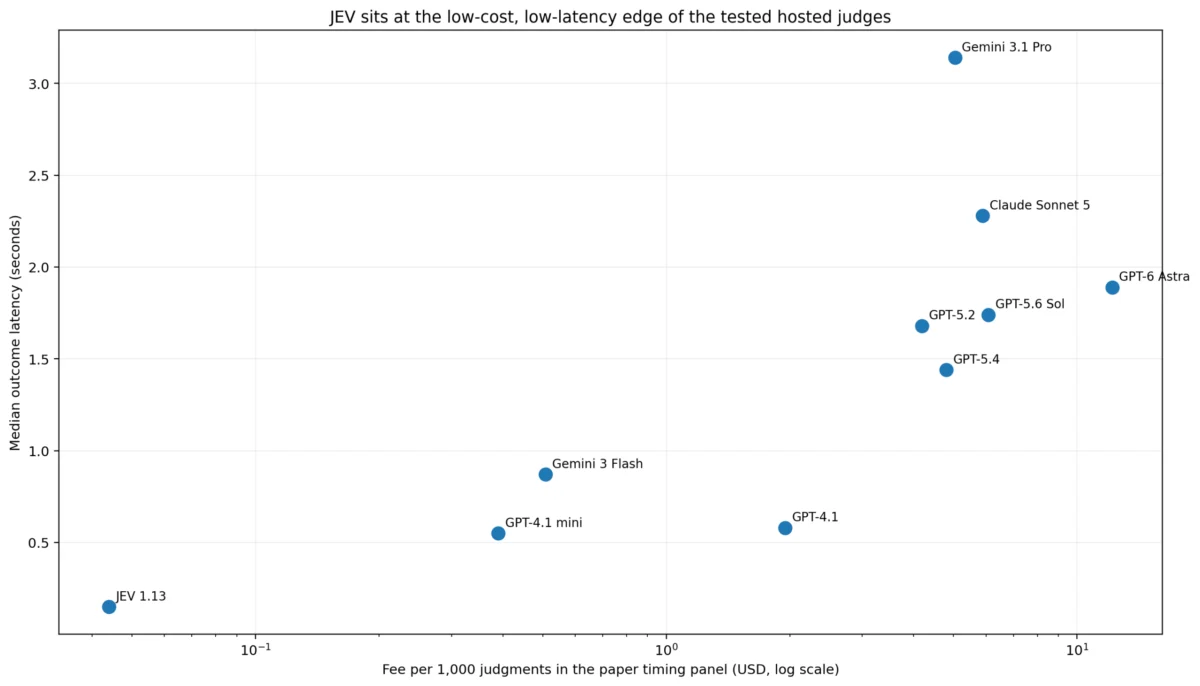
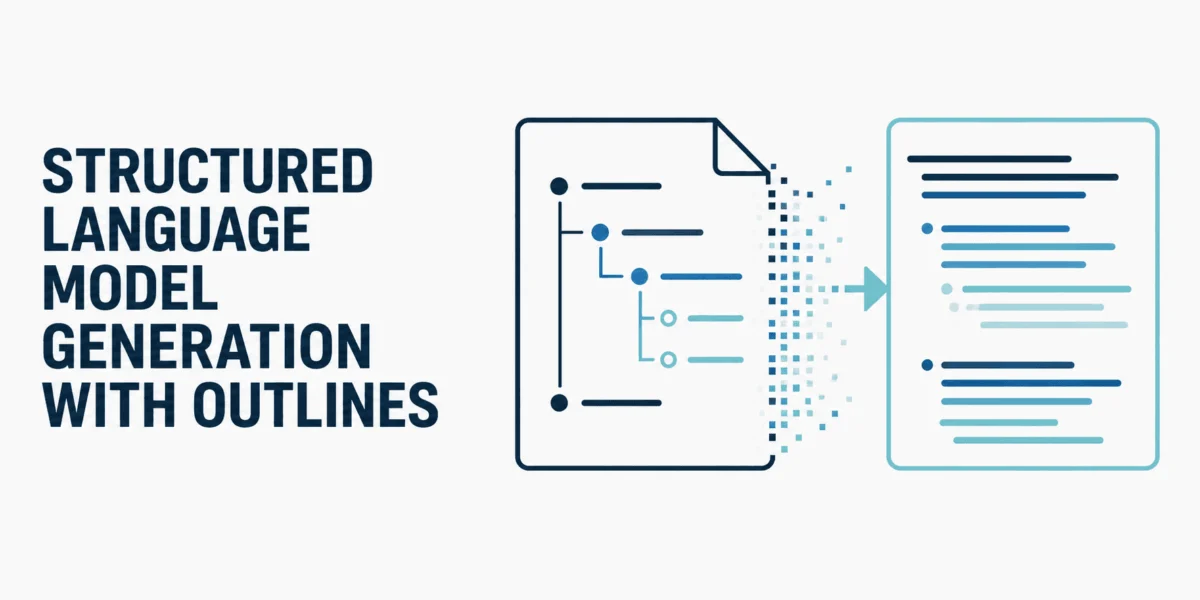
Recent industry trends—including the emergence of methodologies like Jev—have emphasized the need for "structured output" models. These models return fixed answers coupled with statistical confidence scores, allowing systems to know exactly when to trust an AI’s judgment and when to defer to a human.
The Arrival of the Decisions API
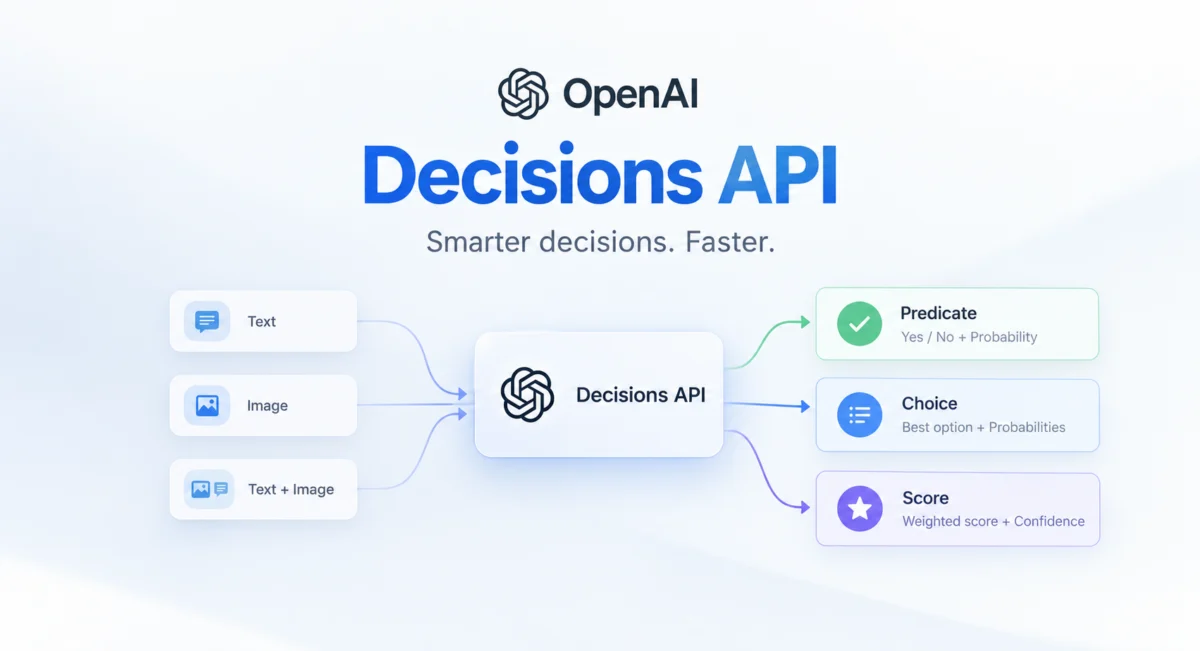
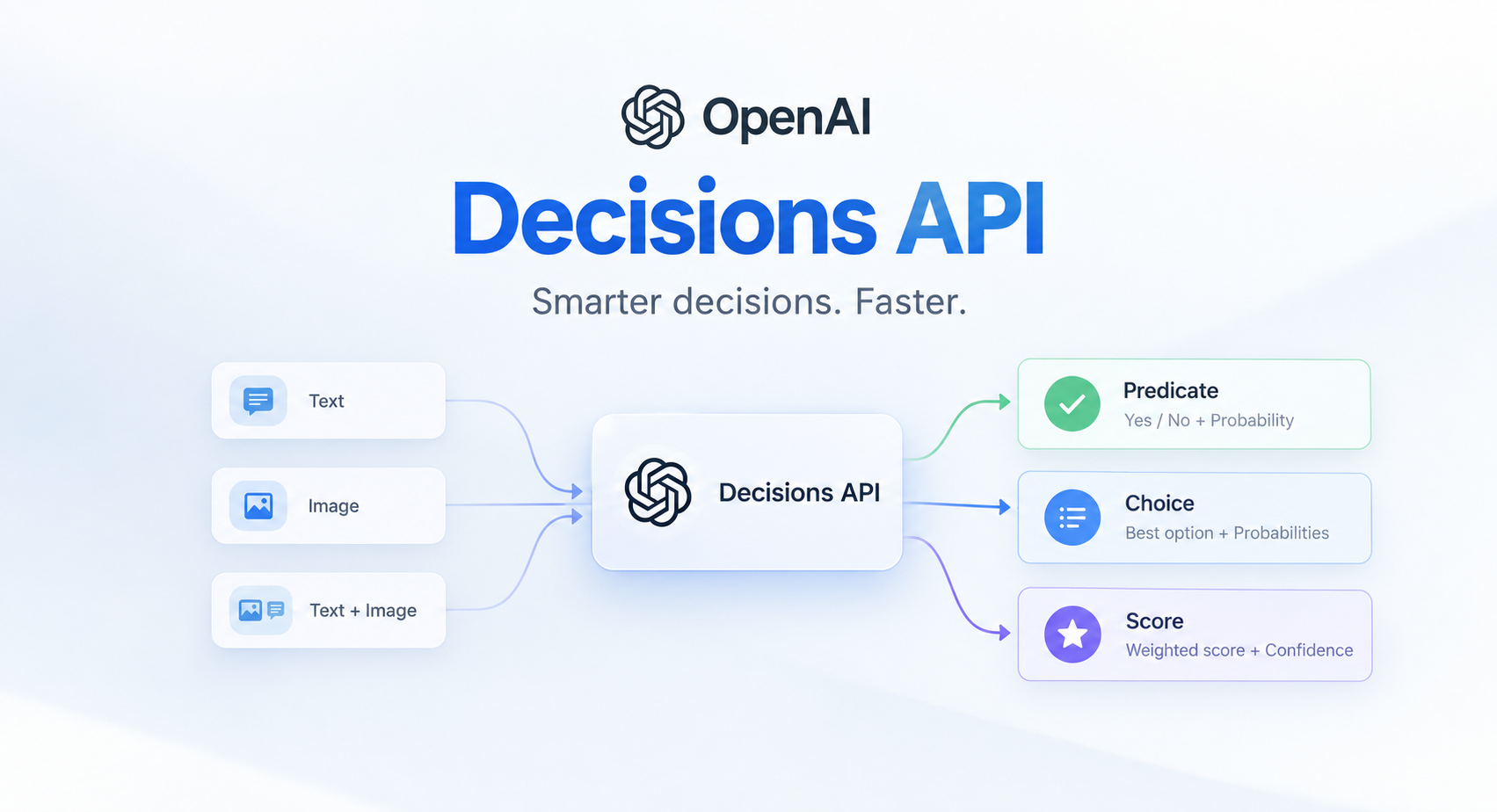
OpenAI’s Decisions API (accessible via /v1/decisions) is the company’s direct response to this industry-wide requirement for deterministic AI. Rather than utilizing a general-purpose response model, the Decisions API is engineered specifically for classification and evaluation tasks. It is optimized to be significantly faster than standard chat completions and is built to ingest multi-modal inputs—including text, images, or a combination of both—to provide a definitive judgment.
Chronology: From Generative Text to Structured Logic
The progression toward the Decisions API follows the broader trajectory of AI development:
- The Generative Era: Early LLM implementations relied on prompt engineering to force models into structured formats (e.g., JSON mode). This was fragile and prone to breaking.
- The "LLM-as-a-Judge" Phase: Developers began using LLMs to evaluate other LLMs, but this was computationally expensive and lacked transparency regarding confidence.
- The Decision-Oriented Era (Present): The launch of the Decisions API signifies a transition where "Evaluation" is no longer an afterthought but a first-class feature of the API layer itself.
By offloading the logic of classification and scoring to the API, developers can reduce their architectural overhead, resulting in leaner, more scalable AI applications.
Technical Architecture and Functionality
The Decisions API is powered by the gpt-6-luna model, a specialized iteration tuned for logic-based evaluation rather than creative synthesis.
Core Parameters
The API simplifies the interaction loop into three primary parameters:
- Model: Currently restricted to
gpt-6-luna. - Input: The raw data—text strings or encoded images—that the model must process.
- Questions: The "system prompt" equivalent that defines the evaluation criteria, the decision type, and the expected constraints.
The Three Decision Types
The API categorizes tasks into three distinct logical frameworks:
- Predicate (Binary/Boolean): Used for verifying conditions. For example, "Is the package in the frame?" The model returns a true/false value along with a probability score.
- Choice (Classification): Used when the model must select the best fit from a predefined list of options (e.g., categorizing a news headline into "Sports," "Tech," or "Markets").
- Score (Rubric-based): Used for grading or nuanced evaluation. The API maps inputs to ordered levels (e.g., "Poor," "Average," "Excellent"), calculating a weighted average based on the model’s confidence in each level.
Supporting Data and Performance Metrics
The Decisions API is priced at $0.10 per 1 million input tokens. Notably, there are no output or cache charges, making it a highly cost-effective solution for high-volume classification tasks. Because the model is optimized for these specific tasks, it operates at speeds roughly 10x faster than standard general-purpose chat models, which is critical for real-time customer service applications.
Practical Implementation: A Hands-On Scenario
To understand the efficacy of the API, let’s consider a real-world test case: Delivery Proof Validation.
When a delivery driver uploads a photo, the system needs to verify if the package is clearly visible at the doorstep. Using the predicate type, developers can instruct the model: "Answer false if the package is inside a vehicle or not visible."
In testing, when provided with an ambiguous image, the API returns a probability score. If the score is below a developer-defined threshold (e.g., 0.85), the system can automatically flag the photo for human review. This prevents the "silent error" problem where an AI might mistakenly mark a blank photo as a successful delivery.
Official Perspective and Design Philosophy
OpenAI has positioned this API as a tool for "AI Governance." By forcing the model to operate within the constraints of defined types, the company aims to reduce the "black box" nature of AI.
According to documentation, the gpt-6-luna model is specifically trained to output confidence intervals that are well-calibrated. This means that when the model reports an 80% confidence, the empirical accuracy should be statistically close to 80%. This calibration is the foundation for building "Human-in-the-loop" systems, where the AI knows when it is uncertain and explicitly asks for help.
Implications for the Industry
1. Reducing Human Overload
The most immediate impact of the Decisions API is the reduction of human intervention. In customer service, traditional ticket routing is often imprecise. With the choice parameter, companies can route queries to the exact department (e.g., "Billing," "Technical Support," "Feedback") with a confidence interval. Only cases with low confidence are escalated to human agents, drastically reducing the volume of tickets handled by staff.
2. Standardization of Evaluation
For years, the industry has struggled with "evals"—how to measure if an AI is doing a good job. By providing a built-in score type, OpenAI is essentially standardizing how developers grade AI performance. This makes it easier for teams to build automated testing suites that track performance metrics over time.
3. Cost-Efficiency in Scale
By removing the overhead of generating natural language tokens and focusing on fixed outputs, the API lowers the latency of decision-making. In a competitive market where sub-second response times are the standard for web applications, this speed is a significant competitive advantage.
Conclusion and Future Outlook
The launch of the Decisions API signals that the "Wild West" era of LLMs is transitioning into a mature, enterprise-ready phase. By providing developers with the tools to implement structured logic and statistical confidence, OpenAI is enabling a new class of "Decision Agents" that are more reliable, transparent, and efficient than their predecessors.
While currently limited to the gpt-6-luna model, the framework is likely to expand as more developers adopt this architecture. Whether you are building an automated triage system, a content moderation filter, or an intelligent routing engine, the Decisions API offers a robust path forward. As we look toward the future, the integration of these structured evaluation tools will be the defining factor for companies that successfully deploy AI at scale versus those that struggle with the unpredictability of generative outputs.

Frequently Asked Questions (FAQ)
Q1. Is the Decisions API compatible with other OpenAI models like gpt-6-astra?
No. At present, the Decisions API is exclusive to the gpt-6-luna model. This model has been specifically fine-tuned to handle the structured output requirements and confidence calibration necessary for this endpoint.
Q2. How does the API handle images?
The API supports multi-modal input. You can pass a base64-encoded image along with your instructions. The model analyzes the visual content and applies the same logical framework (predicate, choice, or score) as it would to text.
Q3. What is the difference between the "choice" and "score" types?
"Choice" is for categorical data where the options are distinct and non-ordered (e.g., categorizing by department). "Score" is for ordinal data where there is a clear hierarchy or quality level (e.g., grading a response from "Poor" to "Excellent").
Q4. Can I adjust the thresholds for confidence?
Yes. Because the API returns a numerical confidence score (and probability for predicates), you can implement your own logic in your code to determine what happens at different thresholds, effectively allowing you to customize the sensitivity of your AI agent.