RIYADH — The skies over the Saudi capital remain eerily silent today as the General Authority of Civil Aviation (GACA) confirmed an indefinite extension of the suspension of operations at King Khalid International Airport. The move comes in the wake of a devastating series of drone and ballistic missile strikes attributed to Yemen’s Iran-aligned Houthi rebels, which have sent shockwaves through the region and triggered a high-stakes standoff in the Middle East.
As of Monday, October 12, 2026, the airport—a vital hub for international and domestic transit—remains shuttered. Authorities have stated that the closure is a necessary precaution to ensure passenger safety and to facilitate emergency repair operations following the structural damage inflicted by the weekend’s bombardment.
The Chronology of the Crisis
The escalation began in the early hours of October 10, when radar systems across the Riyadh province began detecting multiple unidentified aerial objects. What initially appeared to be a routine interception exercise by Saudi air defense batteries rapidly devolved into a major security breach.
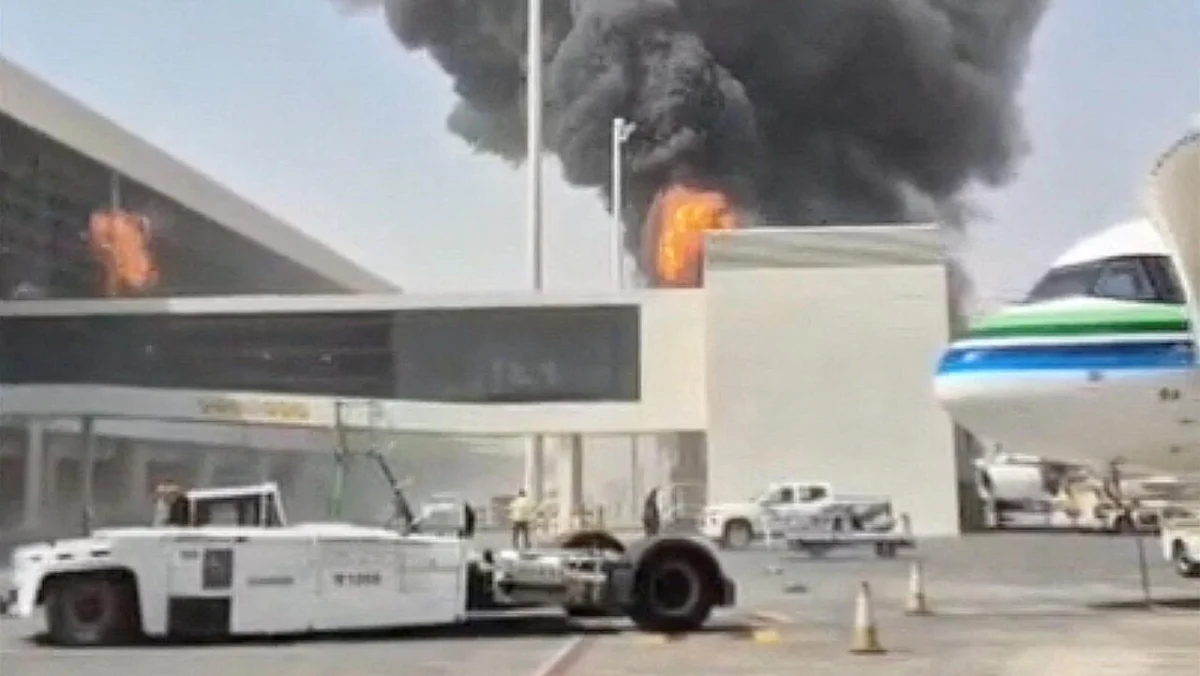
- October 10, 04:15 AM: Initial alarms sound across Riyadh. Social media footage, later verified by intelligence agencies, shows plumes of thick black smoke rising from the vicinity of King Khalid International Airport.
- October 10, 09:00 AM: The Houthi military spokesperson claims responsibility for the attack, stating that a "swarm" of long-range drones and precision-guided ballistic missiles were launched as a direct retaliation for ongoing military interventions in Yemen.
- October 10, 11:30 AM: Saudi authorities issue an emergency directive to halt all air traffic. Thousands of passengers are left stranded in terminal buildings and surrounding hotels as flights are diverted to Jeddah and Dammam.
- October 11, 02:00 PM: Intelligence reports confirm that at least two missiles bypassed defense layers, causing significant damage to a maintenance hangar and runway infrastructure.
- October 12, 08:41 AM: The Saudi Civil Aviation body announces the extension of the flight suspension, offering no definitive timeline for the resumption of commercial air travel.
A Calculated Escalation: Supporting Data and Context
The strike on Riyadh’s primary gateway represents a tactical shift in the protracted conflict that has raged since 2015. Military analysts suggest that the sophistication of the attack—specifically the use of "swarm" tactics designed to overwhelm Patriot missile batteries—indicates a significant increase in the technical capabilities of the Houthi forces.
The Technological Leap
Security experts have long warned that the Houthi arsenal, fueled by illicit smuggling routes, has evolved from rudimentary rockets to advanced Unmanned Aerial Vehicles (UAVs) and cruise missiles. The ability to penetrate the heavily defended airspace of the Saudi capital suggests the use of advanced guidance systems, possibly utilizing Iranian technology that leverages terrain-following flight paths to evade traditional radar detection.
Economic and Logistical Impact
The closure of King Khalid International Airport is not merely a military concern; it is a profound economic blow. As a major logistics hub, the airport’s paralysis disrupts the flow of goods into the Kingdom, impacting the supply chains of Riyadh’s burgeoning business districts. Aviation economists estimate that for every day of closure, the Kingdom faces tens of millions of dollars in losses, not including the long-term impact on investor confidence in the region’s stability.
Official Responses: From Defiance to Retaliation
The international community and regional stakeholders have reacted with a mix of condemnation and urgent calls for de-escalation.
The Saudi Position
The Saudi Foreign Ministry issued a stern communique on Sunday, labeling the attack an "act of state-sponsored terrorism." Riyadh has vowed a "decisive and proportional response," signaling that the Kingdom’s patience with cross-border provocations has reached its limit. "We will not tolerate the targeting of our civilian infrastructure," a spokesperson for the Saudi-led coalition stated. "Those responsible for these strikes, and those who enable them, will be held to account."

International Reactions
- The United Nations: Special Envoy for Yemen Hans Grundberg has called for an "immediate cessation of hostilities," warning that the region is teetering on the edge of a wider conflict that could have catastrophic humanitarian consequences.
- The United States: The White House reaffirmed its commitment to the defense of the Kingdom, with the Pentagon deploying additional technical advisory teams to assist in strengthening Saudi air defense arrays.
- Tehran’s Stance: Iran has officially denied any direct involvement in the specific planning of the weekend’s attacks, characterizing the Houthi actions as an "independent response to the aggression" faced by the Yemeni people.
Implications for Regional Security
The attack on the Riyadh airport marks a turning point in the geopolitical landscape of the Gulf. Several critical implications are now at the forefront of the regional security discourse:
1. The Vulnerability of Infrastructure
The incident has exposed a stark reality: even the most sophisticated missile defense systems can be bypassed. This has forced a re-evaluation of security protocols across the Gulf Cooperation Council (GCC) states. Governments are now accelerating the procurement of short-range, point-defense systems specifically designed to counter low-altitude drone threats.
2. The Future of the Yemen Conflict
For years, the conflict in Yemen was characterized by a stalemate. However, this weekend’s events suggest that the Houthis are willing to expand the "theater of war" far beyond the borders of Yemen. This creates a dangerous precedent, making any potential peace negotiations significantly more complex. The demand for a political solution is now weighed against the necessity of addressing a tangible, persistent security threat to the heart of the Saudi state.
3. The Iran Factor
The persistent alignment between Houthi military capabilities and Iranian geopolitical goals remains the central point of tension. The international community is increasingly focused on the role of maritime and land-based supply chains that facilitate the transfer of missile components. Diplomatic efforts in the coming weeks will likely pivot toward tightening sanctions and increasing surveillance of these suspected supply routes.
The Path Forward: What to Expect
As citizens of Riyadh navigate the uncertainty of the coming days, the primary focus remains on the repair of the damaged airport infrastructure and the restoration of normalcy. However, behind the scenes, the drums of war are beating louder.
Observers are closely watching for signs of a Saudi military response. Will the Kingdom opt for targeted, precision strikes against Houthi launch sites, or will they leverage diplomatic channels to apply pressure on the Houthi leadership through their backers?
For now, the airport remains a closed zone—a silent monument to the fragility of peace in a region where the lines between civil infrastructure and military objectives have become increasingly blurred. The coming 48 hours are expected to be critical, as the international community holds its breath, waiting to see if this incident will spiral into a broader regional conflagration or if cool heads will prevail to prevent further bloodshed.
This report is based on ongoing updates from regional correspondents and official statements from the Saudi Ministry of Defense. Follow our liveblog for minute-by-minute updates as the situation evolves.