In an era where rapid urbanization and industrialization have exacerbated the twin crises of environmental pollution and housing shortages, researchers at the Indian Institute of Technology (IIT) Jodhpur have unveiled a breakthrough that turns two of society’s most persistent waste problems into a solution. By repurposing agricultural residues—such as rice straw, wheat straw, and sugarcane bagasse—and non-recyclable plastic, the institute has developed a novel construction material that promises to make rural housing more affordable, thermally efficient, and environmentally sustainable.
This innovation, recently highlighted by The Times of India, moves beyond the conceptual phase. With prototype structures already standing on the IIT Jodhpur campus, the project serves as a compelling model for circular economy practices in developing nations, where the disposal of farm waste and plastic often results in ecological degradation and health risks.
The Genesis of the Problem: Why Innovation Was Required
To understand the magnitude of this breakthrough, one must look at the specific environmental pressures currently facing India’s rural and peri-urban landscapes.
The Smoke Crisis
India’s agricultural heartlands, particularly in the northern states, have long struggled with the post-harvest management of crop residue. Once the harvest is complete, farmers are often left with massive volumes of straw. Due to the short window between harvest and the next planting season, burning this residue has historically been the fastest and cheapest way to clear fields. This practice, however, releases vast quantities of carbon monoxide, methane, and particulate matter into the atmosphere, creating a toxic smog that blankets cities and causes severe respiratory crises for millions.
The Plastic Dilemma
Simultaneously, the proliferation of single-use and low-density plastics has outpaced the nation’s waste management infrastructure. While high-value plastics are frequently diverted into recycling streams, "non-recyclable" plastic—often contaminated or multi-layered—tends to accumulate in landfills or pollute waterways. It is this specific category of "valueless" waste that IIT Jodhpur has targeted for integration into its "Agro-Plastic Blocks."
Chronology of Development: From Laboratory to Prototype
The development of these materials was not an overnight success; it is the culmination of systematic research into material science and sustainable engineering.
- Early Phase (2022–2023): Professor Priyabrata Rautray and his research team at IIT Jodhpur initiated studies on the thermal and structural properties of plant fibers. The primary goal was to create a binder-free or low-binder material that could withstand the load-bearing requirements of rural construction.
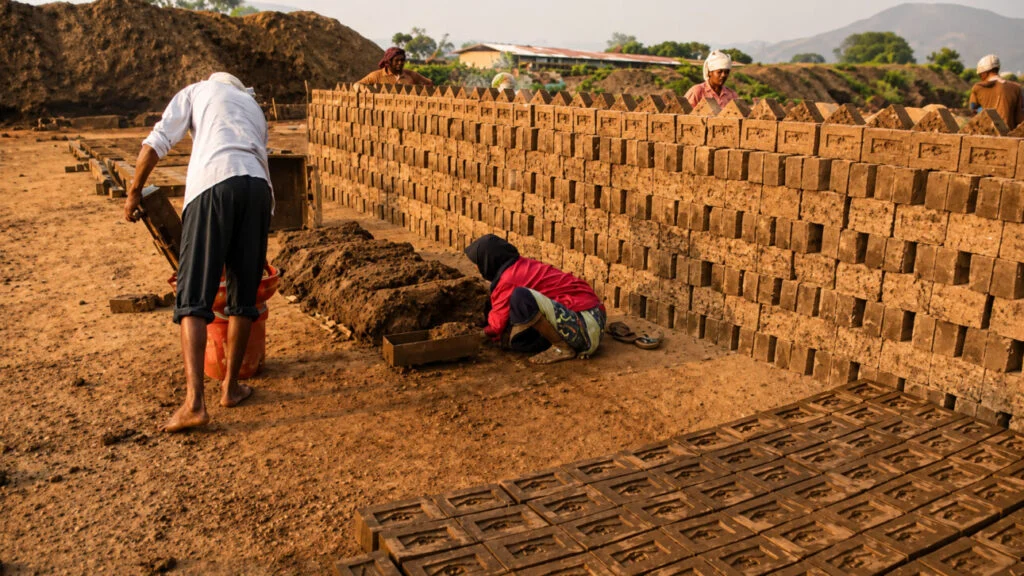
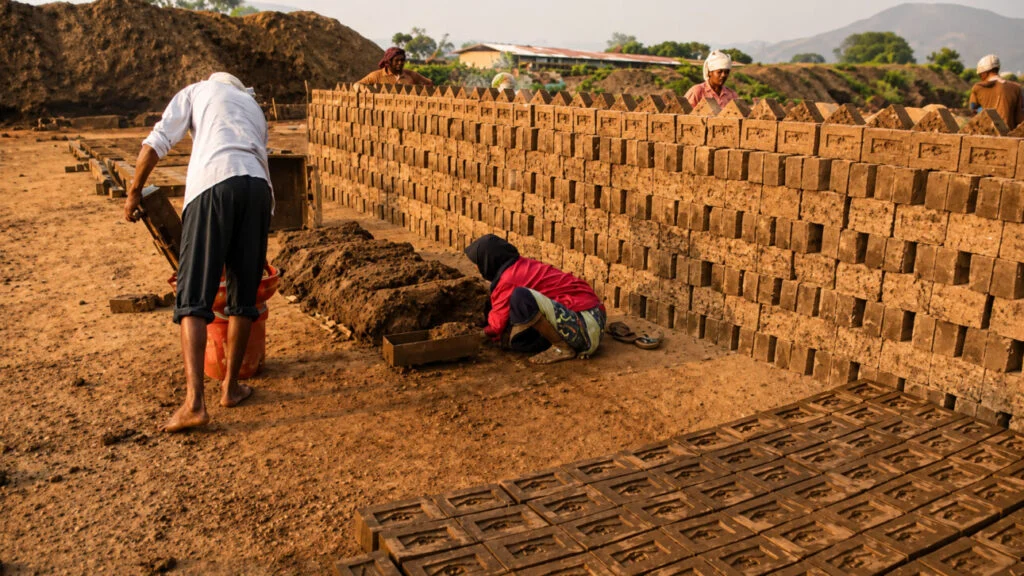
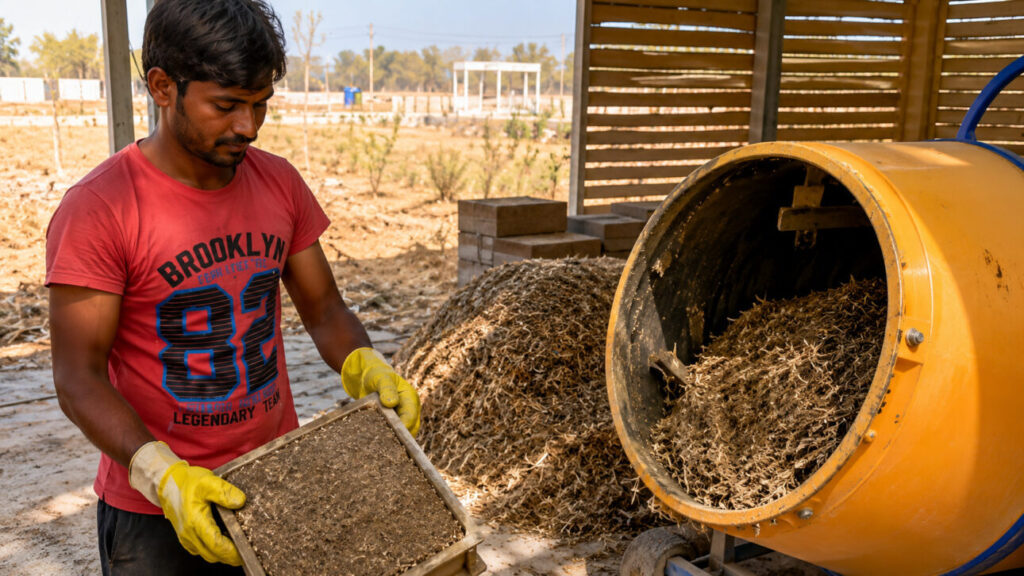
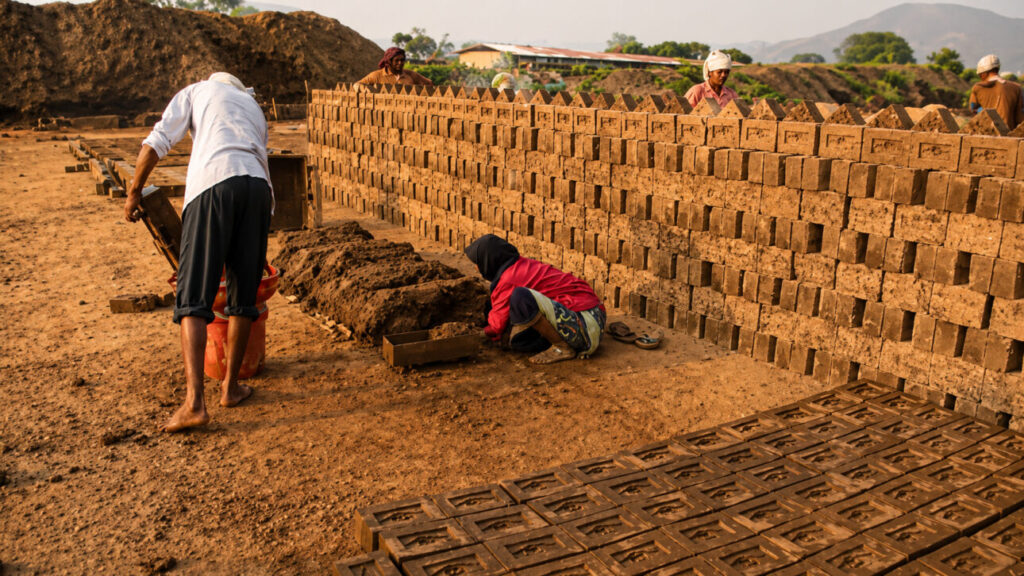
- The "Bio-Brick" Breakthrough: The team successfully developed a formula where agricultural waste is compressed into bricks without the need for kiln firing. Traditional brick making requires immense energy to bake clay, contributing to both deforestation (via firewood consumption) and carbon emissions. The Bio-Brick circumvents this entirely.
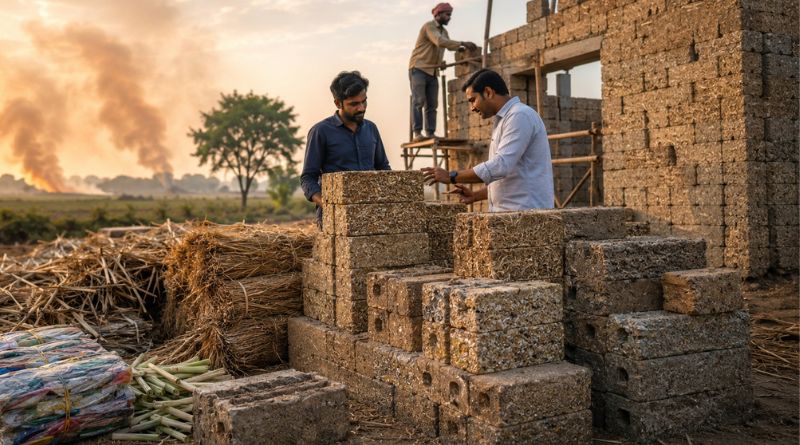
- Integrating Plastic (2024): Recognizing that agricultural waste alone might lack the durability required for certain weather conditions, the team expanded their research to include non-recyclable plastics. By heating and compressing these plastics with farm residue, they created a composite "Agro-Plastic Block" that acts as an effective weather-resistant building component.
- Campus Prototyping (2025–2026): The transition from bench-scale testing to structural reality occurred on the IIT Jodhpur campus. Small-scale dwellings and wall structures were erected to test the materials’ resilience against India’s extreme seasonal heat and monsoon rains.
The Science of Sustainability: Supporting Data
The technical superiority of these materials lies in their physical properties, which were engineered to address the specific needs of rural infrastructure.
Bio-Bricks: The Carbon-Negative Potential
Unlike conventional fired-clay bricks, which are heavy and energy-intensive, Bio-Bricks are lightweight and possess superior thermal insulation. Data from the research team suggests that these bricks have a lower thermal conductivity than traditional concrete blocks. This implies that buildings constructed with these bricks remain cooler in the summer and warmer in the winter, significantly reducing the energy demand for cooling systems—a vital factor in rural India.
Agro-Plastic Blocks: Durability through Compression
The Agro-Plastic Blocks leverage the binding properties of heated plastic to encapsulate the straw fibers. This creates a matrix that is resistant to moisture absorption, which is often the primary cause of decay in organic building materials. By binding the plastic within the block, the process effectively "sequestrates" the plastic waste, ensuring it does not leach into the soil or water table.
Official Responses and Expert Perspectives
Professor Priyabrata Rautray, the lead researcher on the project, has framed the technology as a social tool as much as an engineering feat. "Our goal," Rautray noted in recent discussions, "is to democratize construction. If we can turn what a farmer perceives as ‘trash’ into a valuable building asset, we change the economic relationship between the rural producer and the construction industry."
Academic and environmental experts in India have lauded the project for its holistic approach. Dr. Anjali Mehta, an environmental policy analyst, remarked: "What makes this unique is that it addresses three distinct silos of environmental management—agricultural waste, plastic pollution, and the housing deficit—under a single manufacturing umbrella. It is a textbook example of a circular economy."
Government agencies and local construction firms have begun taking interest in the prototypes, noting that if the technology can be scaled to a cottage-industry level, it could create jobs in rural villages while providing a cost-effective alternative to expensive, carbon-heavy cement blocks.
The Path Forward: Economic and Social Implications
The implications of this technology are vast, reaching far beyond the physical construction of walls.
Transforming Rural Economics
In many rural regions, construction materials are imported from cities, incurring high transportation costs and carbon footprints. By utilizing locally sourced straw and localized plastic waste, the IIT Jodhpur model allows for the creation of "micro-factories." These small-scale production units could produce blocks near the site of construction, drastically reducing costs and empowering local communities to take charge of their own infrastructure development.
Climate Change Adaptation
Thermal comfort is not merely a luxury; it is a necessity in a warming world. As heatwaves become more frequent and severe in South Asia, the passive cooling properties of Bio-Bricks offer a low-cost adaptation strategy for vulnerable populations. By replacing corrugated tin or uninsulated concrete with these straw-based materials, households can achieve a significantly higher quality of life without increasing their electricity bills.
Challenges to Scaling
Despite the success of the campus prototypes, the path to widespread adoption is not without hurdles. The research team acknowledges that scaling requires:
- Standardization: Developing standardized testing protocols for building codes to ensure these materials meet safety and structural integrity regulations.
- Supply Chain Logistics: Creating collection systems for farmers to transport their straw to production sites rather than burning it.
- Cultural Acceptance: Overcoming the perception that "waste-based" housing is inferior to "modern" concrete housing.
Conclusion: A Blueprint for the Future
The work emerging from IIT Jodhpur represents a paradigm shift in how we perceive resources. In the traditional economic model, agricultural residues and waste plastics are the "end of the line"—items to be discarded or destroyed. Through the lens of this new technology, they become the "beginning of the line"—raw materials for the next generation of housing.
By closing the loop on agricultural waste and tackling the plastic crisis, India is positioning itself at the forefront of sustainable development. As the project moves toward potential commercialization, it offers a glimmer of hope for a future where cities are less choked by smoke, fields are left unburned, and the basic human right to decent housing is made attainable through the power of local innovation.
The "Bio-Brick" and "Agro-Plastic Block" are more than just construction materials; they are symbols of a transition toward a more resilient and circular world. If these technologies successfully transition from the campus to the countryside, they may well become the foundation for a greener, more inclusive rural India.