The global food system is currently caught in a paradox of tragic proportions. While an estimated 645 million people faced the harrowing reality of hunger in 2025, the world simultaneously discards more than one billion meals every single day. This systemic failure is not merely a humanitarian catastrophe; it is a profound environmental crisis. Food loss and waste contribute to between 8% and 10% of global greenhouse gas emissions—a figure that dwarfs the total emissions produced by the entire aviation industry.
As the world population approaches 10 billion by 2050, the imperative to fix these structural inefficiencies has never been greater. Entrepreneurs across the globe are rising to meet this challenge, deploying cutting-edge technology, regenerative agricultural practices, and circular economic models to bridge the gap between small-scale farmers and the global consumer.
The Magnitude of the Problem: Structural Inefficiencies
The contemporary food supply chain is marred by fragmentation. In developing nations, the issue is often "food loss"—produce that rots in fields or during transport due to inadequate cold storage and poor logistics. Conversely, in the Global North, the problem manifests as "food waste," where surplus produce is discarded by retailers or households due to cosmetic standards or supply-demand mismatches.
This inefficiency extracts a heavy toll on our planet. Beyond the carbon footprint, the waste of food represents a massive squandering of water, labor, and land. To address this, a new wave of startups is moving beyond incremental change, seeking to re-engineer the supply chain from seed to shelf.

Pioneering Solutions: Four Startups Leading the Charge
1. AgroSustain (Lausanne, Switzerland): The Science of Freshness
In Lausanne, Switzerland, AgroSustain is tackling the biological reality of food decay. Their innovation lies in a dual-pronged approach: pre-harvest protection and post-harvest preservation.
- Pre-Harvest: Their "Tornado" foliar spray acts as a protective shield for crops, bolstering plant resilience against drought and environmental stress. Early trials have shown remarkable results, including a 30% increase in tomato yields and a 37% surge in grape production.
- Post-Harvest: Their "Afondo" coating is an invisible, odorless, and tasteless biological barrier that replaces conventional chemical fungicides. By slowing the ripening process naturally, it extends the shelf life of produce by up to five weeks, significantly reducing the pressure to move goods before they spoil.
By prioritizing sea freight over air travel and utilizing plastic-free packaging, AgroSustain demonstrates that food preservation does not have to come at the cost of environmental health.
2. Matriark Foods (New York, USA): Upcycling the "Ugly"
In the United States, where 30% to 40% of the food supply is discarded, Matriark Foods is proving that "unusable" produce is a resource, not trash. Founded by non-profit leader Anna Hammond, the company sources "ugly" or excess vegetables from regional farms—items that would otherwise be tilled back into the earth or sent to a landfill.
Matriark transforms these raw materials into nutrient-dense broths, stews, and purees. Since its inception in 2019, the impact has been measurable: 1.5 million pounds of produce diverted from landfills, 362 million gallons of water saved, and a reduction of 7.8 million pounds of greenhouse gas emissions. Beyond the numbers, the company’s focus on community outreach and food bank partnerships ensures that their upcycled nutrition reaches the populations that need it most.

3. YoLa Fresh (Casablanca, Morocco): Solving the Logistics Bottleneck
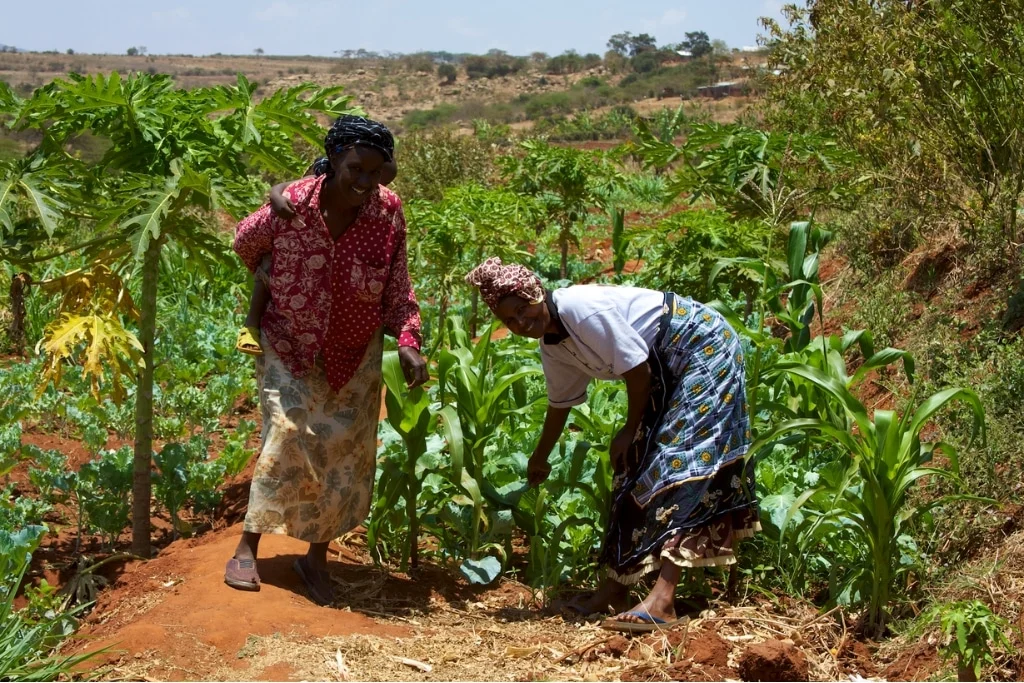
Africa faces a unique challenge: post-harvest losses often reach 50% due to the lack of modern infrastructure. YoLa Fresh, founded by Larbi Alaoui Belghiti and Youssef Mamou, is digitizing the agricultural supply chain to minimize this waste.
The company utilizes a data-driven logistics platform that predicts retailer demand with high precision. By sourcing produce within a 12-hour window and bypassing traditional, inefficient intermediaries, YoLa Fresh ensures that goods reach the market faster and fresher. This model allows retailers to price goods 10% to 20% lower, providing affordability for consumers while ensuring farmers are paid within 24 hours. Having successfully optimized the Moroccan market, the founders are now poised to scale this tech-first logistics solution across the continent.
4. RegenCrops (Hyderabad, India): AI-Driven Regenerative Agriculture
In India, the struggle often involves a dangerous over-reliance on synthetic chemicals, which degrades soil health and increases costs for smallholder farmers. RegenCrops is an AI-powered application that guides farmers toward regenerative practices.
By providing real-time data on soil moisture, pest risk, and nutrient needs, the app allows farmers to replace synthetic fertilizers with bio-fertilizers and botanical extracts. The results from model farm trials are staggering: a 76% reduction in chemical usage, a 95% reduction in water consumption via smart irrigation, and an 85% decrease in pest and disease incidence. RegenCrops not only increases the profitability of the farm but also connects farmers to carbon credit markets, turning the act of land stewardship into a new revenue stream.

Supporting Data: The Impact of Intervention
The success of these startups underscores a shift in how we perceive agricultural viability.
| Startup | Primary Focus | Key Outcome |
|---|---|---|
| AgroSustain | Shelf-life extension | Up to 5 weeks added to produce life |
| Matriark Foods | Upcycling surplus | 1.5M lbs of food diverted from waste |
| YoLa Fresh | Logistics/Efficiency | 99% fulfillment rate |
| RegenCrops | AI & Regenerative | 76% reduction in chemical inputs |
These metrics confirm that when technology is applied to the specific "pain points" of the supply chain, the reduction in waste is not just possible—it is quantifiable and highly scalable.
Official Perspectives and Industry Implications
The United Nations and various international bodies have increasingly called for a "systems approach" to food security. The consensus among agricultural economists is that the traditional "linear" model of food—produce, ship, waste—is obsolete.
"We are moving toward a circular bio-economy," notes one agricultural policy analyst. "The startups highlighted here are not just businesses; they are the prototypes for the next century of food production. However, technology alone cannot solve the problem. It requires a regulatory framework that incentivizes farmers to transition to regenerative practices and penalizes excessive food waste at the retail level."

The implications are clear: the future of global nutrition depends on transparency and connectivity. By utilizing machine learning to predict demand, biological coatings to protect yield, and upcycling to create value from waste, the global food industry is slowly shedding its status as one of the world’s largest polluters.
A Path Forward: Scaling Innovation
While the efforts of these four companies are inspiring, they represent only the beginning. The transition to a sustainable food system requires:
- Investment in R&D: Governments must provide grants and subsidies to startups focusing on food tech, particularly those in developing regions.
- Infrastructure Development: Digital infrastructure (for logistics) and physical infrastructure (for cold storage) must be prioritized in rural areas.
- Consumer Education: Shifting public perception regarding "imperfect" produce is essential to reducing the demand-side waste that occurs in supermarkets.
The crisis of hunger and the crisis of waste are two sides of the same coin. By connecting small farmers to modern tools and consumers to ethical products, we are not just saving food; we are protecting the planet’s future. The technology exists, the models are proven, and the urgency is undeniable. The question remains whether the global community will move fast enough to scale these solutions before the window of opportunity for meaningful climate action closes.