In the modern digital landscape, a brand’s most powerful marketing asset is not its ad budget or its algorithmic reach—it is its people. Employee advocacy programs, which empower staff to share company content and brand stories across their personal social networks, have evolved from a "nice-to-have" engagement tactic into a critical business driver. However, as marketing budgets face increasing scrutiny in 2026, the era of "vanity metrics" is over. To survive and thrive, advocacy programs must now prove their worth through hard data, measurable pipeline impact, and clear return on investment (ROI).
The Evolution of Advocacy: Beyond the "Like"
Measuring employee advocacy success is no longer about counting likes or reshares. It is about evaluating the program’s business impact through a rigorous framework of Key Performance Indicators (KPIs). When an employee shares a company update, they aren’t just amplifying a message; they are providing "referral-like" context that significantly boosts trust.

To move from fluffy metrics to evidence-based strategy, organizations must track a holistic set of data points:
- Awareness and Reach: The volume and quality of impressions.
- Engagement: The depth of interaction (comments, shares, and sentiment).
- Talent Acquisition: The impact on hiring pipelines and recruitment costs.
- Sales Influence: Direct revenue attribution via UTM tracking.
- Cultural Health: Employee retention and internal sentiment.
The Strategic Framework: Building a Measurement Machine
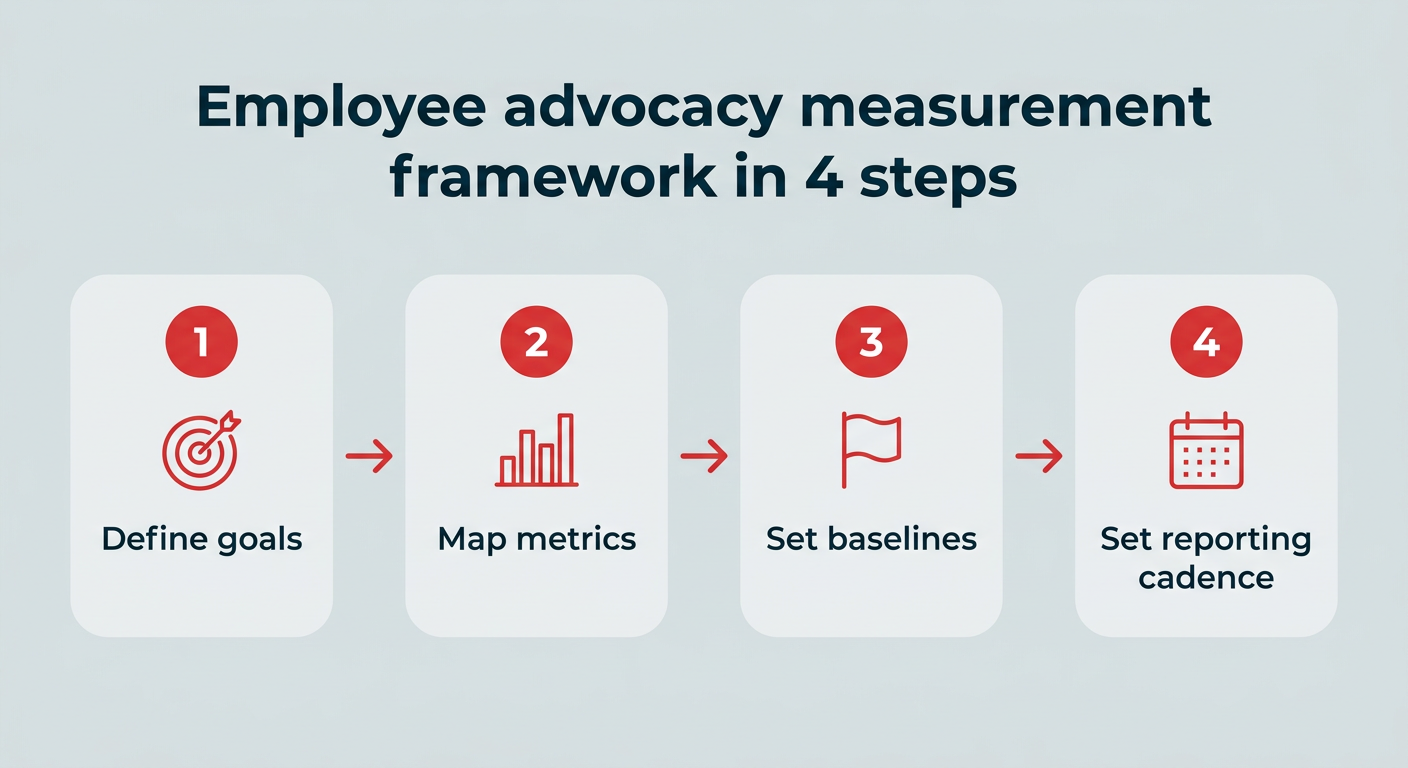
To avoid drowning in a sea of data, businesses must implement a four-step measurement framework before launching their first campaign.

- Define Goals: What is the primary objective? Is it to fill the sales pipeline, lower recruitment costs, or boost brand awareness?
- Map Metrics: Select KPIs that directly align with those goals. If the goal is hiring, prioritize "applicant quality" over "total likes."
- Set Baselines: Establish where your performance currently sits before the program kicks off to measure true lift.
- Reporting Cadence: Schedule regular reporting intervals to ensure stakeholders remain informed and the strategy stays agile.
By documenting this framework and sharing it with leadership, you transform quarterly reporting from a contentious debate into a transparent progress update.
The Business Case: Why Measurement Is Mandatory
Without data, advocacy programs often fail to compete for budget and headcount. The risks of an unmeasured program are three-fold: the inability to justify costs to the C-suite, the failure to identify what content actually resonates with the market, and the eventual decline of employee participation due to a lack of perceived purpose.
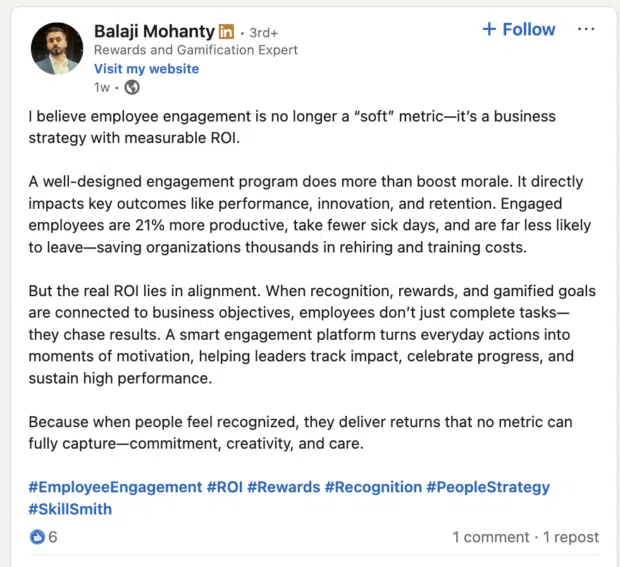
When employees see the tangible impact of their efforts—such as helping the company land a high-value client or attracting top-tier talent—their engagement increases. Measurement, therefore, acts as a participation lever. It validates the employee’s time and effort, proving that their contribution is more than just a social media chore; it is a vital component of the company’s success.
Supporting Data: The Power of Human Connection
The data supporting employee advocacy is compelling. Research consistently shows that content shared by employees reaches a wider and more trusting audience than corporate-pushed content.
- Engagement Multipliers: Studies have shown that engagement rates for employee-shared content can be up to 10 times higher than that of branded content.
- Click-Through Advantage: LinkedIn reports that the click-through rate (CTR) on content is typically twice as high when shared by an employee compared to a company page.
- Sales Performance: Sales professionals who integrate social sharing into their daily routine are 45% more likely to exceed their quotas, illustrating that advocacy is as much a sales tool as it is a marketing one.
Real-World Impact: The Major Tom Case Study
The power of these metrics was recently demonstrated by Victoria Samways, Marketing & Brand Manager at Major Tom. By leveraging UTM tracking links across employee shares, the team was able to attribute a specific campaign to over $100,000 in the company pipeline.
"Thanks to the UTM tracking links, over the coming weeks, we saw a healthy amount of leads that we attributed back to this campaign," Samways explains. "This resulted in over $100k in our pipeline and, as a channel, provided a higher-than-average win rate due to the referral-like context of these leads."
Calculating ROI: The Math Behind the Advocacy
To determine the true ROI of an advocacy program, firms must move beyond qualitative feedback and into the spreadsheet. The standard formula remains the bedrock of this assessment:
ROI (%) = [(Value generated − Program costs) ÷ Program costs] × 100
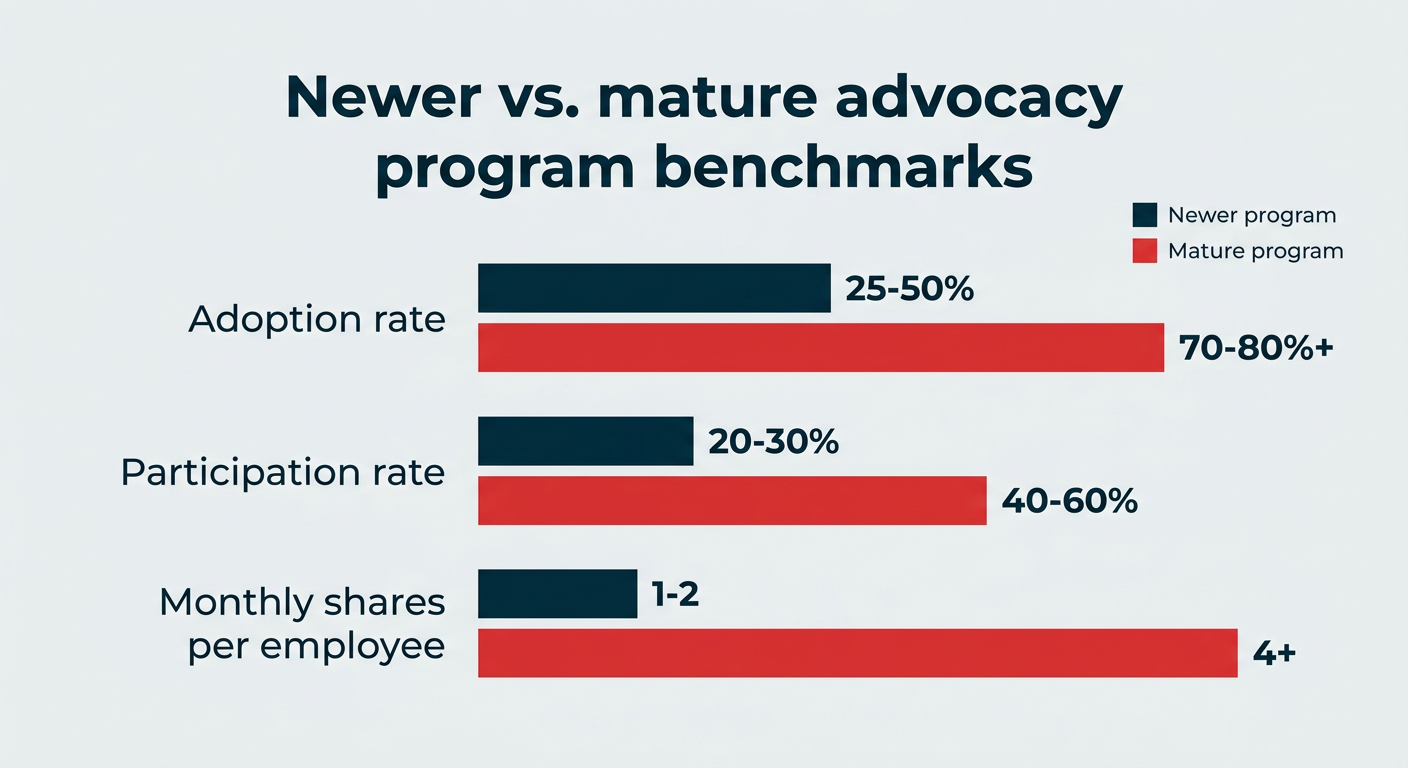
"Value generated" should be an aggregation of several specific buckets:
- Attributed Revenue: Direct leads and conversions traced via UTM.
- Recruiting Savings: The reduction in agency fees or paid job board costs.
- Earned Media Value (EMV): The dollar equivalent of paid reach (Impressions ÷ 1,000 × CPM).
- Retention Savings: The cost saved on turnover by maintaining a more engaged, connected workforce.
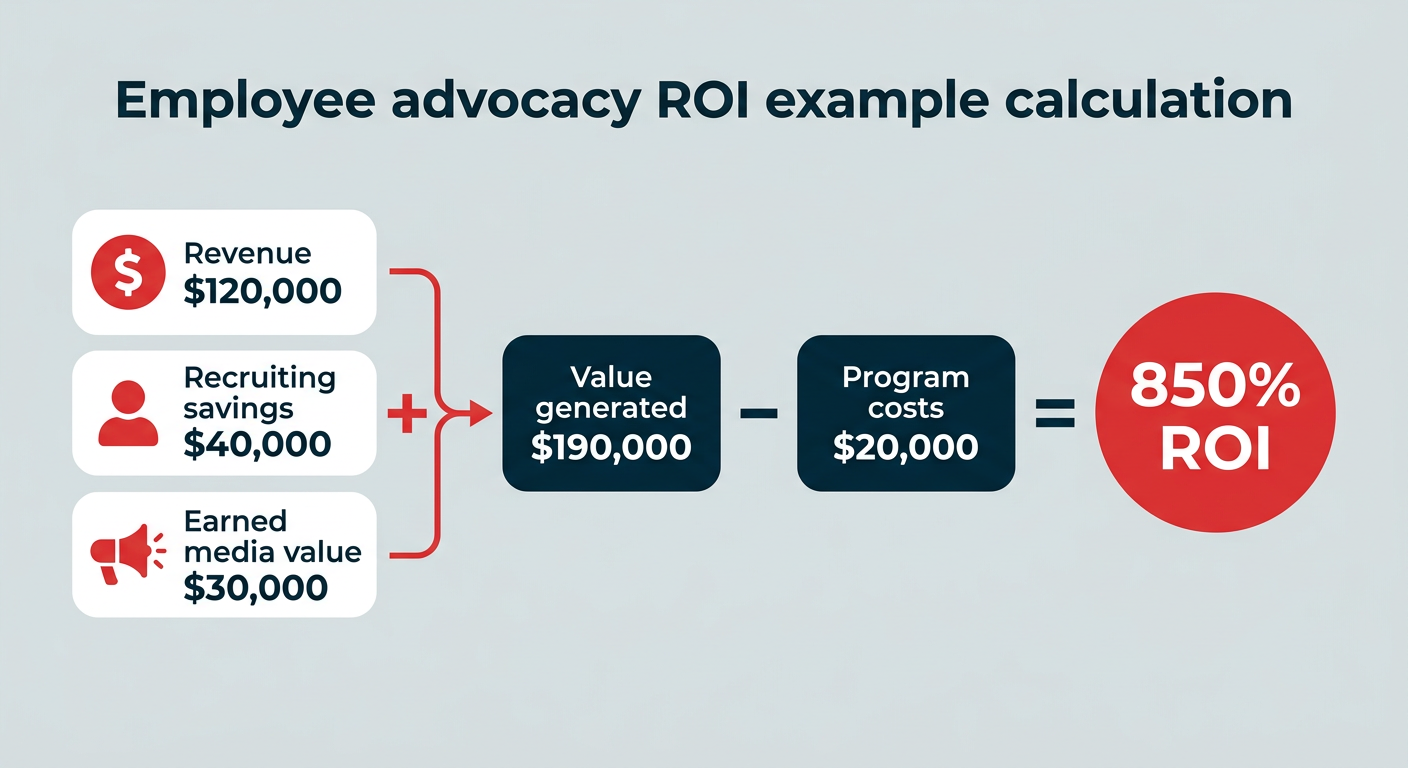
For example, a program costing $20,000 annually that generates $120,000 in revenue, $40,000 in recruiting savings, and $30,000 in EMV yields an impressive 850% ROI.
Implications for the Future: Culture and Retention
Perhaps the most overlooked metric is the correlation between advocacy and employee retention. As trust in employers continues to fluctuate—dropping to 74% according to the 2026 Edelman Trust at Work report—advocacy serves as a proxy for employee pride.
When employees feel confident enough to act as brand ambassadors, they are often more invested in the company’s long-term vision. By tracking retention rates among active advocates versus the broader workforce, organizations can identify if their advocacy efforts are contributing to a more stable, loyal, and enthusiastic culture.
Best Practices for Scaling Success
For organizations looking to optimize their programs, the consensus is clear: prioritize ease of use and traceability.
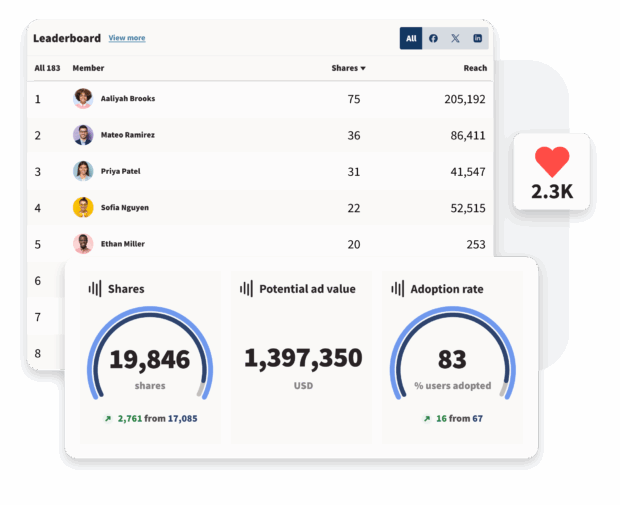
- Gamification: Implement leaderboards and rewards for top sharers. As seen at Major Tom, gamifying the experience with prizes or charitable donations for top performers can drastically increase participation.
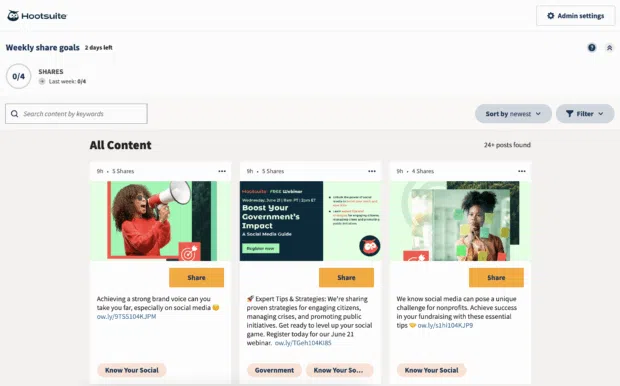
- Tech Integration: Utilize integrated platforms like Hootsuite’s Parliament. By housing advocacy, publishing, and analytics in one ecosystem, teams avoid the "tab-switching" fatigue that leads to platform abandonment.
- Content Alignment: Let the data dictate your content calendar. If your employees consistently share thought-leadership pieces over product updates, lean into that preference to boost engagement.
- Clear Communication: During the rollout, emphasize the "what’s in it for me." When employees understand how sharing helps build their own personal brand, their participation becomes a career asset rather than a job requirement.
Conclusion: The Path Forward
In 2026, the most successful companies will be those that view their employees as the primary conduit for brand authenticity. Measuring employee advocacy is not merely an administrative exercise; it is the process of defining the human value behind your corporate narrative. By aligning advocacy metrics with high-level business goals—revenue, talent, and retention—you ensure that your program remains a permanent, well-funded, and essential part of your organizational strategy.
As the market continues to reward authenticity, the brands that empower their employees to speak will find themselves with a competitive advantage that no paid ad campaign can replicate. The numbers are clear: measure the impact, reward the advocates, and the ROI will follow.