
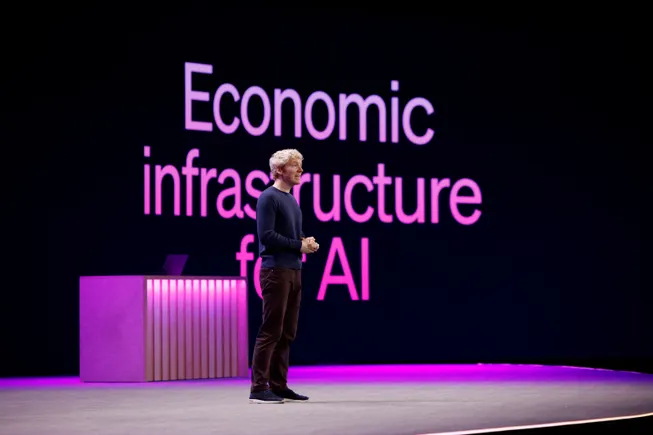
As the digital economy shifts from a human-centric model to one governed by artificial intelligence, the infrastructure of global finance is undergoing its most radical transformation since the dawn of the internet. Stripe, the fintech titan, has emerged as the primary architect of this new landscape, announcing a series of strategic partnerships and technological breakthroughs that aim to empower AI agents to act as autonomous economic actors.
At the heart of this transition is "agentic commerce"—a paradigm where AI bots, acting on behalf of users, navigate the complexities of purchasing, payment, and transaction management with minimal human oversight.
The Dawn of Agentic Commerce: A New Economic Reality
The recent Stripe Sessions 2026 conference served as the launchpad for a fundamental reimagining of how money moves. Stripe’s announcement of a strategic partnership with Google cements a growing trend: the world’s largest AI companies are moving beyond simple chatbot interfaces and into the realm of transactional agency. This follows a flurry of similar agreements established since September, including integrations with Meta’s Facebook, Microsoft’s Copilot, and OpenAI’s ChatGPT.
These partnerships are not merely cosmetic; they represent a fundamental change in the "checkout" experience. By embedding Stripe’s infrastructure directly into these platforms, merchants can now offer seamless purchasing experiences where the transaction happens within the AI environment itself, rather than forcing users to navigate to a separate storefront.
Will Gaybrick, Stripe’s president of technology and business, captured the gravity of this shift during his opening remarks. "It’s easy to underestimate the implications of a near future where agents are autonomous economic actors responsible for most internet transactions," Gaybrick noted. "And just as agents work faster than we do, they’re going to spend money a lot faster, too."
Chronology of the Shift
The transition to agentic commerce has been accelerating throughout 2026, marked by a series of pivotal milestones:
- September 2025 – Early 2026: Stripe initiates a series of high-profile partnerships with Microsoft (Copilot), OpenAI (ChatGPT), and Meta (Facebook), laying the groundwork for integrated commerce across major tech platforms.
- Q1 2026: Google enters the fold, signaling its intent to build out universal agentic protocols. During its Q1 earnings call, Alphabet executives underscored that the agentic era is in its infancy but represents a core strategic priority.
- Mid-2026: Stripe unveils its expansion of the "Link" wallet, enabling it to act as the payment layer for AI agents. This allows users to set guardrails while granting agents the autonomy to complete transactions.
- Present Day: Stripe announces support for stablecoins and the Brazilian instant payment system, Pix, for U.S. merchants, while Meta begins rolling out stablecoin-based payouts to creators in the Philippines and Colombia.
Supporting Data and Technical Infrastructure
The technical backbone of this transition relies on the expansion of digital wallets—specifically Stripe’s Link. By allowing AI agents to interface with a pre-approved, secure payment method, Stripe is solving the "last mile" problem of AI shopping.
The security model here is a "policy-based" approach. Rather than authorizing every single click, a user defines a set of rules—spending caps, preferred merchants, and specific product categories—and the agent operates within those constraints.
Furthermore, the expansion into global payments is indicative of the scale Stripe is aiming for. By integrating Pix—a wildly successful instant payment system in Brazil—Stripe is ensuring that agentic commerce is not siloed within the U.S. financial system. Similarly, the partnership with Meta to facilitate stablecoin payouts on the Solana and Polygon blockchains highlights a commitment to decentralized finance (DeFi) as a tool for cross-border friction reduction. While Meta does not currently offer an "off-ramp" to fiat currency in this specific pilot, the infrastructure for global, near-instant value transfer is being stress-tested across 160 countries.
Official Perspectives: The Visionaries Speak
The corporate leadership behind this transition sees a world where the friction of daily life—repetitive tasks, payment processing, and administrative overhead—is abstracted away by intelligent systems.
The Google Perspective
Philipp Schindler, Chief Business Officer for Alphabet, emphasizes that the goal is to remove the "grunt work" of shopping. For Google, the agentic era is about more than just transactional volume; it is about creating a protocol that allows merchants to compete on brand loyalty, customer service, and value-add attributes rather than just price discovery. "Our goal is to really remove the grunt work of shopping so that consumers can focus on the enjoyable parts," Schindler noted during the Q1 earnings call.
The Meta Perspective
Ginger Baker, who leads fintech and payments at Meta, offered a compelling look at the cultural shift this entails. She posits that payments will evolve from a "moment" to a "policy." In this framework, the human is removed from the payment loop, having already established the parameters for the agent to function.
"It feels radical today to suggest that we would just completely give something else permission to manage our financial transactions," Baker said at the Stripe event. "But I think that’s going to be the reality we’re in."
Broader Implications for Retail and Fintech
The ripple effects of this technological leap are already being felt across the broader retail landscape. MoneyGram, the legacy cross-border payment provider, recently announced a significant modernization of its global retail network, powered by Stripe’s technology.
By integrating new payment terminals that support Apple Pay, Google Pay, and "pay-by-link" technology, MoneyGram is attempting to unify its digital and physical presence. This move serves as a bridge: as agents begin to dominate digital retail, traditional brick-and-mortar retail must modernize its infrastructure to remain relevant in a world where payment is increasingly mobile, instant, and frictionless.
The Future of "Policy-Based" Finance
The shift from manual payment processing to policy-based automation presents several key implications for the future:
- Macro-Economic Velocity: If agents can execute transactions at machine speeds, the velocity of money in the digital economy will likely increase exponentially. This could lead to a more efficient marketplace but also introduces new challenges for financial stability and fraud prevention.
- The Death of the "Checkout" Page: As commerce moves into AI interfaces, the traditional web-based shopping cart may become a relic. The "integrated checkout" model means the storefront is wherever the consumer is, whether that is a social media feed, a chatbot, or a voice assistant.
- Cross-Border Democratization: The use of stablecoins and blockchains for payouts, as seen in the Meta-Stripe collaboration, hints at a future where payment systems are truly agnostic to borders. By bypassing legacy banking corridors, these systems could provide massive cost savings for global creators and merchants.
- Retailer Strategy Shift: As Schindler noted, merchants will need to pivot. When an AI agent is doing the shopping, it may be programmed to prioritize price or availability above all else. Merchants will need to build "brand equity" that is recognizable to AI algorithms—perhaps through metadata, reputation scores, and specialized service-level agreements—to ensure they are the "selected vendor" for an agent’s purchase.
Conclusion
The evolution toward agentic commerce is no longer a theoretical exercise confined to tech labs; it is an active, ongoing infrastructure rollout. Through the convergence of AI development, digital wallet maturation, and global payment modernization, Stripe and its partners are building the foundational layers of a new financial system.
While the transition from human-managed payments to AI-managed policies may feel unsettling, the trajectory is clear. As Ginger Baker aptly summarized, the goal is to "meet people where they are." For the consumer, this means a life with less administrative burden. For the economy, it means a more fluid, faster, and highly integrated marketplace where money and intent move at the speed of thought. The challenge now lies in ensuring that this new infrastructure remains secure, transparent, and equitable as it scales to cover the globe.