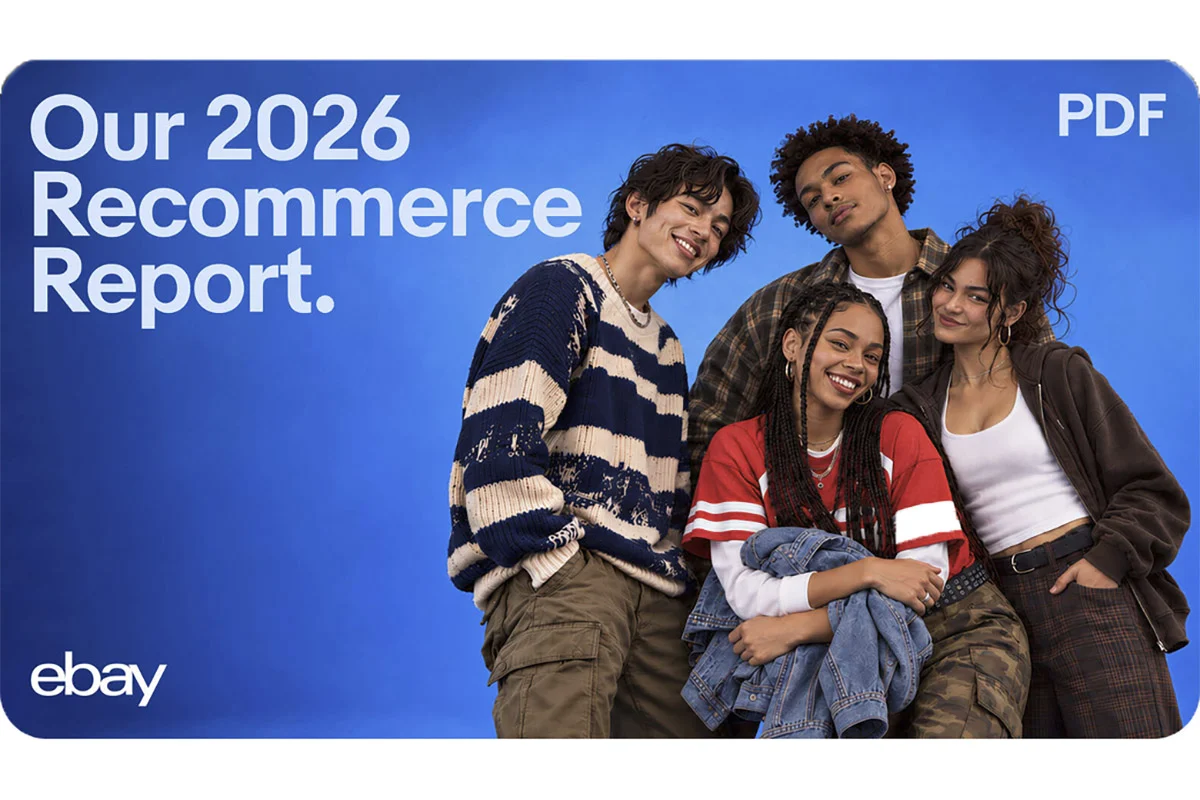
The British retail landscape is undergoing a profound metamorphosis. Once defined by the high-street dominance of new-goods retailers, the UK market has shifted its allegiance toward a more circular, sustainable, and value-driven model: the "recommerce" economy. According to the latest comprehensive data from eBay’s 2026 Recommerce Report, Britain has officially cemented its status as the world leader in the secondhand revolution, outpacing global retail giants including the United States, Japan, Germany, and France.
With nearly nine in ten (87%) UK consumers having engaged in secondhand shopping over the past year—a figure that towers over the 76% global average—the data confirms that pre-loved shopping is no longer a niche activity for bargain hunters or vintage enthusiasts. It is, quite simply, the new mainstream.
The Main Facts: A Paradigm Shift in Consumer Behavior
The findings of the 2026 Recommerce Report, which surveyed over 10,000 shoppers and 1,700 sellers across 10 international markets, reveal a seismic shift in how the British public approaches consumption. For many, the decision to buy secondhand is no longer a last resort or an occasional eccentricity; it is a calculated, preferred method of acquisition.
The most striking metric is the frequency of these transactions. The report indicates that the proportion of UK shoppers who purchase pre-loved items at least once a month has surged by 13% year-on-year, now reaching 59% of the population. This indicates that the "circular economy" is moving from a sporadic interest to a habitual, recurring cycle of trade.
This growth is driven by a four-pillar motivation: value, sustainability, the thrill of discovery, and a burgeoning sense of community. As inflation remains a persistent concern and the environmental impact of "fast fashion" and mass-market manufacturing enters the public consciousness, British consumers are turning to platforms like eBay to reconcile their desire for quality goods with their economic and ethical priorities.
Chronology: The Evolution of the Pre-Loved Market
To understand how Britain reached this pinnacle, one must look at the trajectory of the secondhand market over the last decade.
Phase 1: The Stigma and the Niche (2010–2015)
A decade ago, the secondhand market was largely bifurcated. On one end were charity shops, viewed primarily as a necessity for those on a budget. On the other were niche, high-end vintage collectors. The concept of "pre-loved" was not yet part of the common retail lexicon, and the stigma of buying used goods—particularly electronics or luxury apparel—remained a significant barrier to entry for the general public.
Phase 2: Digital Normalization (2016–2020)
The proliferation of digital marketplaces accelerated the transition. Technology solved the primary friction points of the secondhand market: location and searchability. As mobile applications made it as easy to buy a pre-owned jacket as it was to order a new one from a major retailer, the "discovery" aspect of shopping took hold. Consumers began to view eBay not just as a garage sale, but as a vast, global inventory of unique finds.
Phase 3: The Sustainability Awakening (2021–2023)
The post-pandemic period saw a marked shift in consumer values. Climate anxiety and the visibility of the environmental cost of retail production turned sustainability into a key purchase driver. Younger demographics, particularly Gen Z and Millennials, began to treat "pre-loved" as a badge of honor—a sign of conscious consumerism that rejects the "take-make-waste" culture of traditional retail.
Phase 4: The Mainstream Integration (2024–2026)
We are currently in the fourth phase, where the distinction between "new" and "pre-loved" is blurring. With the rise of refurbished electronics, authenticated luxury goods, and circular fashion initiatives, the secondhand market has reached a state of maturity where it competes directly with traditional retail for the average consumer’s wallet.
Supporting Data: Why Britain Leads the Way
The disparity between the UK and other global markets is significant. While 87% of Brits have participated in the secondhand economy, the global average sits at 76%. This 11-point lead reflects a deep integration of circularity into the national retail psyche.
Several key datasets from the report underline this dominance:
- Monthly Frequency: 59% of UK consumers shop pre-loved monthly, a clear indicator that the behavior is habitual.
- The Trust Factor: 53% of repeat buyers prioritize consistent quality and accurate product descriptions above all else.
- The Barrier to Entry: Among the 13% of UK consumers who have not yet embraced the trend, 54% cite uncertainty regarding product condition and authenticity as their primary concern.
This data suggests that the ceiling for the secondhand market is far from being hit. If retailers and platforms can bridge the "trust gap" for the remaining 13%, the market share of pre-loved goods could climb even higher, effectively cannibalizing the market for new, mass-produced items.
The Critical Role of Trust: The Foundation of Scale
As the industry matures, "trust" has emerged as the single most important currency in the recommerce economy. The 2026 report highlights that for seasoned buyers, the relationship between buyer and seller is anchored in reliability.
- Consistency over Price: Interestingly, buyers are more loyal to sellers who provide accurate descriptions (53%) than they are to those who offer the lowest prices (39%). This indicates a shift in priorities: the consumer is willing to pay for the peace of mind that a product is exactly what it claims to be.
- The Authenticity Imperative: For those who have yet to take the leap into the secondhand market, the barriers are almost entirely psychological. A lack of confidence in product authenticity and condition prevents non-users from participating. However, the report suggests that 44% of these hesitant shoppers would be converted if provided with guaranteed authenticity and stronger buyer protection.
This is where the industry is focusing its next phase of innovation. By implementing rigorous verification processes, offering warranties on refurbished electronics, and standardizing grading systems for pre-owned clothing, platforms are working to remove the risk from the transaction. When the secondhand experience feels as "safe" as a transaction with a primary retailer, the final psychological hurdle to mass adoption will be dismantled.
Official Responses: Insights from Industry Leadership
Kirsty Keoghan, General Manager of Fashion & Luxury for eBay EU, views the current data as a milestone for the retail sector. "Pre-loved shopping is now firmly mainstream in the UK, and there is a genuine kudos to finding quality pre-loved items for less," Keoghan notes.
She emphasizes that the industry is currently in a transitional state. "The next step is making pre-loved and refurbished a first choice by default across fashion and luxury through to electronics. Trust is critical to that—reassurances from money-back and authenticity guarantees to a warranty on a refurbished item is what keeps existing buyers coming back and what gives those yet to shop secondhand the confidence to start."
Keoghan’s assessment underscores a fundamental shift in retail strategy. The goal is no longer to convince people to "save money" by buying used; it is to convince them that "pre-loved" is the superior choice—a choice that offers unique value, verified quality, and a smaller environmental footprint.
The Implications: A New Era for Retailers and Consumers
The dominance of the UK in the recommerce space carries significant implications for the future of the global retail market.
For Traditional Retailers
Major brands can no longer ignore the pre-loved sector. Many luxury houses and high-street retailers are already beginning to integrate circularity into their business models—partnering with platforms, creating "pre-owned" sections on their own websites, and offering trade-in programs. Failing to acknowledge the secondary market is effectively ignoring a massive segment of the customer base that values longevity over constant newness.
For the Consumer
The consumer of 2026 is empowered by data and choice. The ability to source a high-quality, pre-owned item—whether a smartphone, a handbag, or a piece of furniture—with the same assurance as a new product means that the consumer can command a higher quality of life for less capital. Furthermore, the act of buying pre-loved allows the individual to participate in the circular economy, reducing their personal carbon footprint without sacrificing style or utility.
For the Environment
While the report focuses on retail behavior, the environmental implications are massive. If the UK can sustain this level of growth in the circular economy, it represents a significant reduction in the demand for virgin materials and a slowdown in the manufacturing-to-landfill pipeline that currently defines global consumption. By keeping products in circulation longer, the UK is effectively setting a blueprint for sustainable economic growth.
Conclusion: The Future is Circular
The data from the 2026 Recommerce Report paints a picture of a nation that has moved beyond the "fast consumption" era. By prioritizing trust, quality, and the inherent value of existing products, British shoppers have turned the secondhand market into a robust pillar of the national economy.
As the industry continues to invest in verification technologies, warranty programs, and logistics, the "trust barrier" will continue to lower. When this happens, the distinction between a "first-hand" purchase and a "pre-loved" purchase will become increasingly irrelevant to the average consumer. In this new era, the smartest purchase will be the one that is sustainable, reliable, and—thanks to the thriving UK recommerce market—readily available.
Britain has not just adopted a new way to shop; it has pioneered a new way to consume, proving that the most valuable item is often the one that has already been loved.