DARAA, Syria — The air inside the Palace of Justice in Damascus is heavy, saturated with the weight of decades of silence. But in April 2026, that silence was finally broken. For Mouawiya Saysneh, a resident of Daraa, the cradle of the Syrian uprising, the courtroom was not merely a venue for legal procedure; it was a cathedral of memory, a place where the ghosts of the past were finally granted a seat at the table.
Sitting in his family home in southwestern Syria, surrounded by the echoes of a conflict that tore his country apart, Saysneh recalled the precise moment he locked eyes with Atef Najib. “When I saw him,” Saysneh said, his voice dropping to a somber register, “tears fell from my eyes.”
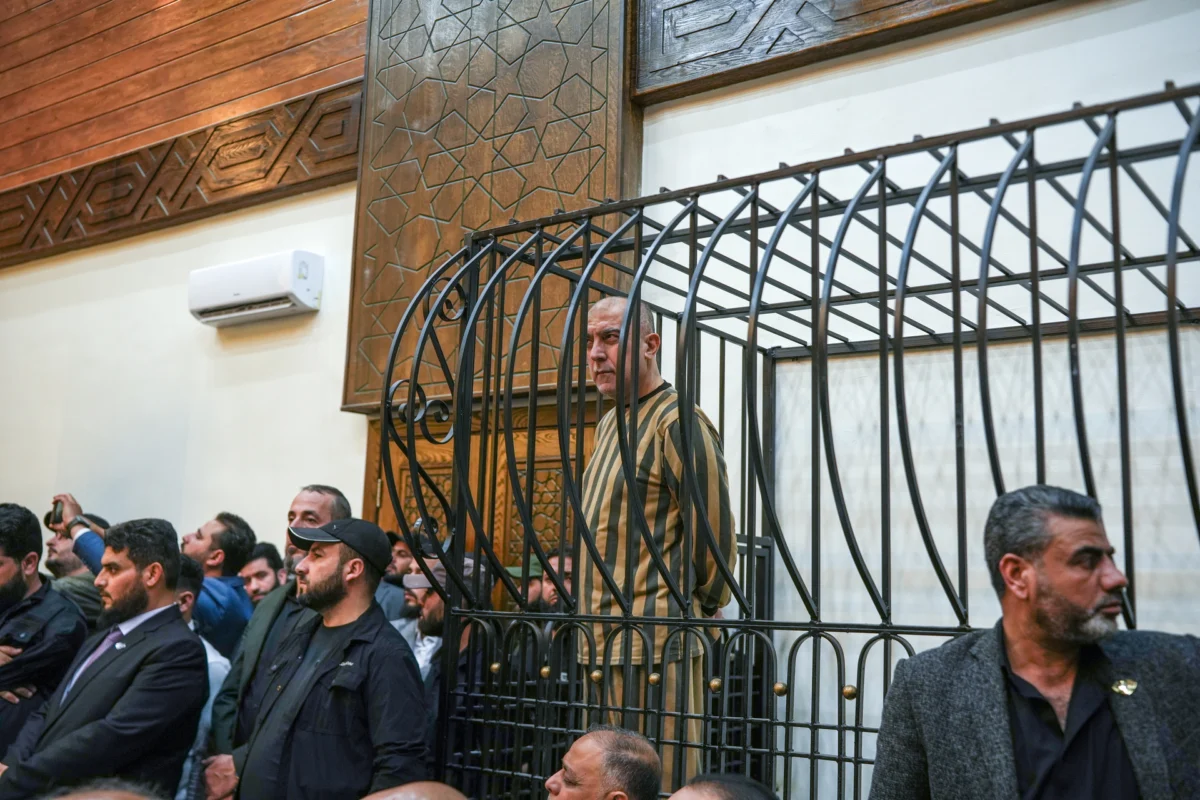
Najib, 66, a former high-ranking official in Bashar al-Assad’s security apparatus, sat in the dock—a figure once synonymous with the untouchable power of the regime. He was one of nine officials currently facing trial, yet he stood as the sole defendant physically present in the courtroom. This proceeding, unprecedented in the annals of modern Syrian history, represents the nation’s first genuine legal reckoning with the systemic brutality of the Assad dictatorship.
The Architecture of Impunity: A Chronology of a Conflict
To understand the gravity of the April 2026 proceedings, one must trace the arc of the Syrian tragedy back to its origins in 2011.
The Spark (2011–2012)
The conflict began in Daraa, where the arrest and torture of local teenagers for anti-government graffiti ignited mass protests. Atef Najib, then the head of Political Security in the province and a cousin of President Bashar al-Assad, became the face of the regime’s heavy-handed response. His directives—characterized by mass arrests, disappearances, and the authorization of live ammunition against civilians—transformed localized grievances into a nationwide insurrection.
The Descent into Total War (2013–2020)
As the Syrian government militarized the state’s response, the conflict escalated into a multi-front civil war. The systematic use of chemical weapons, the siege of civilian populations, and the operation of a sprawling network of detention centers—documented by thousands of smuggled photographs, most notably the "Caesar" files—solidified the regime’s reputation as one of the most oppressive in the 21st century.
The Shift Toward Accountability (2021–2025)
Following years of geopolitical stalemate, the Syrian legal landscape began to shift. International courts in Germany and France began exercising universal jurisdiction, prosecuting lower-level regime operatives. These trials created a legal roadmap, placing pressure on the Syrian judiciary to adapt or face international delegitimization. By late 2025, internal political restructuring and external pressure forced the establishment of a specialized tribunal in Damascus, tasked with addressing "crimes against humanity" committed during the transition period.
The Landmark Trial (2026)
The April 2026 trial of Najib and his eight associates marks the first time senior-level officials have been brought before a domestic court under charges that directly implicate them in the state’s repressive machinery.
Supporting Data: The Scale of Atrocity
The indictment against Najib and his co-defendants is supported by a mountain of evidence that analysts and human rights organizations have been compiling for over a decade.
- The Documentation Gap: Organizations like the Syrian Network for Human Rights (SNHR) have meticulously cataloged over 150,000 cases of enforced disappearances. The evidence presented in court includes digitized archives of internal security reports that link specific orders to the detention centers under Najib’s purview.
- Medical and Forensic Records: Expert testimony provided during the trial includes forensic analysis of bodies exhumed from mass graves in the southern regions. These records provide a grim timeline of the victims’ last hours, often detailing systematic physical trauma consistent with torture practices used in the Daraa detention facilities.
- The "Caesar" Connection: While the original Caesar photographs were used in European courts, the 2026 trial has integrated internal correspondence that mirrors the evidence found in the photographs, effectively linking the high-level policy of the regime to the operational realities of the torture chambers.
Official Responses: Between Reform and Survival
The Syrian government’s stance on the trial is a study in calculated ambiguity. Official state media has framed the proceedings as an act of "national reconciliation" and a demonstration of the state’s judicial independence.
“The law is supreme,” stated a government spokesperson during a press briefing in early April. “These proceedings serve as a testament to the resilience of our institutions and our commitment to ensuring that the grievances of the past do not impede the progress of our future.”
However, critics and legal observers see a more cynical reality. By conducting these trials domestically, the Assad regime seeks to preempt international calls for a hybrid tribunal, maintaining control over the narrative and the scope of the investigations. By limiting the number of defendants to nine and focusing on individuals who have already lost their political currency, the government hopes to create a "pressure valve" to satisfy international demands without dismantling the core power structure of the state.
“They are sacrificing the branches to save the trunk,” says Dr. Elena Rossi, a human rights legal analyst based in Geneva. “The trial is a significant development, but it is not a complete departure from the status quo. The state is essentially attempting to legislate its own survival.”
The Human Cost: Implications for the Future
For victims like Mouawiya Saysneh, the legal proceedings are not about political strategy—they are about the validation of a stolen life.
“I had a lump in my throat,” Saysneh recalled of the moment he saw Najib. “I felt immense happiness to see him detained, but still, the cost was too high. Many Syrians died for this moment.”
The Question of Justice vs. Peace
The implications of this trial extend far beyond the courtroom walls. It forces a national conversation about the limits of restorative justice. Can a country move forward when the architects of its destruction are tried by a system they helped build?
- Establishing Precedent: The trial sets a legal precedent that state officials are not inherently immune to prosecution, regardless of their past proximity to power. This creates a psychological barrier for other officials, signaling that the "blank check" of impunity may finally have an expiration date.
- Societal Reconciliation: The trial is a flashpoint for social healing. For families in Daraa and beyond, the public acknowledgment of these crimes—even if imperfect—is a critical step in countering the state-sponsored narratives of denial that have persisted for fifteen years.
- Regional Stability: The trial has become a litmus test for Syria’s regional reintegration. As neighboring nations look toward diplomatic normalization, the existence of a functioning, albeit flawed, justice system provides a veneer of stability that makes engagement more politically palatable for international actors.
Conclusion: A Long Road Ahead
As the trial continues, the Palace of Justice stands as a monument to the fragility of truth in a post-conflict society. The presence of Atef Najib in the dock is a profound milestone, yet it is only a single thread in a much larger, more complex tapestry of accountability.
For the families who lost their loved ones in the dark corners of the Daraa security offices, the journey is far from over. There are thousands of others—those who gave the orders, those who executed them, and those who provided the political cover—who remain beyond the reach of the current legal proceedings.
The trial is, at its core, a beginning. It is a fragile acknowledgment that the past cannot be permanently buried, and that the tears shed in a quiet living room in Daraa are finally finding an audience in the halls of power. Whether this marks the start of a true transition or merely the rebranding of an old system remains the central question of the Syrian decade. For now, the process of documenting the truth continues, one testimony at a time, in a country still struggling to breathe beneath the weight of its own history.