In a sobering assessment that marks a definitive shift in the global climate narrative, the United Nations Environment Programme (UNEP) has declared that a temporary breach of the 1.5°C global warming threshold is now "inevitable." Following decades of insufficient climate action and sluggish policy implementation, the world’s leading environmental authority warns that the goal of limiting warming to 1.5°C—the bedrock of the Paris Agreement—is now facing an "imminent and unavoidable" overshoot.
The 2026 Emissions Gap Report, titled The Point of Return, strips away the optimism that has characterized previous years’ reports. It shifts the focus from preventing an overshoot entirely to minimizing its magnitude and duration, while attempting to establish a "credible return path" to 1.5°C by the end of the century.
The Reality of the Overshoot
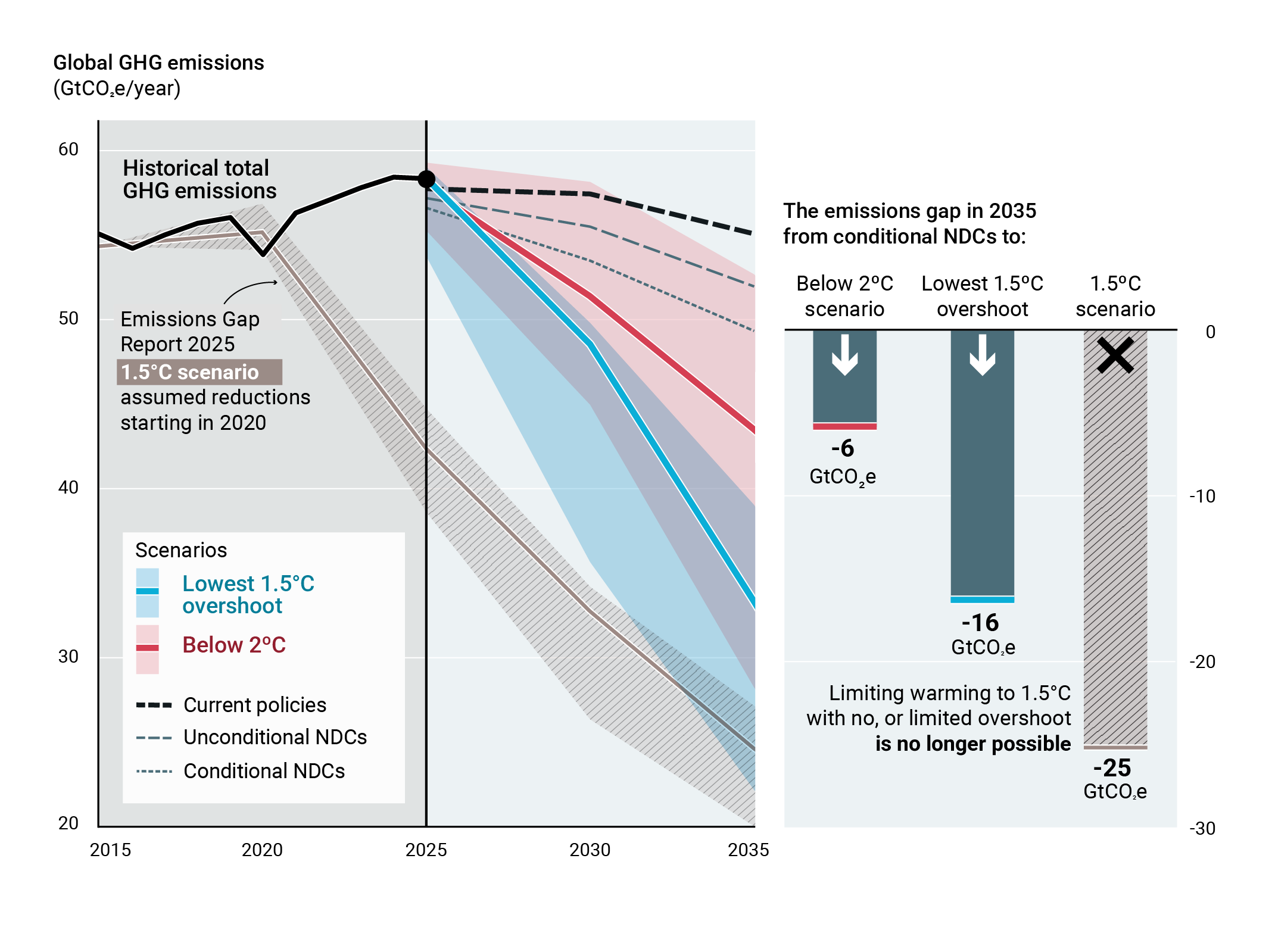
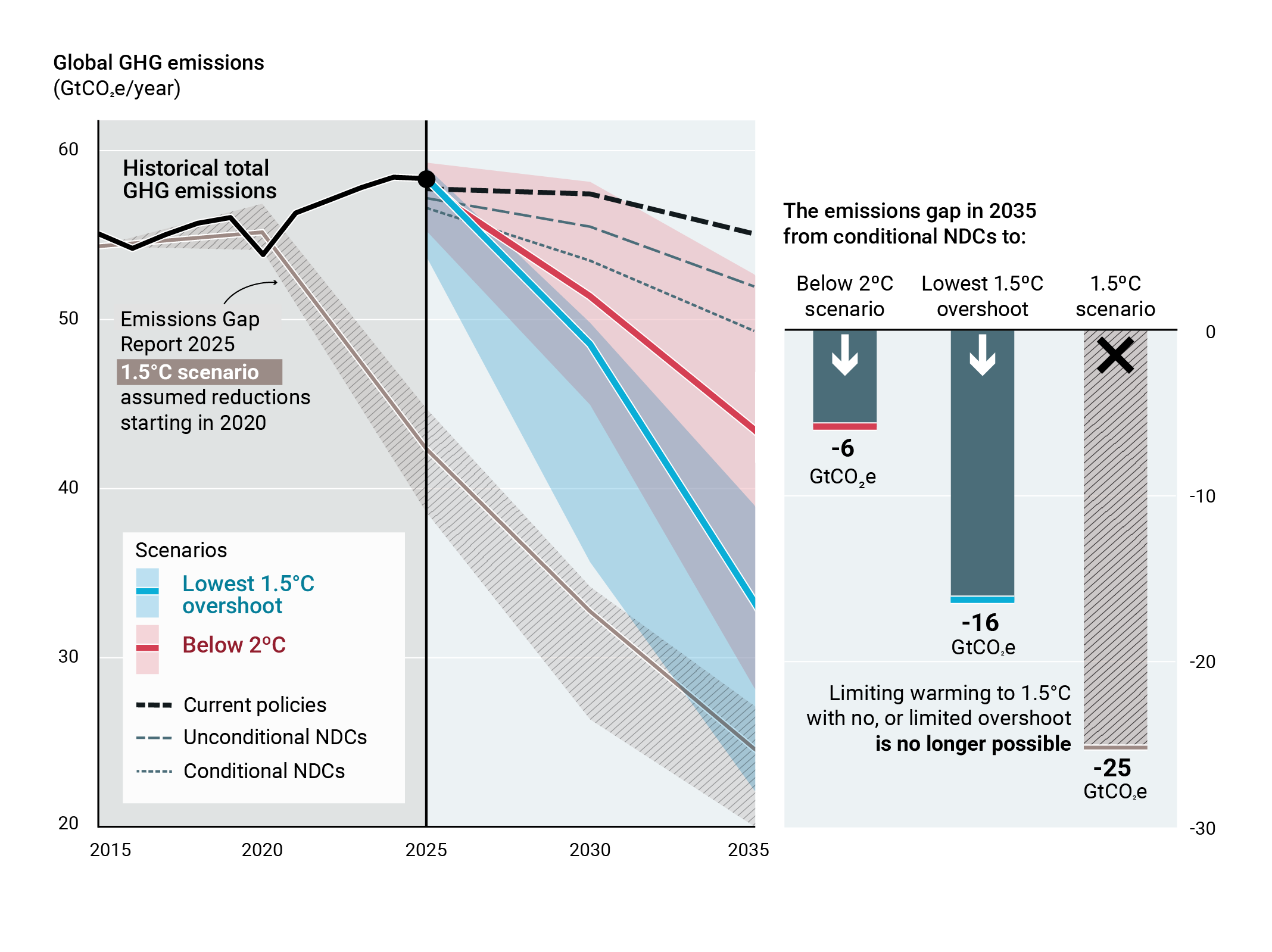
For years, the climate community debated whether 1.5°C remained a reachable target. UNEP’s latest data suggests that the window for a "soft landing" has closed. Even under the most ambitious, "lowest possible" overshoot scenario—which requires deep, systemic economic transformation—global temperatures are projected to peak at 1.7°C to 1.8°C by the middle of the century before beginning a slow, arduous decline.
This trajectory is not a failure of the Paris Agreement’s ultimate goal, but rather a reflection of the systemic failure to act when the warning signs were first clear. To keep this path alive, global emissions must plummet by 18% by 2030 and 45% by 2035. Crucially, this pathway assumes a massive, unprecedented scaling up of carbon dioxide removal (CDR) technologies—a sector that is currently in its infancy.
Chronology: From Ambition to "Policy Progress"
The timeline of global climate failure is etched into the annual reports produced by UNEP over the last decade. Since 2014, the reports have tracked a widening "emissions gap"—the difference between where the world is heading and where it needs to be.
- 2014–2018: Early warnings signaled that a fivefold increase in climate commitments was required.
- 2019–2022: The rhetoric shifted from "slipping out of reach" to the need for a "rapid transformation of societies."
- 2023–2024: Humanity continued to break "all the wrong records," with new pledges requiring a "quantum leap" in ambition.
- 2025–2026: The current reality. With the formal withdrawal of the United States from the Paris Agreement and a general stagnation in global policy, the 2026 report concludes that we have entered an era of "overshoot management."
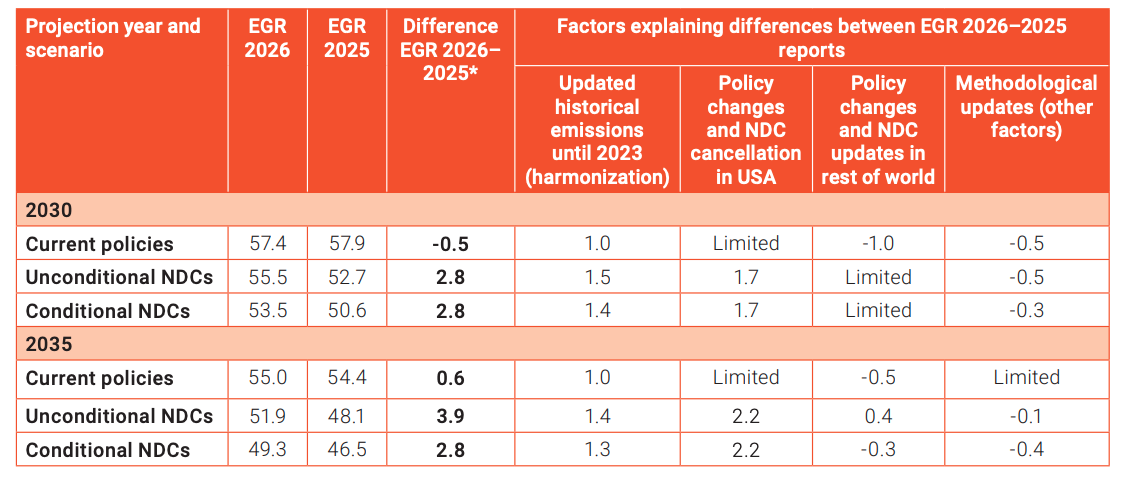
The 2025–2026 period has been defined by what the report describes as a "narrowing of the implementation gap," though it offers little comfort. This narrowing is not the result of policy progress, but rather the consequence of major emitters stepping back from international commitments, thereby technically aligning their lower, less ambitious targets with their current, inadequate policies.
Supporting Data: A Plateauing Crisis
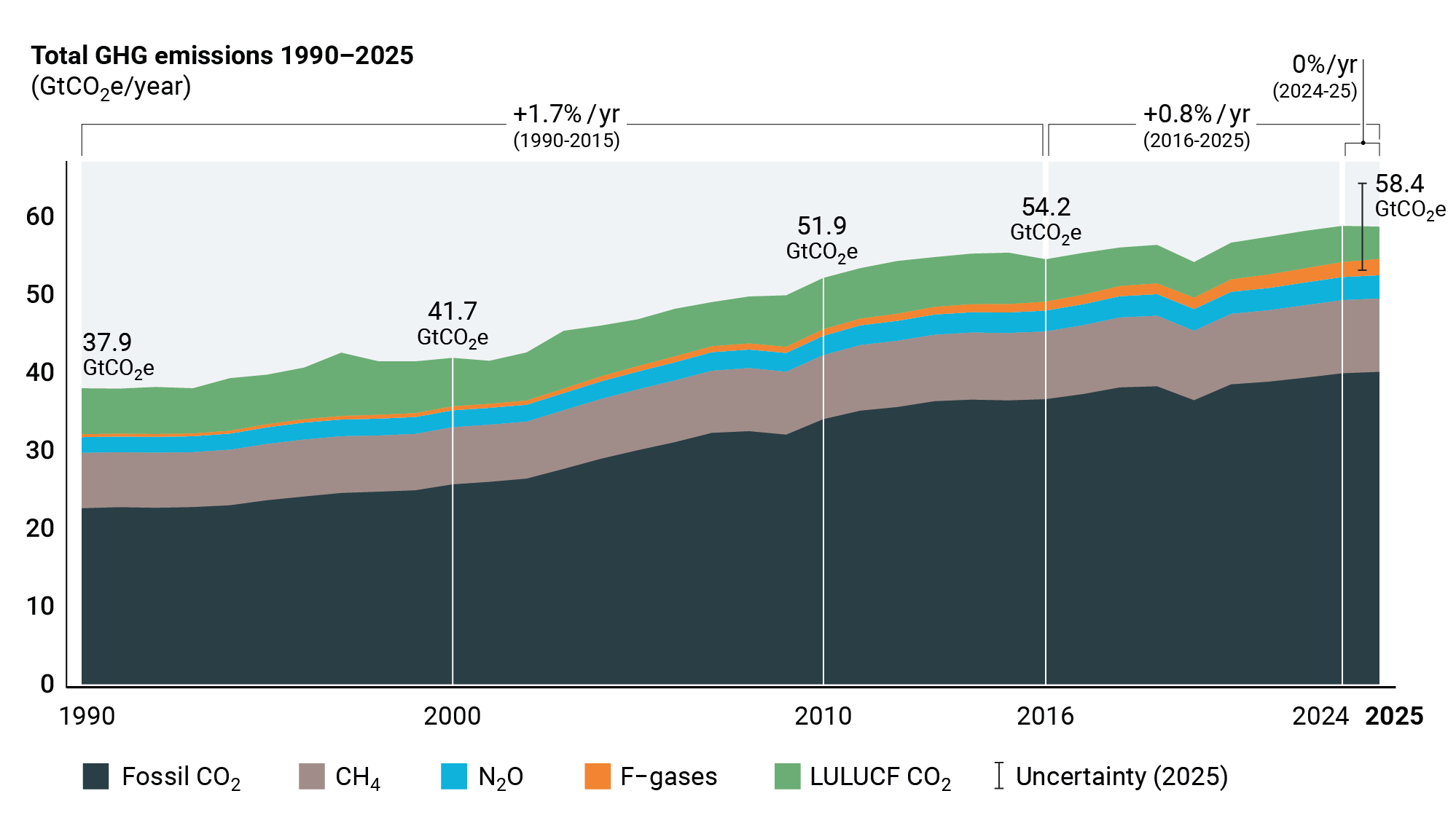
Global greenhouse gas emissions in 2025 totaled approximately 58.4 billion tonnes of CO2 equivalent (GtCO2e). While this represents a marginal decrease of roughly 0.16 GtCO2e from 2024, the report is quick to caution that this is not a turning point. The figures are provisional, and the overall direction of global emissions remains essentially flat.
The growth rate of emissions has slowed significantly compared to the 1990–2015 period, during which emissions grew by an average of 1.7% annually. Since 2016, that growth rate has halved to 0.8%. However, "slowing growth" is not "declining emissions."
Fossil fuel emissions actually saw a slight increase of 0.4% to 1.1% in 2025. The slight dip in overall figures was largely driven by a reduction in land-use emissions, a fluctuation linked to the cessation of El Niño conditions. With a "super" El Niño event anticipated for 2026, experts warn that this temporary reprieve in land-use emissions is likely to be short-lived.
The Role of Top Emitters
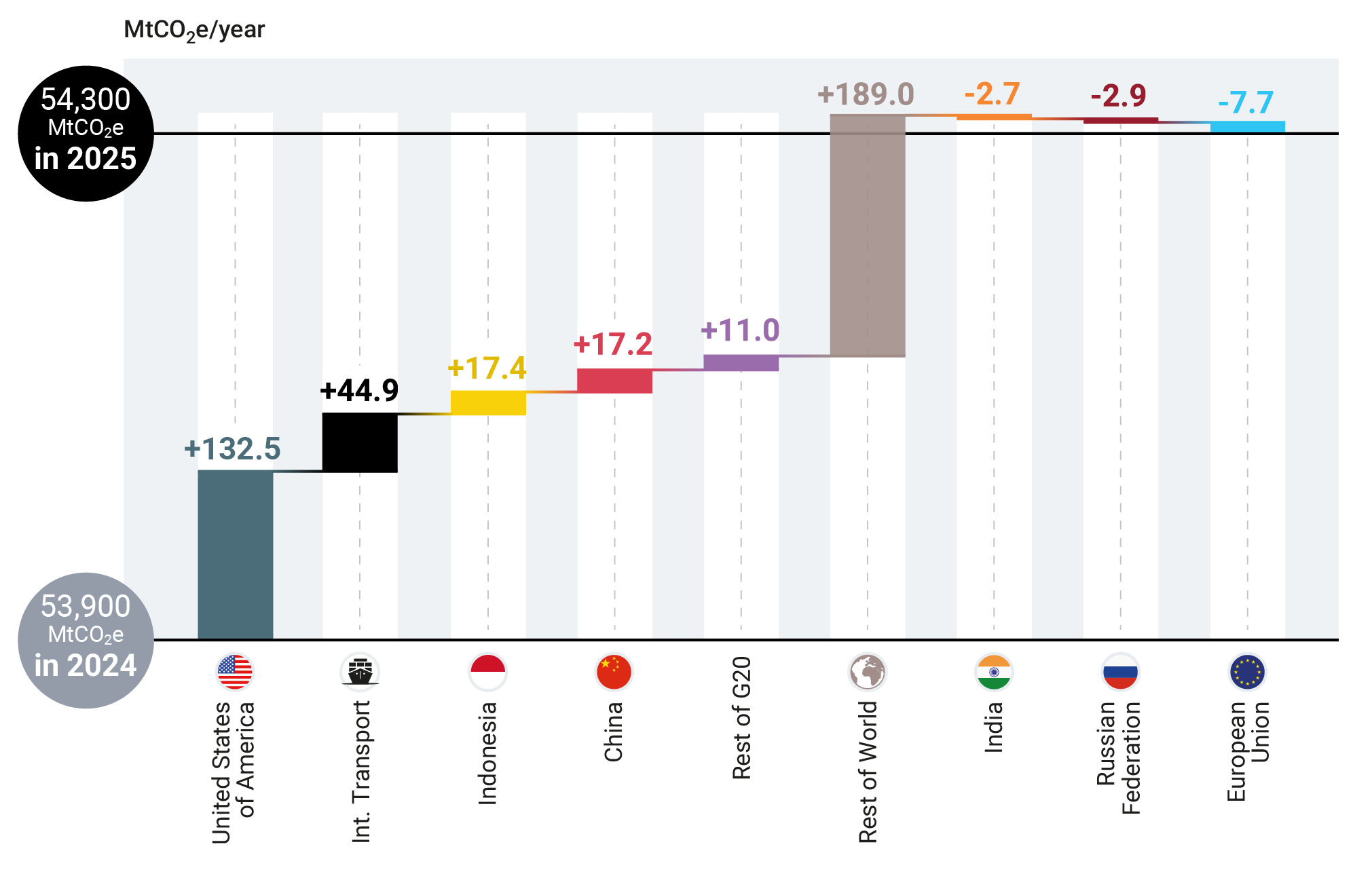
Among the G20, the United States stands out for a notable increase in emissions in 2025—roughly 133 million tonnes—driven by a resurgence in coal power and increased heating demands during a harsh winter. Conversely, emissions in China, the EU, India, Russia, and Indonesia remained relatively flat. While the power and transport sectors show signs of decarbonization due to the rapid deployment of solar energy and electric vehicles, these gains are being offset by the rising demand for international aviation, shipping, and the burgeoning energy requirements of AI data centers.
Official Responses and the "Implementation Gap"
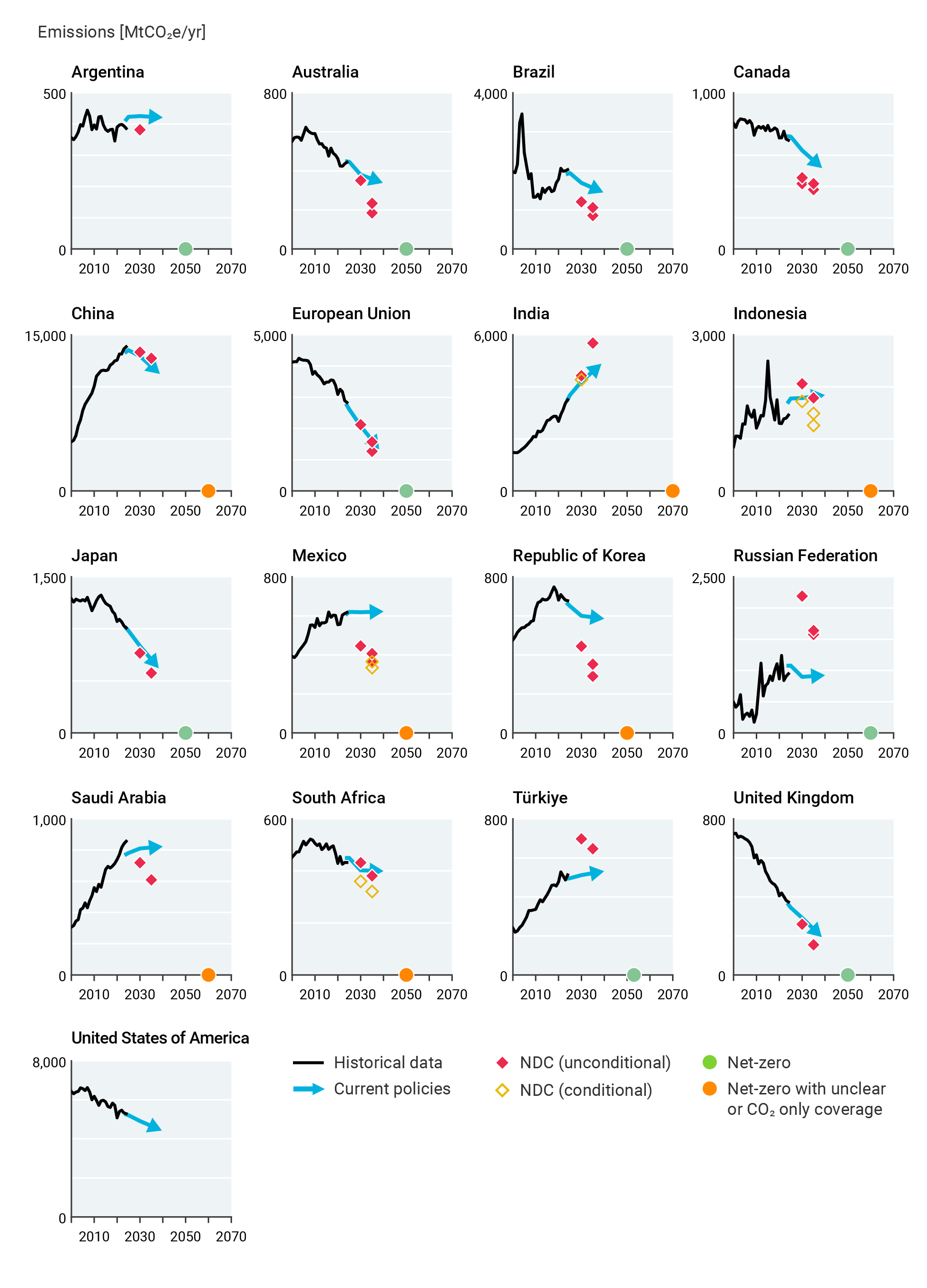
The third round of Nationally Determined Contributions (NDCs) for 2035, which were due in early 2025, serves as a litmus test for global political will. 95% of nations missed the initial deadline, and while 124 countries have now submitted their pledges, these cover only 75% of global emissions.
UNEP notes that while these new NDCs are more "robust" in their formatting, they have failed to meaningfully broaden the scope of sectors covered. If implemented in full, these 2035 pledges would reduce emissions by 3.5 GtCO2e compared to 2030 targets—a figure the report bluntly labels as "far from what is needed."
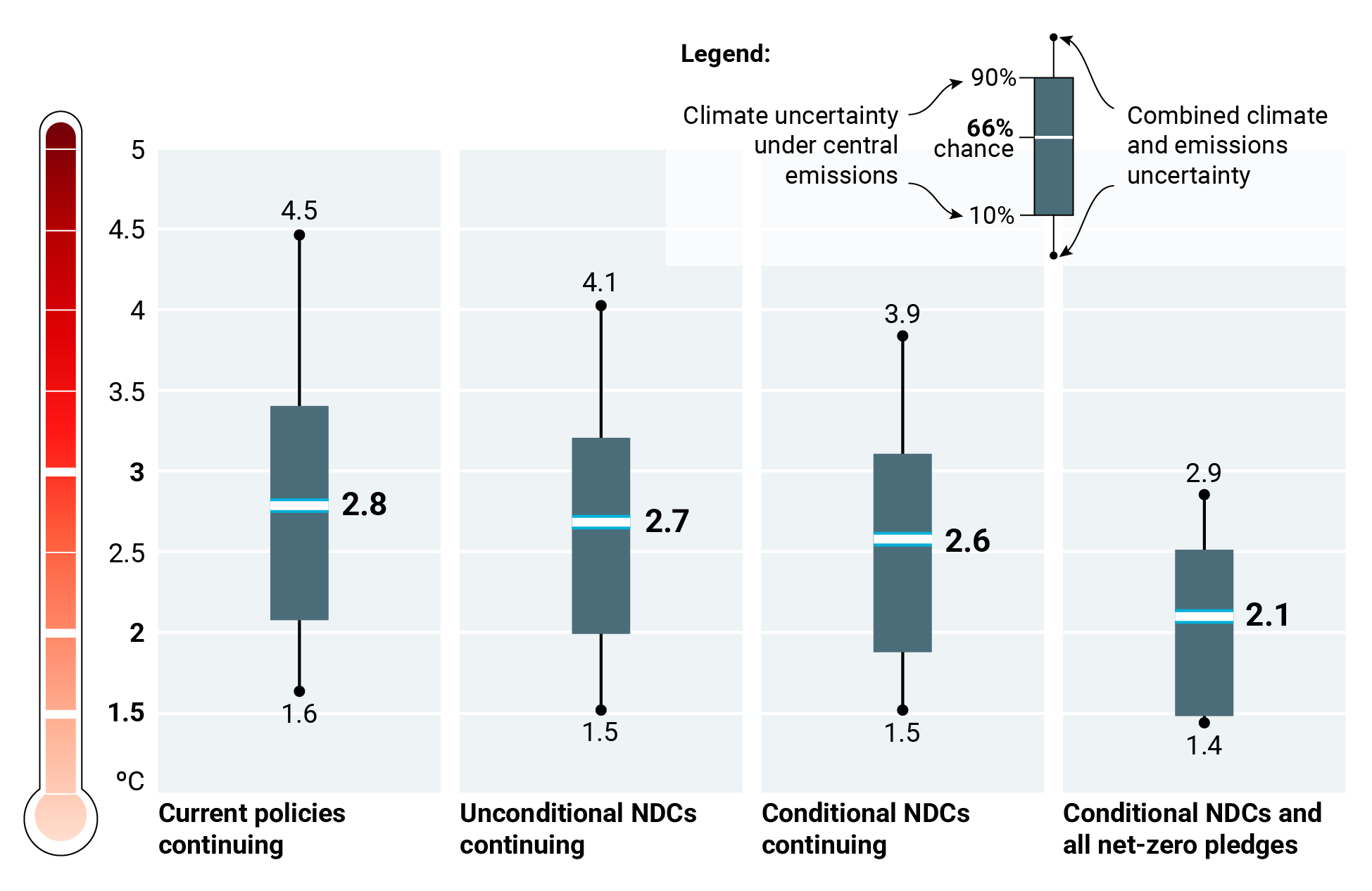
The report highlights a critical, often ignored reality: even if all current NDCs were met, the world is still on track for 2.6°C of warming by 2100. If we include net-zero pledges, the outlook improves to 2.1°C, but this remains significantly above the 1.5°C goal. The message is clear: the gap between "what we say" and "what we do" is a chasm that threatens the stability of the climate system.
Implications: The 0.1°C Penalty
The implications of the 2026 report are perhaps best summarized by the "five-year rule": for every five years of delay in implementing deep, rapid emission cuts, an additional 0.1°C of warming becomes "locked in" to the Earth’s climate system.
1. The Death of the "Low-Overshoot" Pathway
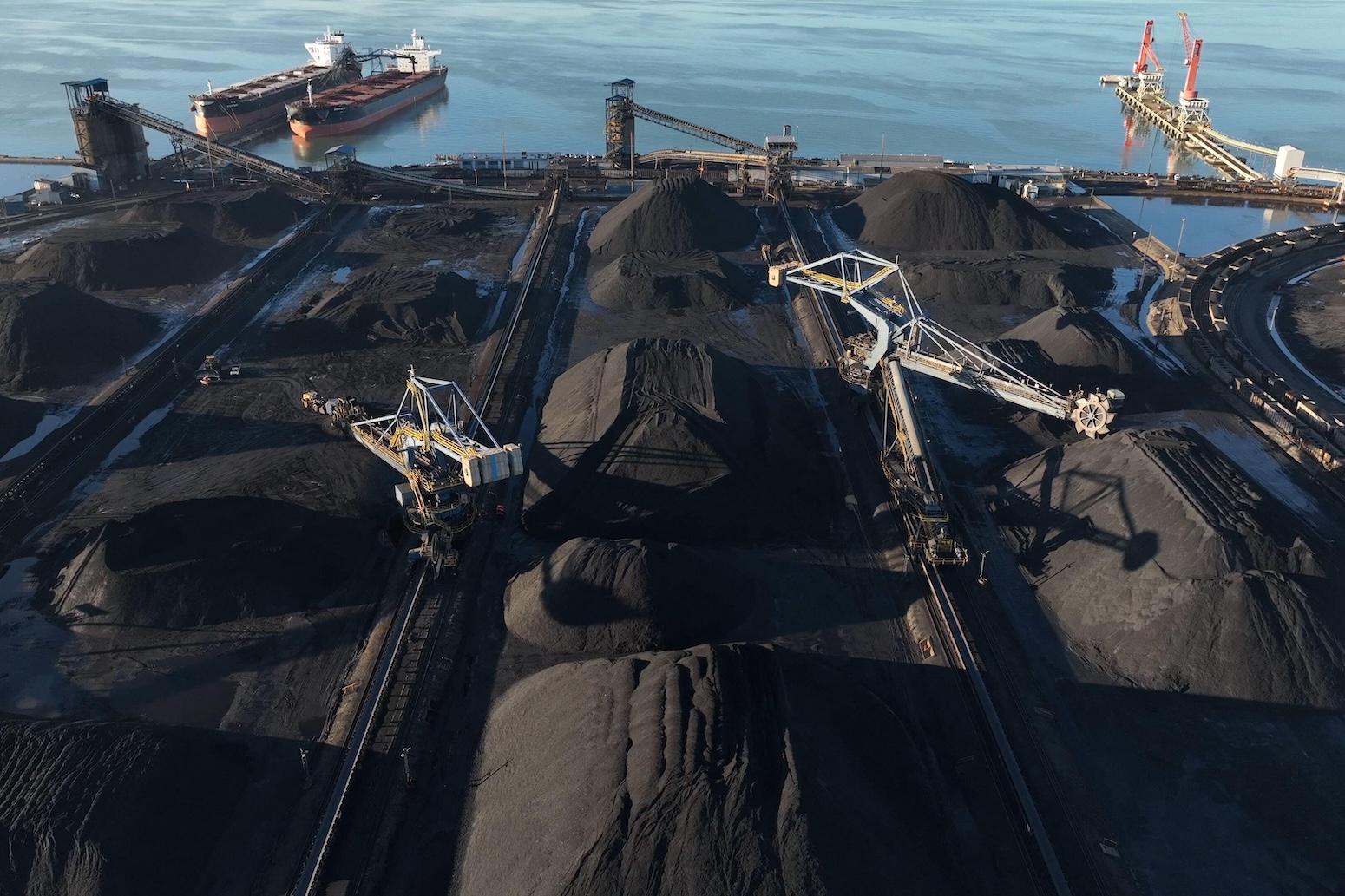
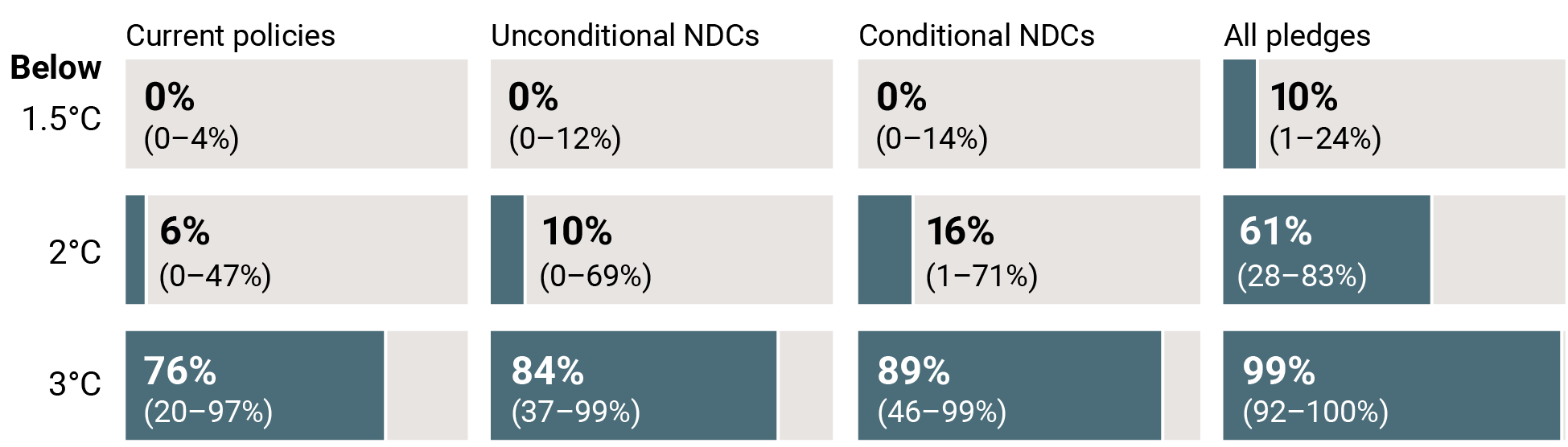
The pathways that would have allowed us to limit warming to 1.5°C with no or minimal overshoot (0.1°C) are now physically and economically infeasible. The world must now prepare for a "deep" overshoot. This necessitates a transition to an economy that not only slashes fossil fuel use—requiring a 90% reduction in coal usage by 2050—but also one that relies on massive, sustainable carbon removal.
2. The Infrastructure Trap
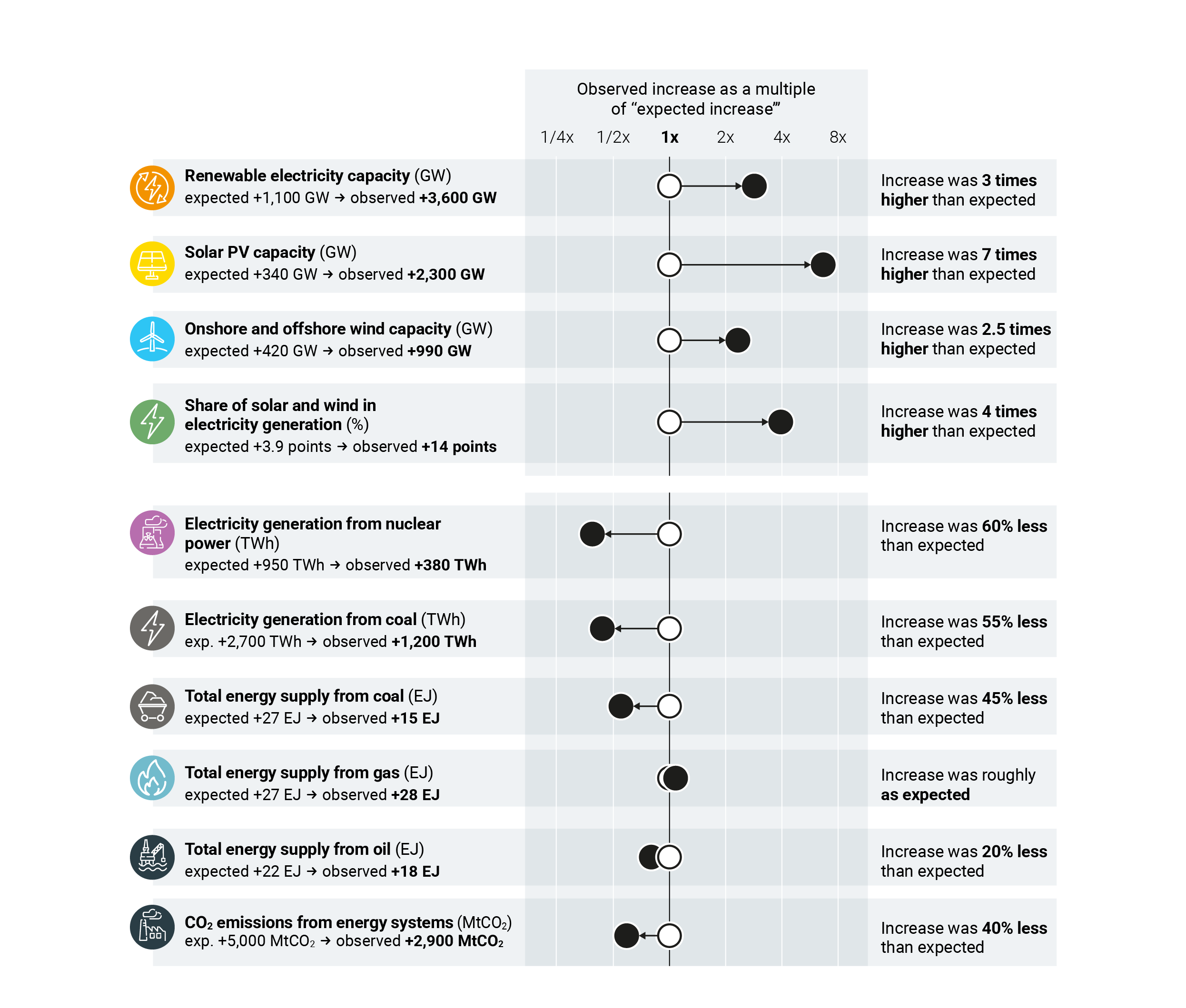
The report warns that the energy infrastructure built today will dictate the climate of tomorrow. While renewables are expanding at three times the rate originally projected in 2015, the global reliance on oil and gas continues to rise. We are currently in a race between the rapid deployment of green technology and the stubborn inertia of fossil-fuel-dependent infrastructure.
3. The Need for "Feasibility Guardrails"
As we enter an era of overshoot, the report emphasizes that we cannot simply "engineer" our way out of the crisis. Large-scale carbon removal must be balanced against food security and biodiversity. There is a high risk that the technologies meant to save the climate could, if deployed recklessly, destroy the very ecosystems we are trying to protect.
Conclusion: A New Era of Climate Action
The 2026 Emissions Gap Report is not a call to surrender; it is a call for a radical change in strategy. The era of "preventative" climate action has transitioned into an era of "remedial" action. The goal is no longer to avoid the pain of a 1.5°C breach—that is now a historical inevitability—but to ensure that the breach is as shallow and as brief as possible.
"Countries can still limit peak warming, shorten the duration of overshoot, and keep the goals of the Paris Agreement within reach," the report concludes. However, the window for this "return" is closing. The "point of return" is not a destination, but a deadline. Without immediate, deep, and sustained global cooperation, the world risks crossing thresholds from which there is no scientific or economic path back.
The global climate trajectory is no longer defined by what is ideal, but by what is still salvageable. The 2026 findings serve as a stark reminder: the planet does not negotiate with politics, and the atmosphere does not recognize the failure of human institutions to meet their own deadlines. The era of the overshoot is here; how we manage it will determine the habitability of the planet for the remainder of the century.