
As the world navigates the turbulent waters of 2026, a counterintuitive trend has emerged from the smoke of geopolitical instability. While the ongoing US-Iran war and the subsequent paralysis of trade through the Strait of Hormuz have triggered a global energy price shock, new analysis from Carbon Brief suggests that these very disruptions are accelerating a historic shift in global carbon dioxide (CO2) emissions. Contrary to fears that energy insecurity would force a desperate, long-term reliance on fossil fuels, 2026 is on track to see a 0.5% reduction in global fossil-fuel emissions compared to 2025 levels.
Main Facts: A Shift in the Energy Paradigm
The global energy landscape in 2026 is defined by the “Hormuz Effect.” The bottlenecking of critical maritime chokepoints has sent oil and gas prices soaring, creating an economic climate that is, paradoxically, incentivizing a faster transition to non-fossil alternatives.
While headlines have fixated on a projected 1.2% rise in global coal demand—fanned by concerns that nations would revert to "dirtier" fuels to compensate for the gas crunch—this increase is marginal when compared to the broader structural decline in oil and gas consumption. The data indicates that for every unit of coal burned in a stop-gap measure, the aggregate impact of declining oil and gas use, coupled with the rapid deployment of renewable energy and electric vehicles (EVs), is creating a net reduction in carbon output.

Fossil fuels still account for roughly two-thirds of global greenhouse gas emissions. However, the 2026 forecast—based on the latest International Energy Agency (IEA) assessments—marks a pivotal moment where the volatility of traditional fuel markets is being met not with a retreat into coal, but with a structural pivot toward energy independence.
Chronology of the 2026 Energy Crisis
The roots of the current shift lie in the rapid escalation of regional hostilities in the Middle East, which began early in the year.
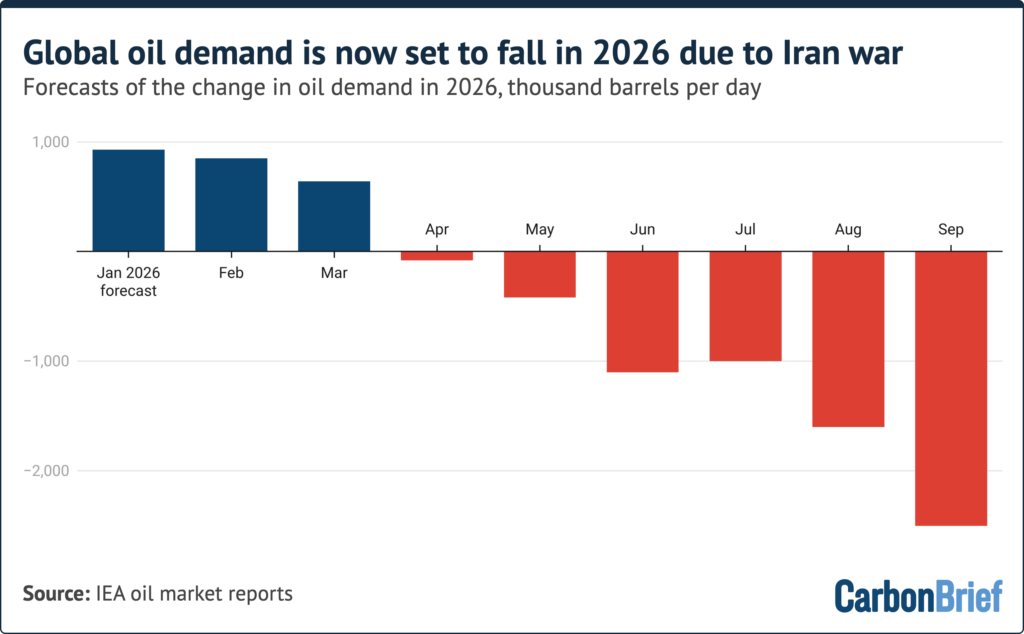
- January 2026: The IEA issues an optimistic forecast, anticipating a rise in global oil demand by 930,000 barrels per day (bpd). At this stage, the market is still operating under the assumption of relative stability in the Persian Gulf.
- March–April 2026: As the US-Iran conflict intensifies, the Strait of Hormuz faces recurring closures. Global gas and oil prices begin a steady climb, forcing major energy importers to reconsider their supply chains.
- July 2026: The IEA releases a revised outlook, documenting a 0.6% drop in gas demand. The narrative shifts from "growth" to "demand destruction" as high prices make fossil fuel consumption unsustainable for industrial sectors.
- September 2026: The definitive turning point. The IEA reports a massive 2,500,000 bpd drop in oil demand—a 2.4% reduction from 2025 levels. Simultaneously, the agency notes that while coal demand is up slightly (1.2%), the broader trend for oil and gas is decisively downward.
Supporting Data: Why Coal is Not the Solution
The narrative of a "return to coal" has been widely publicized, yet the granular data suggests this is a temporary and localized phenomenon. The IEA’s September update highlights that the increase in coal use is largely a reaction to high gas prices. However, there are significant technical and economic limits to this "fuel switching."
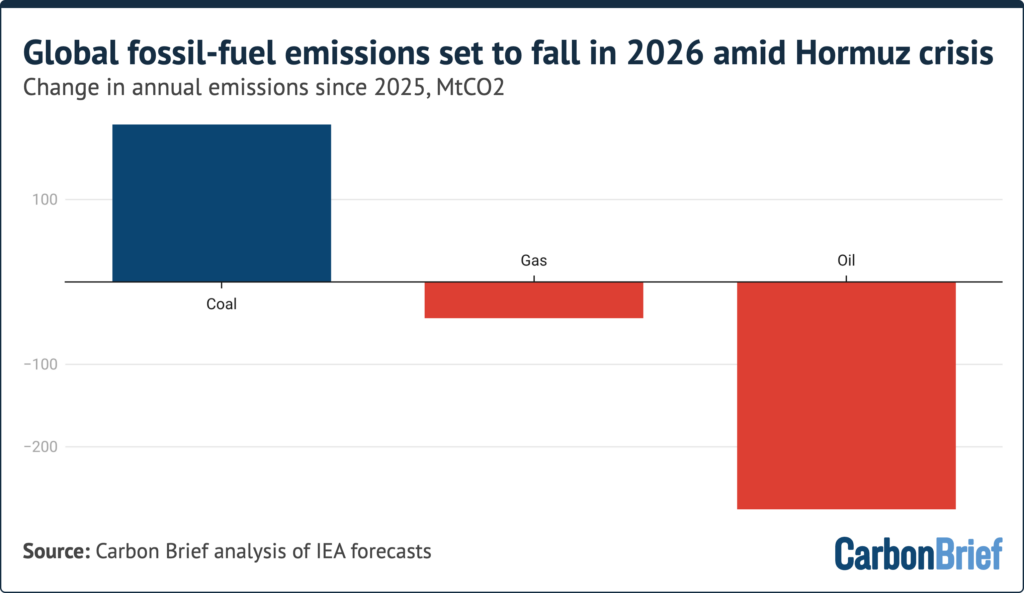
Few countries possess the infrastructure to pivot from natural gas to coal on a large scale. Furthermore, the 2026 climate data is complicated by environmental variables. A record-breaking El Niño event has significantly increased the demand for cooling while simultaneously depressing hydropower output, forcing grids to rely on thermal generation. Additionally, China has reported "wasted" solar and wind capacity, where grid constraints have prevented the full integration of renewable energy.
Despite these headwinds, the decline in oil demand remains the dominant story. The downward revision of oil consumption throughout the year—from an expected increase of nearly a million barrels to a massive drop of 2.5 million barrels—illustrates that the global economy is far more elastic than previously believed. When oil prices spike, industries and consumers accelerate their shift toward electrification, permanently removing a portion of that demand from the global market.
Official Responses and Global Market Sentiment
The reaction from international energy bodies and market analysts has been one of cautious observation. The IEA has significantly downgraded its long-term expectations for oil. Whereas in 2025 the agency projected that oil demand would not peak until 2030, the 2026 reality suggests that the peak may have arrived much sooner.
"For every month the conflict lasts, the probability of permanent oil demand destruction increases," notes Sverre Alvik, Vice President at the consultancy firm DNV. This sentiment is echoed across financial markets. Morgan Stanley analysts recently corroborated the "consensus" forecast of a 2.4 million bpd drop in demand, reflecting a broader investor pivot away from fossil fuel reliance.
Governments that had previously banked on Liquefied Natural Gas (LNG) as a "bridge fuel" are now signaling a radical change in strategy. Nations in Southeast Asia, historically reliant on imported gas, are facing record-high bills, pushing them to expedite investments in domestic solar, wind, and battery storage. The "energy crunch" has become a catalyst for sovereign energy independence, viewing renewables not just as a climate imperative, but as a national security asset.
Implications: The Long-Term Energy Transition
The implications of the 2026 crisis extend well beyond the current year. We are witnessing a fundamental decoupling of economic growth from fossil fuel consumption.

The Rise of Electrification
The most significant long-term consequence of the high-price environment is the accelerated adoption of Electric Vehicles (EVs). From China and Thailand to Australia and the European Union, EV market shares have hit record highs in 2026. The economic pain at the pump has acted as a primary driver, with consumers prioritizing the stability of electricity-based transport over the volatile cost of gasoline and diesel.
Structural Changes to Demand
The IEA’s outlook for 2027 and beyond has been fundamentally altered. The previous expectation of a robust "rebound" in oil demand has been scrapped, with experts now projecting flat consumption for the foreseeable future. This suggests that the current crisis has not merely caused a temporary dip, but has instead brought forward the "peak oil" moment that many analysts predicted would not occur until the next decade.
A New Geopolitical Calculus
The energy crisis has exposed the vulnerabilities of centralized, trade-dependent energy systems. As nations move toward localized, decentralized renewable grids, the leverage held by traditional fossil-fuel-exporting regions is being eroded. The "Hormuz crisis" has inadvertently provided a stress test for the global energy transition—and the system has, for the most part, leaned into renewables rather than collapsing back into total fossil-fuel dependence.

Conclusion: A Turning Point for the Planet
The year 2026 will likely be remembered as the year the world was forced to choose between the volatility of the past and the stability of the future. While the geopolitical situation remains precarious and the immediate cost to the global economy is high, the data offers a glimmer of hope for climate action.
The decline in emissions by 0.5% in the face of such massive global instability is a testament to the resilience of the energy transition. As the world continues to move away from oil and gas, the infrastructure for a cleaner, more secure energy future is being cemented. The "return to coal" remains a myth, while the structural move toward renewables and efficiency is fast becoming the new global standard. The tragedy of the current conflict has, in an ironic turn of history, accelerated the very transition that is necessary to ensure long-term global stability and the health of our climate.