By Michael Grasso, CEO of Grid Rails
For decades, the North American utility model operated on a predictable, linear rhythm. Utilities built centralized generation, transmission lines moved power, and load growth followed steady, historical patterns. Today, that rhythm has been shattered by a convergence of unprecedented pressures: the meteoric rise of artificial intelligence and its power-hungry data centers, the rapid electrification of heavy industry, the mass adoption of electric vehicles (EVs), and a societal expectation of near-perfect grid reliability.
The industry is currently facing the steepest demand-growth challenge it has seen in generations. Yet, a silent, massive solution is already hiding in plain sight. Millions of distributed energy resources (DERs)—residential batteries, EVs, smart thermostats, and commercial assets—are already connected to the grid. These assets represent an untapped reservoir of gigawatt-scale capacity. The challenge of the modern era is no longer about the adoption of these devices; it is about the orchestration of them. We must move beyond the pilot phase and transform these fragmented assets into a cohesive, dispatchable network capable of supporting the grid when and where it is needed most.
The Core Challenge: From Adoption to Orchestration
For years, the industry’s primary focus was the "deployment" phase—subsidizing solar panels, incentivizing EV purchases, and promoting smart home technology. We have succeeded in that endeavor. However, a battery in a customer’s garage or an EV plugged into a wall outlet does not inherently serve the grid. Without a robust, standardized framework, these resources remain "operationally invisible."
To become a true grid asset, a device must be discoverable, measurable, and dispatchable. It must be able to participate in market programs that provide clear compensation for performance. The shift we are witnessing today is the transition from "behind-the-meter" consumer hardware to "in-front-of-meter" grid resources.
Chronology of the Shift
- The Era of Passive Adoption (2000–2015): Utilities focused on net metering and basic distributed generation. DERs were viewed as peripheral rather than central to grid stability.
- The Regulatory Awakening (2016–2020): FERC Order 2222 signaled a paradigm shift, mandating that wholesale markets open their doors to distributed resources. This moved DER participation from a "nice-to-have" utility program to a regulatory necessity.
- The Rise of the VPP (2021–2025): Virtual Power Plants (VPPs) emerged as the preferred framework for aggregating DERs. Early pilots proved technical feasibility but often struggled with scalability.
- The Operational Imperative (2026 and Beyond): The industry is now entering the "Operational Scale" phase, where the focus shifts from proving that VPPs can work to proving that they can be managed with the same reliability as a traditional peaker plant.
Supporting Data: The Scale of the Opportunity
The potential for distributed flexibility is staggering. According to industry analysis, the United States is home to millions of connected, flexible assets. If we could unlock just a fraction of the latent capacity currently sitting in residential garages and commercial basements, utilities could:
- Defer Infrastructure Upgrades: By managing peak demand through VPPs, utilities can avoid or delay billions of dollars in multi-year transmission and distribution (T&D) capital projects.
- Enhance Grid Resilience: Distributed resources provide localized support during extreme weather events, acting as a buffer against outages that might otherwise cascade through the centralized grid.
- Optimize Cost Efficiency: Dispatched VPPs offer a lower-cost alternative to the "peaker" plants that are fired up only during periods of extreme demand.
However, the data also reveals a sobering reality: fragmentation. In our work at Grid Rails with the OpenVPP community, we observed that even at a scale of only a few hundred EVs, operational complexity becomes an exponential burden. Monitoring state-of-charge, communication reliability, and performance verification in real time requires a level of technological sophistication that most current utility systems were not designed to handle.
The Roadblock: Why Pilots Fail to Scale
If the potential is so great, why are most VPPs still stuck in the pilot phase? The answer lies in the "operational layer."
Currently, the utility software ecosystem is a patchwork of point solutions. Qualification, telemetry, and settlement are often siloed in disparate systems, sometimes connected by little more than manual spreadsheets. This fragmentation is the single greatest barrier to scaling.
The Pillars of VPP Maturity
To move beyond pilot programs, utilities must master four distinct operational pillars:

- Standardized Telemetry: Without universal data standards, utilities are forced to build custom integrations for every hardware vendor. Just as IEEE 1547 created a common language for distributed generation, we need an "interconnection standard" for the digital orchestration of DERs.
- Performance Verification: Trust is the currency of the grid. If a utility calls for a dispatch event, they need instantaneous verification that the resource responded. Without rigorous, real-time performance tracking, the VPP remains a theoretical asset rather than a reliable one.
- Settlement and Compensation: This is where trust is built or broken. Customers must be compensated accurately and transparently for their contributions. If a consumer cannot verify that their participation in a grid event resulted in an accurate credit on their bill, engagement will erode, no matter how sophisticated the app interface might be.
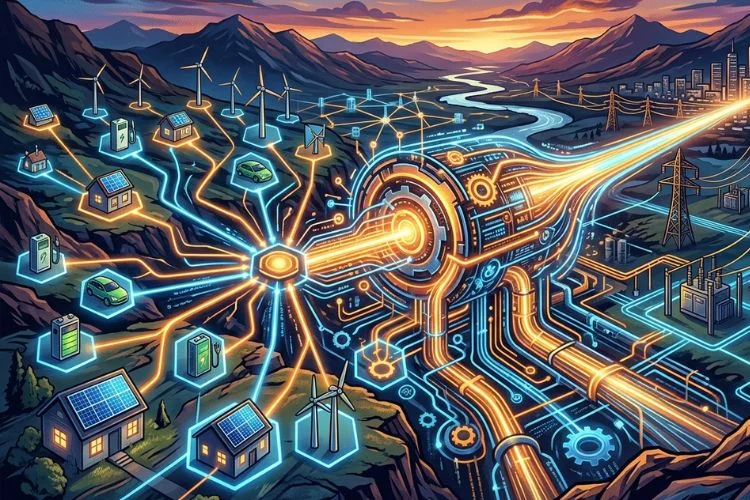
- Coordinated Dispatch: Moving from manual, event-based triggering to automated, algorithmic dispatch is the final hurdle. The grid of the future requires a "shared operational layer" that sits across various vendors and asset types, allowing a utility operator to view a city’s worth of batteries as a single, controllable resource.
Implications: The Future of Utility Operations
The implications for the utility sector are profound. The next chapter of grid modernization will not be defined by the number of hardware units sold, but by the efficiency of the software and regulatory frameworks that coordinate them.
Regulatory and Market Perspectives
Regulators are increasingly demanding that utilities stop treating DERs as a "black box." Federal guidance is shifting toward mandating that utilities provide clear pathways for these resources to compete in wholesale markets. This is no longer a question of whether these markets will open, but how they will be governed.
The industry is navigating a transition similar to the early days of telecommunications, where the move from private, walled-garden networks to an interconnected, standardized internet enabled an explosion of innovation. We are currently in the "dial-up" phase of the distributed grid. To reach the "broadband" phase, we must move toward open, interoperable systems.
The Role of Trust
Ultimately, the transition to a decentralized, flexible grid relies on the trust of the participant. If a homeowner feels their EV or battery is being managed in a way that risks their daily needs, or if they feel their payments are opaque, they will opt out. Utilities must demonstrate that the "grid service" is a win-win, providing the participant with financial value while providing the operator with the stability required to keep the lights on.
Conclusion: A New Era for the Grid
We have moved past the era of questioning whether distributed resources can support the grid; we know they can. The harder question, and the one that will define the next decade of energy policy, is whether utilities can operationalize them with the same confidence they apply to traditional, large-scale generation.
This requires a fundamental rethinking of the utility’s role. They must evolve from being the sole builders of power plants to becoming the "orchestrators" of a vast, complex, and highly flexible network. It is a transition from an era of iron and wire to an era of data and intelligence.
The opportunity to improve system efficiency, lower costs, and enhance the resilience of the North American grid is immense. But the path to that future is built through operational rigor. We must build the infrastructure that allows us to manage these resources as a coordinated network, ensuring that every watt of flexibility is accounted for, verified, and valued. That is the challenge of our time, and it is the key to a sustainable, reliable, and modern energy future.
About the Author
Michael Grasso is the CEO of Grid Rails, a platform engineered to provide the real-time energy management, control, and settlement systems necessary to manage the modern, decentralized grid. He also serves as a Board Advisor to OpenVPP, a community-driven initiative dedicated to developing decentralized, blockchain-based payments and tokenization frameworks for the global utility sector.
Before his current leadership roles, Grasso served as the Executive Vice President and Chief Revenue Officer at Sunnova Energy International, where he was responsible for scaling multi-billion-dollar divisions across residential, commercial, and utility-scale grid services. His extensive background also includes executive roles at Sunrun and TXU Energy, where he was instrumental in shaping early market approaches to consumer-side energy participation. Throughout his career, Grasso has been a vocal advocate for the integration of technology and grid operations to create a more resilient, customer-centric energy future.