Executive Summary
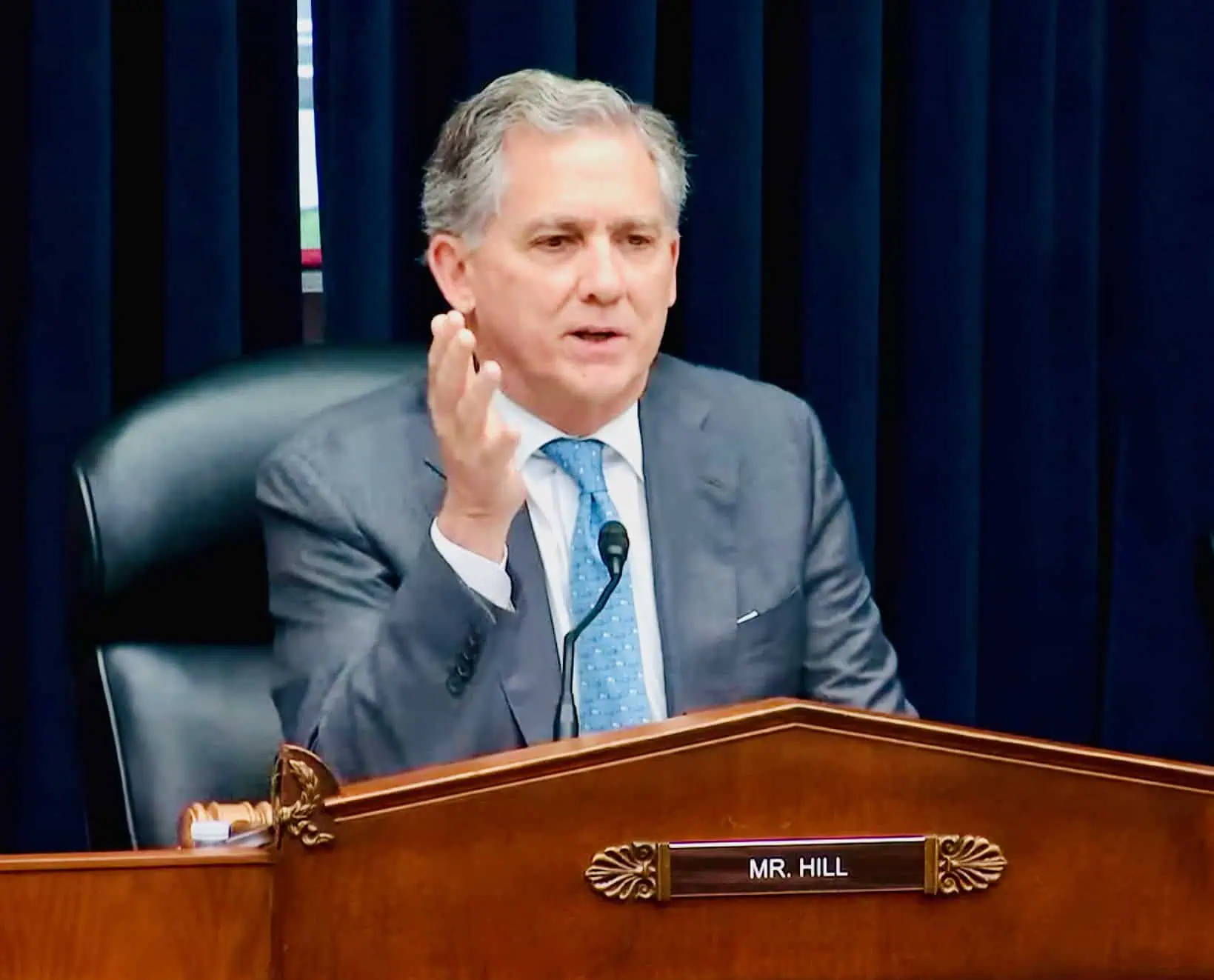
In the wake of the U.S. Senate’s failure to pass the CLARITY Act—a landmark piece of legislation intended to establish a definitive market structure for digital assets—the landscape of American financial regulation has entered a period of administrative improvisation. Representative French Hill, Chairman of the House Financial Services Committee, has issued a stern warning: while the Securities and Exchange Commission (SEC) and the Commodity Futures Trading Commission (CFTC) are taking commendable steps to provide immediate relief, their regulatory maneuvers are no substitute for a durable, congressionally mandated statutory framework.
As the digital asset industry grapples with a fragmented regulatory environment, the debate centers on a fundamental question of governance: Can temporary agency guidance provide the certainty required for long-term institutional investment, or does the lack of a permanent legislative mandate keep the U.S. at a competitive disadvantage in the global blockchain economy?
Chronology of the Legislative Standoff
The road to the current regulatory impasse has been marked by high hopes and procedural friction. For years, the digital asset industry has lobbied for a "bright-line" test to distinguish between securities and commodities.
- The Foundation: Building upon the momentum of the Financial Innovation and Technology for the 21st Century Act from the previous Congress, House leadership worked to refine market-structure rules.
- September 2026: The CLARITY Act arrived in the Senate with bipartisan backing from the House. However, it hit a procedural wall, failing to secure the 60-vote threshold necessary to overcome a filibuster, resulting in a narrow 49-50 defeat.
- The Immediate Aftermath: With the legislative path blocked, SEC Chairman Paul Atkins and CFTC Chairman Michael Selig shifted to a policy of "regulation by enforcement and rulemaking," utilizing existing statutory authority to address urgent market needs.
- Post-Vote Initiatives: Within days of the Senate’s rejection of the bill, both agencies began rolling out innovation exemptions and custody rule updates, signaling an intent to fill the vacuum left by Congress.
Regulatory Responses: Filling the Void
Following the CLARITY Act’s failure, SEC Chairman Paul Atkins and CFTC Chairman Michael Selig moved quickly to stabilize the market. Their actions, while technically sound under current law, represent an attempt to build a regulatory house without a foundation of clear legislative intent.
The SEC’s Pivot
The SEC, long criticized for its "regulation by enforcement" approach, surprised market observers by introducing a targeted innovation exemption. This initiative allows for the trading of specific tokenized stocks under temporary relief measures. Simultaneously, the Commission proposed updates to custody rules specifically tailored for investment advisers and funds managing crypto assets. These steps are designed to address the "permissibility" gap—the ambiguity surrounding whether certain assets are subject to securities laws or if they exist in a regulatory gray zone.
The CFTC’s Strategy
Simultaneously, the CFTC has submitted comprehensive market rulemaking proposals to the White House for review. These proposals aim to bring crypto trading platforms under a federal oversight umbrella that mirrors traditional derivatives markets. By defining digital commodities with greater precision, the CFTC is attempting to provide the legal certainty that platforms need to operate without fear of sudden, retroactive enforcement actions.
The Chairman’s Stance: Why "Durability" Matters
Chairman French Hill has maintained a nuanced position throughout this crisis. While he acknowledges the technical efficacy of the initiatives led by Atkins and Selig, he remains a vocal critic of the "regulatory-only" approach.
The Durability Argument
Hill’s central thesis rests on the concept of durability. He argues that administrative actions are inherently ephemeral. Because they are grounded in current agency interpretation, they are subject to:
- Judicial Challenge: Regulatory rules can be struck down by federal courts if they are deemed to exceed the agency’s original statutory mandate.
- Executive Reversals: A change in administration often brings a change in leadership and policy priorities. What the SEC grants today, a future Commission could rescind tomorrow.
- Statutory Limitations: Agencies cannot create laws; they can only interpret existing ones. If a statute—such as the 1934 Securities Exchange Act—does not explicitly address the unique mechanics of blockchain technology, an agency’s attempt to "shoehorn" crypto into that framework will always be legally vulnerable.
Hill emphasizes that a law passed by Congress provides the "jurisdictional certainty" that markets crave. It defines the rules of the road for the long term, ensuring that firms can invest in infrastructure without the looming threat of a sudden regulatory pivot.
Implications for the Digital Asset Market
The current state of affairs has created a "bifurcated" environment for market participants. Some segments of the industry have expressed a sense of relief, suggesting that working directly with regulators is a more pragmatic path than waiting for a gridlocked Congress. However, this optimism is likely misplaced.
The Cost of Uncertainty
Without a permanent legislative framework, the cost of compliance remains unnecessarily high. Firms are forced to hire armies of legal counsel to navigate conflicting guidance between the SEC and the CFTC. Furthermore, institutional investors—who demand ironclad legal certainty before committing capital—remain largely on the sidelines, waiting for a legislative seal of approval that has yet to arrive.
The Global Competitive Landscape
The United States is not operating in a vacuum. Other jurisdictions, such as the European Union with its MiCA (Markets in Crypto-Assets) regulation, have established comprehensive frameworks. Chairman Hill and his allies argue that the U.S. is losing its edge as the global hub for blockchain innovation. If the regulatory environment remains a "patchwork" of agency exemptions rather than a cohesive statutory code, talent and capital will continue to migrate to more stable, albeit perhaps more restrictive, regulatory climates.
The Lame-Duck Window: A Final Chance?
As the current Congress enters its twilight phase, Hill has not given up hope. The post-election "lame-duck" session presents a narrow window of opportunity to revive the CLARITY Act.
Whether the political will exists to resolve the disputes that blocked the bill in September remains to be seen. However, the pressure on lawmakers is mounting. As the agencies move forward with their own initiatives, the reality of "de facto" regulation becomes more entrenched. If Congress fails to act now, it effectively abdicates its responsibility to define the future of the digital economy, leaving that power entirely in the hands of unelected regulators.
Supporting Data and Comparative Analysis
To understand the gravity of the situation, one must look at the historical context of similar financial innovations.
- The 1930s Precedent: When the Securities Act of 1933 and the Exchange Act of 1934 were passed, they created a durable framework that governed U.S. markets for nearly a century. These acts were not the result of agency rule-making; they were the result of a deliberate, statutory consensus.
- The Jurisdictional Tug-of-War: The CLARITY Act was specifically designed to resolve the "jurisdictional overlap" between the SEC and the CFTC. Currently, platforms that offer both tokenized securities and digital commodities often find themselves reporting to two different regulators with potentially conflicting custody and reporting requirements.
- Industry Sentiment: Surveys of crypto-native firms indicate that 72% of executives prefer "less favorable, but clear" legislation over "favorable, but ambiguous" agency guidance. The desire for predictability outweighs the desire for immediate regulatory relief.
Conclusion: The Path Forward
The efforts of SEC Chairman Paul Atkins and CFTC Chairman Michael Selig are a necessary stopgap, but they are ultimately insufficient for the long-term health of the U.S. financial system. As French Hill correctly asserts, the digital asset market requires a legislative solution that transcends the political cycles of individual administrations.
The CLARITY Act—or a successor bill—represents the only path toward true market stability. Until Congress codifies the jurisdictional boundaries of digital assets, the U.S. will continue to operate under a cloud of regulatory ambiguity. For the blockchain industry, this is not just a policy debate; it is a fundamental challenge to the country’s position as the world’s leading center for financial and technological innovation. The window for action is closing, and the stakes for the U.S. economy have never been higher.