
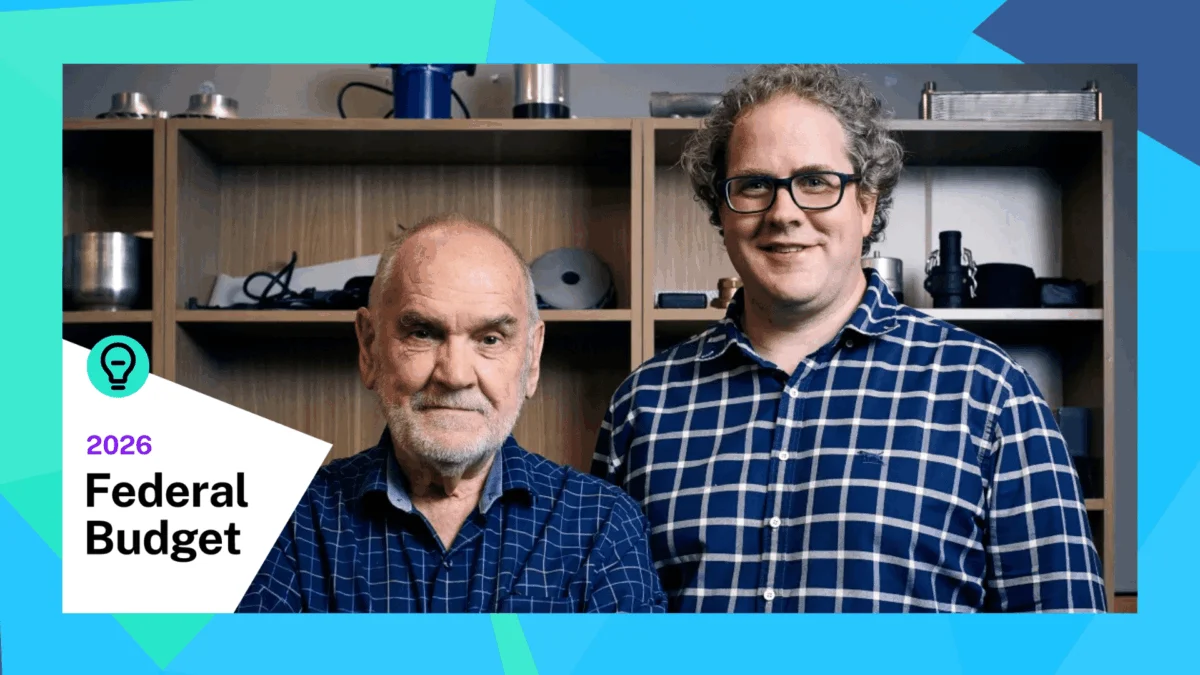
For the Australian deep tech sector, the 2026 federal budget was initially heralded as a landmark opportunity to solidify the nation’s status as a global innovation powerhouse. However, as the fine print of the fiscal package becomes clear, a wave of concern is rippling through the startup ecosystem.
Leading the chorus of dissent is Ron Conry, co-founder of Conry Tech. With over 25 years of industry experience and six years dedicated to building a hardware-intensive venture in the heart of Australia, Conry argues that the government has fundamentally misunderstood the mechanics of "hard tech." According to Conry, recent adjustments to the Research and Development (R&D) Tax Incentive and changes to family trust taxation do not merely represent a policy shift; they represent a significant barrier to the survival of the very startups the government claims to support.
The Anatomy of the Conflict: Main Facts
At the core of the controversy are two specific budgetary pivots that impact the financial viability of early-stage, capital-intensive companies.
- R&D Tax Incentive Recalibration: While the government has positioned the changes as a way to streamline and modernize support for innovation, industry veterans argue that the criteria for eligibility and the rebate calculations have become increasingly restrictive. For hardware startups—which require years of prototyping, testing, and expensive manufacturing before reaching market—any reduction in the accessibility of this rebate acts as a direct hit to their runway.
- Trust Taxation Reform: The government’s move to tighten the screws on family trust distributions is aimed at closing tax loopholes for the wealthy. However, for many deep tech founders, family trusts are not a tax-avoidance vehicle; they are a necessary structural tool used to manage the volatile income streams, personal risk, and long-term capital preservation required when a founder pours their life savings into a venture that may not turn a profit for a decade.
Chronology: The Road to the 2026 Budget
To understand the frustration of the tech community, one must look at the timeline of the Australian innovation landscape over the past half-decade.
- 2020-2022: The "Pandemic Pivot." During this period, the federal government leaned heavily into sovereign capability, encouraging domestic manufacturing and R&D to mitigate supply chain disruptions. Founders like Conry responded by scaling up local operations.
- 2023-2024: The "Capital Crunch." Global interest rates rose, and venture capital liquidity tightened. Founders became increasingly reliant on government incentives—specifically the R&D Tax Incentive—to maintain their burn rates.
- 2025: The "Pre-Budget Consultations." The government engaged in widespread dialogue with the tech sector, promising a "Future-Ready" budget aimed at nurturing high-growth sectors.
- May 2026: The Budget Drop. The federal government unveils the 2026 fiscal plan. While it includes headline-grabbing grants for AI and software, the structural changes to R&D and trusts are introduced with little warning regarding their impact on hardware startups.
- Late May 2026: Post-Budget Realization. Industry leaders begin publicly denouncing the policies, noting that the "fine print" contradicts the rhetoric of supporting deep tech.
The "Hard Tech" Reality: Supporting Data
Deep tech is distinct from the broader "tech" umbrella. While a software-as-a-service (SaaS) company can launch with a laptop and an internet connection, a hardware startup dealing in robotics, advanced materials, or energy-efficient cooling technology (like Conry Tech) faces the "Valley of Death."
The Capital Intensity Gap
Data suggests that deep tech hardware startups require, on average, 40% more capital in their first three years than their software counterparts. When the R&D tax incentive—the primary lifeline for these firms—is restricted, the impact is compounded by:
- High Prototype Costs: Materials and specialized engineering talent are inflationary.
- Extended Revenue Cycles: Unlike software, which can iterate weekly, hardware requires physical manufacturing cycles that can take 12 to 18 months.
- The Trust Factor: According to a survey by the Australian Founders Network, over 65% of deep tech founders utilize family trusts to protect their personal assets while bootstrapping their companies. The 2026 tax changes threaten to erode the liquidity these founders rely on to bridge the gap between "concept" and "commercialization."
Official Responses and Government Intent
The Treasury maintains that the budget changes are designed to ensure the integrity of the tax system. In a briefing provided following the budget announcement, a Treasury spokesperson emphasized that "incentives must be targeted toward genuine innovation that provides a clear public benefit, rather than serving as general subsidies for private enterprise."
Regarding the trust reforms, the government asserts that these measures are about "fairness and equity," ensuring that high-net-worth individuals and business owners pay their "fair share" of tax. However, the government has yet to address the specific nuance of the founder-led startup, where the "owner" is often the person earning the least amount of money in the organization while carrying the highest financial risk.
Implications: The Long-Term Cost to Australia
The implications of these policies extend far beyond the balance sheets of individual companies. Experts warn of a "brain drain" and a "technology exodus."
1. The Stunting of Sovereign Capability
If Australia makes it financially unviable to build hardware at home, those companies will inevitably pivot their operations to jurisdictions with more favorable tax regimes—such as the United States (via the CHIPS Act) or Singapore. The long-term cost to Australia is the loss of domestic manufacturing jobs and the intellectual property (IP) that accompanies them.
2. Deterrence of Early-Stage Investment
Angel investors and early-stage venture capitalists look for stable environments. If the tax landscape is perceived as "hostile" to founders, investors will shift their capital toward safer, more liquid asset classes, leaving deep tech founders to struggle in a vacuum of funding.
3. The "Founder Scars" Sentiment
As Ron Conry noted, the "scars" of building a deep tech company are deep enough already. When government policy adds further administrative and financial complexity to the mix, it discourages the next generation of engineers and scientists from taking the leap into entrepreneurship. The "risk-to-reward" ratio is no longer balanced.
Conclusion: A Call for Policy Correction
The 2026 federal budget was intended to be an engine for growth, but it is currently functioning as a drag on the very sector that holds the key to Australia’s economic future. Deep tech is not a hobby; it is the backbone of the next industrial revolution.
If the government is serious about its commitment to innovation, it must consider a "carve-out" for deep tech and hardware-intensive startups within the R&D tax framework. Furthermore, a nuanced approach to trust taxation—one that recognizes the unique role of trusts in founder-led, high-risk ventures—is essential to prevent a mass exodus of talent and innovation.
As the industry waits for the government to acknowledge these oversights, the message from the startup community remains clear: You cannot build the future of technology by dismantling the foundations upon which it stands. The "scars" of the past were enough; founders are now asking that the government stop creating new ones.