Published August 17, 2026 | By Alejandra Carranza
For global supply chain managers, the narrative of 2026 has been defined by a paradox: while the total physical capacity of the global container fleet continues to reach record highs, the reliability of moving goods from point A to point B remains frustratingly volatile. As ocean carriers grapple with fluctuating demand and strategic service adjustments, shippers are discovering that the existence of a vessel does not necessarily equate to the availability of space.
Industry experts warn that the current landscape is creating a "false sense of security" for importers. Even as new ships are delivered and integrated into major trade lanes, the operational reality on the water is being dictated by blank sailings—scheduled voyages that are canceled or skipped by carriers—and tactical capacity management that leaves cargo stranded at origin ports.
The Core Conflict: Physical Capacity vs. Operational Availability
The fundamental disconnect in modern maritime logistics lies in the distinction between "nominal capacity" and "effective capacity." Nominal capacity refers to the total number of containers a fleet is physically capable of carrying. Effective capacity, however, is the space actually made available to shippers on specific trade lanes.
Pete Mento, a director at Baker Tilly’s Global Trade Management Services, argues that carriers are increasingly adept at manipulating effective capacity to manage freight rates and operational costs. "A carrier can own plenty of ships and still reduce the capacity actually offered on a trade lane through blank sailings, slower sailing speeds, vessel redeployment, or service changes," Mento explains.
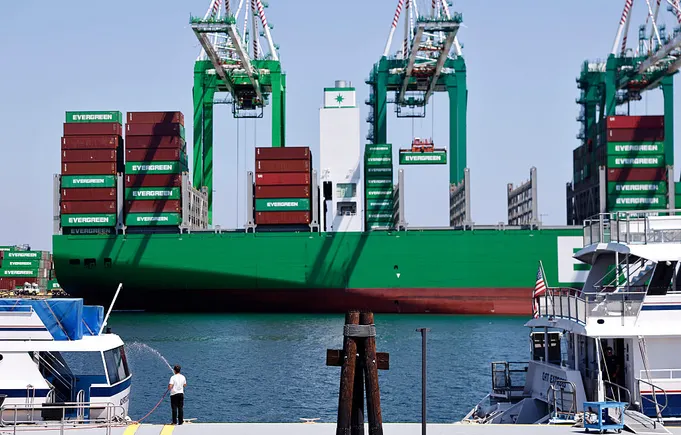
For the shipper, this means the supply chain is no longer governed by the standard cycles of the pre-pandemic era. Instead, it is governed by the strategic decisions of a handful of massive shipping alliances. When a carrier pulls capacity, the cargo does not simply vanish. It is pushed into a backlog, creating a "ripple effect" where multiple weeks of demand are suddenly forced to compete for the space available on a single vessel.
Chronology: From Pandemic Chaos to Strategic Volatility
To understand the current environment, one must look at the evolution of ocean freight over the last five years:
- 2020–2022: The Era of Disruption. The global pandemic shattered the "just-in-time" model. Congestion at major ports like Los Angeles and Long Beach resulted in ships waiting at anchor for weeks, leading to record-high freight rates and a scramble for any available vessel space.
- 2023–2024: The Normalization Attempt. As port congestion eased, carriers attempted to return to standard schedules. However, geopolitical tensions—ranging from conflicts in the Middle East to trade frictions between major economies—forced carriers to divert vessels, extending transit times and disrupting the rhythm of global trade.
- 2025: The Capacity Injection. A massive wave of new-build container ships, ordered during the boom years of the pandemic, began hitting the water. Analysts initially predicted a "capacity glut" that would drive rates to historic lows.
- 2026 (Present): The Strategic Response. Instead of a price collapse, carriers have utilized blank sailings and slow steaming as primary tools to balance supply with sluggish global demand. The market has shifted from a crisis of physical shortage to a crisis of service reliability.
Supporting Data and Market Dynamics
The current market environment is characterized by an uneven distribution of growth. While the headline number of TEUs (twenty-foot equivalent units) on the water is rising, the "schedule reliability" index remains far below the standards expected by retailers and manufacturers.
According to data tracked by industry analysts like Sea-Intelligence, the gap between announced capacity and actualized capacity is widening. When carriers blank sailings at a rate faster than the overall fleet grows, the resulting "capacity contraction" creates immediate inflationary pressure on spot rates.
For a business relying on predictable transit, the implications are severe:

- Rolled Cargo: When a sailing is blanked, bookings are bumped to the next available voyage. This can delay shipments by 7 to 14 days, wreaking havoc on manufacturing schedules.
- Inventory Costs: Increased lead times force companies to hold higher safety stocks, tying up working capital and increasing warehousing expenses.
- Freight Rate Volatility: Even if the long-term trend for capacity is upward, the localized, short-term shocks caused by capacity management lead to sudden, sharp spikes in shipping costs that are difficult to forecast in a budget.
Official Perspectives and Industry Responses
Industry leaders are increasingly vocal about the need for a total reset of supply chain planning. The consensus among logistics professionals is that the "predictable" 2019 model is dead.
"Procurement teams could make assumptions about how long it would take to move a container from Asia to the United States and be reasonably confident they were in the ballpark," Mento notes. "Those days are gone."
In response, many multinational corporations are moving away from purely cost-driven procurement. Instead, they are prioritizing "resilience-driven" procurement. This involves:
- Diversification: Moving away from single-source manufacturing hubs to avoid total reliance on specific, high-risk trade lanes.
- Visibility Tools: Implementing advanced AI-driven logistics platforms that can predict blank sailings and adjust routing in real-time.
- Buffer Management: Viewing inventory not just as a cost center, but as a strategic insurance policy against the inherent volatility of the shipping industry.
Implications: The New Normal for Global Logistics
The long-term implication for the industry is a permanent shift in how companies interact with ocean carriers. The relationship between shipper and carrier is becoming increasingly transactional and defensive.
1. The Death of Predictability
Supply chain planners must accept that the "linear" supply chain is a relic. In its place, a "dynamic" supply chain is required—one that assumes the route will change, the date will slip, and the capacity will be tighter than the contract suggests.

2. Resilience Over Cost
The shift toward resilience is perhaps the most significant legacy of the post-2020 era. As Mento observes, "Companies are much more conscious of resilience, alternate sourcing, inventory buffers, and geopolitical risk than they were in 2019." This shift means that logistics departments are now viewed as strategic partners rather than back-office cost centers.
3. The Role of Technology
As human intervention becomes less effective at navigating the sheer scale of global trade, technology will play a larger role. Blockchain for documentation, predictive analytics for demand planning, and IoT for real-time cargo tracking are no longer "nice-to-haves"—they are essential tools for surviving in a market where the rules of supply and demand are being rewritten by the minute.
Conclusion
The current state of global trade is a testament to the resilience of the human supply chain, but it is also a warning. As the industry moves further into the latter half of 2026, shippers must remain vigilant. The headlines regarding "record capacity" are technically accurate, but they obscure the reality of a market that is fundamentally less reliable than it was before the pandemic.
For those in the shipping industry, success will no longer be measured by who can secure the lowest freight rate, but by who can maintain the most consistent flow of goods in a world where the only constant is disruption. Organizations that cling to outdated, pre-pandemic assumptions regarding lead times and schedule reliability do so at their own peril. The future belongs to those who view capacity as a fluid, negotiable, and highly volatile asset, and who build their supply chains to withstand the gaps between what is promised and what is actually delivered.