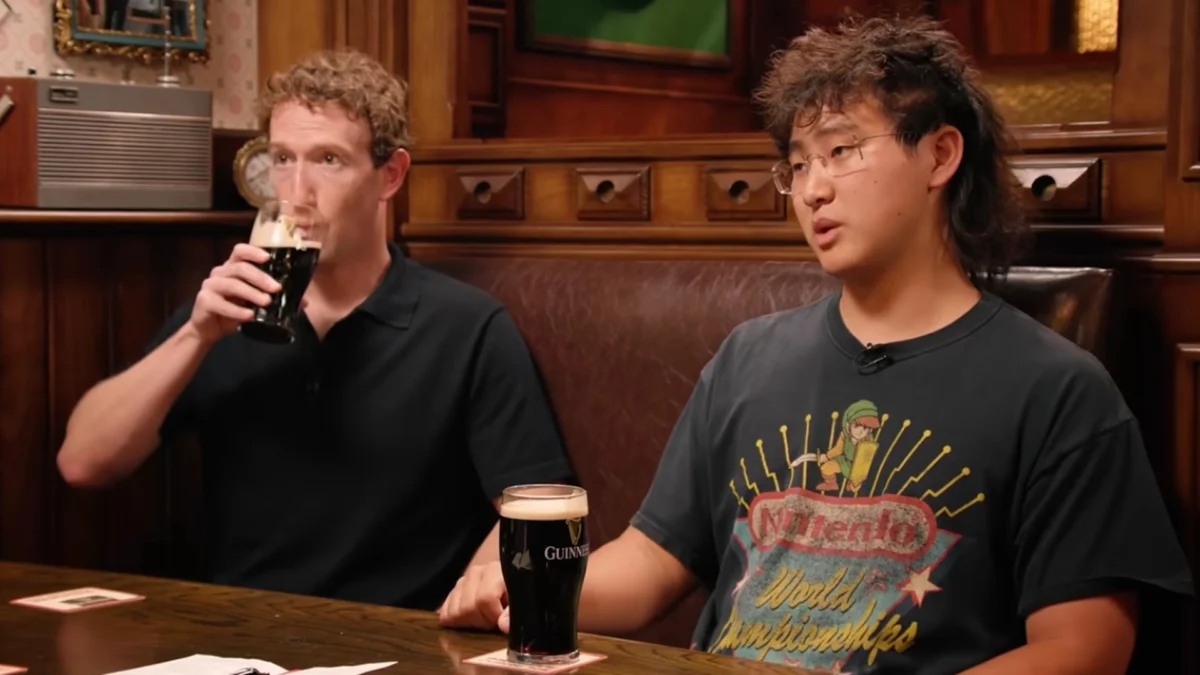
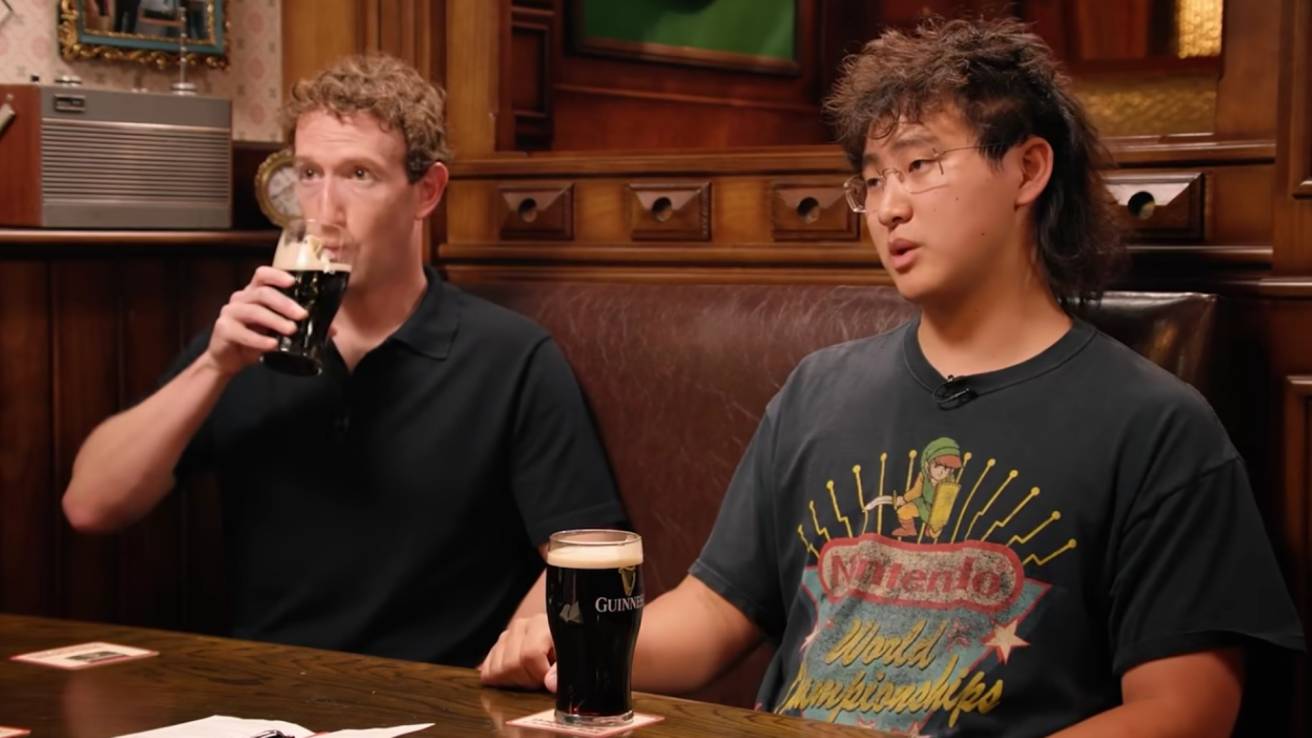
In the modern era of hyper-curated digital personas, the slightest deviation from "normative" behavior by a tech titan is enough to ignite a firestorm of social media discourse. Last week, Meta CEO Mark Zuckerberg found himself at the center of a peculiar viral phenomenon following his appearance on the Cheeky Pint podcast. Hosted by Stripe co-founder and Irish billionaire John Collison, the episode—which featured Meta’s Chief AI Officer Alexandr Wang—was intended to be a deep dive into the future of artificial intelligence. Instead, it became an accidental masterclass in internet scrutiny, with millions of viewers fixating not on the nuances of large language models, but on the way Zuckerberg held his pint of Guinness.
The Chronology of the "Guinness Glitch"
The incident, which took place during the recording of the podcast, began innocuously enough. As part of the Cheeky Pint format, guests are invited to enjoy a drink while engaging in high-level conversation. When Zuckerberg reached for his stout, the internet immediately took note.
Social media platforms, particularly X (formerly Twitter) and TikTok, were flooded with clips of the Meta CEO taking a sip of the drink. Critics and casual observers alike pointed to his hand placement, the angle of the glass, and what many described as an "unnatural" facial expression during the consumption. Within hours, the clip had been deconstructed frame-by-frame.
The backlash was swift, if not entirely serious. Memes circulated comparing Zuckerberg to various science-fiction androids or characters struggling to mimic human social rituals. For a CEO who has spent years attempting to soften his image—transitioning from the hoodie-clad coder to a martial arts-enthusiast and family man—the "beer incident" served as a jarring reminder of how deeply ingrained the "Zuckerberg-as-robot" caricature remains in the public consciousness.
The Response: "That’s Just My Face"
When confronted with the barrage of mockery, Zuckerberg opted for a candid, albeit characteristically dry, defense. Addressing the viral moment, he remarked, "That’s just my face."
This response, while seemingly dismissive, is emblematic of Zuckerberg’s evolving relationship with his public image. Rather than issuing a PR-cleansed statement or leaning into a performative "correction" of his drinking style, he leaned into the absurdity. By acknowledging the scrutiny but refusing to apologize for his physical mannerisms, Zuckerberg highlighted the impossible standard to which tech leaders are held. In the eyes of his supporters, the moment proved that no matter how much effort he puts into appearing "relatable," the internet is primed to view his every movement through a lens of skepticism.
The Intersection of Power, Perception, and Performance
To understand why a simple sip of beer generated such a volatile reaction, one must look at the broader context of Mark Zuckerberg’s public trajectory. As noted in previous analyses regarding his changing style—such as his recent affinity for high-end watches—every move the Meta CEO makes is now analyzed for signs of ego, intent, or "humanity."
The Cheeky Pint podcast was meant to showcase a different side of the Meta leadership. Alongside Alexandr Wang, a wunderkind in the AI space, Zuckerberg was positioned to discuss the profound shift toward open-source AI and the infrastructure challenges Meta faces. However, the juxtaposition of high-stakes technological evolution and the low-stakes "human error" of drinking a beer created a dissonance that the internet could not resist.
The "Robot" Trope and Tech Exceptionalism
The obsession with Zuckerberg’s "humanity" is a unique byproduct of the Silicon Valley era. As the leaders of these companies exert unprecedented control over global information flows, the public has developed a psychological need to ensure that these individuals are, at their core, relatable. When they fail to exhibit "normal" social behaviors—whether it’s eating brisket, surfing with a flag, or drinking a pint—it reinforces the narrative that these individuals are fundamentally disconnected from the average user.
Data and Demographics of the Viral Wave
The engagement metrics surrounding the Cheeky Pint episode were staggering. While official numbers from Meta regarding the podcast’s impact on brand sentiment are not public, the sheer volume of "reaction content" indicates a significant reach.
Data analysts monitoring the discourse noted that the demographic most active in the mockery were users aged 18–34—the exact demographic Meta has been struggling to retain as it pivots toward AI and the metaverse. For this cohort, the "cringe factor" of the video became a form of social currency.
Interestingly, the episode also served as a massive marketing boon for the podcast itself. By inviting two of the most influential figures in tech to partake in an informal, relaxed setting, John Collison successfully demonstrated the power of "personality-led" media in the B2B and tech entrepreneurship space.
Implications for Meta and AI Leadership
Beyond the memes, the incident raises critical questions about the "optics of leadership" in the age of AI.
1. The Burden of Authenticity
For CEOs, authenticity is a commodity. Zuckerberg has spent years trying to move past the "cold corporate overlord" image. However, the Cheeky Pint incident proves that authenticity cannot be forced. If a CEO is constantly aware that their every sip of a drink is being recorded and analyzed, they are effectively never "authentic."
2. The Distraction Effect
The irony of the situation is that the viral mockery obscured a substantial conversation about AI policy. Alexandr Wang, a key figure in the development of synthetic data and large-scale model training, was present to provide expert insight. When the media focus shifts to a "beer-drinking technique," it inevitably dilutes the seriousness of the policy and innovation discussions that are arguably more consequential to the future of the global economy.
3. The Future of Executive Branding
We are likely to see a shift in how CEOs approach public appearances. If the Cheeky Pint experience serves as a case study, future media engagements may be more tightly controlled—or, conversely, leaders may choose to ignore the noise entirely, doubling down on the "unbothered" persona that Zuckerberg has begun to cultivate.
Conclusion: A Lesson in Modern Scrutiny
Mark Zuckerberg’s experience on the Cheeky Pint podcast is a microcosm of modern digital life. It illustrates the speed at which a minor, contextless moment can be transformed into a cultural narrative. Whether one views the mockery as justified criticism of a powerful figure or as a trivial, mean-spirited distraction, the outcome remains the same: the barrier between the personal lives of tech billionaires and their professional obligations has effectively dissolved.
As Meta continues to navigate the treacherous waters of AI regulation, competitive pressure from rivals like OpenAI and Google, and the ongoing challenge of maintaining user trust, the CEO’s image will remain a focal point. Zuckerberg’s "that’s just my face" defense may be the most honest thing he has said in years. In an age where everything is recorded, analyzed, and memed, perhaps the only way to survive the scrutiny is to accept that no matter how hard one tries to perform "humanity," the internet will always find something to critique.
Ultimately, the lesson for entrepreneurs and leaders is clear: in the digital age, your brand is not just what you say or the products you ship; it is the sum total of every micro-expression, every gesture, and every pint of beer captured on camera. Whether you are ready for it or not, the world is watching.