In the complex ecosystem of digital assets, a fascinating divergence has emerged. For years, the crypto market operated under the dogma that liquidity—specifically the total market capitalization of stablecoins—was the singular fuel for price appreciation. However, the current landscape of 2026 is challenging that assumption. As the broader market undergoes a recalibration, a distinct decoupling between technical market data and fundamental adoption is taking shape, catalyzed by unexpected regulatory tailwinds from East Asia.
Main Facts: The Stablecoin Liquidity Contraction
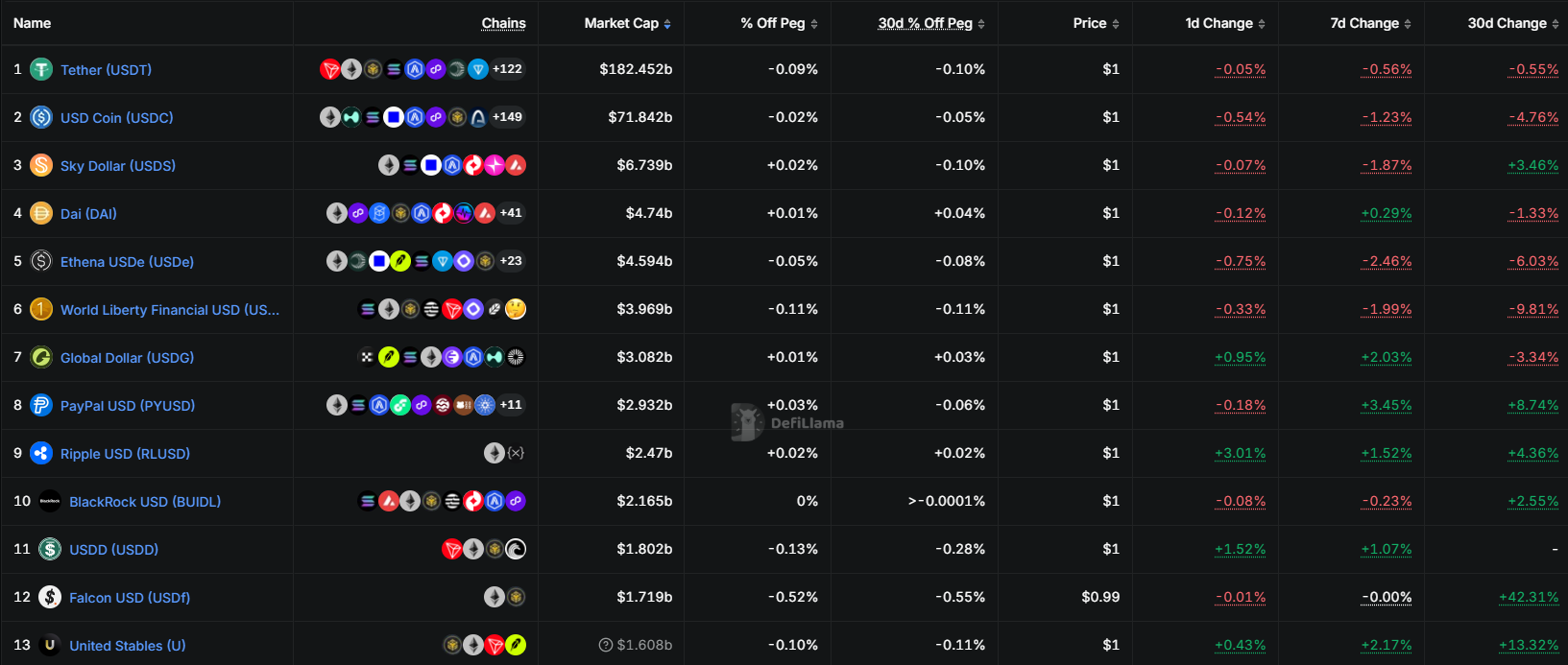
The stablecoin sector, once the undisputed bellwether for market health, is currently navigating a period of significant contraction. Total market capitalization has drifted away from its peak, shedding nearly $8 billion from its yearly opening of $315 billion.
The primary driver of this trend is the waning dominance of "OG" stablecoins. Tether (USDT), which commands over 50% of the total stablecoin market, has experienced a decline of over 2.5% in market cap over the past 12 months. Similarly, Circle’s USDC has seen a notable 4.7% net decrease in its supply over the last 30 days.
While established players are seeing capital outflows, the ecosystem is not stagnating. Instead, it is diversifying. Newer, specialized stablecoin projects—such as RLUSD, BUIDL USD, USDf, and U—are bucking the trend, recording significant inflows. Most notably, Falcon USD (USDf) has surged by over 42%, catapulting its total market valuation beyond the $1 billion threshold. This shift suggests that capital is not necessarily leaving the ecosystem; rather, it is migrating toward newer, perhaps more specialized or yield-bearing, financial instruments.
Chronology: A Year of Shifting Sands
The trajectory of the 2026 market can be segmented into several distinct phases that highlight the current volatility and structural evolution of the industry:
- Q1 2026: The market opened with a robust stablecoin capitalization of $315 billion. Investor sentiment was optimistic, fueled by expectations of institutional adoption.
- Late July 2026: A critical inflection point occurred. Bitcoin hit a local low of $65,000, and traditional safe-haven assets began to falter. Gold fell below the $4,000/oz mark for the first time in months, and silver plummeted 54% from its January highs.
- August – September 2026: Despite the drop in overall stablecoin market cap, Bitcoin began to decouple from the liquidity crunch. It rallied more than 23% from its July lows, signaling a shift in investor psychology where "adoption-driven" momentum began to outweigh pure liquidity-driven speculation.
- October 2026 (Current): The Bank of Korea and the South Korean government announced plans to amend the Foreign Exchange Transactions Act. This move serves as the current focal point, as it aims to officially recognize stablecoins as legitimate payment instruments, signaling a massive shift in the global regulatory posture.
Supporting Data: The Divergence Explained
The discrepancy between technicals and fundamentals is now a defining feature of the crypto market. Data provided by DeFiLlama illustrates this divide with startling clarity.

While the "Big Two" (USDT and USDC) have faced consistent redemption pressure—likely due to institutional investors rotating into other asset classes or high-yield off-chain environments—the rise of the "New Guard" suggests a transformation in market utility.
Furthermore, the comparison between Bitcoin’s performance and stablecoin liquidity is revealing. Typically, a $8 billion contraction in stablecoin market cap would be expected to trigger a significant drawdown in Bitcoin’s price. However, Bitcoin has maintained resilience, holding its ground despite being approximately 36.5% below its peak of $126,000. This "relative strength" suggests that the market is becoming less dependent on the immediate availability of stablecoin "dry powder" and more reliant on institutional conviction and long-term holding strategies.
Official Responses and Regulatory Implications
The most significant development on the horizon is the move by South Korean regulators. By amending the Foreign Exchange Transactions Act, South Korea is not merely "regulating" stablecoins; it is integrating them into the national financial fabric.
Why the Korean Move Matters
The recognition of stablecoins as a formal means of payment is a massive hurdle for the industry. Historically, stablecoins have lived in a legal gray area, which discouraged mainstream merchants and payment processors from adopting them. By providing a clear legal framework, the Bank of Korea is effectively lowering the barrier to entry for retail and corporate users.
Industry analysts suggest that this regulatory clarity could act as a force multiplier for the newer stablecoin entrants. As projects like USDf gain traction, they are doing so in an environment where they are increasingly viewed as reliable payment rails rather than just volatile-asset proxies.
The Macro Context
This regulatory pivot comes at a time when traditional "safe havens" like precious metals are struggling to maintain their luster. As macro-economic uncertainty (or "FUD") persists, the traditional flight to gold and silver has been replaced by a more nuanced behavior. Investors are increasingly looking toward digital assets that offer the stability of the dollar but the technological agility of blockchain.
Implications: The Path Toward Maturity
What does this mean for the future of the crypto market? The evidence points toward three major conclusions:
- The Death of Monoculture: The era where USDT and USDC dictated the entire market’s health is drawing to a close. The success of smaller, specialized stablecoins indicates that the market is beginning to value features over simple liquidity dominance.
- Adoption-Driven Momentum: The current rally in Bitcoin, despite the contraction in stablecoin liquidity, suggests that the market is maturing. It is no longer a purely speculative game driven by margin-heavy stablecoin leverage; it is increasingly driven by the underlying utility and the promise of real-world application.
- Regulatory Legitimacy: The South Korean initiative is likely the first of many. As nations realize that they cannot stop the movement toward digital payments, they are opting to steer it through regulation. This will eventually lead to a global standard, reducing the risks that have historically plagued the stablecoin sector.
A New Chapter for Crypto
As we move into the final months of 2026, the question is no longer whether stablecoins will recover to their previous market cap highs, but rather how the next generation of stable assets will integrate into the global economy.
The divergence between technical indicators and fundamental adoption is, in many ways, a sign of a healthy, evolving market. While liquidity may be under pressure, the infrastructure of the crypto economy is stronger than it has ever been. With the backing of major economies like South Korea, the next phase of the crypto rally may not be built on the back of easy money, but on the foundation of a robust, regulated, and widely accepted digital payment infrastructure.
Investors should watch the growth of these newer, smaller stablecoins closely. They are the bellwethers of the next cycle, representing a shift toward a more sophisticated, utility-first financial ecosystem. The "Great Decoupling" is not a sign of the end; it is a sign of a beginning.