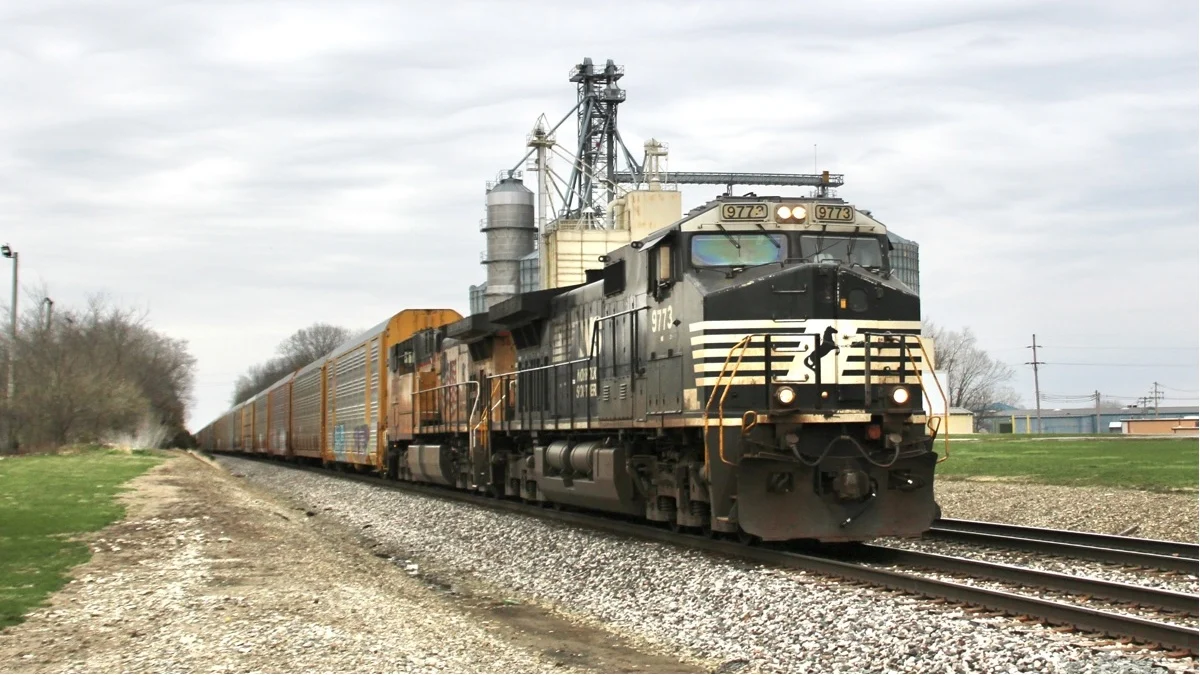
The United States industrial economy is undergoing a profound period of transformation, marked by a robust resurgence in rail activity that suggests a durable expansion rather than a fleeting seasonal uptick. Data from the Association of American Railroads (AAR) reveals that U.S. rail traffic has reached new heights, with intermodal and carload volumes demonstrating broad-based growth across nearly all sectors of the economy.
This performance is not merely a statistical anomaly. It is the culmination of tight trucking capacity, elevated diesel prices, and a sustained manufacturing push that began at the start of the year. As the nation’s rail networks—the backbone of its domestic supply chain—report significant volume increases, economists and industry analysts are beginning to view this "renaissance" as a signal of a long-term economic shift.
The Numbers: A Broad-Based Surge
In the 40th week of 2025, the industry witnessed a significant jump in activity. U.S. intermodal rail traffic surged by 10.4% year-over-year, while domestic carload volume climbed by 3.4%. Collectively, total U.S. rail traffic increased by 7.2% compared to the same period in 2025. This momentum extends across North America, where combined carload and intermodal volumes rose by 5.9%.
These figures are corroborated by the AAR’s third-quarter Rail Industry Overview, which provides a granular look at the health of the sector. The report highlights that 17 of 20 tracked carload categories posted year-over-year gains in September. Notably, the chemicals sector—the second-largest commodity by volume—set a new record for September and remains on a trajectory to break annual records by the close of the year.
A Sector-by-Sector Breakdown
The recovery is not limited to a single niche. The "motor vehicles and parts" segment, which had struggled for much of the early part of 2025, saw a sharp rebound with a 9.4% increase in week 40. Furthermore, metallic ores and metals—often seen as a bellwether for manufacturing health—continued their double-digit year-over-year growth. Even when removing the volatile coal and grain segments, carload volume remained exceptionally strong, up 5.6% for the week. While coal dipped by 2% and grain saw a marginal gain of 0.5%, the overall industrial picture remains overwhelmingly positive.
Regional Performance and the West Coast Engine
The surge in traffic has been particularly pronounced among Western railroads, which are benefiting from a historic flow of international trade. BNSF reported a 12.5% increase in intermodal volume, while Union Pacific saw a staggering 19.4% gain.
Rail industry expert Bill Stephens attributes this western dominance to the record-breaking container volumes currently passing through the ports of Los Angeles and Long Beach. These ports serve as the primary gateways for trans-Pacific trade, and the fact that this volume is successfully pumping through the broader U.S. economy indicates that domestic distribution networks are managing the load effectively.
Eastern carriers have also maintained strong performance, albeit at a more moderate pace. CSX posted an 8.9% gain, while Norfolk Southern saw a 5.4% increase. According to Stephens, the rail industry is benefiting from a "perfect storm" of tailwinds: cost savings compared to long-haul trucking, sustained high diesel prices, and, perhaps most impressively, the ability of the rail network to maintain service levels despite the surge in demand.
The "Perfect Storm" of Logistics Tailwinds
Why is rail traffic surging now? The answer lies in the structural challenges currently facing the trucking industry. The combination of high fuel costs and tight capacity has forced shippers to rethink their logistics strategies. Intermodal rail, which utilizes both trains and trucks for short-haul delivery, has become the preferred choice for cost-conscious shippers looking to bypass the volatility of the spot trucking market.
As Stephens noted, "It’s nothing but tailwinds for intermodal due to the cost savings, partly related to the surge in diesel prices, and the tight trucking capacity." This shift represents a strategic pivot for many companies, moving away from reliance on heavy-duty trucking toward more efficient, long-haul rail solutions.
Regulatory Scrutiny and the Path Ahead
While the current economic outlook is bullish, the rail industry faces significant regulatory hurdles. The Surface Transportation Board (STB) is currently in the midst of a high-stakes review regarding the potential merger of Union Pacific and Norfolk Southern.
The review process has been marked by a degree of friction between the regulators and the carriers. During the acceptance of the merger application, STB board member Richard Kloster issued pointed remarks, calling for more rigorous data and more substantive arguments from the involved parties. Industry observers, including Stephens, suggest that these comments reflect a broader, more cautious sentiment within the STB regarding rail consolidation and its impact on competition.
The upcoming quarterly earnings calls for both railroads are expected to be flashpoints for this discussion. Stakeholders will be looking for clarity on how the companies intend to address the STB’s concerns and what conditions other railroads may attempt to attach to the deal. The regulatory landscape remains a primary variable that could influence the industry’s trajectory heading into 2026.
Potential Risks and Economic Implications
Despite the current optimism, the AAR and industry analysts remain vigilant regarding potential headwinds. The most significant risk is the impact of persistent inflation. While consumer goods spending grew by 2.7% in August, there is mounting evidence that inflationary pressures are migrating from the energy sector into essential items like food.
If diesel prices remain at elevated levels for an extended period, the resulting strain on the supply chain could dampen consumer purchasing power. Should consumer spending soften, the current boom in intermodal traffic—which is heavily dependent on retail and consumer goods—could face a correction.
However, for the present, the industrial expansion appears remarkably durable. The consistent growth in metallic ores, chemicals, and automotive parts suggests that the underlying manufacturing base of the U.S. economy is expanding. This "renaissance" is not merely about moving goods from point A to point B; it is about the sustained reinvestment in domestic production and the increasing reliance on rail infrastructure to sustain that growth.
The Future of Freight: A Turning Point
The resilience shown by the rail industry in the face of logistical volatility suggests that the sector is entering a new era of efficiency and strategic importance. As businesses continue to optimize their supply chains to combat rising operational costs, the role of rail as a cost-effective and reliable transportation mode is likely to grow.
Looking ahead, the industry will gather at key events like the Future of Freight Festival (F3) in Chattanooga, where the conversation will shift toward the technological innovations necessary to sustain this growth. From AI-driven scheduling to automated cargo handling, the industry is looking for ways to ensure that the current surge is not just a temporary spike, but a baseline for future productivity.
Conclusion: Is the Renaissance Here to Stay?
The evidence presented by the AAR’s latest data paints a picture of an economy that is firing on all cylinders. While risks such as inflationary pressure and regulatory uncertainty persist, the sheer scale of the volume increases across nearly all industrial sectors points toward a robust and durable trend.
The rail industry has managed to turn a challenging environment of high fuel costs and capacity constraints into an opportunity for growth. By providing a reliable and cost-efficient alternative to trucking, railroads have secured their position as a critical component of the U.S. economic recovery. If the current trends continue, this rail renaissance will likely serve as a cornerstone of industrial stability for the foreseeable future, providing the infrastructure necessary for a sustained period of economic prosperity.
For shippers, carriers, and investors, the message is clear: the rail network is back in the spotlight, and its performance in the coming months will be the single most important indicator of the nation’s industrial health. Whether this momentum holds will depend on the industry’s ability to navigate the complex regulatory environment and the broader macroeconomic shifts that will define the rest of 2026 and beyond.