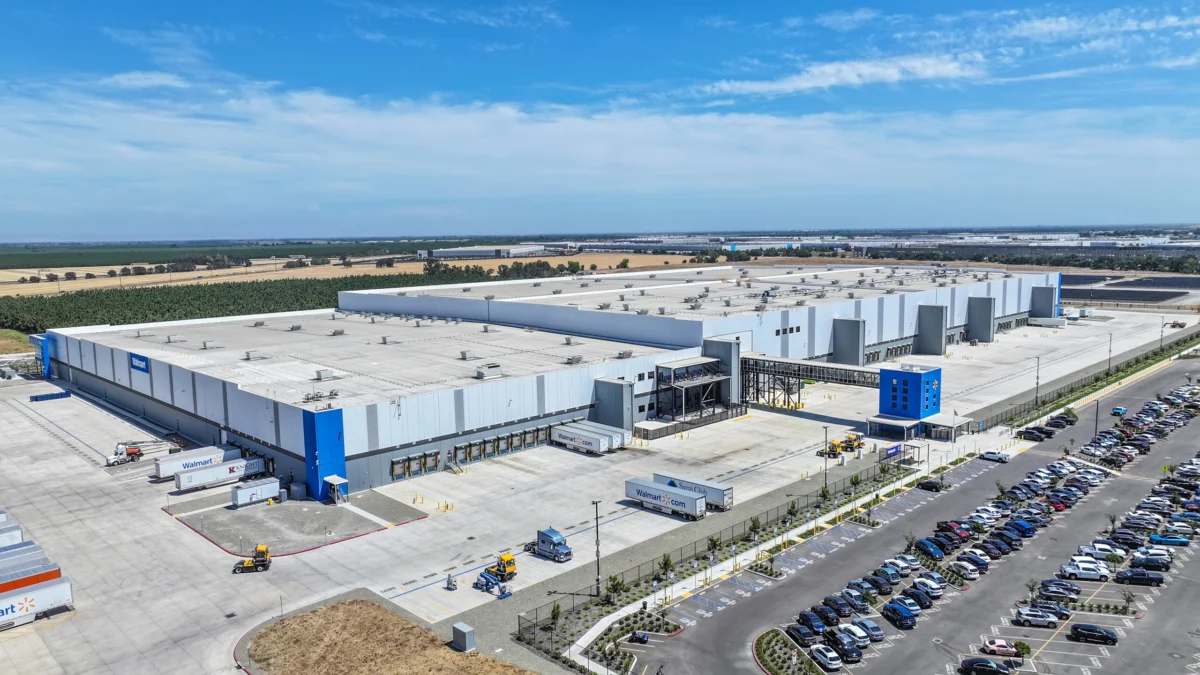
In a strategic maneuver to cement its dominance in the hyper-competitive landscape of North American e-commerce, Walmart has officially unveiled its fifth "next-generation" fulfillment center in Stockton, California. This massive 900,000-square-foot facility represents more than just a storage upgrade; it is a physical manifestation of the retailer’s aggressive pivot toward automation, efficiency, and near-instantaneous delivery capabilities. As Walmart continues to secure its position as the No. 2 retailer in Digital Commerce 360’s Top 1000 Database, the Stockton facility serves as a vital anchor for the company’s West Coast operations.
Main Facts: A New Paradigm for Logistics
The Stockton facility is designed to address the "last-mile" dilemma that plagues global e-commerce giants. By strategically positioning this massive hub in California’s Central Valley, Walmart is optimizing its ability to move inventory across the West Coast with unprecedented speed.
The core of the facility’s success lies in its sophisticated, high-density storage and retrieval system. Unlike traditional warehouses where employees must navigate miles of aisles to pick items, the Stockton center utilizes automation to bring the product directly to the associate. This shift reduces a standard 12-step fulfillment process to just five steps. By eliminating the non-value-added "travel time" for workers, Walmart is not only boosting throughput but also significantly improving the ergonomic and safety profile of the warehouse environment.
The Chronology of Automation
Walmart’s journey toward the Stockton facility did not happen in a vacuum. It is the latest milestone in a multi-year, multi-billion-dollar transformation of the retailer’s supply chain.
- The Early Investment Phase: Walmart began signaling a massive shift in capital expenditure toward automated fulfillment several years ago, aiming to move away from the labor-intensive, human-reliant models that characterized early e-commerce.
- Fiscal Year 2024-2025: Throughout the last two fiscal years, Walmart significantly ramped up its implementation of automated freight systems across its 3,100 U.S. stores, setting the stage for centralized, high-tech hubs to support store-based delivery.
- The Q1 Growth Surge: During the first quarter of the current fiscal year, Walmart reported a 26% growth in U.S. online sales. This surge confirmed that their investments in delivery speed were yielding tangible market share gains.
- The Q2 Milestone: By the second quarter of this year, Walmart informed investors that more than half of its e-commerce fulfillment volume was being processed through automated facilities, marking a point of no return for the company’s logistics strategy.
- The Stockton Launch (October 2026): The activation of the Stockton hub serves as the current peak of this strategy, providing the necessary infrastructure to scale the gains observed earlier in the year.
Supporting Data: Why Speed is the Ultimate Competitive Advantage
The impetus behind the Stockton center is data-driven. In the modern retail environment, "speed matters," as Walmart CEO John Furner noted in a recent investor call. The numbers support this sentiment:
- Population Reach: With the integration of its next-generation fulfillment network, Walmart now claims the ability to reach 95% of the U.S. population with next- or two-day shipping.
- Hyper-Local Delivery: Beyond the major hubs, Walmart has mastered the "small-scale" delivery game. Approximately 60% of the U.S. population is currently within the orbit of a Walmart that can deliver in 30 minutes or less, a capability now active in 38 U.S. markets.
- Store-Fulfilled Success: Over the past two years, the volume of deliveries fulfilled directly from local stores has more than doubled. Notably, 36% of these orders are reaching customers’ doorsteps in under three hours.
- Marketplace Growth: Walmart Fulfillment Services (WFS)—the third-party logistics (3PL) arm that allows third-party sellers to leverage Walmart’s network—saw units shipped same-day or next-day grow by nearly 150% in the first quarter alone.
Official Responses and Strategic Vision
The opening of the Stockton facility was met with high optimism from Walmart’s executive leadership. Karisa Sprague, senior vice president of fulfillment operations at Walmart U.S., emphasized the symbiotic relationship between human labor and robotic precision.
"We’re bringing together associates with advanced technology and automation to create a safer, more efficient operation that can fulfill more orders and get products to customers faster," Sprague stated. She framed the facility as a "critical part" of the company’s broader mission to redefine the West Coast supply chain.
By investing in the Central Valley, Walmart is also positioning itself as a major economic contributor to the region, creating a new tier of "tech-enabled" warehouse jobs that prioritize operational oversight rather than manual labor. This aligns with the company’s broader objective of improving employee retention through less physically taxing work environments.
Implications: The "Marketplace" Effect
The Stockton center is not merely a warehouse for Walmart’s own inventory; it is a vital engine for the company’s growing third-party marketplace. By opening this space to merchants selling on Walmart.com, the company is directly challenging competitors like Amazon in the 3PL space.
For brands and independent distributors, this is a game-changer. When a seller uses Walmart Fulfillment Services, their products gain access to the same high-tech, high-speed logistics network that powers Walmart’s first-party sales. This democratization of high-speed shipping allows smaller merchants to compete on a level playing field with massive national retailers. As WFS continues to grow, the Stockton center will likely serve as a blueprint for how Walmart plans to scale its marketplace offerings, turning its logistics prowess into a lucrative service-based revenue stream.
AI and the Future of Retail
Walmart’s commitment to tech-driven logistics is further underscored by its position as No. 37 in Digital Commerce 360’s AI Commerce Rankings. The automation at Stockton is just the beginning. The company is increasingly utilizing artificial intelligence to predict demand, optimize inventory placement, and route deliveries with surgical precision.
While the hardware in Stockton (the robots and conveyor systems) gets the headlines, the software running in the background is the true differentiator. AI-driven predictive modeling ensures that the items being stocked in Stockton are the ones most likely to be ordered by West Coast consumers within the next 48 hours. This reduction in "inventory drift"—where products sit idle in the wrong geographic region—is a primary driver of the increased profitability Walmart has seen in recent quarters.
Conclusion: A New Baseline for Retail
The Stockton fulfillment center is a microcosm of the current retail era. The traditional brick-and-mortar giant has successfully reinvented itself as a digital-first logistics powerhouse. By shrinking the distance between product and consumer, Walmart is effectively raising the barrier to entry for smaller retailers and even some larger competitors.
As the retail industry continues to shift, the metrics of success have become clear: automation, regional density, and the ability to pivot from store-based delivery to massive-scale fulfillment. With its fifth next-generation facility now operational, Walmart has signaled that its expansion is far from over. For the rest of the industry, the race to catch up has just become significantly more complex, proving once again that in the world of modern commerce, the winner is whoever can deliver the fastest.