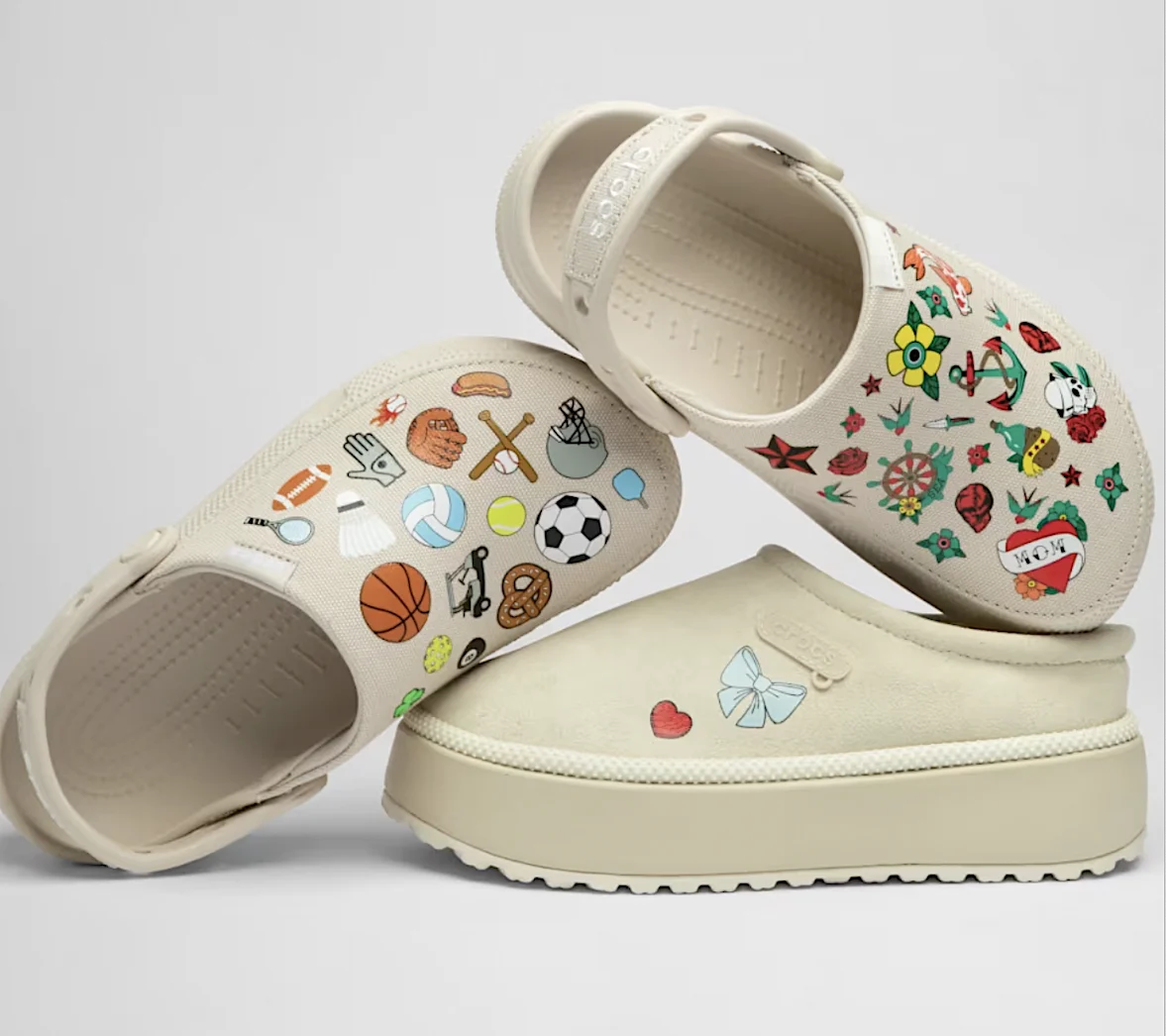
As Crocs approaches its landmark 25th anniversary in 2027, the brand is moving beyond its roots as a simple foam clog manufacturer to become a titan of self-expression. By leaning into "elevated personalization," the company is fundamentally altering its retail strategy, product development, and customer engagement models. With Jibbitz charms evolving into sophisticated "shoe jewelry" and experiential retail hubs popping up globally, Crocs is proving that in the modern consumer landscape, the product is only the canvas—the customer is the artist.
The Core Facts: A Strategy Rooted in Customization
For nearly two decades, Crocs has operated on a foundational premise: a shoe should be as unique as the person wearing it. What began as a quirky niche for children—plastering foam clogs with licensed Disney characters—has matured into a robust, multi-faceted business pillar.
Today, personalization is not merely an add-on; it is a primary driver of customer loyalty. According to Crocs President Anne Mehlman, consumers who engage in personalizing their footwear demonstrate a significantly higher lifetime value than those who purchase standard, unadorned models. By transforming every pair of shoes into a modular accessory, Crocs has successfully created a "sticky" ecosystem where customers return not just for new footwear, but to refresh their existing collection with the latest trends.
A Chronology of Customization
The trajectory of Crocs’ personalization strategy has been marked by strategic acquisitions and bold retail experimentation:
- 2006: Crocs makes a defining move by acquiring Jibbitz LLC for $10 million in cash. At the time, it was a speculative investment in a niche accessory brand; today, it is widely regarded as one of the most successful retail acquisitions in footwear history.
- 2024: The financial impact of the Jibbitz strategy becomes undeniable, with sales surpassing $270 million—representing approximately 8% of the brand’s total annual revenue.
- July 2025: Crocs launches an experiential retail concept in New York City, featuring a "bodega" that sells high-end, exclusive Jibbitz charms, some retailing for as much as $850.
- September 2026: The company unveils its most ambitious retail experiment to date: "Crocs by You" in Wuhan, China. This store serves as a dedicated laboratory for 100% personalized shopping experiences, utilizing local art students as stylists to curate bespoke shoe treatments.
- 2027 and Beyond: The brand is currently architecting its long-term roadmap to coincide with its 25th anniversary, with plans to scale successful personalization learnings from the China market to its global retail fleet.
Supporting Data: The Economics of ‘Shoelry’
The numbers underscore a profound shift in consumer behavior. With the Crocs brand recently surpassing $1 billion in quarterly revenue for the first time, the "Shoelry" movement is no longer a peripheral trend—it is a core business driver.
The pivot toward "elevated personalization" is responding to a distinct change in the demographic of the Crocs shopper. While children remain a massive part of the business, the brand is seeing a surge in adult consumers who view Crocs as appropriate attire for social gatherings, parties, and even high-fashion settings. To meet this demand, the company has introduced premium materials: gold chains, metallic hearts, white pearls, and rainbow studs.
The data also reveals that when the barrier to entry for customization is lowered, sales volume increases. The recent introduction of sandal charms—designed to clip onto the straps of the wildly popular Miami sandal—saw an immediate "sell-out" response. When the brand tested a limited assortment, the inventory vanished, signaling that customers are not just willing to buy accessories; they are hungry for them.
Official Responses: Insights from Leadership
Leadership at Crocs describes this shift as a transition from "toy-like" customization to "high-fashion" curation.
"Personalization, when we first started out, was kids-focused," Anne Mehlman explained in an interview with Modern Retail. "What we’re seeing from a trending perspective is really what we call ‘shoelry.’ It’s about those more elevated Jibbitz and exploring how you actually make your shoe very beautiful."
Lori Foglia, Chief Product Officer at Crocs, frames the "Crocs by You" concept as an educational tool for the wider industry. "You can’t buy a shoe without personalizing it," Foglia stated, emphasizing that the brand aims to make the act of customization the default, rather than the alternative. This sentiment aligns with broader retail trends where brands like Nike (with Nike By You) and Tecovas (with in-store boot branding) are prioritizing the "co-creation" experience as a means to foster deeper emotional connections with their products.
The Future: Testing New Mediums
The brand is not content with limiting personalization to the iconic holes of the clog. The introduction of "shoe tattoos"—press-on icons that adhere to any surface of the footwear—represents the next frontier. By testing these in smaller, digital-first batches, the company is using a "test-and-learn" methodology to gauge consumer appetite before a full-scale global rollout.
Furthermore, the "Crocs by You" concept in Wuhan is serving as a testing ground for high-touch service. By allowing customers to work with local art students to create one-of-one, bespoke products, the brand is effectively transforming the retail store into an art studio. The insights gained here regarding labor, inventory, and customer wait times will dictate how Crocs expands its physical footprint in the coming years.
Implications: A Frictionless Future
The implications for the wider retail sector are significant. Crocs has successfully integrated personalization not just into the product, but into its digital infrastructure. Feliz Papich, VP of Digital Technology, Experience, and Insights, notes that the ultimate goal of these personalization efforts is the reduction of "friction."
From the algorithm-driven content on Instagram and personalized email marketing to the ease of clicking a Jibbitz charm into a shoe, the brand is focused on minimizing the time between desire and acquisition. By segmenting their audience and tailoring the digital journey, Crocs ensures that the consumer is constantly met with products that feel curated to their specific aesthetic.
Conclusion: The Path to 2027
As Crocs looks toward its 25th birthday, the message from leadership is clear: the future of the brand is one where the consumer dictates the final look of the product. By investing in "Shoelry," experiential retail hubs, and digital personalization, Crocs is moving beyond the status of a footwear manufacturer to become a platform for individual identity.
For investors, retailers, and fans alike, the lesson is simple: in an era of mass production, the brands that win are those that provide the tools for the individual to stand out. As Crocs continues to refine its "Crocs by You" concept and scale its high-end accessories, it is cementing its position as a cultural icon, one charm at a time. The next few years will undoubtedly see this strategy expand, potentially turning every pair of Crocs sold into a unique, gallery-worthy piece of "shoelry."