Editor’s note: This story is part of a series highlighting key takeaways from the "Supply Chain Outlook: Trends and Risks to Watch in 2026" event hosted by Packaging Dive, Supply Chain Dive, Manufacturing Dive, and Trucking Dive. You can register here to watch the full event replay.
In the modern industrial landscape, the margin for error has shrunk to near zero. As global trade becomes increasingly volatile and consumer expectations for rapid delivery hit an all-time high, the supply chain is no longer just a back-end logistics function—it is the central nervous system of the enterprise. According to industry experts, the era of the "static" supply chain is over, replaced by a mandate for "smart," interconnected, and autonomous ecosystems that offer real-time visibility.
The New Baseline: Building an "Always-On" Infrastructure
The shift toward hyper-connected supply chains is being driven by the falling costs of advanced technologies, including IoT sensors, cloud-based orchestration, and generative AI. What was once considered a luxury reserved for the Fortune 100 is now a competitive baseline for survival.
“I’m talking about a supply chain that’s always on, always thinking, always connected, and knows where everything is at all times,” said Adam Wiseman, senior director of distribution strategy at GE Appliances, during a recent virtual panel.
For industry leaders, "always-on" is not merely a buzzword; it is a strategic requirement. At GE Appliances, this means maintaining granular, real-time oversight of every purchase order and individual unit of inventory, regardless of its position in the complex web of production or global distribution. This level of visibility acts as a force multiplier for the C-suite, enabling executives to make bolder investments, take calculated risks, and pivot strategies based on data rather than intuition.
“Knowing where everything is at all times is table stakes these days,” Wiseman noted. “Because otherwise, the world moves too fast.”
A Chronology of Digital Transformation
To understand the current state of supply chain management, one must look at the recent trajectory of corporate digital adoption.
The Reactive Phase (Pre-2020)
For decades, supply chains were designed for efficiency and cost-minimization, often at the expense of agility. Visibility was typically delayed, relying on periodic reporting and manual reconciliation of spreadsheets. The "just-in-time" model was king, but it left companies brittle when faced with systemic shocks.
The Resilience Shift (2020–2023)
The global pandemic served as a brutal stress test. Companies realized that "just-in-time" had to evolve into "just-in-case." This period saw a massive uptick in cloud migration and the early implementation of control towers designed to provide centralized oversight.
The Autonomous Era (2024–2026)
We are currently in the midst of a transition where data is no longer just being visualized—it is being processed. The focus has shifted toward "sensing and responding" through AI-driven predictive analytics. Companies are now moving from simply observing their supply chains to allowing autonomous agents to make micro-decisions, such as rerouting shipments or adjusting inventory levels automatically based on incoming data streams.
Supporting Data: The Gap Between Ambition and Execution
While the desire for digital transformation is nearly universal, the path to implementation remains fraught with obstacles. A recent study conducted by Kearney and Amazon Web Services (AWS) highlights the chasm between strategic intent and operational reality.
- Broad Adoption: Approximately 67% of surveyed organizations have launched end-to-end supply chain transformations within the last 12 months. This represents a significant acceleration compared to the previous year, where that figure hovered just above 50%.
- The Performance Gap: Despite this surge in activity, the study found that only 10% of these companies have successfully achieved their top three strategic targets.
This data suggests that while the boardroom is committed to modernization, the actual "plumbing"—the data integration, legacy system modernization, and talent acquisition—remains a significant bottleneck.
Official Perspectives: The Expert Consensus
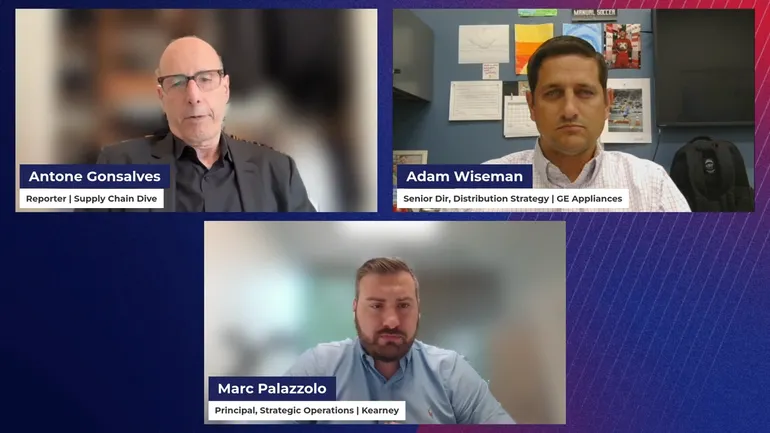
The panel, moderated by Reporter Antone Gonsalves, featured insights from Marc Palazzolo, principal of strategic operations at Kearney, who has spent years guiding global enterprises through these complex transitions.
The Digital Divide
Palazzolo argues that the success of a transformation is often predicated on a company’s "digital DNA." Organizations with robust in-house technology departments have a distinct advantage. “They are very close to achieving real-time visibility into their operations,” Palazzolo said. “Some are even dialing up the amount of autonomy they give to software agents, allowing them to manage routine supply chain tasks without human intervention.”
However, for those without a long history of digital maturity, the climb is steeper. Yet, Palazzolo emphasizes that this group should not be discouraged. “It’s a very wide range, but all of my clients are on that journey,” he explained. “Everybody is hungry for that and working towards that kind of ‘north star.’”
Overcoming the "Cost Barrier"
One of the primary historical deterrents to adopting smart supply chain tech was the prohibitive cost of deployment and the complexity of integrating disparate systems. Fortunately, the market is changing. The proliferation of specialized software startups—focused specifically on evaluating, cleansing, and orchestrating messy enterprise data—has significantly lowered the barrier to entry.
“I think it’s within reach for a lot more people than maybe it used to be,” Wiseman agreed, noting that cloud-native solutions have made sophisticated analytics more accessible to mid-market manufacturers.
Strategic Implications: Patience and Culture
The most successful supply chain transformations are rarely the result of a "quick fix" or a single technology purchase. Instead, they require a fundamental shift in corporate culture and a long-term investment horizon.
The Danger of Piecemeal Adoption
Palazzolo warns against "technological theater"—the act of implementing an autonomous mobile robot (AMR) in a single warehouse without a broader, enterprise-wide strategy. Such isolated initiatives, while flashy, rarely move the needle on company-wide efficiency. To be effective, automation must be integrated into the core workflows of the business.
Long-Term Vision
Transformational companies are making what Palazzolo describes as “bold, strategic bets.” These are investments that may not yield a positive ROI for five to ten years. This requires a level of C-suite commitment that permeates the entire organization, ensuring that the supply chain is treated as a strategic asset rather than an operational expense.
Building In-House Expertise
GE Appliances provides a prime example of this long-term mindset. While the company utilizes autonomous trucks for short, 1-mile deliveries between factories and warehouses in Tennessee, the value is not found in the mileage itself. Rather, the value lies in the development of in-house expertise. By running these programs, GE Appliances builds the internal capabilities, the regulatory knowledge, and the technical infrastructure necessary to scale robotics as the technology matures.
“It’s about knowing where we’re going,” Wiseman said.
Conclusion: The Path Ahead to 2026
As we look toward 2026, the definition of a successful supply chain will be defined by its ability to self-correct. The companies that thrive will be those that have successfully moved beyond the "visibility" stage and into the "orchestration" stage.
The challenges of integration, data quality, and cultural resistance are real, but they are no longer insurmountable. The tools are cheaper, the data is more accessible, and the necessity of real-time responsiveness has never been greater. For the modern manufacturer, the journey to an "always-on" supply chain is not a destination, but a continuous evolution—and for those who fail to start, the gap between them and the competition will only continue to widen.