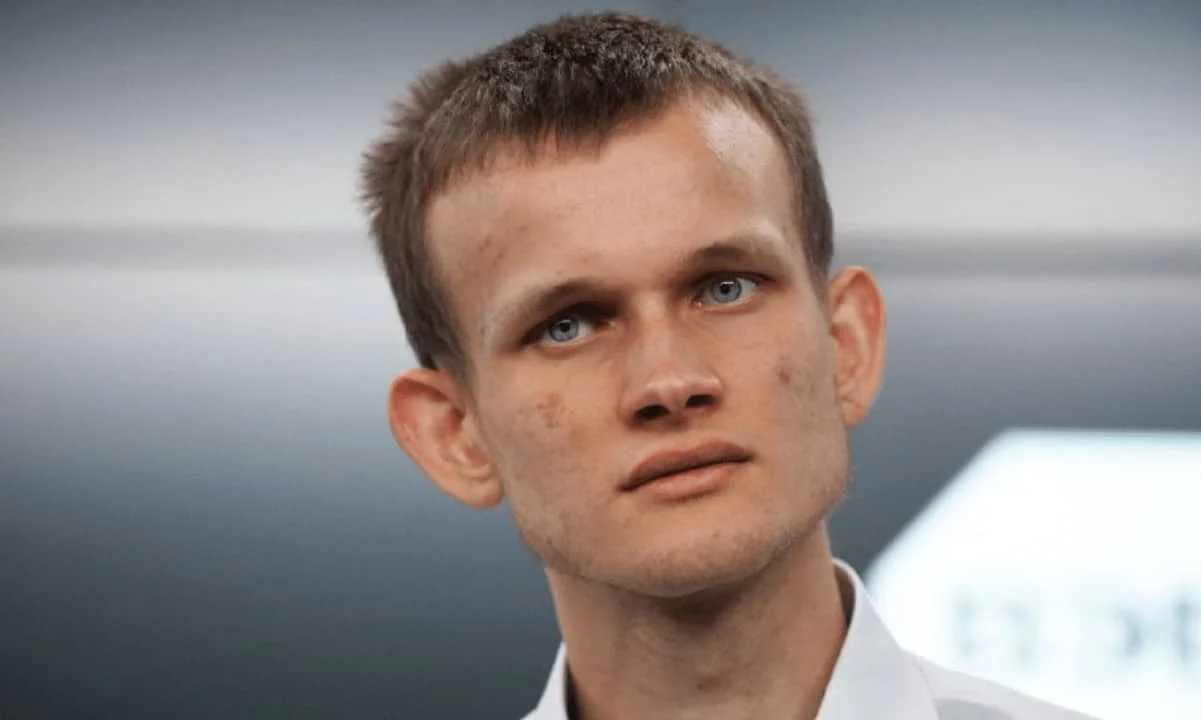
The bedrock of the modern internet—the invisible infrastructure protecting our private messages, banking transactions, virtual private networks (VPNs), and global financial systems—relies almost exclusively on public-key cryptography. For decades, the security of these systems has been tethered to the perceived computational difficulty of specific mathematical problems. However, a growing chorus of experts, led by Ethereum co-founder Vitalik Buterin, is beginning to question whether the foundational assumptions of this digital security are on the verge of collapse.
While much of the public discourse on cryptographic vulnerability has focused on the theoretical "Quantum Apocalypse," a more nuanced and potentially more immediate threat has emerged: Artificial Intelligence. According to Buterin, the rapid acceleration of AI-assisted mathematics could allow machines to discover "shortcuts" in complex mathematical problems, effectively rendering current standards like ECDSA (Elliptic Curve Digital Signature Algorithm) insecure far sooner than traditional models predicted.
The Catalyst: From "Bunker Mode" to Rational Caution
The debate was ignited by a provocative call to action from Ethereum researcher Justin Drake. In a widely discussed commentary, Drake urged large-scale crypto asset holders to transition into a "bunker mode," advocating for the immediate migration of funds to fresh, secure addresses. His primary concern was that the security of ECDSA—the standard used by Bitcoin and Ethereum to manage wallet ownership—could be compromised within months, not years, due to advancements in AI.
Drake’s proposal centered on the strategy of "hiding" public keys. By ensuring that public keys remain shielded behind hash functions, users might mitigate the risk of a catastrophic breach of the underlying signature schemes.
Vitalik Buterin, while acknowledging the validity of the underlying anxiety, has urged the industry to resist a panic-driven exodus. "We should not scramble to move our funds to new wallets today," Buterin stated in a public response. However, his measured tone hides a deeper, more profound concern: the need for a long-term, structural shift away from algorithms that are potentially vulnerable to both quantum and AI-assisted attacks.
Chronology of the Cryptographic Debate
The timeline of this concern is relatively short, reflecting the meteoric rise of AI capabilities:
- Pre-2023: Cryptographic security was largely viewed through the lens of Moore’s Law and the long-term, distant threat of fault-tolerant quantum computers (Shor’s algorithm).
- Early 2024: AI models, particularly large language models (LLMs) and specialized mathematical reasoning agents, began demonstrating an unprecedented ability to identify patterns in formal proofs and mathematical conjectures.
- Late 2024 (The Current Debate): Ethereum researchers began formalizing the "AI-threat model." Justin Drake proposed "bunker mode" for high-net-worth wallets, prompting an industry-wide reassessment of signature schemes.
- The Present: The industry is currently divided between those who see an imminent threat to legacy cryptography and those who maintain that the mathematical foundations of elliptic-curve cryptography remain as robust as ever.
Supporting Data: Why AI Changes the Game
For decades, the difficulty of elliptic curve discrete logarithm problems has been considered a "hard" problem, bolstered by the fact that the best-known algorithms have not improved in efficiency for nearly 30 years. The security of these systems is based on the assumption that even with increased computing power, these problems remain intractable.
Buterin’s argument shifts the focus from raw computing power to "mathematical insight." He posits that just as historical advances in integer factorization eventually surpassed the "naive" assumptions held by early mathematicians, AI could theoretically uncover algebraic shortcuts that humans have failed to find for decades.
This concern extends beyond standard elliptic curves to include lattice-based systems. While lattice-based cryptography (such as ML-DSA) is currently the leading candidate for post-quantum security, Buterin remains skeptical. He argues that the industry should lean heavily toward hash-based cryptography—a technology that is far better understood and arguably less susceptible to novel mathematical breakthroughs.
"The Ethereum roadmap has consistently favored hash-based cryptography," Buterin noted, citing the preference for WOTS (Winternitz One-Time Signatures) and SPHINCS+ wherever possible. By avoiding unnecessary complexity, the protocol minimizes its "attack surface" against both human genius and machine-driven discovery.
Official Responses and Industry Pushback
The community’s reaction to these warnings has been starkly polarized. Critics of the "bunker mode" approach argue that the risks of premature migration far outweigh the theoretical threats of a sudden cryptographic break.
Yehuda Lindell, Head of Cryptography at Coinbase, offered a vigorous rebuttal to the alarmist sentiment. "There is no evidence whatsoever that the decades-old assumptions behind elliptic-curve cryptography are close to failing," Lindell asserted. He warned that framing the issue as an imminent crisis ignores the catastrophic systemic risks such a break would pose to the global economy.
If ECDSA were to fail, the issue would not be confined to cryptocurrency wallets. Digital certificates (TLS/SSL), banking software, and government communications—the entire framework of digital trust—would effectively collapse. Lindell’s position is that until there is a concrete, reproducible exploit, the industry should focus on evolutionary, not revolutionary, changes to its security infrastructure.
Implications: The Path Forward
The implications of this debate are profound, impacting everything from individual asset management to the future of the decentralized web.
1. The Complexity of Migration
Buterin highlighted a practical reality that often escapes the theoretical debate: the danger of user error. "Botched migrations have cost me more money than all hacks combined," he admitted. For an average user, moving funds to a "more secure" wallet involves significant risks of loss, phishing, and management failures. He suggests that for multisig wallets, the safest interim approach is to perform key management off-chain or to rotate keys regularly after each operation.
2. Beyond the Blockchain
While the focus of the current debate is Ethereum, the stakes are global. If public-key encryption is indeed vulnerable to AI-assisted shortcuts, the entire digital economy requires a transition strategy. Buterin suggests that, at a minimum, the industry should start increasing the size of cryptographic keys. Larger keys increase the difficulty of brute-force attacks and provide a buffer against incremental improvements in mathematical reasoning.
3. The Shift toward Minimalism
The most significant takeaway from this debate is the renewed appreciation for "minimalist" cryptography. As the threat environment becomes increasingly complex, the industry is gravitating toward solutions that are simple, well-audited, and heavily reliant on hash functions rather than complex algebraic puzzles. This shift is not just an Ethereum preference; it is becoming a best practice for security engineers across the tech sector.
Conclusion: A Measured Evolution
The tension between Justin Drake’s "bunker mode" and Yehuda Lindell’s demand for evidence highlights a fundamental shift in the cybersecurity landscape. We are moving from an era where security was defined by human limitations to one where we must account for the potentially exponential speed of AI-assisted discovery.
Vitalik Buterin’s stance—a middle ground of "vigilant caution"—appears to be the consensus for a mature industry. We are not yet in a position where the sky is falling, but the era of resting on the laurels of 1990s-era mathematical assumptions is coming to an end. Whether the threat comes from quantum computers or an AI-driven mathematical breakthrough, the solution remains the same: a steady, deliberate transition toward more robust, hash-centric cryptographic standards and a greater emphasis on the operational security of our digital assets.
As we look toward 2030 and beyond, the most secure systems will not necessarily be those with the most complex mathematics, but those with the most resilient, adaptable, and fundamentally simple designs. The warning has been sounded; now, the work of architectural reinforcement begins.