As we close out the week, the rapid evolution of artificial intelligence shows no signs of slowing down. From the integration of multimodal AI into daily creative workflows to massive architectural shifts in large language models, the landscape for marketers, developers, and business owners is being redrawn in real-time.
In this edition, we explore how to bridge the gap between AI potential and professional output, examine the latest industry-shifting announcements from the titans of Silicon Valley, and look at the systems required to stay agile in a volatile technology market.
The Creative Pivot: AI-Driven Design and Video Production
The modern professional often finds themselves wearing an impossible number of hats. Between strategic planning, data analysis, and content creation, the technical burden of graphic design and film production can become a significant bottleneck. However, new AI-powered workflows are effectively commoditizing high-end creative tasks.
Mastering Print Design with ChatGPT and Canva
Graphic design is no longer the exclusive domain of those trained in Adobe Creative Cloud. By treating ChatGPT as a creative director rather than just a chatbot, users can achieve near-professional print materials.
The strategy relies on a "client-brief" approach:
- The Briefing: Provide the AI with precise print specifications, brand guidelines, and copy.
- Art Direction: Use ChatGPT’s iterative editing tools to refine the layout. Mark specific areas for deletion, adjust image placement, or request background removals.
- The Canva Integration: Export the draft to Canva. By utilizing "Magic Layers," the design becomes an editable file where individual elements can be manipulated, ensuring fonts and spacing are print-perfect.
The New Era of AI Video with Gemini Omni
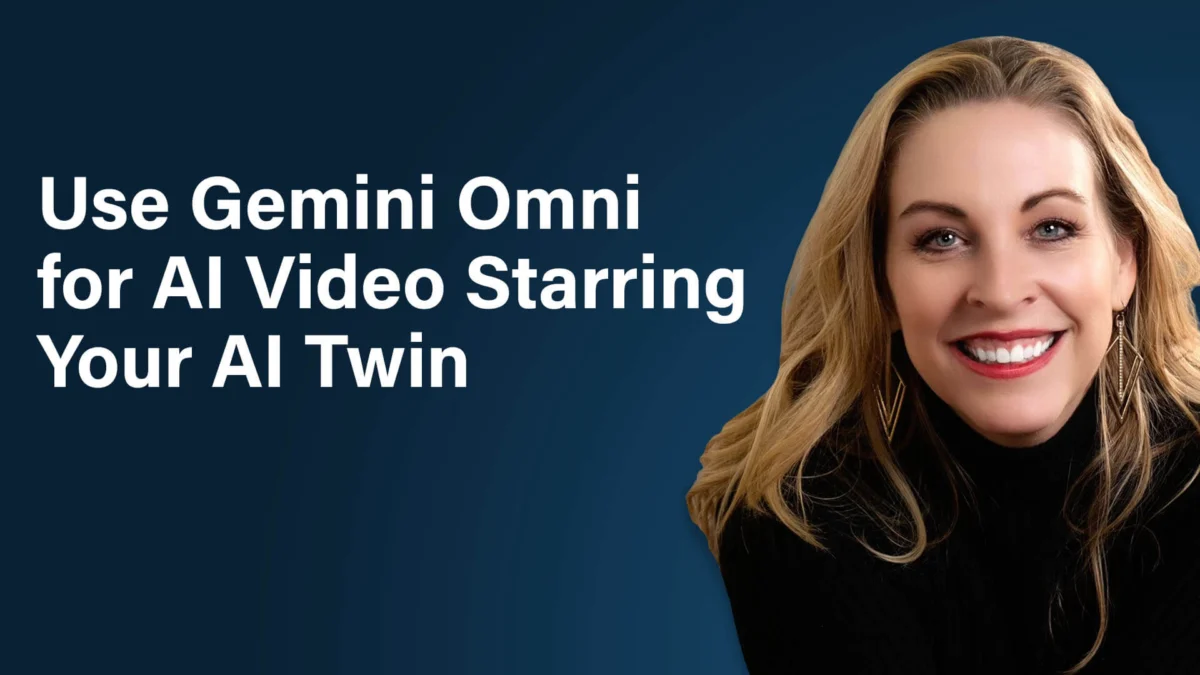
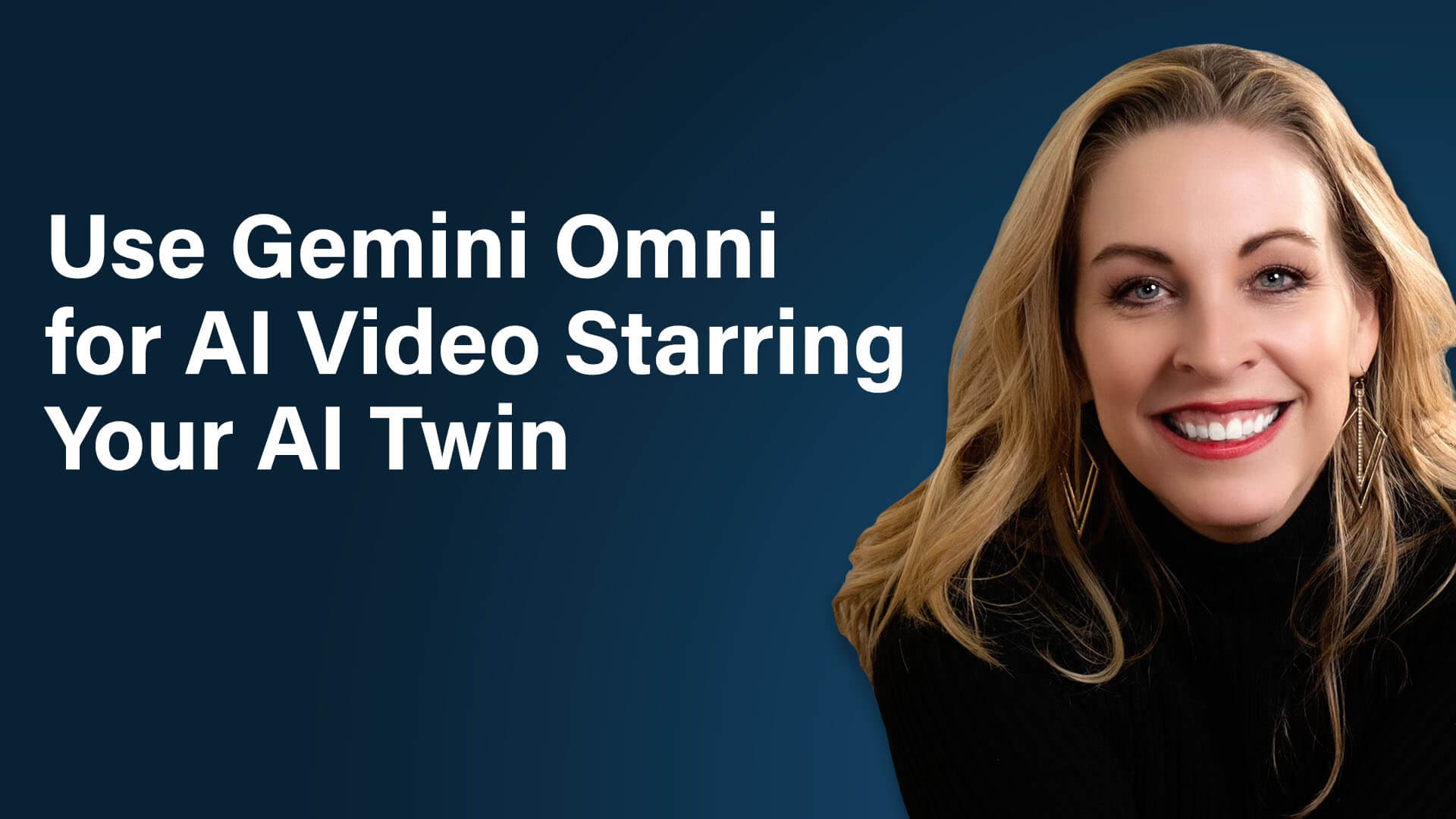
Video strategy has historically been hindered by the high cost of production teams and technical expertise. Google’s Gemini Omni is changing this dynamic by allowing marketers to create professional-grade video content—including realistic avatars, background changes, and motion graphics—without a film crew.
The core methodologies for success include:
- The "AI Twin" Protocol: Creating a digital likeness requires attention to detail. Recording mistakes, such as poor lighting or inconsistent head movement, can lead to unnatural "uncanny valley" results.
- Director-Level Prompting: Moving beyond generic prompts, creators are now using "TV director" logic. By specifying camera placement, framing, and emotional intent, prompts yield results that feel curated rather than randomly generated.
- Seamless Long-Form Production: Because most generative AI models excel at short-form clips, the key to longer video content lies in meticulous pre-production planning, ensuring that transitions between AI-generated segments are seamless.
Chronology of the Week’s Major AI Announcements
The tech industry saw a flurry of activity this week, centered largely on efficiency, agentic workflows, and cross-platform integration.
- Anthropic’s Efficiency Push: Anthropic launched Claude Sonnet 5.5, a model designed to be 30% faster and significantly more cost-efficient than its predecessor. This release targets the professional coding and content creation market, positioning the model as a mid-tier powerhouse between the light "Haiku" and the heavy "Opus" models.
- Google’s Multimodal Expansion: Google took significant steps in enterprise AI with Gemini 3.8 Live, which introduces "Live Avatar"—an animated, expressive persona that can handle real-time conversation and multi-tasking. Simultaneously, Google launched Gemini 3.8 Flash TTS, allowing for sophisticated, customizable, and emotional voice generation.
- OpenAI’s DevDay 2026: In a massive move toward automation, OpenAI unveiled over 20 updates, headlined by "Dots" agents—always-on AI assistants that function as persistent workers rather than just chatbots. They also introduced GPT-6 Sol and Luna, new models that cut API costs by 50% while improving performance in complex reasoning tasks.
- The Connected Ecosystem: Google expanded its "Connected Apps" initiative, allowing Gemini to pull data directly from third-party productivity tools like Airtable, Linear, and Adobe, reducing the "tab-switching" fatigue common in digital workflows.
Supporting Data and Technical Implications
The shift in the industry is not just about "better" models; it is about "integrated" models. The data suggests that developers are moving away from monolithic applications toward modular, agent-based systems.
The Rise of Portable Workflows
One of the most critical lessons from this week was demonstrated by AI strategist Nicole Leffer. When a primary tool (in this case, Claude) encountered an outage, her workflow did not collapse. Because she had designed a "portable system," she was able to migrate the task to ChatGPT seamlessly.
This highlights a shift in industry best practices: Tools change, but systems should not. The most successful organizations are now building "Platform-Agnostic Workflows." By focusing on the logic and structure of the task rather than the specific UI of a single model, businesses ensure business continuity regardless of provider downtime.
Cost and Performance Metrics
The release of GPT-6 Sol and Luna, combined with Anthropic’s Sonnet 5.5, signals a race to the bottom for inference costs. For businesses, this means that the "cost-per-task" of automation is dropping, making it feasible to deploy AI agents for background processes that were previously too expensive to automate.
- API Cost Reduction: 50% reduction in GPT-6 API pricing.
- Speed Efficiency: 30% faster response times in Claude 5.5.
- Scalability: Integration of prompt caching to reduce latency in long-running agentic conversations.
Official Responses and Strategic Perspectives
Industry leaders are framing these developments as the transition from "AI as a Chatbot" to "AI as a Colleague."
In his recent analysis, Michael Stelzner, founder of Social Media Examiner, emphasizes the necessity of moving beyond solo experimentation. "Every week, there’s a new AI headline," Stelzner notes. "Working it out solo means guessing which parts actually matter." The industry consensus is that passive consumption of AI news is no longer sufficient. Organizations must move toward "Hands-on Implementation"—getting into the room with practitioners to test, fail, and optimize in real-time.
OpenAI’s recent DevDay announcements underscore this sentiment. By inviting external developers to integrate with ChatGPT via "Sign in with ChatGPT" and new marketplace plugins, they are signaling a desire to move beyond being a destination and becoming the underlying operating system for professional work.

Implications: The Road Ahead
What does this mean for the average professional?
- The Death of the Technical Barrier: The barrier to entry for high-quality production (video, design, code) has effectively collapsed. The new competitive advantage is not "who can use the software," but "who has the best creative vision and strategy."
- The Agentic Future: With the introduction of "always-on" agents like OpenAI’s Dots and Google’s Live Avatar, the expectation of "instant response" will become the norm. Business processes will shift from reactive to proactive, with AI agents handling routine communication and organization in the background.
- The Necessity of Agility: As evidenced by the rapid release of Sonnet 5.5 and the GPT-6 suite, the "best" model changes monthly. Professionals who tie their entire business model to a single provider risk obsolescence. The smartest strategy is to build modular workflows that treat AI models as interchangeable components.
Conclusion: Staying Ahead
As we look toward the remainder of the year, the mandate for marketers and business owners is clear: Implement, iterate, and integrate.
The transition from manual labor to AI-assisted workflows is no longer a futuristic concept—it is the standard of operations. Whether it is utilizing ChatGPT to design print collateral or deploying Google’s Gemini for enterprise-level customer service, the tools are ready. The question is no longer "what can AI do," but "what are you going to build with it today?"

For those looking to deepen their expertise, conferences like the upcoming AI Business World offer a critical opportunity to move beyond the headlines and engage with the practical, hands-on strategies that will define the next decade of digital business. Stay informed, stay modular, and keep building.