The digital retail landscape is undergoing a profound transformation. This week’s flurry of product releases and strategic partnerships signals a clear pivot away from static, manual management tools toward "agentic commerce"—a new paradigm where artificial intelligence doesn’t just assist with tasks but actively executes them on behalf of merchants. From Shopify’s design surface to Amazon’s advertising engine and TikTok’s conversational assistants, the infrastructure of online retail is becoming increasingly autonomous, intelligent, and interconnected.
Main Facts: The Rise of Agentic Commerce
At the heart of this week’s news is the proliferation of AI agents capable of handling end-to-end business operations.
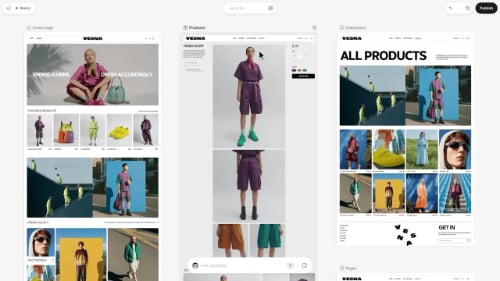
- Shopify Canvas: A new design surface that allows merchants to build and iterate on store layouts by interacting with Sidekick, Shopify’s AI agent. This allows for a more visual, conversational approach to storefront development.
- Amazon Ads Agent: An agentic platform that streamlines full-funnel campaign management—from sponsored ads to video and display—allowing AI to optimize performance with minimal human intervention.
- TikTok’s Agentic Shopping: The platform is doubling down on "Buy Direct" checkout features and a "Shopping Assistant" that provides real-time guidance on sizing, shipping, and product availability, effectively acting as an automated sales clerk.
- Strategic Acquisitions: Companies like Swap are actively acquiring AI visibility tools (such as Vizby) to integrate product discovery into their existing agentic checkout and storefront infrastructure.
Chronology of Developments (October 2026)
The pace of innovation this week has been relentless. Below is the timeline of the most significant rollouts:

- September 29-30: Commerce, the parent company of Feedonomics and BigCommerce, launched AI-driven data enrichment tools to automate product catalog optimization. Simultaneously, UPS introduced "Secure Commerce," a risk-mitigation suite designed to protect supply chains against fraud and revenue loss.
- October 1: Swap acquired Vizby to bolster its AI discovery capabilities. Contentstack also debuted "Canoe," an AI visibility tool that helps brands understand how AI search engines interpret their products.
- October 6: ShipStation launched "Ship with Walmart," providing direct access to negotiated shipping rates and marketplace protections for US sellers.
- Ongoing: The USPS and Amazon pilot for same-day delivery continues to roll out, while ThredUp pushes into live-commerce via the Whatnot platform, signaling a shift toward real-time, interactive shopping experiences.
Supporting Data and Technical Integrations
The current wave of innovation is fueled by deep technical integrations. The focus is no longer on simply having an AI tool, but on ensuring those tools "talk" to one another across disparate systems.
The Power of Integration
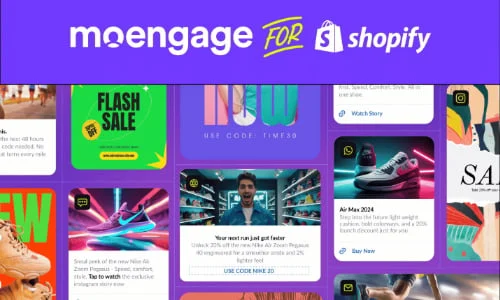
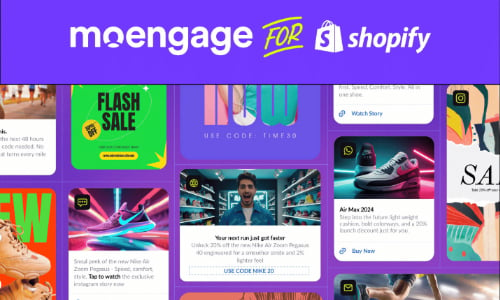
- MoEngage for Shopify: This new platform unifies merchant data across email, SMS, WhatsApp, and web push. It allows for "agentic engagement," where marketing teams can automate the creation of campaigns and performance reporting without moving between multiple tabs.
- miniOrange WordPress MCP Server: As AI agents become more prevalent, governance is critical. The miniOrange server acts as a bridge, allowing businesses to define specific WordPress capabilities for AI agents, effectively creating a "sandbox" with role-based permissions and human-in-the-loop verification.
- Easyship’s Global Expansion: By expanding its export infrastructure for eBay U.K., Easyship is solving the friction of cross-border commerce, enabling sellers to reach 195 countries with integrated compliance and documentation.
Content Intelligence
Tools like Contentstack Canoe and the Feedonomics/BigCommerce enrichment suite represent a new frontier in SEO. Rather than optimizing solely for human keywords, these tools help brands "train" AI models. By identifying buyer personas and generating structured data facts, these tools ensure that when a consumer asks an AI search engine about a product, the brand’s data is accurate, persuasive, and discoverable.
Official Responses and Strategic Rationale
Industry leaders are framing these moves as necessary steps to combat "digital fatigue" and operational complexity.
"The goal is to move from chat to work," says the development team behind various agentic tools. The rationale provided by companies like Helppli—which launched an AI customer service agent—is that merchants are currently spread too thin. By shaping an AI agent around a specific role, such as a receptionist or a sales assistant, businesses can scale their customer support operations without a linear increase in headcount.
Regarding the USPS and Amazon partnership, the strategic intent is clear: to leverage existing infrastructure to bridge the gap in delivery speed. By utilizing mail carriers for same-day delivery, Amazon is attempting to turn the U.S. Postal Service into a critical link in their "last-mile" competitive advantage, limiting routes to 200 packages per location to ensure service quality remains high during the pilot.
Implications for the Future of Retail
The cumulative effect of these developments is the transition from "Doing it yourself" to "Managing the AI that does it for you."
1. The Death of the "Manual" Merchant
For small and medium-sized enterprises (SMEs), the barrier to entry has traditionally been operational labor. Manually updating listings across four marketplaces, managing shipping labels, and responding to customer queries is a full-time job. With solutions like uParcel’s "Complete Marketplace Outsource Solutions," merchants are increasingly offloading the entire back-end to specialized AI-driven services.
2. The Rise of "Agentic" SEO
As more consumers shift from traditional search engines to AI-powered discovery (like TikTok’s Shopping Assistant), the way products appear in search results will change. Brands that do not invest in "AI visibility"—the ability to show up correctly in an LLM’s response—will likely lose market share to those that do.
3. Frictionless Returns as a Competitive Moat
The partnership between UPS’s Happy Returns and TikTok Shop marks a cultural shift. The "no-box, no-label" return model is becoming the gold standard for customer experience. For platforms like TikTok Shop, this reduces the friction of trying a new brand, making it easier for impulsive purchases to convert, knowing that the return process is essentially effortless.
4. Governance as a New Category
As businesses delegate more authority to AI, the risk of "runaway agents"—AI that makes incorrect pricing updates or sends off-brand emails—increases. The emergence of tools like miniOrange’s Secure MCP Server indicates that "AI Governance" will become a mandatory layer of the ecommerce stack. Companies will need to treat their AI agents like employees, with defined access, performance monitoring, and mandatory human review cycles.
Final Thoughts
We are witnessing the end of the "do-it-yourself" era of ecommerce. The successful merchant of 2027 will not be the one who works the hardest at updating listings or manually calculating shipping costs; it will be the merchant who best orchestrates a fleet of AI agents. By integrating discovery, logistics, and customer service into a cohesive, agent-driven ecosystem, the industry is moving toward a future where the store doesn’t just wait for customers—it actively participates in the journey from discovery to delivery.
Do you have an ecommerce product release or update? Email the editorial team at [email protected] to be included in our next industry rundown.