As the digital commerce landscape pivots toward a new era of automation and economic bifurcation, industry veterans Bill D’Alessandro and his co-analyst have released their annual forecast for 2026. This year’s predictions move beyond simple trend-spotting, diving into the mechanics of a market increasingly dictated by artificial intelligence, geopolitical shifts, and a widening divide between the affluent consumer and the struggling middle class.
To ensure accountability, the duo has committed to a unique "AI-adjudicated" grading system. At the conclusion of 2026, the transcripts of these predictions will be fed into advanced large language models—Claude and Grok—to determine the winner. The loser faces a high-stakes, highly public penalty: buying the winner a steak dinner and, quite literally, feeding them the first bite.
The Technological Vanguard: AI as the New Operating System
The primary theme dominating the 2026 forecast is the total integration of artificial intelligence into every facet of the eCommerce value chain—from content creation to the psychological precision of advertising.
Telepathic Advertising: The OpenAI Era
The most disruptive prediction involves the eventual entry of OpenAI into the advertising space. While Meta has mastered the art of tracking user interests, the analysts argue that OpenAI’s potential ad platform will represent a qualitative leap. By processing the intimate, conversational data inherent in LLM interactions—such as a user’s search for "signs of burnout" or their private anxieties about business partnerships—OpenAI could offer targeting that feels "telepathic." The message to early adopters is clear: those who integrate with these next-generation models first will capture market share before the rest of the industry realizes the rules of engagement have changed.

The Death of Manual Creative
In the realm of media production, the era of the bloated production team is nearing its end. By the close of 2026, video and audio editing are expected to be largely automated, reaching a "7/10 quality" threshold that is more than sufficient for social media and direct-response marketing. Scrappy, independent founders will soon be able to feed raw footage into an AI, provide a brief prompt, and receive a broadcast-ready asset, effectively democratizing high-end content production.
Verified Human Content: The New Gold Standard
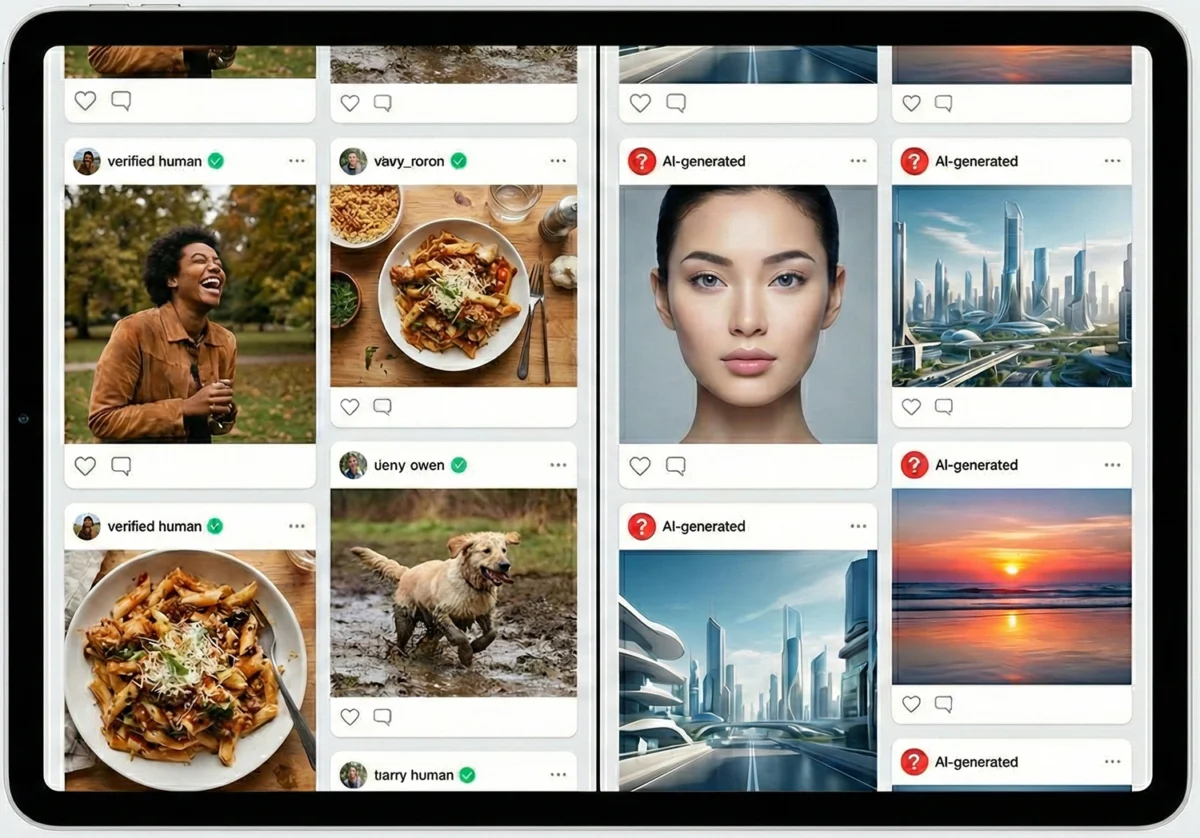
As the internet becomes saturated with synthetic media, a crisis of trust is emerging. Reports indicate that nearly a third of content on platforms like X (formerly Twitter) is already AI-generated. To combat the resulting erosion of consumer confidence, the analysts predict that major social platforms will begin rolling out "verified human" content badges. This move will likely become a necessary layer of verification for brands looking to maintain authenticity in a post-truth digital environment.
The Economic Landscape: A K-Shaped Reality
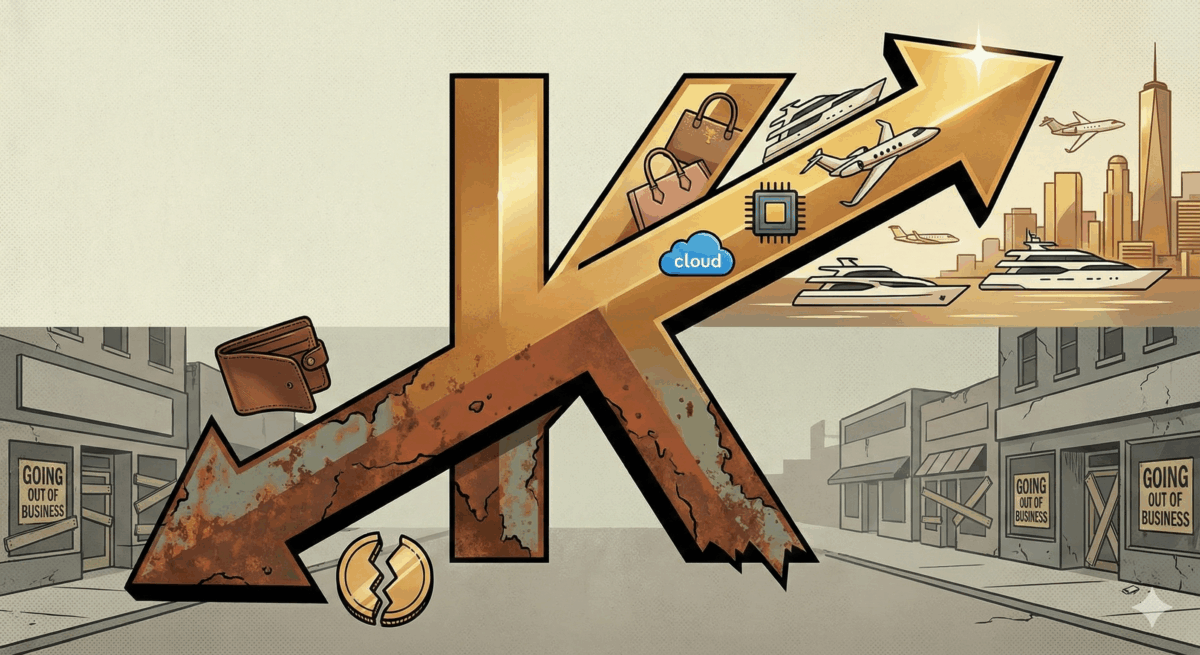
While technology accelerates, the macroeconomic outlook remains grim for the average consumer. The 2026 forecast paints a picture of a "K-shaped" economy, where the gap between the ultra-wealthy and the rest of the population dictates the success or failure of retail brands.
The Peril of the Middle Market
Bill D’Alessandro highlights that the "middle" is now a dangerous place for eCommerce businesses. Brands must choose their lane: either move up-market to capture the affluent consumer—who remains largely insulated from economic shocks—or move down-market, competing on sharp pricing for daily essentials. Businesses that fail to specialize in one of these extremes risk being squeezed out by larger, more agile players.

Inflationary Persistence
The forecast for inflation is equally sobering. With little to no political appetite for significant government spending cuts, the analysts project that inflation will remain north of 3% throughout 2026. This suggests that inflation is not merely a transient post-pandemic byproduct but a structural feature of the next decade. Businesses are urged to position their portfolios and operational strategies for a long-term, high-inflation environment rather than banking on a return to historical price stability.
The M&A Divide
The "K-shaped" economy is mirrored in the mergers and acquisitions market. Data shows that while mega-deals (transactions exceeding $1 billion) are up by 19% year-over-year, the small-to-mid-size market has plummeted, with deal volume down 18%. This suggests that while capital is still flowing to elite, top-tier businesses, the "typical" eCommerce brand is facing a liquidity crisis, struggling to find buyers as the market narrows its focus on only the most resilient assets.
Geopolitics and Asset Markets
Beyond the domestic storefront, international trade and alternative assets remain key variables in the 2026 strategy.
Tariff Realities
Regarding the U.S.-China trade relationship, the analysts predict that tariffs will settle in the 30% to 50% range. While campaign rhetoric may suggest higher figures, the harsh reality of a softening economy and a jittery bond market will likely force a more moderate approach. The assumption is that leadership will be wary of "shooting a wounded economy" by imposing duties that could trigger rapid, uncontrollable inflationary spikes.

The Bitcoin Paradox
Bitcoin occupies a unique position in the 2026 forecast. The analysts anticipate a volatile year, with the asset dipping below $70,000 in the first half of the year as the "struggling consumer" narrative dominates. However, as the realization of persistent inflation takes hold, Bitcoin is expected to transition into its role as "digital gold," finishing the year above the $100,000 mark.
Implications for Founders: The End of the "Lifestyle Brand"
Perhaps the most provocative assertion is that the "lifestyle brand"—the small, multi-million dollar eCommerce business—is effectively dead.
The rationale is rooted in the "AI-powered machine." Larger competitors are now deploying systems that can generate 100 novel advertisements per day, pulling from vast libraries of brand assets and customer reviews to optimize campaigns in real-time. These larger players can tolerate a higher Customer Acquisition Cost (CAC) and out-test smaller competitors in every metric. For the independent store owner, this means that unless they possess unique, defensible Intellectual Property (IP) or fall into the top 5-10% of global brand recognition, the business model is no longer sustainable.
The AI Bubble: A Reality Check
Contrary to the prevailing bearish sentiment regarding artificial intelligence, the analysts argue that the AI bubble will not pop in 2026. By comparing current NASDAQ forward P/E ratios (roughly 27x) to the dot-com era (which saw ratios exceeding 100x), they conclude that the market is not in a state of irrational exuberance. Furthermore, with government spending on AI infrastructure currently tracking at five times the rate of tech spending in 2000 (adjusted for inflation), the fundamental support for the sector is far more robust than it was during previous market crashes.
Conclusion: Adapting to the New Normal
The 2026 outlook is a call to arms for the digital entrepreneur. It is a world where intuition must be augmented by AI, where economic positioning is a matter of survival, and where the barriers to entry—and exit—are higher than ever.
Predictions are useful for framing the year, but they are not a strategy. The analysts conclude by noting that the most effective way to navigate this volatility is through community. Engaging with a braintrust of high-performing store owners—individuals in the trenches who are collectively observing what works and what fails—remains the only reliable way to stay ahead of the curve. As the eCommerce landscape undergoes its most significant shift since the launch of the internet, the collective intelligence of the industry will be the ultimate competitive advantage.