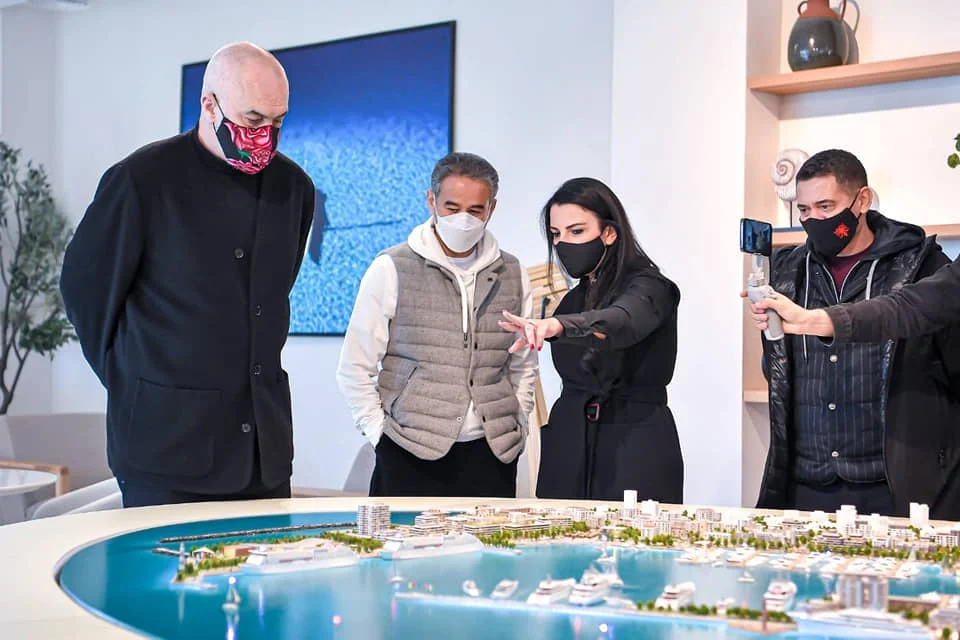
TIRANA, ALBANIA – A flagship luxury development project in the coastal city of Durrës, spearheaded by prominent Emirati businessman Mohamed Alabbar, is facing serious scrutiny following the discovery of significant structural issues. The National Inspectorate for Territorial Protection (IKMT) has officially acknowledged critical structural problems in two buildings within the "Durrës Yacht & Marina" complex, with recent inspections revealing alarming levels of subsidence, raising immediate concerns about the integrity and safety of these structures.
The IKMT confirmed on Wednesday that a joint inspection team had identified that two residential and service buildings, under construction as part of Alabbar’s ambitious waterfront project, have experienced vertical settlement ranging from 18 to a staggering 28 centimeters. This substantial downward movement of the foundations has prompted urgent calls for remedial action from the developer.
Unveiling the Structural Deficiencies: A Joint Investigation
The discovery of these structural anomalies stems from a joint control group meticulously assembled by the IKMT. This inter-agency task force was convened in response to mounting concerns regarding the "stability and safety" of the buildings. The group comprised seasoned inspectors from the IKMT, representatives from the Territorial Development Agency, officials from the Durrës Municipality’s Urban Planning Agency (IMT), and specialized engineers from the Institute of Construction.
The primary focus of this intensive verification process was on two specific residential and service buildings that had received construction permits in September 2023 from the National Territorial Council (KKT). These structures, designed to rise between six and ten stories above ground with underground parking facilities, are situated in management zones A02 and A04 of the Durrës port area. According to the IKMT, construction on these buildings has reached its final stages, with current efforts concentrated on external landscaping and finishing works.
The findings of the topographic report, meticulously prepared by the Institute of Construction and subsequently shared with the IKMT, have been described as "worrying" and have served to corroborate earlier allegations of structural instability.
Alarming Subsidence Figures: A Detailed Breakdown
The IKMT’s official statement detailed the extent of the subsidence:
- Building 02: This structure, encompassing building phases of one, six, seven, and eight stories above ground, with a single underground level, has reportedly sunk by 28 centimeters.
- Building 04: This building, comprising one, six, seven, eight, and ten stories above ground, also with a single underground level, has experienced a subsidence of 18 centimeters.
These figures represent a significant deviation from expected structural behavior and have triggered an immediate response from the regulatory authorities.
Urgent Call to Action: Mandating Reinforcement Measures
In light of these findings, the IKMT has officially communicated with the implementing company responsible for the project, demanding an urgent intervention to reinforce the compromised buildings. The inspectorate has explicitly requested the "immediate adoption of measures for the realization of necessary technical reinforcements, which guarantee the stability of the structures."
Furthermore, the IKMT has stipulated that any reinforcement project proposed by the implementing company must undergo rigorous review and approval by the relevant legal authorities before any work can commence. This stringent approval process is designed to ensure that all technical conditions are met and that the proposed solutions adequately address the identified structural weaknesses.
Unraveling the Root Cause: Speculation and Allegations
While the IKMT’s official statements have focused on the discovered subsidence and the mandate for reinforcement, the underlying reasons for this alarming sinking remain officially unaddressed. However, initial reports and denunciations have pointed towards potential engineering oversights as the primary culprit.
Allegations, first brought to light in the broadcast program "Piranjat" on Syri TV by whistleblowers and subcontractors working within the construction site, suggest that the fundamental cause of the subsidence is linked to the "lack of engineering measures in the foundations." These sources further assert that the port area itself is characterized by sandy and unstable terrain, a factor that would necessitate exceptionally robust foundational engineering.
The implications of these allegations are profound, suggesting that the structural integrity issues may stem from fundamental design or execution flaws rather than minor construction defects.
A Troubled Genesis: The Broader Context of the Durrës Port Development
The engineering challenges plaguing the new constructions are merely the latest chapter in a series of controversial developments surrounding the Durrës port. The "Durrës Yacht & Marina" project, envisioned as a transformative luxury development, has been mired in complexities since its inception.
The project was initially approved as a "strategic investment" in December 2021, with "Symphony Real Estate Development sh.p.k." listed as the applicant. Subsequently, the Strategic Investment Committee made the decision to transfer the "strategic investor" status to a newly established entity. This new company was formed through the amalgamation of the public company "Albanian Seaports Development Company (ASDC) sha" and the private entity "Eagle Hills Real Estate Development."
According to an agreement signed in January 2023, the project, hailed by Prime Minister Edi Rama as the largest foreign investment in Albania, was projected to cost over 2 billion euros. This substantial financial commitment underscores the high stakes involved in the development.
Shifting Tides: Port Operations and Infrastructure Challenges
The ambitious scope of this mega-real estate project necessitated the relocation of traditional commercial port operations. However, the construction of a new port in the Porto Romano area has encountered significant obstacles. The tender process for its construction has reportedly faced difficulties, leading to delays and complications in the essential infrastructure transition. This logistical challenge further compounds the issues arising from the structural problems within the residential components of the development.
The Durrës Yacht & Marina project, intended to be a jewel in Albania’s growing tourism and investment crown, now finds itself at a critical juncture. The discovery of significant structural defects casts a long shadow over its future, demanding transparency, accountability, and a swift and effective resolution to ensure the safety and viability of this high-profile endeavor. The coming weeks will be crucial in determining how the Albanian authorities and the developers address these pressing concerns and what measures will be implemented to restore confidence in the project and safeguard public safety.