By David Jones | Cybersecurity Dive | Sept. 21, 2026
In an era where the global supply chain acts as the circulatory system of the world economy, the digital integrity of the vessels traversing our oceans has become a matter of profound national security. U.S. federal authorities are currently engaged in a high-stakes investigation to determine whether foreign cyber adversaries have successfully compromised the operational networks of commercial vessels bound for American ports.
The investigation, which gained public visibility in late August, highlights the mounting vulnerability of the maritime sector. As the U.S. Coast Guard, the FBI, and federal cyber-intelligence agencies intensify their scrutiny of maritime traffic, the incident serves as a stark reminder that the digital perimeter of a country now extends far beyond its physical coastline.
The Chronology of the Incursions
The federal response was triggered by intelligence suggesting that foreign actors—suspected to be state-sponsored or state-aligned groups—had gained unauthorized access to the network infrastructure of commercial shipping vessels.
- August 21, 2026: The U.S. Coast Guard, operating in tandem with FBI cyber specialists, conducted a targeted boarding of a foreign-flagged commercial vessel as it approached U.S. territorial waters. The objective was to perform a forensic audit of the ship’s operational technology (OT) and information technology (IT) systems.
- August 24, 2026: Just days after the initial intervention, federal authorities executed a second boarding under similar circumstances. Both vessels involved were oil tankers operating within the Gulf of Mexico, navigating toward Texas-based ports.
The coordinated nature of these boardings underscores the severity with which U.S. officials view potential digital intrusions. While the Coast Guard has not explicitly named the state actors suspected of orchestrating these attempts, the context of the operations suggests a highly sophisticated effort to gain persistence within the command-and-control systems of energy infrastructure carriers.
Official Responses and Damage Control
The immediate priority for the Coast Guard and the FBI was to ensure that the integrity of the vessels’ navigation and safety systems remained uncompromised. According to a spokesperson for the Coast Guard, the boardings were a proactive measure to verify the safety of the vessels’ internal networks following credible indications of unauthorized penetration by "foreign cyber actors."
Crucially, the federal government has been quick to manage public concern. In a series of briefings, officials confirmed that there were no indications of operational disruption. The ships’ propulsion, steering, and cargo-handling systems—the vital components that, if compromised, could lead to catastrophic accidents or environmental disasters—remained under the control of the crew.
"The ship’s captain, crew, and shore-side corporate staff were critical partners in our efforts to ensure that any potential threats were identified and mitigated," the Coast Guard spokesperson noted. "Our focus remains on ensuring that port operations continue without interruption while maintaining the highest standard of maritime security."

The Coast Guard is currently managing a complex communication loop, liaising with port operators, vessel owners, and local maritime stakeholders to ensure that the intelligence gained from these boardings is disseminated to prevent further incursions.
The Structural Fragility of Modern Maritime Assets
The recent incidents are not merely isolated security glitches; they are symptoms of a systemic architectural flaw within the maritime industry. For decades, the focus of ship design was physical durability and mechanical reliability. Today, however, the "smart ship" relies on a convergence of IT and OT that often ignores the most basic principles of network segmentation.
"Modern tankers run navigation, propulsion, steering, and cargo systems on the same onboard network that also carries IT and satellite connectivity," explains Liz Martin, senior director of threat hunting at Dragos, a firm specializing in operational technology risk. "Often, these critical functions sit behind a single firewall. If an adversary gains access to the ship’s satellite internet—a common entry point—they are essentially one step away from the bridge’s navigation controls."
This convergence creates an "attack surface" that is difficult to secure. Unlike a land-based facility that can be protected by a perimeter fence and a dedicated security operations center (SOC), a ship at sea is a remote, mobile island. Relying on satellite links for constant connectivity provides convenience for crew communication and logistical updates, but it also provides a persistent, wide-area network link that adversaries can exploit.

Historical Context: A Legacy of Vulnerability
The 2026 investigations occur against a backdrop of increasing cyber-threats to the global supply chain. The maritime industry has been a prime target for years, with several high-profile incidents shaping current policy:
- The 2017 Maersk Attack: The NotPetya malware, widely attributed to Russian intelligence, caused a global logistical paralysis. Maersk, the world’s largest shipping line, suffered losses exceeding $300 million as its terminal operating systems were wiped out, forcing a manual rebuild of its entire IT infrastructure.
- The 2021 Port of Houston Intrusion: A nation-state actor managed to gain access to the Port of Houston’s network. While the intrusion was caught before it could impact cargo movement, the incident highlighted that the threat is not limited to ships at sea but extends to the shore-side facilities that keep the global economy moving.
These events have forced the U.S. government to move from a position of "encouraged best practices" to "mandatory security requirements." The Maritime Transportation Security Act (MTSA) has been updated to include rigorous cybersecurity reporting, and the Coast Guard has begun incorporating cyber-readiness into its routine inspections of foreign-flagged vessels.
The Geopolitical Implications
The central question remains: Why target oil tankers in the Gulf of Mexico? Analysts suggest that these actions may be less about causing an immediate explosion or crash and more about "pre-positioning"—the practice of placing malware or backdoors in critical infrastructure that can be activated during a future geopolitical crisis.
"The concern specifically for foreign vessels is whether those vessels are adhering to minimum cybersecurity standards," says Annie Fixler, director of the Center on Cyber and Technology Innovation at the Foundation for Defense of Democracies. "If an adversary can control a vessel’s position or telemetry, they can disrupt energy markets, cause localized environmental crises, or even use a ship as a physical tool for sabotage."
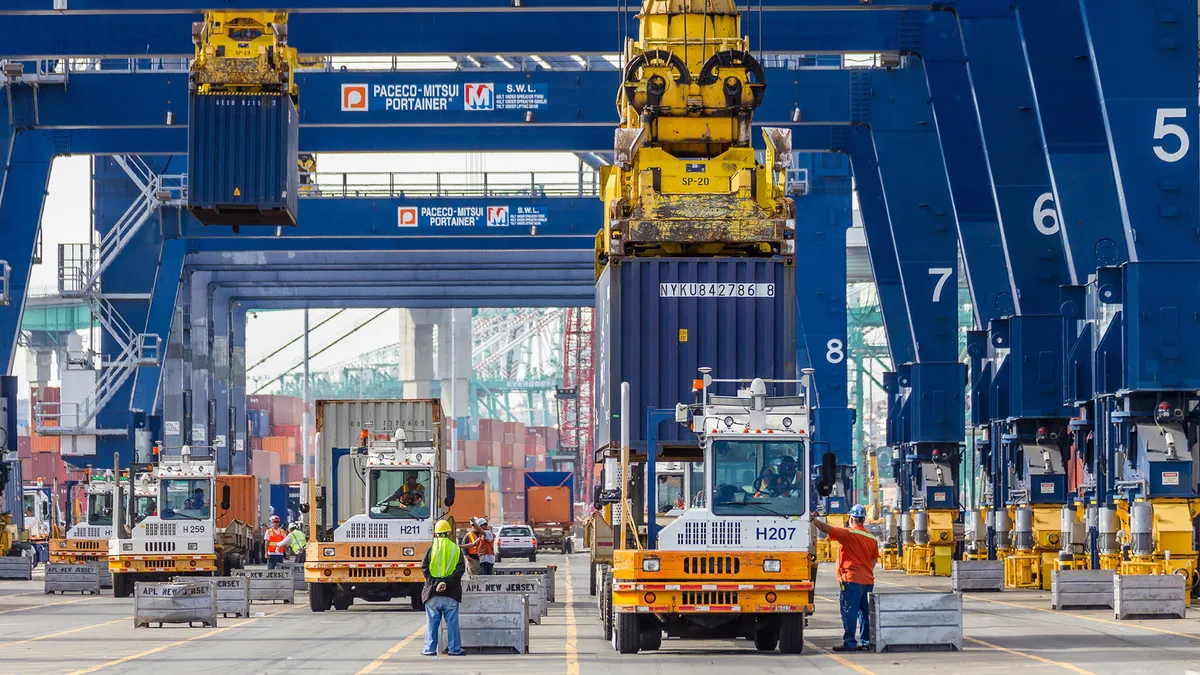
The maritime sector is the backbone of the U.S. economy, with over 90% of imported goods arriving by sea. Any perception that this system is insecure could lead to increased insurance premiums, port delays, and a broader lack of confidence in the global shipping system.
Looking Forward: Strengthening the Maritime Perimeter
As the investigation into the August boardings continues, the U.S. government is expected to issue new directives for shipping companies operating in American waters. This will likely include:
- Mandatory Network Segmentation: Regulations requiring ships to physically or logically separate navigation and propulsion systems from general-purpose IT networks.
- Enhanced Satellite Security: New standards for encrypted communication channels between ship-borne hardware and shore-side management.
- Real-Time Threat Intelligence Sharing: A more robust, automated system for sharing threat signatures between the Coast Guard and international shipping conglomerates.
The maritime industry is currently at a turning point. The transition to autonomous systems, remote-controlled cargo handling, and AI-optimized navigation will only increase the reliance on digital networks. If the industry fails to treat cybersecurity with the same urgency as it treats hull integrity or engine maintenance, the "digital-maritime" gap will become a permanent, exploitable fault line in national security.
For now, the focus is on the Gulf of Mexico and the lessons learned from the two tankers boarded in August. As federal agencies piece together the origin and methodology of the threat, the maritime community remains on high alert, watching the horizon not just for storms or physical threats, but for the invisible, malicious code that seeks to compromise the lifeblood of global trade.