BELGRADE, SERBIA – October 27, 2026 – A wave of unprecedented political upheaval has swept through Serbia, culminating in protesters storming a prominent pro-government television station, Informer TV, late Monday night. The dramatic intrusion, which temporarily disrupted broadcasting and saw demonstrators demanding the arrest of the station’s editor-in-chief, unfolded as tens of thousands of Serbians continued their second night of jubilant celebrations following a landmark election result. This seismic shift marks the end of Aleksandar Vučić’s 14-year grip on power, overthrown by a burgeoning student-led anti-corruption movement.
The "Student List of Serbia," an alliance born from grassroots protests, delivered a stunning defeat to Vučić in Sunday’s historic election. His ouster signifies a profound turning point for a nation long characterized by centralized power and tightly controlled media. Vučić, who served as Information Minister during the Slobodan Milošević era, had maintained a formidable influence over the country’s media landscape, a control that became a central point of contention in the lead-up to the elections.
The events at Informer TV, a staunch supporter of the former president, saw approximately 30 individuals breach the newsroom, confronting editor-in-chief and owner Dragan Vučićević. Live footage from the station captured the tense scene, with protesters chanting slogans such as "This is free Serbia!" and "Where is Vučić now?", some explicitly calling for Vučićević’s arrest. The incident underscores the deep-seated frustration and desire for accountability that has fueled the recent political transformation.
A Nation Reimagined: The Fall of an Era
The election results sent shockwaves across the Balkans and beyond. Aleksandar Vučić, a figure who had dominated Serbian politics for over a decade, first as Prime Minister and then as President, was unseated by a relatively nascent political force. His administration had often been criticized for democratic backsliding, a shrinking space for independent media, and persistent allegations of corruption. The international community, while often cautious in its statements, had increasingly voiced concerns over the state of democracy and rule of law in Serbia under his leadership.
From Corruption Protests to Political Power
The "Student List of Serbia" emerged not from traditional political structures but from a vibrant, decentralized student movement dedicated to combating corruption and advocating for democratic reforms. Their campaign resonated deeply with a populace weary of the status quo, particularly younger generations who felt marginalized and disenfranchised. The movement’s success is a testament to the power of grassroots organizing and the collective desire for change, effectively translating widespread societal discontent into a decisive electoral victory. Their platform focused on transparency, accountability, and strengthening democratic institutions, directly challenging the perceived weaknesses of the previous administration.
Confronting the Media Establishment: The Informer TV Incident
The Monday night intrusion into Informer TV’s offices was a dramatic manifestation of the public’s ire towards what they perceived as a biased and propagandistic media environment. Informer TV, known for its sensationalist reporting and unwavering support for Aleksandar Vučić, had long been a target of criticism from opposition figures and media watchdogs alike. The protesters’ actions, while raising questions about media safety and journalistic freedom, were framed by many as a direct response to years of perceived misinformation and manipulation.
The live broadcast captured the raw emotion of the moment. Demonstrators, their faces a mix of anger and exhilaration, surrounded Vučićević, who appeared visibly shaken but defiant. The chants of "This is free Serbia!" were particularly potent, symbolizing a break from an era where critical voices were often silenced or marginalized by state-aligned media. The demand for Vučićević’s arrest further highlighted the public’s desire for immediate accountability from figures they believe perpetuated the previous regime’s narrative.

In a swift response, Aleksandar Vučić himself took to his personal Instagram account. Wearing a T-shirt with the word "sorry" crossed out – a symbol he had adopted in previous instances of public defiance – he condemned the incident as an "attack on freedom of expression and freedom of journalism." This statement, however, drew immediate criticism from many who pointed to his own extensive history of stifling media independence and using pro-government outlets to disseminate propaganda and discredit opponents. Critics argued that his concern for press freedom was deeply ironic given his track record.
Calls for Calm Amidst Revolutionary Fervor
The jubilant celebrations and the confrontational atmosphere at media outlets prompted an urgent call for calm from within the triumphant student movement. Ilija Srdanović, a distinguished cardiologist and the leading candidate on the "Student List of Serbia’s" electoral slate, appealed for restraint and dignity.
"We ask you to remain calm and dignified until the completion of the electoral process, just as you have been until now," Srdanović stated in a video message posted on his Instagram account. "Do not resort to any form of violence. Your Student List and your student movement call upon you for this." His message underscored the delicate balance the nascent political force must maintain between harnessing revolutionary energy and ensuring a peaceful and orderly transition of power. The "Student List" currently lacks a single, identifiable leader, and the nation awaits its decisions regarding the formation of a new government and appointments to key ministerial positions. The potential for splintering or unrest remains a significant concern, making Srdanović’s plea for unity and peaceful conduct all the more crucial.
The Reckoning: Demands for Media Accountability
Beyond the immediate protests, institutional responses to Serbia’s media landscape are already taking shape. The Independent Association of Journalists of Serbia (NUNS) announced its intention to file a formal request on Tuesday for the revocation of Informer TV’s broadcasting license. NUNS cited "systematic violations of the law and programming obligations" as the basis for their demand. This move reflects a broader aspiration within civil society for a complete overhaul of the media sector, aiming to dismantle the networks of control that characterized the previous era.
Dragan Vučićević, reacting to NUNS’s announcement and the broader shift in power, expressed his dismay to Reuters, stating, "On the first day of the Student List’s power, they want to ban the media. They have said everything about themselves and nothing about us." His comments highlight the expected pushback from media outlets that benefited from the previous administration’s patronage, setting the stage for a contentious battle over media regulation and ownership in the coming months.
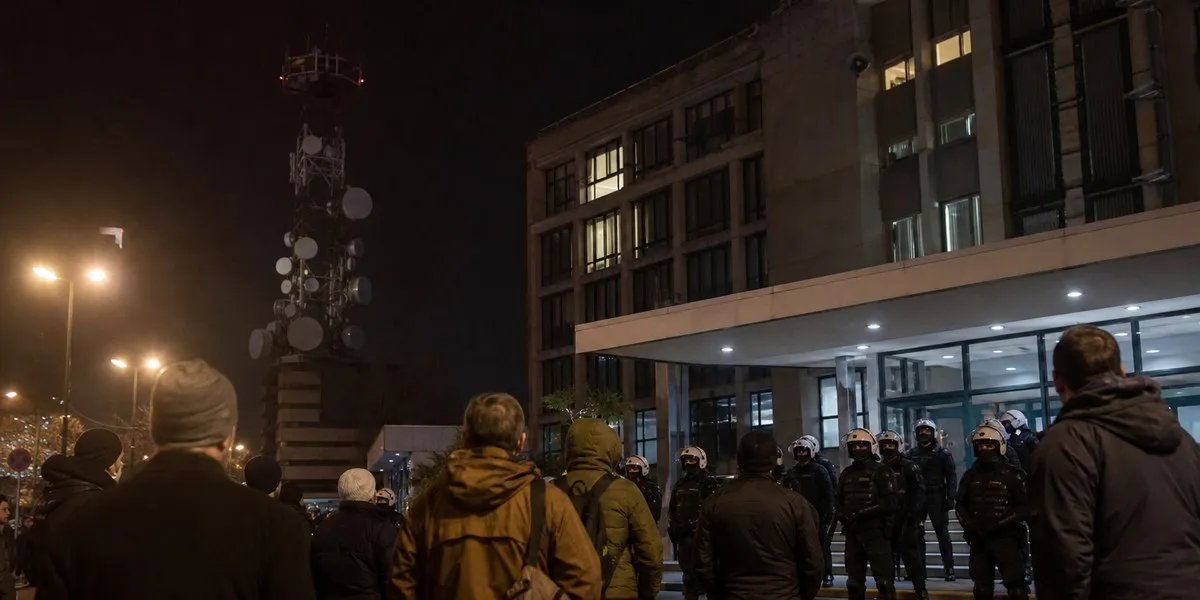
The protests extended beyond Informer TV. On Monday evening, a crowd also gathered outside the private Pink TV station in Belgrade, another channel widely perceived as pro-Vučić. Police had to cordon off the area, highlighting the widespread public anger directed at media perceived to be complicit in the former government’s narrative.
Public Broadcaster’s Confession: A Shift in Narrative
In a remarkably symbolic gesture, the public broadcaster RTV in the Vojvodina region initiated its Monday evening news program with an unprecedented apology to its viewers. The station acknowledged its failure to fulfill its public service role, citing "biased and uncritical reporting." This candid admission is a powerful indicator of the shifting winds in Serbia’s media landscape, suggesting a willingness within some state-owned institutions to confront past shortcomings.
The RTV apology bears a striking resemblance to a dramatic event in Hungary just a few months prior. In July, following the electoral defeat of former Prime Minister Viktor Orbán’s Fidesz party three months earlier, Hungary’s main state television channel displayed a black screen with a stark message: "Public media cannot lie. We apologize for having done so for many years." These parallel events in two Central European nations underscore a regional trend where the downfall of long-serving populist leaders is quickly followed by public demands for media accountability and a reckoning within state broadcasters. These apologies, while symbolic, are crucial first steps in rebuilding public trust and fostering a genuinely pluralistic media environment.

Serbia’s Media Landscape: A History of Control and Bias
The events unfolding in Serbia are deeply rooted in a history of media manipulation and political control. Under Aleksandar Vučić, Serbia’s press freedom ranking steadily declined, reaching its lowest point ever in 2026. Reporters Without Borders, in its 2026 World Press Freedom Index, ranked Serbia 104th out of 180 countries, placing it at the bottom of the European Union and Balkan regions. This abysmal ranking reflected a systemic erosion of journalistic independence, characterized by political pressure, economic influence over media ownership, and a hostile environment for critical reporting.
The election monitoring organization Crta further substantiated these concerns last week with a damning report on media coverage during the recent election campaign. Their findings revealed that national television broadcasters allocated three-quarters of airtime designated for politicians to government representatives. Conversely, the "Student List of Serbia" was portrayed negatively in over 80% of instances where it was discussed. Such stark imbalances in coverage demonstrate the profound challenges faced by opposition movements and the extent to which state-aligned media had become tools for political endorsement rather than impartial information dissemination. This long-standing pattern of bias fueled public distrust and contributed significantly to the widespread anger now directed at these media outlets.
Implications and the Road Ahead for a New Serbia
The victory of the "Student List of Serbia" and the subsequent events signal a momentous, albeit potentially turbulent, period for the country. The implications are far-reaching, touching upon Serbia’s democratic trajectory, its aspirations for European Union membership, and its role in regional stability.
The immediate challenge for the student movement is to translate its electoral success into stable governance. Without a clearly defined leadership structure, the process of forming a government, appointing ministers, and articulating a coherent policy agenda will be complex. The movement will need to demonstrate its capacity for effective administration while staying true to its anti-corruption and democratic reform principles. The world will be watching to see if this grassroots movement can evolve into a robust and sustainable political force capable of delivering on its promises.
For Serbia’s media landscape, the shift in power promises a potential renaissance. The demands for license revocations, the public apologies from state broadcasters, and the general clamor for accountability indicate a strong public desire for media pluralism and independence. However, achieving this will require significant structural reforms, including transparent media ownership, stronger regulatory bodies, and protection for journalists from political and economic pressures. The battle for media freedom will likely be protracted, facing resistance from entrenched interests.
Economically, the new government faces the task of addressing systemic corruption, fostering a more transparent business environment, and attracting investment. Serbia’s path towards EU integration, which had stalled under Vučić amidst concerns over democratic standards, could see renewed momentum if the new administration demonstrates a genuine commitment to reforms.
Regionally, a more democratic and less autocratic Serbia could contribute to greater stability in the Western Balkans, a region historically prone to tensions. However, the transitional period itself carries risks, and the new government will need to navigate complex geopolitical relationships with care.
The events of late October 2026 represent a profound inflection point in Serbian history. The euphoria of a popular uprising has ushered in an era of uncertainty and immense potential. The coming months will determine whether Serbia can successfully transition from a period of concentrated power to a truly democratic society, where media serves the public and governance is genuinely accountable. The world watches with anticipation as this new chapter unfolds.