
By Dani James | Retail Dive | September 11, 2026
In its maiden quarterly financial report as a publicly traded company, direct-to-consumer (DTC) fashion powerhouse Reformation has delivered a performance that suggests both resilience and strategic maturity. Posting a 24% surge in net revenue for the second quarter of 2026, the brand has managed to silence some of the initial market skepticism that clouded its transition to the public markets earlier this summer.
As the retail sector faces a volatile macroeconomic environment, Reformation’s ability to leverage its unique, speed-focused supply chain model has provided a much-needed buffer against the industry-wide inventory bloat that has plagued many of its contemporaries.
The Core Performance: A Breakdown of the Q2 Results
The headline figure—a 24% year-over-year revenue increase—serves as the cornerstone of Reformation’s debut report. This growth, while impressive, arrives in the wake of an initial public offering (IPO) in July that failed to meet the lofty $1 billion valuation target the brand had originally set.
When the company hit the ticker, trading began at the lower end of its projected price range, a reality that reflected a broader investor hesitation toward apparel stocks. However, the Q2 results provide a tangible answer to those concerns. By demonstrating double-digit top-line growth, Reformation has signaled to Wall Street that its business model is not merely a trend-driven phenomenon, but a scalable enterprise capable of sustained expansion.
Chronology: From Private Darling to Public Player
To understand the weight of these earnings, one must look back at the trajectory of the last six months:
- Early 2026: Reformation prepares for its IPO, touting its "sustainability-first" brand identity and its unique, rapid-response manufacturing capabilities.
- July 2026: The company officially lists on the public exchange. Despite high hopes for a $1 billion valuation, the stock enters the market at a more modest valuation, reflecting caution from institutional investors who remain wary of DTC apparel companies after several high-profile failures in the sector.
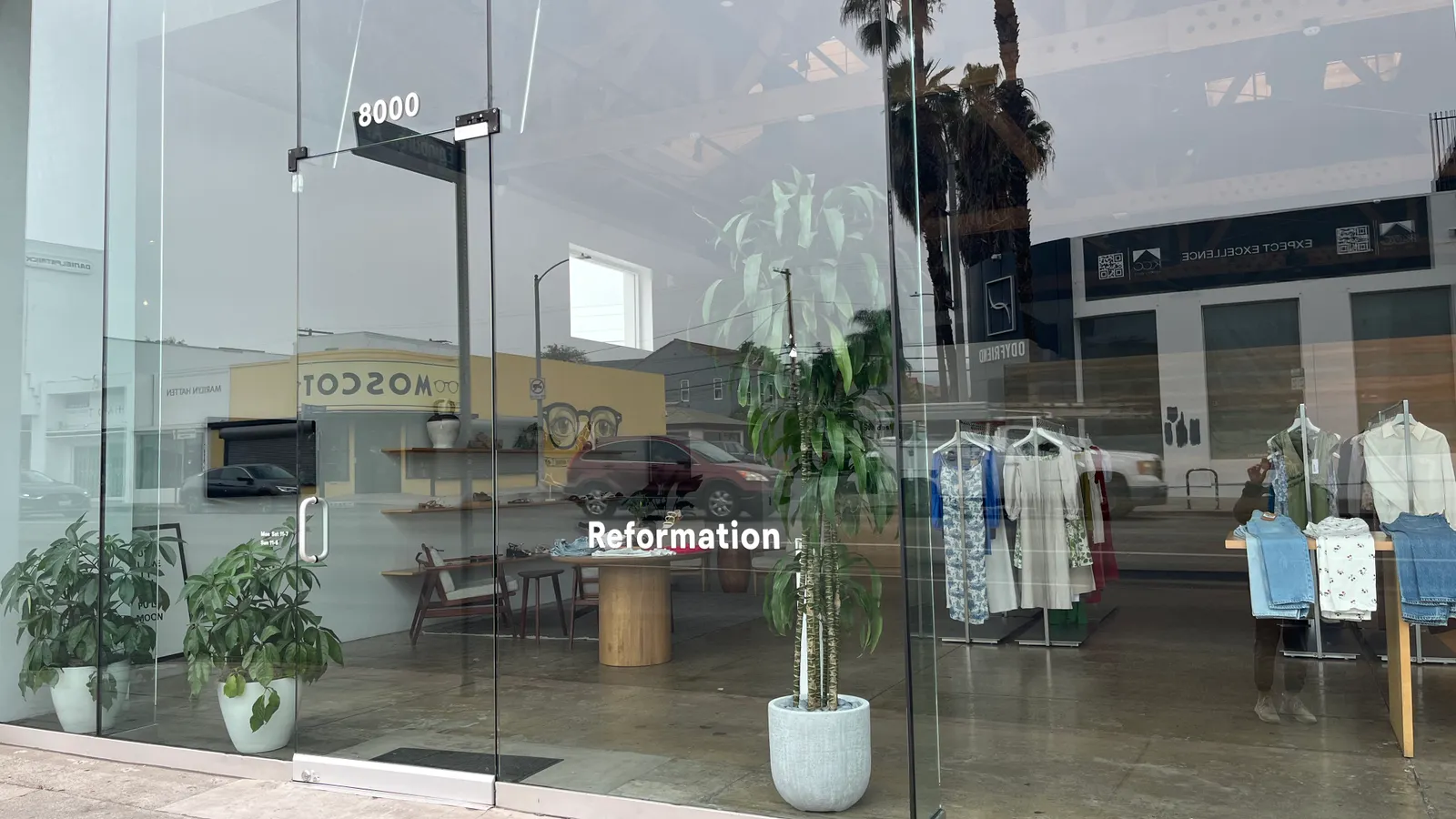
- August 2026: The brand continues its retail expansion, focusing on high-traffic, high-visibility storefronts in major urban centers.
- September 10, 2026: Reformation holds its first earnings call as a public company, revealing the 24% revenue jump.
- September 11, 2026: Analysts at William Blair issue a bullish note, praising the brand’s "clear visibility" in its operational model.
Supporting Data: The Power of the "Speed-to-Market" Model
A significant portion of the conversation surrounding Reformation’s success focuses on its supply chain. In an industry where competitors typically forecast demand and order inventory up to a year in advance—often leading to massive markdowns when styles fail to resonate—Reformation operates on a model of extreme agility.
Key Operational Metrics:
- Lead Times: Over 50% of the brand’s product line is manufactured in 60 days or less.
- Proven Performance: Approximately 90% of the company’s direct-to-consumer revenue is generated from styles that have already shown "proven performance" in the market.
- Retail Footprint: As of the close of Q2 2026, the brand operates 70 physical retail locations.
- Expansion Trajectory: The company has laid out a five-year plan to double its current store count.
- 2026 Guidance: The brand is on track to open 15 to 16 new stores in total for the current fiscal year, with 9 to 10 of those slated for the second half of the year.
This data underscores a fundamental shift in how modern apparel retailers are approaching the "inventory trap." By keeping production cycles short and relying on real-time data rather than long-term speculation, Reformation minimizes the risk of capital being tied up in unsold, discounted merchandise.
Official Perspectives: CEO and CFO Commentary
During the earnings call held on Thursday, September 10, leadership was keen to frame the results as a validation of their long-term strategy.
CEO Hali Borenstein addressed the elephant in the room—the skepticism surrounding the brand’s valuation—by shifting the focus to operational excellence. "Rather than making large inventory bets up to 12 months in advance like many brands, we respond to what customers actually tell us they want," Borenstein explained. "Our supply chain is built for speed, sustainability, and quality. We are not just selling clothes; we are selling a model that reacts to the consumer in real-time."

CFO Joshua Moore provided the financial roadmap, emphasizing that the aggressive store opening schedule is a calculated risk. "Our capital expenditure is focused on high-conversion physical spaces," Moore noted. "The Q2 performance gives us the confidence to push forward with our store growth targets for the second half of the year, bringing our total new openings to 15 or 16 by year-end."
Implications: Can Reformation Sustain the Momentum?
The implications for the broader fashion retail market are significant. As legacy retailers struggle to pivot to digital-first models, Reformation—a native digital brand that successfully expanded into physical retail—is proving that a "phygital" (physical plus digital) approach is the most effective way to capture market share.
The Analyst Outlook
William Blair analysts, in a note issued Friday, expressed a "deeper conviction" in the brand’s future estimates. They noted that while there is inherent risk in any newly public apparel company—largely due to the "reactionary" nature of short-lead-time models—the potential for growth is substantial.
"We see the largest risk as volatility in the model, which comes with short lead times," the analysts noted. "However, the visibility in their current performance indicators suggests that this volatility is manageable. For investors, the current share price represents a compelling opportunity to enter a growth-stage company that has already proven its ability to scale."
The Sustainability Factor
Crucially, Reformation’s brand equity is tied inextricably to its reputation for sustainability. In an era where "greenwashing" accusations are common, Reformation has managed to maintain credibility by weaving sustainability into its operational core rather than treating it as a marketing afterthought. This has created a "moat" around the brand, insulating it from customers who might otherwise be tempted by cheaper, fast-fashion alternatives.

Future Challenges
Despite the optimism, the road ahead is not without obstacles. As the brand expands its store fleet, it will face the classic challenges of retail scaling: rising real estate costs, the complexities of managing a larger labor force, and the necessity of maintaining the "boutique" feel that made the brand successful in the first place. Furthermore, as a public entity, the brand will be under constant scrutiny to deliver consistent quarterly growth, a pressure that can sometimes lead to short-sighted decision-making.
Conclusion
Reformation’s first quarter as a public company has effectively served as a stress test. By posting a 24% revenue increase, the brand has demonstrated that its lean, responsive business model is more than capable of navigating the pressures of the public market. While Wall Street remains naturally cautious of the volatile apparel sector, Reformation’s commitment to speed, data-backed inventory, and measured retail expansion provides a compelling narrative for the future.
As the brand heads into the remainder of 2026, all eyes will be on whether the planned store openings can maintain the same high-performance metrics that defined this quarter. For now, Reformation stands as a rare example of a DTC brand successfully navigating the complex transition to the public stage, proving that in today’s retail environment, the fastest—and most responsive—brands are the ones that stand to win.