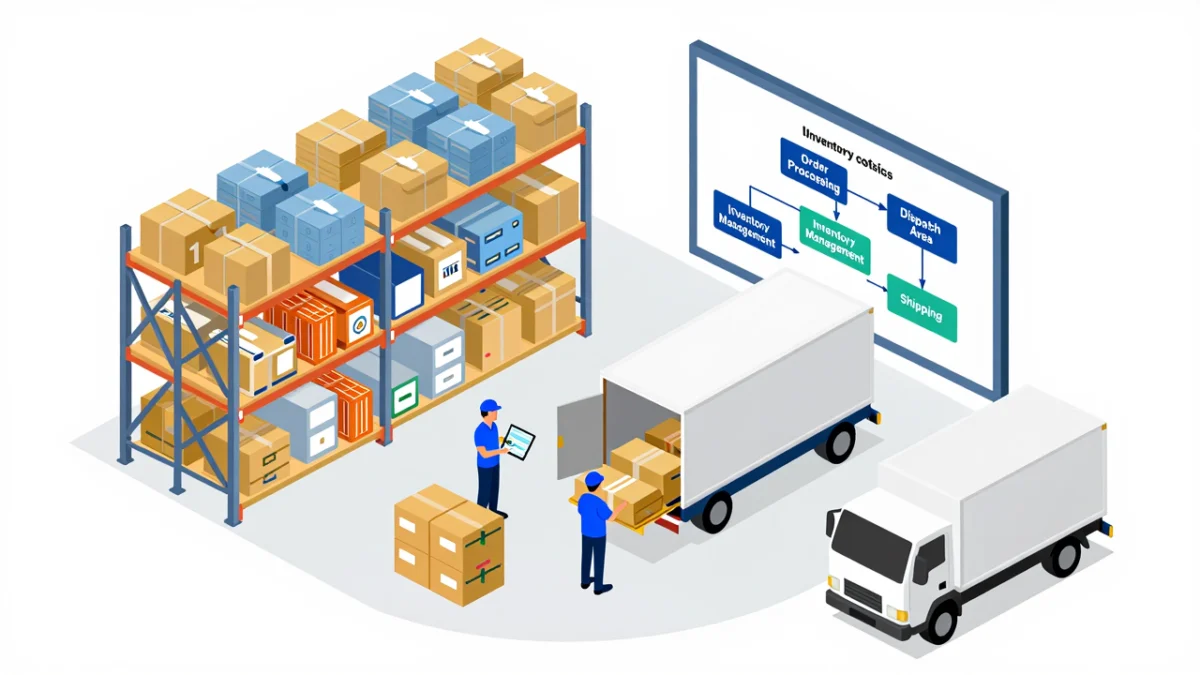
In the modern marketplace, where consumer expectations for speed and accuracy are at an all-time high, inventory logistics has evolved from a back-office administrative task into a strategic pillar of business survival. For small and mid-sized enterprises (SMEs) and global corporations alike, the ability to orchestrate the movement of goods from raw material sourcing to final delivery is the definitive factor in long-term profitability.
This guide explores the structural components, technological imperatives, and strategic methodologies required to transform your inventory logistics into a competitive advantage.

Main Facts: The Anatomy of Inventory Logistics
Inventory logistics is the science of balancing the supply of goods against the reality of demand. At its core, it encompasses five primary pillars: sourcing and procurement, inventory control, storage and organization, order fulfillment, and transportation management.
When these components are misaligned, the consequences are immediate: capital is trapped in "dead stock," storage costs spiral, and customer satisfaction plummets due to stockouts or shipping delays. Conversely, a streamlined logistics operation acts as a flywheel for growth, ensuring that cash flow remains fluid and that the right products are available at the right time.

The Four Stages of Inventory
To manage logistics, one must first categorize inventory correctly:
- Raw Materials: The foundational inputs for production.
- Work-in-Progress (WIP): Goods currently in the manufacturing or assembly stage.
- Finished Goods: Ready-to-sell products held in warehouses.
- MRO Items: Maintenance, repair, and operations supplies essential for internal business functionality.
Chronology: Building a Logistics Workflow
Optimizing your logistics is not an overnight transition; it is a phased approach to operational maturity.

Phase 1: Foundation and Visibility
The journey begins with the implementation of a robust Inventory Management System (IMS). Real-time visibility is the prerequisite for all subsequent steps. Without it, you are making decisions based on historical ghosts rather than current data.
Phase 2: Strategic Procurement
Once tracking is established, companies must shift focus to sourcing. This involves building resilient partnerships with suppliers. By leveraging data, firms can move from reactive purchasing to predictive procurement, aligning orders with anticipated market demand.

Phase 3: Tactical Fulfillment
With inventory arriving and being accounted for, the focus shifts to the warehouse floor. This stage involves the integration of automated picking, packing, and labeling processes. Efficiency here determines the "order-to-delivery" lead time—a critical metric for customer retention.
Phase 4: Distribution and Optimization
The final stage is the movement of goods to the customer. This involves sophisticated route planning, carrier management, and the use of IoT-enabled tracking to ensure the end-user stays informed, thereby reducing the burden on customer service teams.

Supporting Data: Why Logistics Optimization Matters
Data-driven logistics is no longer a luxury; it is a necessity for financial health. According to industry benchmarks:
- Accuracy: Maintaining a 63% to 90%+ inventory accuracy rate significantly mitigates the risk of "ghost inventory"—items that appear on a digital ledger but are missing from the shelf.
- Cost Reduction: Businesses that adopt advanced demand forecasting can reduce inventory holding costs by 20% to 30%.
- Performance Gains: Integrating automation and robotics into warehouse storage solutions can improve order fulfillment speeds by 20% to 30%.
- Efficiency: Applying AI-driven analytics to inventory turnover can boost overall turnover rates by 10% to 20%, ensuring that capital is not tied up in stagnant assets.
Official Perspectives: Navigating the 7 Pillars of Logistics
Industry experts often refer to the "7 Pillars of Logistics" as the blueprint for operational success. While companies may prioritize them differently, they are universally recognized as the framework for a balanced supply chain:

- Transportation: Selecting the optimal mix of speed and cost.
- Inventory Management: Balancing stock levels to avoid oversupply or outages.
- Warehousing: Organizing space to maximize throughput.
- Order Fulfillment: The precision with which a customer’s request is executed.
- Supply Chain Management: The holistic oversight of the entire ecosystem.
- Demand Planning: Using historical and predictive data to anticipate the future.
- Customer Service: The ultimate litmus test of logistics success.
By aligning these seven pillars, businesses can ensure that they remain compliant with industry regulations while maintaining the convenience and speed that modern consumers demand.
Implications: The Technological Frontier
The future of inventory logistics is inextricably linked to technological integration. We are witnessing a shift where traditional manual tracking is being replaced by sophisticated digital ecosystems.

The Role of AI and IoT
Artificial Intelligence (AI) and the Internet of Things (IoT) are changing the game. IoT sensors provide real-time updates on the location and condition of goods in transit. Meanwhile, AI-powered predictive analytics process vast datasets—including weather patterns, social media trends, and historical sales—to forecast demand with unprecedented precision.
The Impact of Blockchain
Blockchain technology is emerging as a powerful tool for traceability. By creating an immutable ledger of a product’s journey from the supplier to the end-user, companies can significantly reduce fraud and ensure the authenticity of their goods.

The Rise of Robotics
Warehouse automation, including autonomous mobile robots (AMRs), is solving the labor-shortage crisis. These systems can navigate complex warehouse layouts, retrieve items, and deliver them to human packers, drastically reducing the margin for human error.
Overcoming Challenges: A Practical Guide
Even with the best technology, logistics is fraught with challenges. Here is how leading firms navigate the most common hurdles:

- Inaccurate Inventory Data: Combat this with frequent cycle counts rather than relying on annual full-warehouse audits. Implementing barcode or RFID scanning at every touchpoint ensures data integrity.
- Increased Lead Times: In an era of global supply chain volatility, diversify your supplier base. Relying on a single source is a structural risk; strategic partnerships with multiple, geographically dispersed suppliers build redundancy.
- High Carrying Costs: Adopt Just-In-Time (JIT) methodologies to minimize the duration that inventory sits idle. Use the Economic Order Quantity (EOQ) formula to determine the most cost-effective order volume.
- Technology Integration Barriers: Do not attempt to overhaul your entire stack at once. Start with a scalable cloud-based IMS that can grow with your business and provide the flexibility needed for future integration.
Conclusion: The Path Forward
Mastering inventory logistics is a continuous process of refinement. It requires a commitment to data accuracy, an investment in technology, and a culture that prioritizes efficiency. As consumer demand becomes more fragmented and global supply chains remain complex, the businesses that succeed will be those that treat their logistics operation not as a cost center, but as a core value proposition.
By focusing on the integration of demand forecasting, supplier collaboration, and automated storage solutions, you can create a lean, agile, and resilient operation. The next step is to assess your current performance metrics, identify the weakest link in your supply chain, and implement a targeted improvement strategy. In the world of logistics, the only constant is change—and those who manage that change effectively will define the future of their industry.