In the digital age, Google’s reach is global, yet the most critical battles for service-based businesses are won within a five-mile radius. When a homeowner’s pipe bursts or a car breaks down, they aren’t looking for a national corporation; they are looking for a trusted, local professional who can arrive within the hour. For these service providers, the challenge has always been bridging the gap between a frantic search and a confirmed booking.
Enter Google Local Services Ads (LSAs). Now integrated into the robust infrastructure of Google’s Performance Max (PMax) campaigns, these ads have evolved from a niche tool into a cornerstone of modern local marketing. By shifting the focus from clicks to verified leads, Google has transformed the search engine results page (SERP) into a high-conversion gateway for service professionals.
Main Facts: What Are Google Local Services Ads?
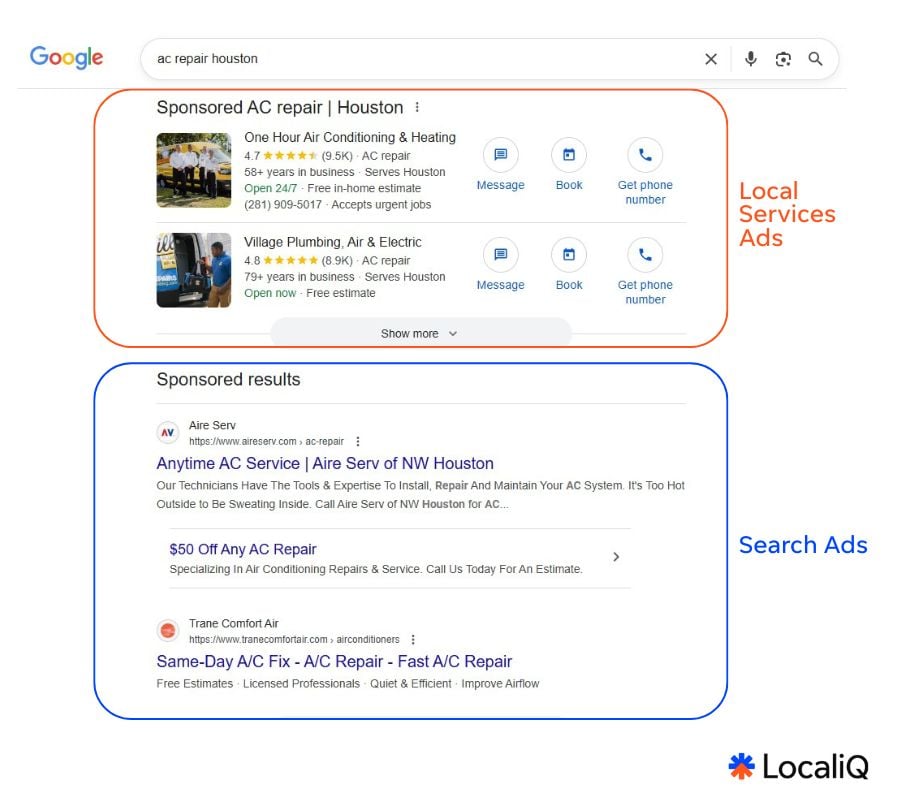
Google Local Services Ads are a specialized advertising format designed specifically for service-based businesses—ranging from locksmiths and plumbers to attorneys and real estate agents. Unlike traditional Google Search ads, which funnel traffic to a landing page, LSAs function as a direct-response mechanism. They allow potential customers to call, message, or book appointments directly from the SERP.
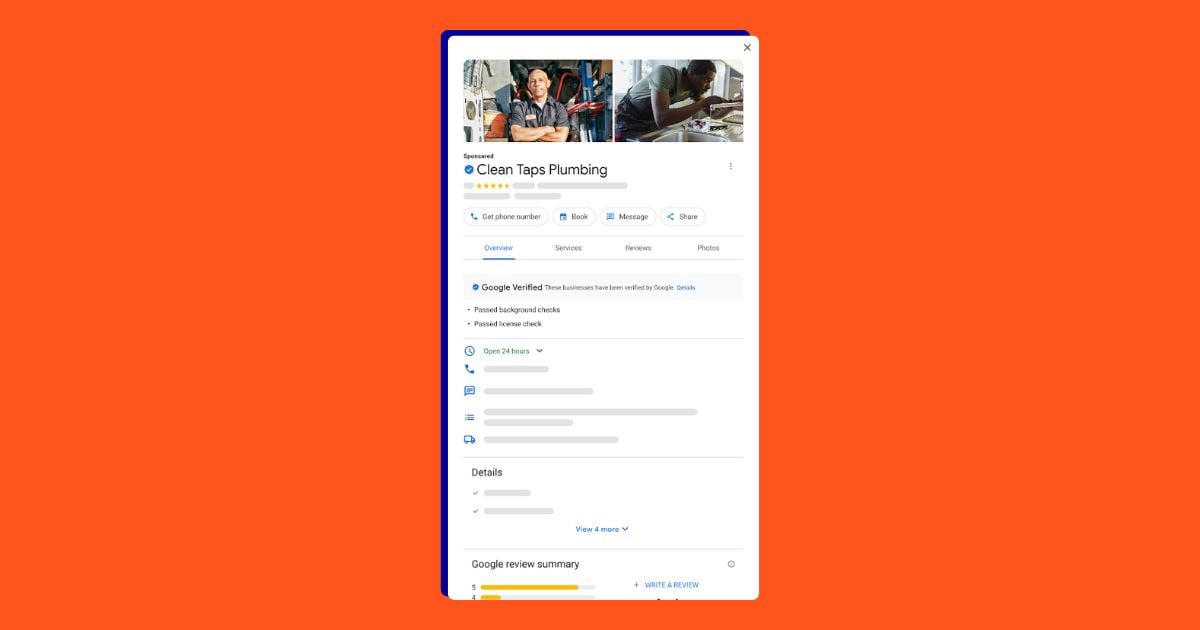
When a user executes a local search, LSAs appear prominently at the very top of the page, often outranking even the highest-bidding traditional paid search ads. These listings provide a snapshot of the business, including the company name, phone number, operating hours, and, most importantly, user ratings and reviews.
The mechanism is simple: if a user clicks on an LSA, they are prompted by Google to specify the nature of their problem and their location. If the business matches the criteria, they are connected. If the business is a poor match, Google intelligently directs the user elsewhere, effectively acting as a filter that protects both the business owner’s budget and the user’s time.
Chronology: The Evolution of Local Advertising
The journey of LSAs reflects Google’s broader strategy of simplifying the user experience while centralizing advertiser control.
- The Early Days: Initially, LSAs existed as a standalone product, managed through a separate dashboard. This required business owners to juggle two distinct interfaces—the Google Ads platform for traditional search and the LSA portal for local leads.
- The Integration Phase: Recognizing the friction this created, Google began moving LSAs under the umbrella of Performance Max campaigns. By utilizing a "pay-per-lead" goal, Google allowed advertisers to streamline their efforts.
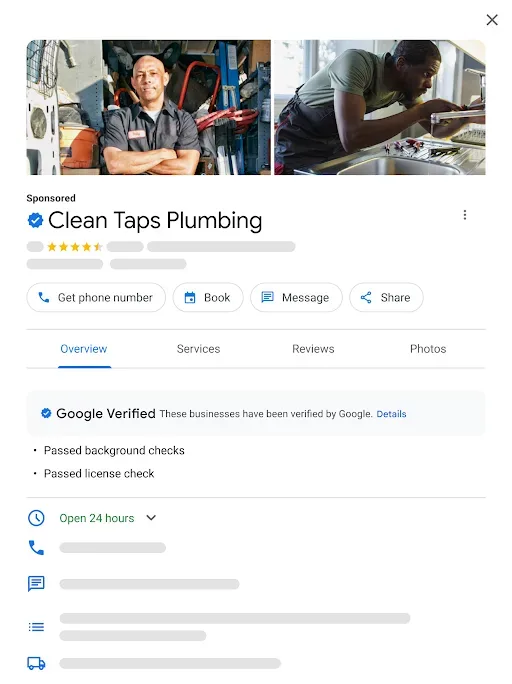
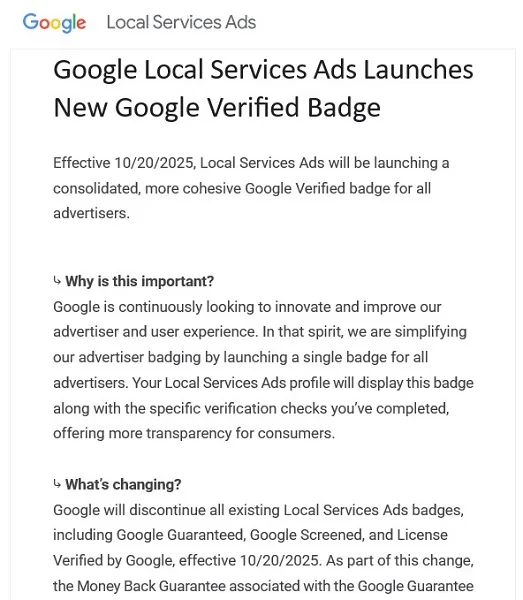
- The Verification Shift: In October 2025, Google consolidated its various trust-signaling badges (such as the "Google Guarantee") into the singular "Google Verified" badge. This shift was designed to provide a more cohesive and transparent standard for trust, ensuring that consumers know exactly what they are getting when they hire a professional through the platform.
Supporting Data: The Economics of the Pay-Per-Lead Model
The primary value proposition of LSAs is the departure from the "pay-per-click" (PPC) model. For many industries—such as legal services, HVAC, or dentistry—a single click can cost upwards of $50, with no guarantee that the visitor will actually convert.
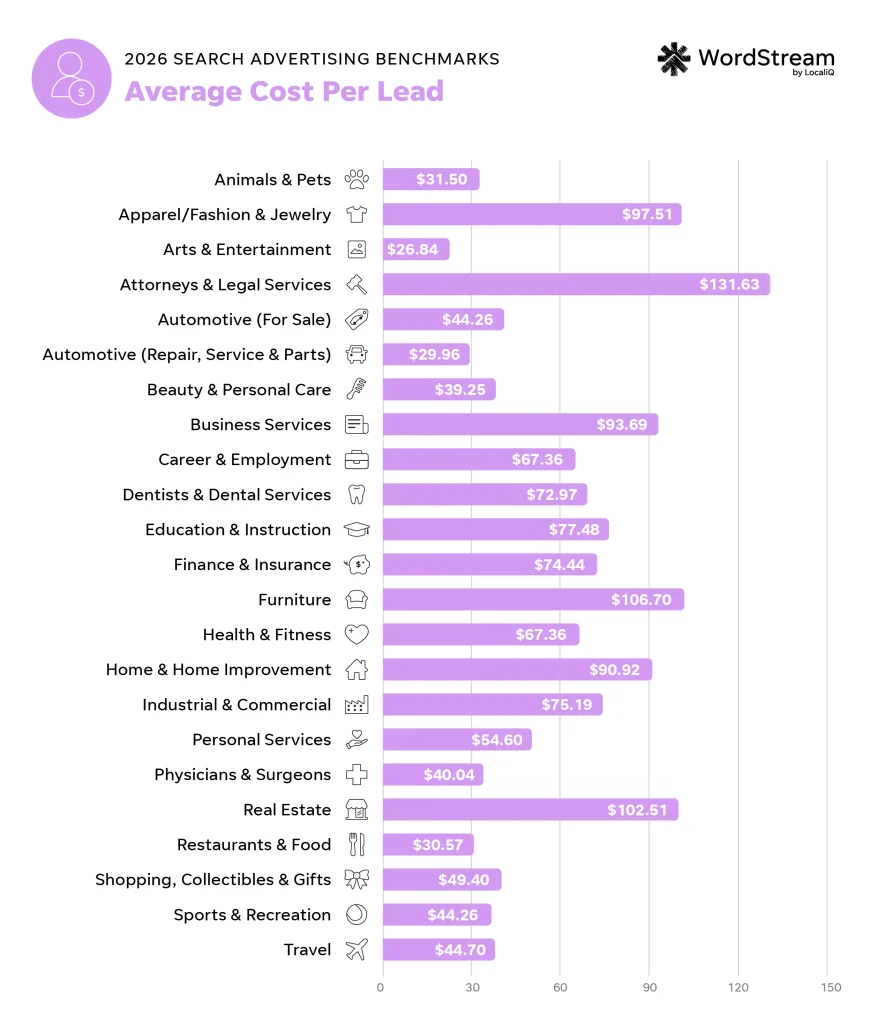
According to industry data, the average cost per lead (CPL) for Google Local Services Ads hovers around $60, which compares favorably against the broader search ad benchmark of $66.69. However, the true benefit lies in the "qualified" nature of these leads. Because advertisers can dispute charges for spam, fraudulent calls, or poor matches, the efficiency of spend is significantly higher than traditional search marketing.
Furthermore, the visibility of these ads is unmatched. By occupying the "prime real estate" above organic and paid search results, LSAs benefit from the psychological halo effect of being the first, most trusted option presented to a user in distress.
Official Responses and Verification Requirements
Google maintains a high barrier to entry for LSAs to ensure that the "Google Verified" badge remains a symbol of genuine quality. The company’s policy is clear: if they are sending a stranger into a user’s home or office, they must guarantee a baseline of safety.
The Verification Process:
- Eligibility Check: Businesses must first confirm that their industry and service area are supported. Google currently covers over 80 distinct industries.
- Business Profile Sync: The LSA account must be linked to a verified Google Business Profile. This ensures that the business location and service area data are accurate.
- Credentialing: Professionals must submit proof of professional licenses and general liability insurance.
- The Background Check: Perhaps the most rigorous step, Google requires that business owners and their field staff undergo a background check. This is conducted through third-party services (such as Pinkerton) and is provided at no cost to the business.
This, according to official Google documentation, is designed to reduce the "trust gap" that often plagues local service industries, where consumers are historically wary of scams or subpar workmanship.
Implications for Modern Businesses
The shift toward PMax-integrated LSAs has significant implications for how businesses should approach their marketing strategy.
1. The Death of the "Click-Only" Strategy
Businesses that rely solely on clicks to their website are missing out on a massive segment of the market—the "immediacy searcher." These users do not want to read an "About Us" page; they want a professional on-site. By not utilizing LSAs, businesses are essentially conceding the top of the SERP to competitors who have prioritized the pay-per-lead model.
2. Reputation Management as a Competitive Edge
Because LSA listings display Google reviews, the reputation of a business is no longer a secondary asset—it is a primary advertising variable. A business with a 4.9-star rating will naturally generate a higher conversion rate on an LSA than a competitor with a 3.5-star rating, even if their bid prices are identical. Consequently, reputation management (promptly responding to reviews and resolving disputes) is now a core component of advertising ROI.
3. Proximity and Local Targeting
The integration of LSAs into PMax campaigns highlights the importance of hyper-local targeting. Because LSAs favor proximity as a ranking factor, businesses with multiple locations must ensure their campaigns are geographically siloed. Attempting to blanket a massive region from a single office often leads to poor performance, as the algorithm prioritizes the physical distance between the user and the business’s registered service area.

Strategic Recommendations for Implementation
For businesses looking to capitalize on this tool, the path forward requires a blend of technical setup and operational discipline.
1. Optimize for Conversion, Not Just Traffic
Once the campaign is live, the focus must shift to lead management. A lead is not a sale. Businesses must ensure they have a CRM or a simple tracking system to follow up on every call and message. Since Google records calls, these recordings should be audited to identify why certain leads did or did not convert.
2. Leverage the "Google Verified" Badge
The badge is a powerful psychological trigger. It signals to the consumer that they are safe. Ensure that your business profile is fully updated with current insurance and licensing information to maintain this status. A lapse in documentation can lead to the removal of the badge, which often results in an immediate, sharp decline in lead volume.
3. Test and Iterate within PMax
Because LSAs are now a part of the PMax ecosystem, advertisers can leverage machine learning to optimize bids. Start with a conservative budget to gauge the lead quality in your area, and gradually increase it as you identify the job types that yield the highest lifetime value (LTV).
Conclusion: The Future of Local Search
Google Local Services Ads represent the maturation of local advertising. By prioritizing the user’s need for speed and the business’s need for qualified, actionable leads, Google has created an ecosystem that rewards quality and proximity.
As we look toward the future, the integration of AI within PMax will likely make these ads even more precise. However, the fundamental truth of local business remains unchanged: success is built on trust, responsiveness, and being in the right place at the right time. For those ready to invest the time in verification and reputation management, LSAs are not just an advertising expense—they are an essential pipeline for sustainable, local growth.