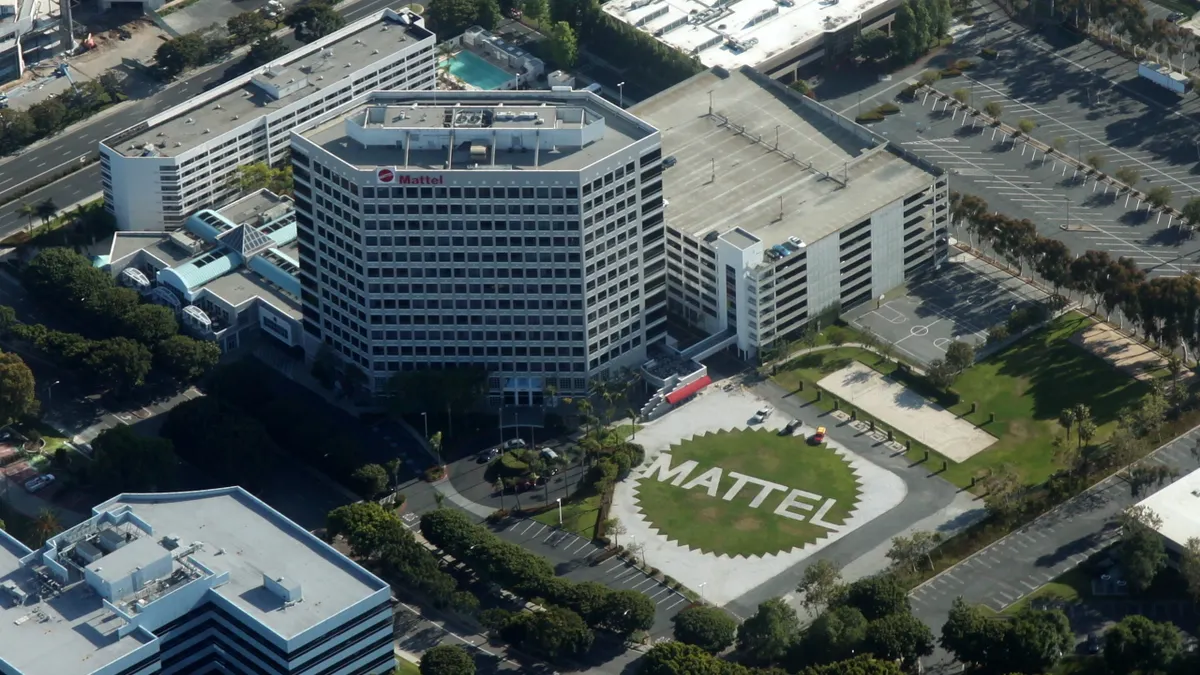
EL SEGUNDO, Calif. — In a landmark leadership transition for the global toy giant, Mattel Inc. has officially announced that Roger Lynch will succeed Ynon Kreiz as the company’s Chief Executive Officer. The move, disclosed on September 30, 2026, marks the end of a transformative era for the manufacturer of Barbie and Hot Wheels and signals a strategic shift toward a future defined by digital integration and sophisticated intellectual property (IP) monetization.
Lynch, who has served as a member of the Mattel Board of Directors since 2018, arrives at the helm of the toy manufacturer with a diverse executive pedigree. He joins the organization from Condé Nast, where he served as chief executive, having previously steered major operations at Pandora and Sling TV. His appointment is effective on or before November 2, 2026.
The Succession Chronology: A Strategic Pivot
The transition follows a meticulous, multi-year succession planning process overseen by the Mattel Board of Directors. Under the leadership of Ynon Kreiz, who took the helm in 2018, Mattel transitioned from a traditional toy manufacturer into a multifaceted entertainment powerhouse.
- 2018: Ynon Kreiz assumes the CEO role, tasking himself with stabilizing the company’s finances and revitalizing its iconic IP. Roger Lynch joins the Board of Directors, providing oversight and strategic counsel during the company’s turnaround phase.
- 2023–2025: Mattel pivots toward a "capital-light" model, focusing on film production, digital licensing, and brand extensions that go beyond physical plastic toys.
- Summer 2026: Mattel launches Mattel Game Studios, signaling a permanent commitment to virtual world building and interactive entertainment.
- September 30, 2026: The company formally announces the departure of Ynon Kreiz and the appointment of Roger Lynch as his successor.
- October 2, 2026: Jonathan Anschell, Chief Legal Officer and Secretary, assumes the role of interim principal executive officer to bridge the gap until Lynch’s formal start date.
- November 2, 2026 (Expected): Roger Lynch officially takes the reins as CEO.
The Profile of a New Leader
The selection of Roger Lynch is widely viewed by industry analysts as a deliberate choice to lean into the digital media and streaming expertise that defined his previous roles.
Before his tenure at Condé Nast, Lynch was instrumental in the streaming revolution. As the founding CEO of Sling TV, he pioneered the "cord-cutting" movement in the U.S. television market. His subsequent leadership at Pandora provided him with deep insights into the subscription-based digital economy and ad-supported monetization.
Mattel’s Board has emphasized that Lynch’s experience in unifying global operations and managing high-value media assets was the primary driver behind his selection. In an era where a toy company must compete for the same attention spans as Netflix, Disney+, and Roblox, Lynch’s background is uniquely suited to the challenge of keeping Mattel’s brands culturally relevant in a digital-first ecosystem.
Financial Implications and Compensation
The transition comes with a significant investment in executive talent. According to filings submitted to the U.S. Securities and Exchange Commission (SEC), the financial terms of Lynch’s onboarding reflect the high-stakes nature of the position.
Lynch is set to receive a base salary of $2.3 million. Beyond the base pay, he is eligible for an incentive plan award structured at 200% of his base salary, with a performance-based cap at 400%. To facilitate the transition and incentivize his move, the company is providing a $10.6 million cash signing bonus, alongside a $6 million restricted stock unit (RSU) award. A relocation allowance of $985,000 rounds out the compensation package.

Supporting Data: The State of the Business
The transition occurs at a complex moment for Mattel’s financial performance. While the company remains a dominant player in the toy industry, recent earnings reflect the headwinds facing the broader retail and consumer goods sector.
In its most recent quarterly report, Mattel posted net sales of $1.1 billion, representing a 10% year-over-year increase. However, the bottom line tells a more challenging story. The company reported a net loss of $18 million for the second quarter of 2026, a sharp contrast to the $53 million net income generated in the same period a year prior.
Despite this volatility, the company has reiterated its full-year guidance, projecting a net sales growth of 3% to 6%. Investors remain focused on how efficiently the company can convert its massive brand equity—exemplified by the global footprint of its flagship IP—into consistent, scalable digital revenue.
Strategic Implications: Beyond the Toy Box
The "Mattel of tomorrow" is an entity that increasingly prioritizes virtual worlds over physical aisles. Under the outgoing leadership of Kreiz, the company successfully bridged the gap between physical play and digital engagement. The launch of Mattel Game Studios serves as a testament to this shift, aiming to integrate iconic brands like Monster High and Barbie into robust virtual ecosystems.

Lynch’s mandate will be to scale these initiatives. Analysts suggest that the next phase of growth will likely involve:
- Deepening Digital Monetization: Moving beyond mere marketing and into persistent, revenue-generating digital play.
- Global Brand Uniformity: Leveraging Lynch’s expertise to ensure that Mattel’s brand identity remains consistent across disparate global markets, especially as digital content consumption becomes increasingly international.
- Efficiency and Operational Agility: With the company currently navigating a post-inflationary environment, streamlining the supply chain while maintaining high-margin creative output will be a critical hurdle for the new CEO.
Corporate Governance and Stability
To ensure continuity during the transition, Jonathan Anschell has been appointed as the interim principal executive officer. Anschell, who will continue to serve as the company’s Chief Legal Officer and Secretary, provides a steady hand in the C-suite, ensuring that corporate strategy and regulatory compliance remain uninterrupted.
Furthermore, the board has strengthened its governance oversight by appointing Diana Ferguson as the new independent lead director. This move is designed to provide the board with robust, objective leadership as it navigates the change in executive strategy.
Conclusion: The Road Ahead
The appointment of Roger Lynch represents a fundamental evolution for Mattel. By moving away from a traditional manufacturing-focused leadership style and embracing a veteran of the digital media and streaming landscape, the company is signaling to Wall Street that it no longer views itself solely as a toy maker.
Whether Lynch can successfully navigate the complexities of shifting consumer behavior in the digital age remains to be seen. However, given his track record of launching successful digital platforms and managing complex media conglomerates, his appointment suggests that Mattel is positioning itself for a future where the distinction between "playing with a toy" and "engaging with a digital world" has all but vanished.
As the company prepares for this new chapter, stakeholders will be watching closely to see if the combination of high-value legacy brands and new-age digital strategies can restore the profitability levels seen in previous years and sustain the company’s long-term competitive advantage.